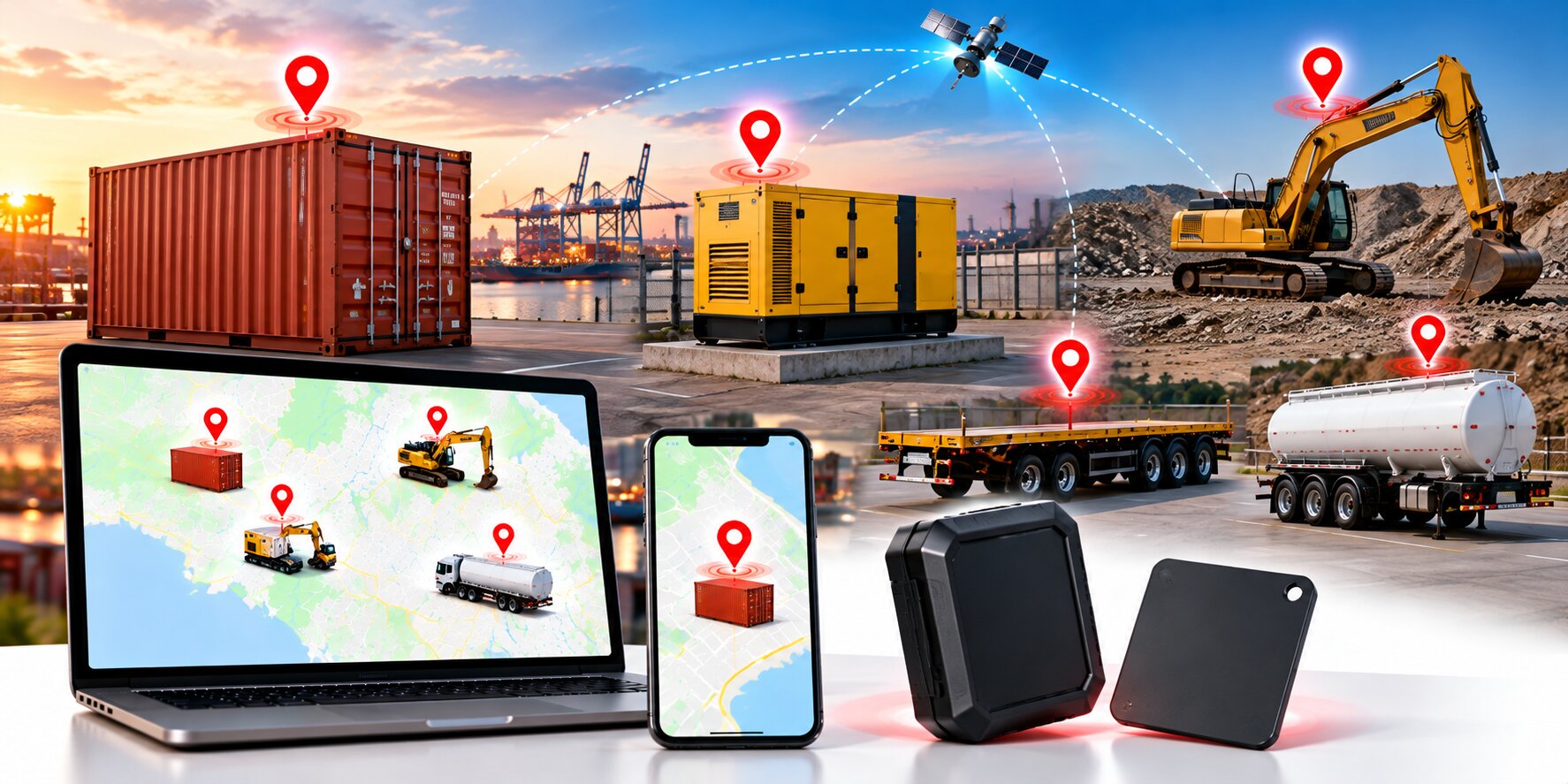
A truck is relatively easy to monitor because it has its own electrical system, ignition and regular movement. A shipping container, generator, construction attachment, mobile storage unit or other non-powered asset presents a different problem. Once the asset is separated from the vehicle that transported it, the fleet manager may lose visibility completely. For Kenyan businesses managing movable equipment and high-value assets, GPS asset tracking in Kenya can provide a practical way to monitor items that do not have their own permanent source of power.
The challenge is common in logistics, construction, agriculture, equipment rental and project-based businesses. A container may leave a yard on one truck, be dropped at a customer’s premises and later be collected by a completely different vehicle. If the tracking system is installed only on the trucks, management may know where every truck is while still being unable to confirm the location of the container itself.
This is why non-powered assets often require independent tracking. Instead of relying on electricity from a vehicle battery, a wireless tracker or long-life tracking tag can operate from its own internal battery. The device can then report the asset’s position periodically or when movement is detected, depending on the technology and configuration being used.
The reporting strategy is important because battery-powered devices have a different operating model from permanently powered vehicle trackers. A wired GPS tracker installed in a truck can report frequently because the vehicle supplies electricity whenever the system is operating. A battery-powered asset tracker must conserve energy, which means the frequency of location updates has a direct effect on how long the battery can last.
Fleet managers therefore need to decide what level of visibility the asset actually requires. A container carrying high-value cargo and moving between several locations may justify more frequent reporting. A generator that remains on the same construction site for several months may only need periodic location updates together with a movement alert if it unexpectedly leaves the site.
This creates an important difference between live tracking and long-life tracking. Customers sometimes expect a battery-powered device to provide the same second-by-second reporting as a hardwired vehicle tracker while also operating for years without charging. In practice, those goals compete with each other. The more often a device wakes up, acquires its location and communicates with the network, the more energy it generally consumes.
For many non-powered assets, frequent live updates are not necessary. What matters is knowing where the asset is located, whether it has moved unexpectedly and where it was last reported. A long-life tracking tag can therefore be very useful for equipment that spends most of its life stationary but still needs an independent security layer.
Geofencing can make this type of tracking much more useful. A business can establish a virtual boundary around a warehouse, construction site, farm, depot or customer premises. If the asset moves outside that boundary, the tracking system can generate an event or alert depending on the solution installed.
Consider a container that has been placed at a customer’s premises for temporary storage. Management expects it to remain there for three weeks. If the container suddenly moves several kilometres away overnight, the company does not necessarily need to know its location every ten seconds during the previous three weeks. What matters is recognising that movement occurred when none was expected.
The same principle applies to construction equipment and project assets. Contractors may move generators, compressors, water tanks, specialised tools and other valuable equipment between sites. Some items can remain at remote locations where management rarely visits physically. A tracking tag can create an