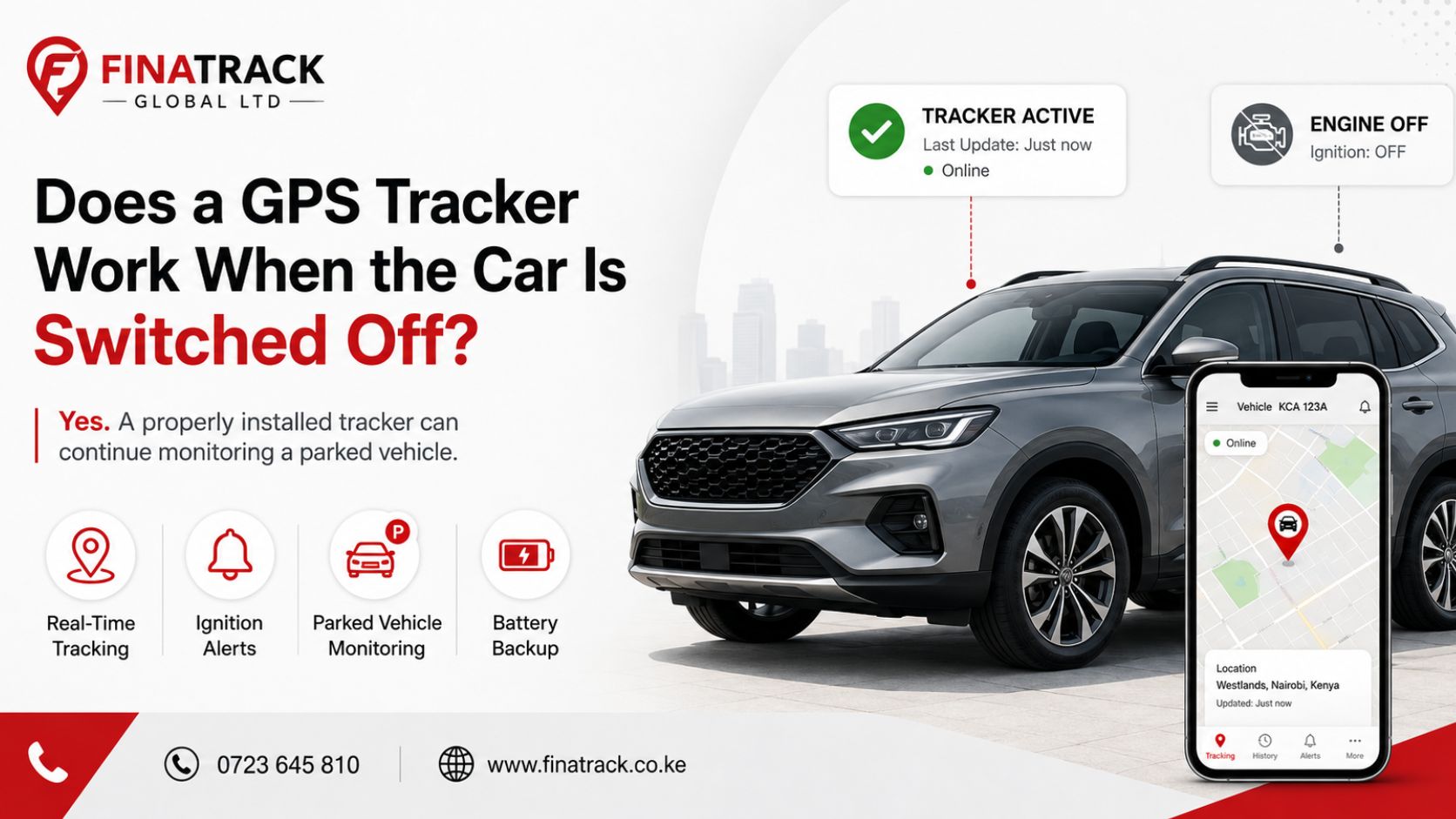
For many vehicle owners, one of the most common questions after installing a GPS tracker is whether the device continues working when the engine is off. The short answer is yes, in most professionally installed wired tracking systems, the GPS tracker can continue communicating even when the vehicle has been switched off.
This is because a wired GPS tracker is normally connected directly to the vehicle’s electrical system rather than relying only on the ignition circuit. As long as the vehicle battery has power and the tracker remains properly connected, the device can continue sending location and status information to the tracking platform.
The engine being off therefore does not necessarily mean the tracker is off. In fact, one of the reasons GPS tracking is useful for vehicle security is that the system can continue monitoring a parked vehicle even when nobody is inside it.
This is especially important overnight, when a car may remain parked for several hours. If the vehicle is moved without authorisation, a properly configured tracking system may still be able to detect the change in location and update the user through the tracking platform.
Some systems can also generate alerts when the ignition is switched on. If a vehicle owner receives an unexpected ignition notification while the car should be parked, they can immediately open the tracking application and check what is happening.
That combination of location tracking and ignition monitoring can provide an important early warning during suspected theft.
The exact behaviour of a tracker depends on how the device has been installed and configured. A professionally installed wired tracker usually receives power from the vehicle battery and can distinguish between ignition on and ignition off states.
When the ignition is switched off, the tracker may reduce the frequency of certain updates to conserve power, depending on the device and platform. However, it can still remain available for monitoring and may continue reporting its location or responding to configured events.
Some trackers also include an internal backup battery. This can be useful if the vehicle battery is disconnected or if somebody attempts to remove power from the tracking device.
A backup battery does not normally run indefinitely, but it may allow the tracker to continue operating for a period after the main power supply has been interrupted. The length of time depends on the battery capacity, device settings and how frequently the tracker is transmitting information.
This feature can be valuable during a theft attempt. If a thief disconnects the vehicle battery, a tracker with backup power may continue communicating long enough to generate a power disconnection alert or provide additional location updates.
Not every tracker has the same capability, which is why vehicle owners should ask about backup battery functionality before installation.
The issue of battery drain also concerns many motorists. Because a wired GPS tracker remains connected to the vehicle electrical system, some owners worry that it will flatten the car battery when the vehicle is parked.
A properly installed quality tracker is generally designed to use relatively little power. Many devices also enter a lower power state when the vehicle is inactive.
However, the condition of the vehicle battery still matters. A weak or ageing battery may be more sensitive to even small electrical loads, especially if the vehicle remains parked for extended periods without being driven.
Installation quality is equally important. Poor wiring, incorrect connections or faulty equipment can create unnecessary electrical problems.
This is one reason GPS tracking should be installed by trained technicians rather than treated as a simple plug and play accessory.
Vehicle owners should also understand the difference between wired and wireless trackers.
A wired tracker receives power from the vehicle and is generally suited to continuous long term monitoring. This makes it practical for private cars, commercial vehicles and fleets where the vehicle needs to remain visible on the tracking platform throughout normal use.
A wireless or magnetic GPS tracker relies on its own internal battery. It can continue working while the vehicle is off because it does not depend on the vehicle electrical system at all.
However, the battery eventually needs to be recharged or replaced.
Wireless trackers are therefore often used as backup devices or where discreet placement is important. For continuous everyday monitoring, a wired system is usually more practical because it does not require frequent charging.
The ability to track a parked vehicle can also support geofencing.
A vehicle owner can create a virtual boundary around a home, office, yard or parking area. If the vehicle leaves that area unexpectedly, the system may generate an alert.
This can be useful when a car is parked overnight or when a commercial vehicle should remain inside a company yard outside working hours.
For businesses, monitoring while vehicles are switched off can provide additional operational visibility. A fleet manager may want to know when vehicles arrive at a depot, when they leave, how long they remain parked and whether any vehicle moves outside authorised hours.
This information can help improve security and accountability.
It is also useful for identifying unauthorised vehicle use. If a company vehicle is meant to remain parked after working hours but starts moving late at night, the tracking platform can provide information that allows management to investigate.
In a theft situation, the fact that the engine was initially off does not prevent the tracker from being useful. The important issue is whether the device remains powered and connected to the tracking network.
Once the vehicle begins moving, the system can continue updating its location, subject to mobile network coverage and device configuration.
This is where real time tracking becomes valuable. Instead of discovering later that a vehicle disappeared from a parking location, the owner may be able to see the vehicle’s movement as the incident unfolds.
Some systems also include trip history, allowing users to review where the vehicle travelled after leaving the original location.
Vehicle owners should remember that a GPS tracker depends on more than just satellites. While GPS satellites help the device determine location, the tracker usually relies on a mobile network to transmit that information to the tracking platform.
If the vehicle enters an area with poor network coverage, live updates may temporarily stop.
This does not always mean the tracker has failed. Some devices can store location information and transmit it once network communication is restored.
The quality of the tracking platform and device therefore matters just as much as the physical installation.
A reliable system should show the vehicle’s status clearly, including whether the ignition is on or off, whether the tracker is online and when the last update was received.
For private motorists, this provides reassurance that the tracker remains active even when the car is parked.
For fleet managers, it provides a clearer picture of vehicle activity across the business.
So, does a GPS tracker work when the car is switched off?
Yes, in most professionally installed wired GPS tracking systems, the tracker can continue operating while the engine and ignition are off because it receives power directly from the vehicle battery.
A wireless tracker can also operate independently using its own internal battery.
The key factors are installation quality, power supply, mobile network coverage and the capabilities of the tracking device itself.
A good GPS tracker does not only protect your vehicle while you are driving.
It continues watching when the vehicle is parked.
For professional GPS vehicle tracking solutions in Kenya, Finatrack Global Ltd provides tracking systems for private motorists, businesses and commercial fleets.
For enquiries, contact Finatrack Global Ltd on 0723 645 810 or visit www.finatrack.co.ke.