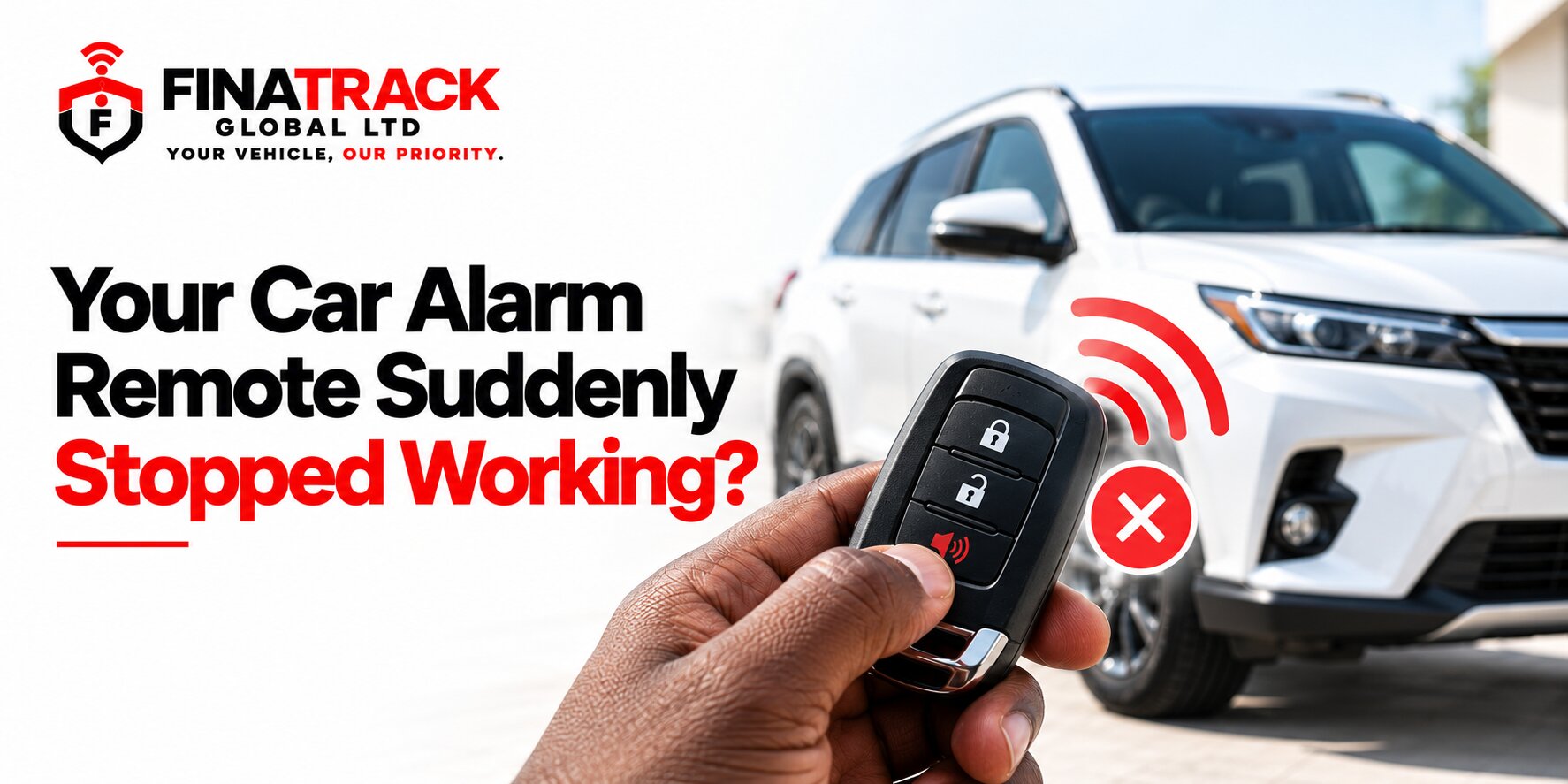
You press the button on your car alarm remote and nothing happens. The doors remain locked, there is no response from the siren and pressing the button several more times makes no difference. For motorists in Kenya, a car alarm remote not working can be frustrating, but it does not always mean the entire alarm system has failed. The problem may be as simple as a weak remote battery, although wiring, receiver or vehicle-power issues can also cause similar symptoms.
One of the first things to check is the remote-control battery. Car alarm remotes depend on a small internal battery to transmit their signal, and its performance gradually weakens over time. You may first notice that you have to stand closer to the vehicle than usual before the alarm responds. If the range has gradually reduced before the remote stops working completely, replacing the remote battery is often a sensible starting point.
The problem may also come from the vehicle rather than the remote. An aftermarket alarm depends on the car’s electrical system, so a weak vehicle battery, disconnected terminal, blown fuse or wiring fault can prevent the alarm from operating normally. If other electrical systems are also behaving unusually, the vehicle’s power supply should be checked. This is particularly important after battery replacement, electrical repairs or workshop work where alarm wiring may have been disturbed.
Sometimes the remote and alarm receiver may no longer be communicating correctly. Depending on the alarm model, the remote may require reprogramming or synchronisation after battery replacement, electrical interruption or certain system changes. This should be handled according to the alarm manufacturer’s procedure rather than repeatedly pressing random button combinations. A professional installer can determine whether the issue is with the remote itself, the receiver or another component within the alarm system.
Owners should also pay attention to whether only one remote has stopped working. If the vehicle was supplied with two alarm remotes and one still works normally, the problem is more likely to be with the faulty remote. If neither remote communicates with the vehicle, the issue may be within the alarm system, its receiver, fuse, wiring or power supply. Testing the second remote can therefore provide a quick clue before more detailed troubleshooting begins.
A non-responsive alarm remote can become more than an inconvenience if the system also controls an immobiliser or hidden cut-off. Vehicle owners should avoid bypassing wiring themselves unless they understand the installation, because incorrect changes can create starting problems or weaken the vehicle’s security. Professional diagnosis is particularly important on newer vehicles with sensitive electrical systems where poorly handled aftermarket wiring can create additional faults.
The situation also highlights why vehicle security should not depend entirely on one remote-controlled alarm. An alarm can discourage interference and attract attention, while a GPS tracker provides a different layer of protection by allowing authorised users to check the vehicle’s current or most recently reported location. Combining an alarm with GPS tracking, immobilisation and, where appropriate, backup tracking gives the vehicle owner more than one security layer if a single component develops a problem.
Finatrack Global Ltd provides professionally installed car alarm systems, advanced alarms with hidden cut-off and GPS tracking solutions for motorists in Kenya. Finatrack’s standard car alarm is available from KES 6,500, while the advanced alarm with hidden cut-off is available at KES 7,500. The GPS tracker and car alarm combination is available at KES 20,000. For installation, inspection or troubleshooting, call or WhatsApp 0723 645 810 or visit www.finatrack.co.ke. When a car alarm remote stops responding, replacing the battery may solve the problem, but if it does not, having the system professionally checked is better than waiting until the alarm is needed for real security.