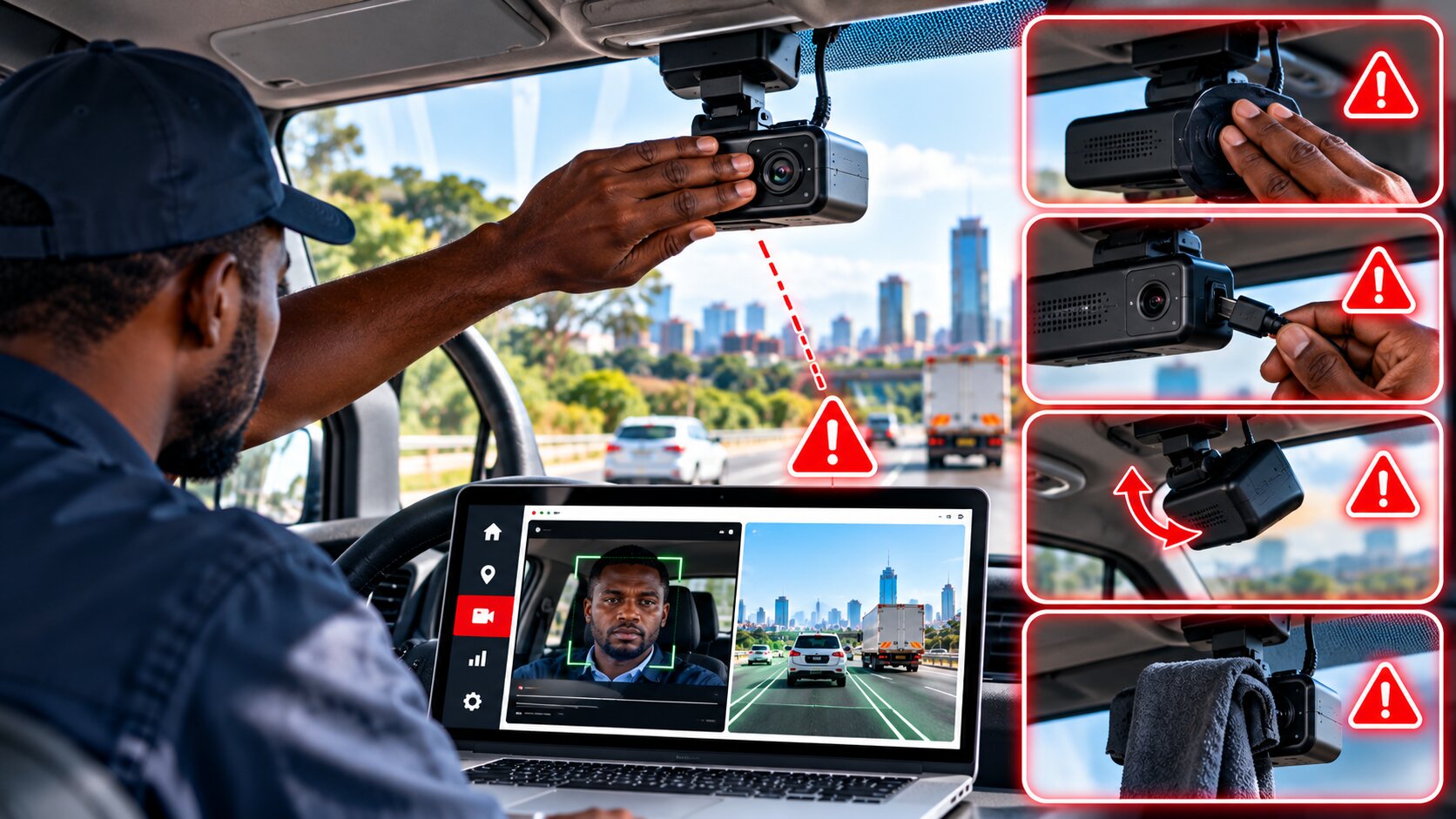
An AI dashcam can provide valuable information about road incidents, driver behaviour and vehicle safety, but the system becomes far less useful if the camera is intentionally covered, unplugged or repositioned. For businesses operating delivery vans, trucks, staff transport or other commercial vehicles, AI dashcam tampering in Kenya is therefore becoming an important fleet-management issue. The challenge is determining whether a missing video or offline camera represents deliberate interference, an electrical problem or a normal technical fault.
A driver may be able to interfere physically with a dashcam if the device is installed where it can easily be reached. This could involve covering the lens with an object, moving the camera away from the road or driver, disconnecting power or unplugging a cable. Some forms of interference may leave the camera powered while making the footage practically useless. A driver-facing camera pointed toward the roof, for example, may technically remain online without providing meaningful Driver Monitoring System information.
Covering the driver-facing camera can particularly affect DMS functions. Depending on the installed system, Driver Monitoring System technology may analyse selected behaviours associated with distraction, fatigue, mobile-phone use or attention. If the driver’s face is no longer visible, the system may stop producing useful alerts or generate unusual events because it cannot interpret what it sees properly. Fleet managers should therefore pay attention to sudden changes in camera visibility rather than looking only at whether the unit shows as online.
The road-facing camera presents a similar issue. A camera that has been rotated toward the dashboard, covered by an object or blocked by a sticker may no longer provide useful video of the road ahead. This can reduce the value of ADAS functions and make incident investigation more difficult. If an accident occurs while the camera is obstructed, the company may discover too late that the footage it expected was never available.
Physical disconnection is usually easier to recognise because the camera may stop transmitting information altogether. Depending on the system, management may notice that the dashcam suddenly goes offline, loses external power or stops sending event clips. However, a disconnected device should not automatically be treated as deliberate tampering. Battery replacement, workshop repairs, damaged wiring, loose connectors and electrical faults can produce similar symptoms.
The timing of the interruption can provide useful context. If the dashcam goes offline immediately after a vehicle enters a garage for electrical repairs, the cause may be completely legitimate. If the camera repeatedly disconnects during particular journeys and returns online later without any workshop activity, management may have more reason to investigate. Patterns are usually more informative than one isolated event.
Fleet managers should also compare the dashcam status with GPS tracking information. Suppose a vehicle continues travelling normally on the GPS platform while the dashcam suddenly stops sending video. The tracking system may show where the vehicle travelled during the period when the camera was unavailable. This does not prove that the dashcam was deliberately switched off, but it gives management valuable context when investigating what happened.
The same principle applies when video footage suddenly becomes obstructed. If the driver’s face is clearly visible throughout most of the day and then disappears during a particular trip, the footage before and after the event may help determine whether the camera physically moved. A camera that gradually changes position because of a loose mount will look different from one that appears to have been deliberately covered for a short period.
A good fleet policy should define who is authorised to touch, reposition or disconnect the dashcam. Drivers should know that the camera is part of company equipment and should not be moved unless there is a genuine safety or technical reason. If the device creates a visibility problem, becomes loose or appears faulty, the driver should report it rather than adjusting the installation without informing management.
This policy should also apply when vehicles visit workshops, body shops or windscreen replacement centres. Technicians may need to remove or disconnect the camera temporarily while carrying out repairs. Fleet managers should record when this happens and verify that the camera has been restored correctly before the vehicle returns to normal operations. A dashcam that was properly aligned before workshop work may not necessarily be positioned correctly afterwards.
Routine camera health checks can prevent many problems. Management can periodically review whether each device is online, whether road-facing footage is clear and whether the driver-facing camera still has an appropriate view. A quick inspection can identify loose mounts, dirty lenses, damaged wiring or blocked cameras before a major incident occurs. Checking only after an accident defeats much of the purpose of having the system.
Businesses should also pay attention to repeated missing footage. One short recording gap may have a technical explanation, but a pattern involving the same vehicle or driver deserves investigation. If a camera repeatedly goes offline during particular assignments, management can compare GPS trip history, timestamps, vehicle power information and workshop records. The objective should be to establish what happened using evidence rather than assuming deliberate interference.
Where the dashcam system supports tamper or power-loss alerts, those notifications can help fleet managers respond more quickly. A sudden loss of external power may create an event that management can compare with vehicle activity. However, even an alert should be interpreted carefully. A loose connector may generate the same power-loss event as intentional disconnection, which is why physical inspection remains important.
AI dashcams also need to be installed in a way that discourages casual interference without creating safety problems. Wiring should be professionally routed and secured rather than left hanging where it can easily be unplugged. The device should be mounted firmly in an appropriate position that does not obstruct the driver’s view. Professional installation does not make tampering impossible, but it can make accidental disconnection less likely and deliberate interference more obvious.
Driver communication is equally important. Employees may resist cameras when they do not understand why they are being used. Businesses should explain that the system is intended to support safety, incident investigation, driver coaching and protection of company vehicles. Clear policies around who can view footage, how long recordings are retained and when footage may be reviewed can reduce unnecessary mistrust while supporting responsible monitoring.
Management should also avoid treating AI dashcams as tools for watching employees constantly. The strongest fleet programmes use alerts and video to investigate meaningful events rather than continuously observing drivers without a clear operational reason. This approach can improve acceptance while ensuring that recorded footage remains focused on legitimate fleet-management and safety purposes.
There are also situations where a driver may have a legitimate reason to report a camera problem. The device could block part of the windscreen, produce excessive glare, become loose or malfunction. A well-designed policy should make it easy for drivers to report these problems without feeling that any complaint will automatically be interpreted as an attempt to avoid monitoring. Technical concerns should be addressed promptly so that employees are not tempted to modify the installation themselves.
For businesses using several vehicles, dashcam status can become part of the normal daily fleet checklist. Management may check whether cameras are online alongside GPS tracker status, fuel information and vehicle availability. Vehicles showing abnormal camera behaviour can then be inspected before they leave for another assignment. This simple process can prevent weeks of missing footage from going unnoticed.
Finatrack Global Ltd provides professionally installed AI dashcam solutions with DMS and ADAS capabilities for private vehicles and commercial fleets in Kenya. Finatrack’s AI Dashcam is available at KES 35,000, with professional installation designed to support road-facing and driver-facing monitoring. Businesses can also combine AI dashcams with GPS tracking and fleet-management solutions so that video events can be considered together with vehicle location and trip information.
For installation and enquiries, call or WhatsApp 0723 645 810 or visit www.finatrack.co.ke. A dashcam that is covered, disconnected or badly repositioned cannot provide the level of visibility a fleet expects from it. The best response is not to assume every interruption is deliberate, but to build a system of professional installation, camera health checks, clear driver policies and evidence-based investigation so that genuine technical faults can be separated from possible tampering.