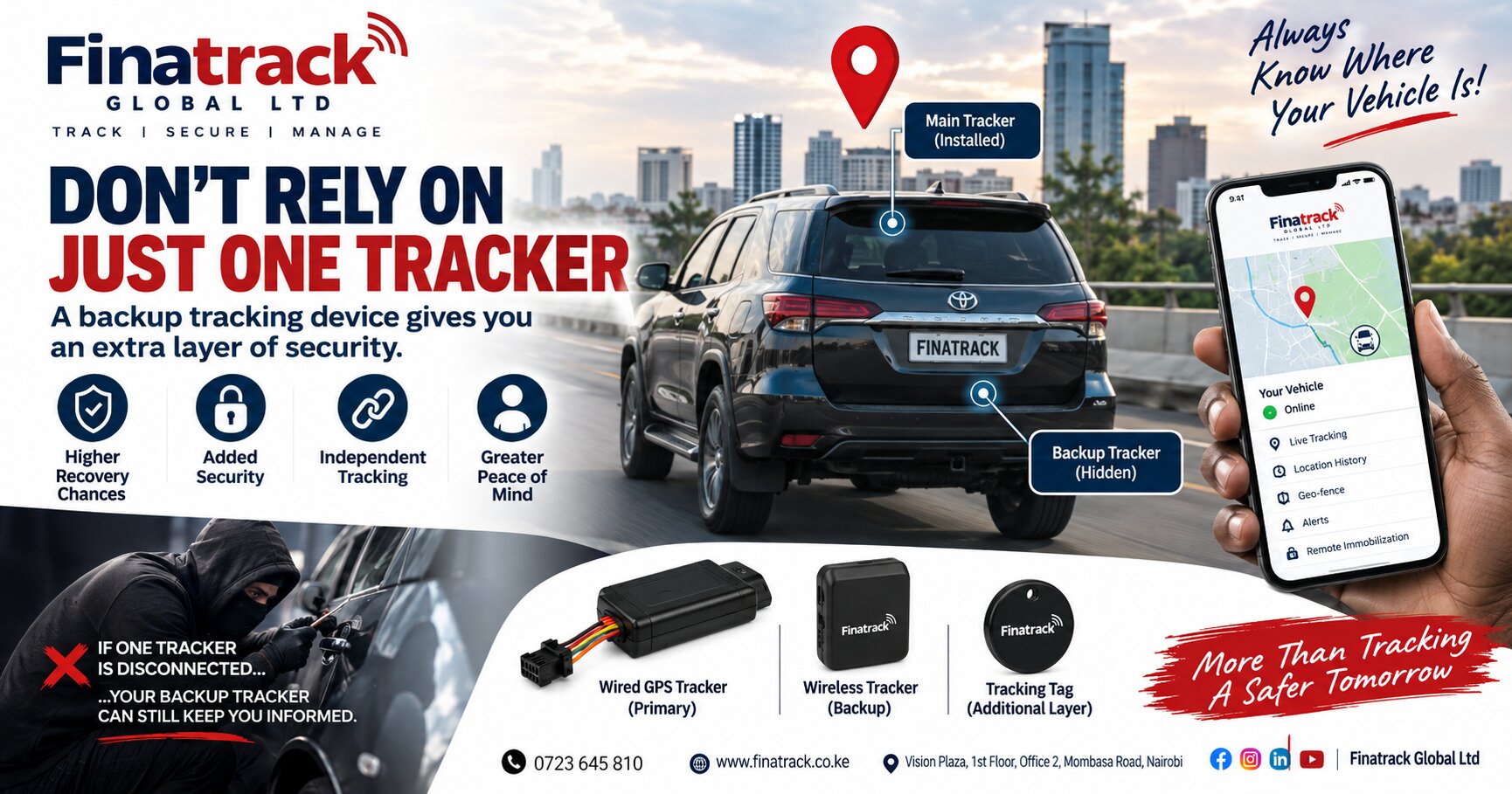
Vehicle tracking has become an important part of modern vehicle security, but relying on a single tracking device may not always provide the level of protection a vehicle owner expects. A primary GPS tracker can help monitor a vehicle’s location, movement and travel history, yet there are situations where a second tracking device can provide an additional layer of security and improve the chances of locating a vehicle when the main system is unavailable.
For private motorists, fleet owners and businesses operating valuable vehicles, the idea of a backup tracking device is simple: if the primary tracker is disconnected, damaged or otherwise unable to report its location, another independently positioned device may still provide useful information. This redundancy is especially relevant for owners who want to avoid depending entirely on one device, one installation point or one tracking method.
Why One Tracker May Not Always Be Enough
A professionally installed GPS tracker remains one of the most useful tools for monitoring a vehicle. It can provide real-time location information, historical route playback, geofencing, speed alerts and other vehicle monitoring features depending on the system installed.
However, no single security device should be treated as a complete guarantee against vehicle theft. Tracking devices can potentially be discovered during an attempted theft, electrical systems can be interfered with, and communication or power-related problems can sometimes affect how a device reports information.
Having a backup tracker does not eliminate these risks, but it creates another possible source of location information if the main device stops communicating.
Creating a Second Layer of Tracking
A backup tracking device should ideally operate independently from the primary tracking system. This can mean using a different type of device, a different power source or a separate installation location inside the vehicle.
For example, a vehicle fitted with a conventional wired GPS tracker can also use a wireless magnetic tracker or a compact tracking tag as an additional layer of monitoring. The main device may provide the day-to-day tracking features required by the owner, while the secondary device remains available as an alternative source of location information.
This layered approach is similar to using both a GPS tracker and a car alarm. Each system performs a different function, but together they create a stronger overall security setup.
Hidden Placement Can Be Important
One of the advantages of a backup tracking device is that it can be positioned separately from the primary tracker. If both devices are installed in the same area, anyone who discovers one may also find the other.
A secondary device should therefore be installed or placed with security and practicality in mind. The exact location will depend on the type of tracker, the vehicle and the way the device receives power or communicates.
Professional guidance can help ensure the device remains effective without interfering with vehicle operation or compromising its ability to obtain a reliable signal.
Wireless Trackers as Backup Devices
Wireless tracking devices can be particularly useful as backup systems because they do not necessarily depend on the vehicle’s electrical wiring in the same way as a permanently installed tracker.
A wireless magnetic GPS tracker, for example, may be positioned in a suitable location on a vehicle and used as an independent tracking solution. This can make it useful for vehicles where owners want an additional device that is separate from the main electrical system.
Battery life, network availability and how frequently the device reports its position should still be considered when choosing a wireless tracker for backup use.
Tracking Tags Can Add Another Layer
Compact tracking tags can also be used as part of a broader vehicle security strategy. Their small size makes them useful as secondary locating devices, particularly where the owner wants an additional layer beyond the main GPS tracking system.
A tracking tag should not necessarily be viewed as a replacement for a full vehicle GPS tracker. Instead, it can complement the main system by providing another possible method of locating the vehicle.
For motorists using high-value vehicles, company vehicles or vehicles frequently left in unfamiliar locations, combining technologies can provide greater peace of mind than relying on one device alone.
Backup Tracking for Commercial Fleets
The benefits of backup tracking are not limited to private cars. Commercial fleets can also benefit from having additional tracking options, particularly for trucks, vans, company vehicles and other valuable assets that travel long distances.
A fleet vehicle may operate far from the company’s offices and sometimes travel through areas where monitoring is especially important. If the primary tracking system stops reporting, having an additional independent device may help the fleet manager continue locating the vehicle.
For companies operating high-value cargo or expensive commercial vehicles, redundancy can form part of a wider risk-management strategy that also includes driver monitoring, fuel monitoring, dash cameras and vehicle security systems.
Tracking Should Be Part of a Wider Security Plan
A backup tracking device works best when it forms part of a broader vehicle security approach. Tracking helps a vehicle owner understand where a vehicle is, but other security systems can help reduce the risk of unauthorised access or movement in the first place.
Combining GPS tracking with a car alarm, immobilisation capability, responsible parking habits and good key management can create a more comprehensive security setup.
For fleet operators, AI dashcams, driver monitoring and fuel monitoring can also add useful information beyond location alone.
Different Technologies Can Reduce Dependence on One System
Using two identical devices in the same way may offer less benefit than combining different technologies. A wired GPS tracker, a wireless tracker and a compact tracking tag each have different strengths and limitations.
The objective of a backup system is not simply to install more devices, but to reduce dependence on a single point of failure. If one system depends on the vehicle’s power supply, a second device with an independent battery may offer useful redundancy. If one tracker is installed permanently, another portable or discreet device can provide an additional option.
The best combination will depend on the type of vehicle, how it is used and the level of security the owner requires.
Professional Installation Still Matters
Even when adding a backup device, correct installation remains important. Poorly installed equipment can affect reliability, make a tracker easier to locate or interfere with normal vehicle systems.
Finatrack Global Ltd provides professional GPS tracking and vehicle security solutions for private motorists, businesses and fleet operators. Customers can discuss their security needs and choose a combination of tracking devices that provides both primary monitoring and additional backup options.
Installations can be arranged at the company’s offices or at a customer’s convenient location, depending on the type of device and installation requirements.
Building a More Resilient Vehicle Security System
Vehicle security is most effective when it does not depend on one solution alone. A GPS tracker remains an important first layer, but adding an independent backup tracking device can strengthen the overall system by providing another potential way to locate the vehicle when it matters most.
For vehicle owners seeking greater control and redundancy, combining wired tracking, wireless tracking and other security technologies can provide a more resilient approach to protecting a vehicle.
For professional GPS tracker installation, wireless tracking devices, tracking tags and vehicle security solutions, contact Finatrack Global Ltd on 0723 645 810 or visit www.finatrack.co.ke. The company’s Nairobi office is located at Vision Plaza, 1st Floor, Office 2, Mombasa Road.