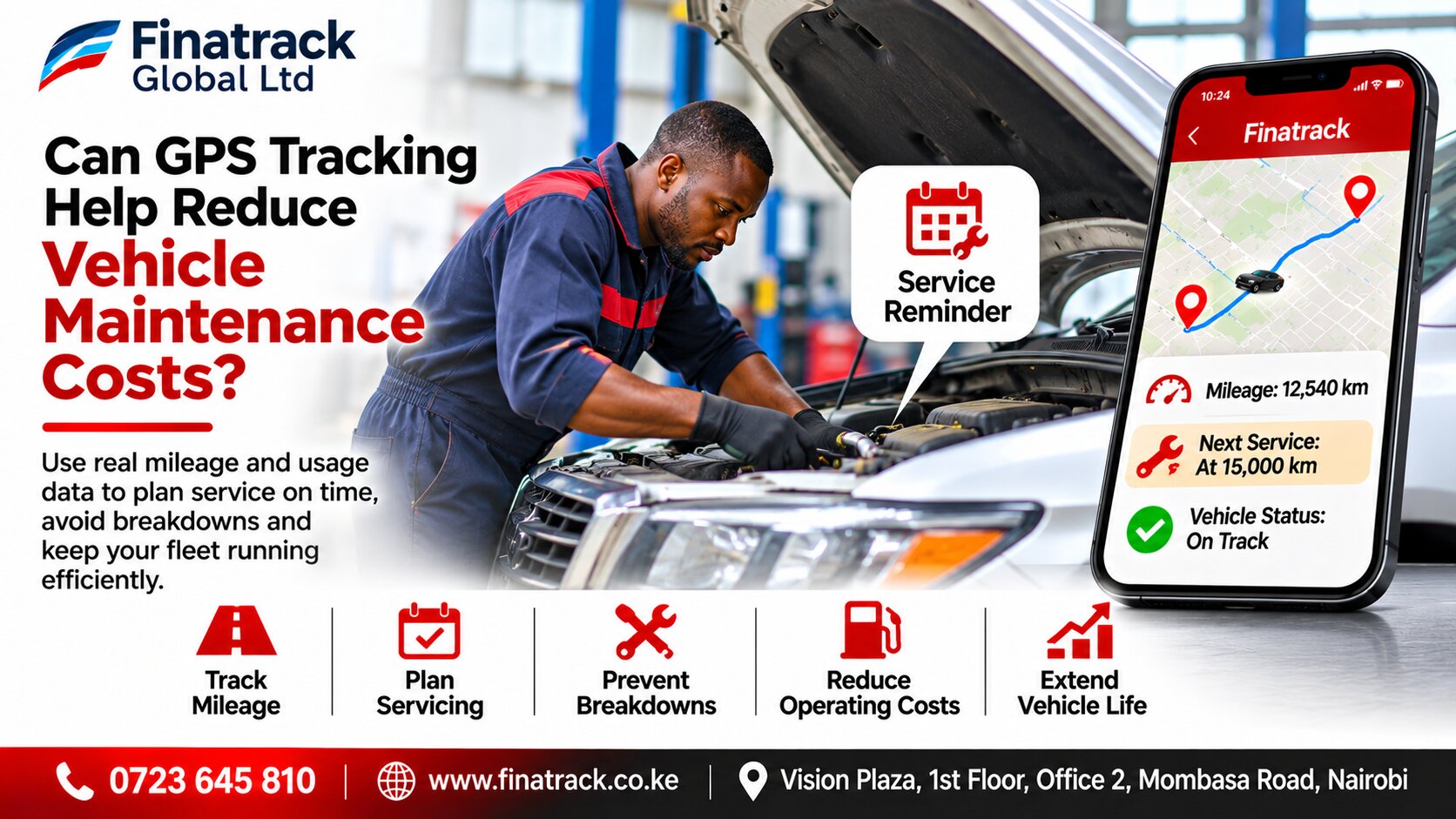
Vehicle maintenance is one of the biggest recurring expenses for businesses that operate fleets and for private motorists who depend heavily on their vehicles. The challenge is that many maintenance problems do not come from one major failure. They build gradually because servicing is delayed, mileage is not tracked properly, vehicles are overused or warning signs are ignored. For businesses with several vehicles, keeping accurate service records can become even more difficult because each vehicle may cover a different distance every week.
GPS tracking can help solve part of this problem by giving vehicle owners and fleet managers better visibility over mileage, routes and vehicle usage. Instead of depending entirely on handwritten records or drivers remembering when a vehicle was last serviced, tracking data can provide a more reliable picture of how much the vehicle has actually been used. This makes it easier to plan servicing, identify excessive mileage and reduce the risk of maintenance being postponed until a costly breakdown occurs.
Why Mileage Matters in Vehicle Maintenance
Most vehicles are serviced based on either time or mileage. A business may plan to service a vehicle every few months or after it covers a particular number of kilometres. The difficulty is that vehicles do not all accumulate mileage at the same rate. One company car may travel only within Nairobi, while another may regularly make long-distance trips and reach its next service interval much sooner.
When mileage records are inaccurate, maintenance schedules become unreliable. A vehicle that is assumed to have covered 8,000 kilometres since its last service may actually have travelled 12,000 kilometres because of additional trips, detours or after-hours use. If the service is delayed, engine oil, filters, tyres, brakes and other components may be used beyond their recommended intervals.
GPS tracking gives managers another way to monitor distance travelled. By reviewing actual vehicle movement over time, businesses can make maintenance decisions based on usage rather than assumptions.
GPS Tracking Can Support Better Service Scheduling
A fleet manager does not need to wait for a driver to report that a vehicle is due for service. If vehicle mileage is being monitored through a tracking system, the business can keep a closer eye on when each vehicle approaches its maintenance threshold.
This is especially useful for larger fleets where service dates can easily be missed. A manager may be responsible for several cars, vans or trucks, each with different mileage and maintenance requirements. By combining GPS mileage information with a maintenance schedule, it becomes easier to identify which vehicles should be booked for servicing first.
The result is a more organised approach to maintenance. Instead of servicing vehicles only after a warning light appears or after a driver complains about a problem, businesses can move toward preventive maintenance.
Preventive Maintenance Can Reduce Expensive Breakdowns
Preventive maintenance is generally less disruptive than emergency repairs. A vehicle that is serviced on time can have worn components identified before they fail completely. Problems with tyres, brakes, fluids, belts or suspension can often be addressed before they become more serious.
For a business, a breakdown creates more costs than the repair bill alone. The vehicle may miss deliveries, delay staff, interrupt customer visits or require emergency towing. A replacement vehicle may also be needed while repairs are being completed.
GPS data does not replace a mechanic, but it can help ensure that vehicles are inspected and serviced at the right time. By monitoring how much a vehicle is being used, businesses can reduce the chance of accidentally pushing it far beyond its planned service interval.
Route History Can Reveal Heavy Vehicle Usage
Two vehicles of the same model may have very different maintenance needs depending on how they are used. A vehicle operating mainly on short urban journeys may experience frequent braking, stop-start traffic and long periods of idling. Another vehicle may cover long highway distances at more consistent speeds.
Route history helps fleet managers understand these differences. If one vehicle spends most of its time in congested urban conditions, it may require closer attention even if its overall mileage appears reasonable. Similarly, a vehicle regularly travelling on rough roads or remote project sites may experience greater wear on tyres, suspension and other components.
The value of GPS tracking is therefore not just in counting kilometres. It also provides context about how and where those kilometres were accumulated.
Tracking Can Help Identify Unauthorised Mileage
Unauthorised vehicle use can increase maintenance costs without management immediately noticing. A company vehicle may be used after working hours, on weekends or for personal journeys. Even if the additional trips appear small, repeated use adds mileage, consumes fuel and brings the next service interval closer.
GPS tracking can help businesses identify these patterns by reviewing route history and vehicle activity outside approved working hours. If a vehicle consistently covers more distance than expected, management can investigate whether the extra mileage is operationally justified.
Reducing unnecessary mileage can lower fuel use, delay wear and extend the useful life of tyres, brakes and other components. In this way, GPS tracking can contribute to maintenance savings even before the vehicle enters a workshop.
Idling and Driving Behaviour Also Affect Maintenance
Maintenance costs are not determined by mileage alone. Driver behaviour also matters. Harsh acceleration, excessive braking, speeding and long periods of idling can all increase wear and fuel consumption.
A vehicle may cover relatively few kilometres but still experience significant stress if it is operated aggressively. For example, repeated harsh braking can shorten brake life, while excessive speeding can increase tyre wear and mechanical strain. Long idling periods also add engine running time without adding distance to the odometer.
Tracking systems that provide speed and vehicle activity information can therefore help fleet managers identify behaviours that may be increasing maintenance costs. Driver coaching based on real operational data can help reduce unnecessary wear over time.
GPS Data Can Improve Maintenance Records
Businesses often struggle with fragmented maintenance records. Service information may be stored in notebooks, spreadsheets, receipts or driver files, making it difficult to understand the full history of a vehicle.
GPS tracking can provide a consistent usage record that complements workshop invoices and service documents. A manager can compare maintenance dates with actual mileage and vehicle activity to build a clearer picture of each vehicle’s operating history.
This becomes especially useful when deciding whether to repair or replace an ageing vehicle. A vehicle that has accumulated high mileage, frequent repairs and heavy operational use may no longer be economical to keep. Better records make these decisions easier to justify.
How GPS Tracking Helps Fleet Budgeting
Maintenance budgets are more accurate when they are based on real usage. If a business knows how quickly each vehicle is accumulating mileage, it can estimate when tyres, servicing and other maintenance expenses are likely to occur.
This helps reduce surprises. Instead of several vehicles unexpectedly becoming due for service in the same month, the fleet manager can plan maintenance schedules and spread costs more effectively.
The information can also help compare vehicles. If one vehicle consistently costs more to maintain despite performing similar work, management may need to investigate its condition, driver behaviour or suitability for the task.
Over time, these insights can support better purchasing and fleet replacement decisions.
GPS Tracking Is Not a Replacement for Mechanical Inspection
GPS tracking is a useful management tool, but it cannot diagnose every mechanical problem. A vehicle may develop an issue even when its mileage is low, and some faults require immediate inspection regardless of the normal maintenance schedule.
Drivers should still report unusual sounds, warning lights, vibration, overheating or changes in vehicle performance. Regular physical inspections remain important, especially for tyres, brakes, fluids and safety systems.
The best approach is to combine GPS usage data with professional maintenance. Tracking helps businesses know when and how the vehicle is being used, while mechanics determine its actual mechanical condition.
Who Can Benefit Most From GPS-Based Maintenance Planning?
Any organisation operating several vehicles can benefit from better maintenance visibility. Logistics companies, contractors, delivery businesses, SACCOs, staff transport providers and sales organisations may all have vehicles accumulating mileage at different rates.
The benefit is especially significant for fleets where vehicles operate away from the main office. Managers may not see each vehicle every day, making it easy for service intervals to be missed. Tracking data gives them a way to monitor usage remotely and plan maintenance before problems become urgent.
Private motorists who cover high annual mileage can also benefit. If a vehicle is used frequently for work, travel or family transport, tracking records can provide another way to understand how quickly service intervals are approaching.
Finatrack GPS Tracking for Better Vehicle Management
Finatrack Global Ltd provides GPS tracking solutions that help businesses and private motorists monitor vehicle movement, route history, mileage and other important usage information. These features can support better maintenance planning by giving vehicle owners a clearer picture of how much their vehicles are actually being used.
The Finatrack Wired GPS Tracker is available at KSh 15,000 one-off with no annual subscription, or customers can choose KSh 10,000 installation plus KSh 3,000 annual subscription. Finatrack also provides wireless tracking devices, fuel monitoring systems, AI dashcams, backup trackers, motorcycle trackers and advanced car alarm systems.
For businesses, combining tracking data with a structured maintenance programme can help reduce unexpected downtime and improve the long-term management of fleet assets.
Better Maintenance Starts With Knowing How Your Vehicle Is Used
A vehicle cannot be maintained properly if its actual usage is unclear. Mileage, routes, idling and driving behaviour all influence how quickly components wear and when servicing should be carried out.
GPS tracking gives vehicle owners and fleet managers better visibility over these factors. It does not replace professional servicing, but it can help ensure that maintenance decisions are made using reliable information rather than estimates.
For enquiries or installation, contact Finatrack Global Ltd on 0723 645 810, visit www.finatrack.co.ke, or visit our office at Vision Plaza, 1st Floor, Office 2, Mombasa Road, Nairobi.
A GPS tracker can do more than show you where your vehicle is. Used properly, the information it provides can also help you understand when that vehicle needs attention before a small maintenance issue becomes an expensive problem.