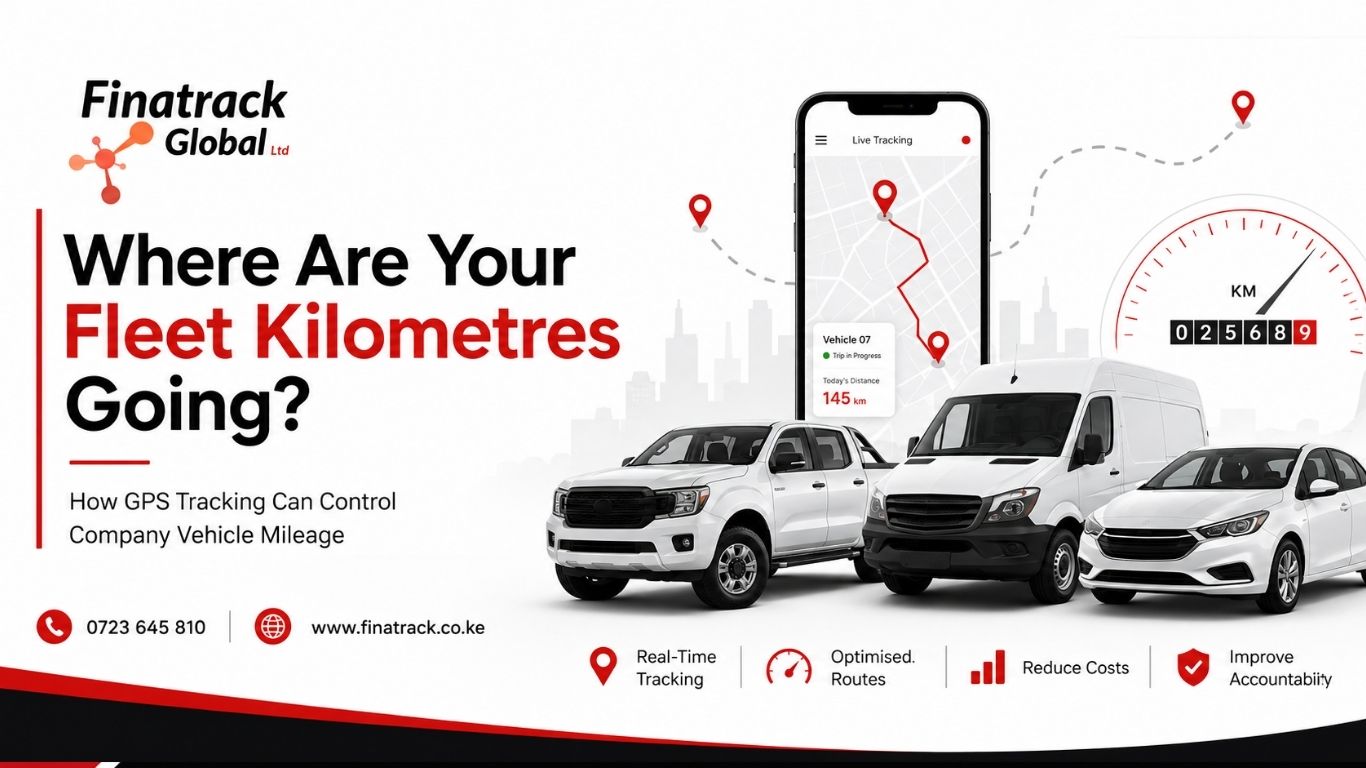
A company may budget carefully for fuel while paying much less attention to mileage. Yet every unnecessary kilometre also consumes tyres, engine life, servicing capacity and eventual resale value. For businesses managing several vehicles, controlling mileage can therefore be just as important as controlling the fuel bill.
GPS tracking gives management a clearer record of how company kilometres are generated. Instead of relying entirely on odometer readings taken at the end of the month, managers can review journeys throughout the period. This helps distinguish productive mileage from movement that may not be supporting the business.
Sales vehicles provide a common example. A representative may legitimately travel widely while visiting customers, but poorly organised appointments can cause unnecessary back-and-forth movement across Nairobi. Trip history can reveal whether routes could be planned more efficiently.
After-hours mileage can also increase costs. A company vehicle assigned to an employee may continue travelling during evenings and weekends without a clear business reason. These journeys consume fuel while also bringing the next service, tyre change and replacement date closer.
Clear vehicle-use policies should therefore work alongside tracking. Employees need to understand whether personal journeys are allowed and how exceptions should be authorised. GPS data can support that policy without requiring management to assume every unusual journey is misuse.
Mileage information is also important for maintenance. Two vehicles purchased on the same date may have completely different service requirements if one travels 4,000 kilometres per month and another travels only 1,500. Treating them identically can result in poor maintenance planning.
Vehicle replacement decisions can benefit from the same information. A heavily utilised company car may age operationally much faster than another vehicle of the same model and registration year. Historical mileage records provide useful context when management decides whether to retain, rotate or replace an asset.
Businesses should also compare mileage across departments. One branch may be accumulating far more distance because of the territory it serves, while another may be generating excessive movement because routes are poorly managed. Tracking turns these differences into information that management can investigate.
Unnecessary mileage can also result from poor dispatching. A technician may be sent from the office to a customer even though another field vehicle is already nearby. Real-time location helps businesses identify the nearest suitable unit and reduce avoidable travel.
The financial effect becomes more visible as fleets grow. Saving ten kilometres on one vehicle may appear insignificant, but saving the same distance across twenty vehicles every working day creates a completely different result. Fleet cost control is often built from many small operational improvements rather than one dramatic change.
Finatrack Global Ltd provides GPS tracking and fleet-management solutions that can help Kenyan businesses understand trip activity, mileage and vehicle utilisation. Businesses can contact 0723 645 810, visit www.finatrack.co.ke, or visit Vision Plaza, 1st Floor, Office 2, Mombasa Road, Nairobi.
Mileage is not simply a number on the dashboard. It is a running record of how quickly your business is consuming fuel, maintenance and vehicle value, which makes understanding where those kilometres come from an important part of fleet management.