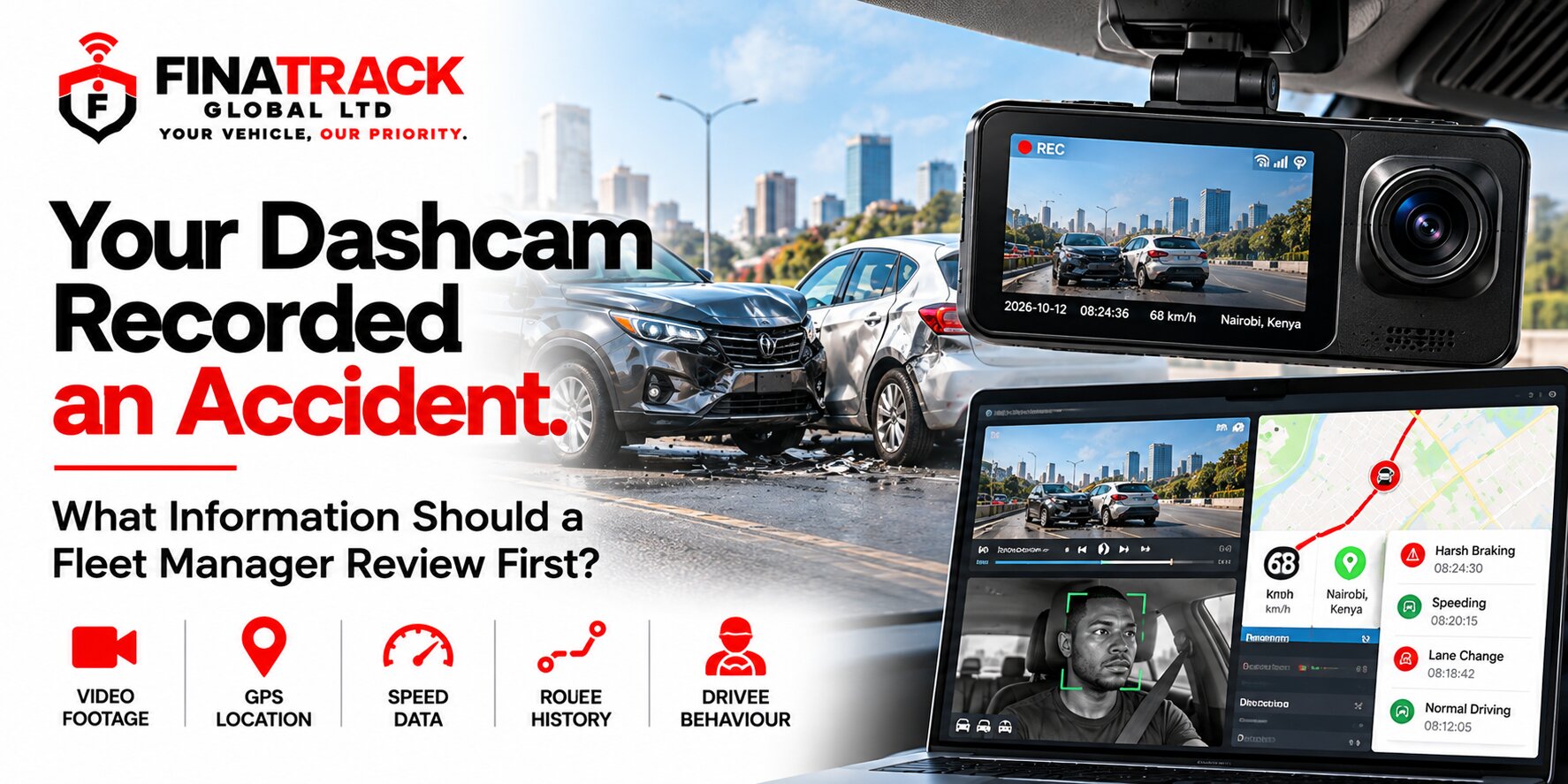
When an accident happens, the first reaction is often to watch the dashcam footage immediately and try to determine who was at fault. For fleet managers, however, video should be treated as one part of a wider investigation rather than the entire story. A modern dashcam can provide useful evidence about what happened before, during and after an incident, but the most valuable information comes from reviewing the footage together with time, location, speed and other available telematics data.
The first thing to confirm is the date, time and location of the incident. A dashcam clip becomes much more useful when management can match it with the vehicle’s GPS history and trip records. This helps establish where the vehicle was travelling, whether it was on an authorised route and what happened immediately before the collision. Accurate timing also makes it easier to compare the footage with driver reports, police records, customer information or other available evidence.
The next area to review is the road-facing video itself. Fleet managers should look at traffic movement, lane position, road conditions, junctions, pedestrians and the behaviour of nearby vehicles. The objective should be to understand the sequence of events rather than jump immediately to a conclusion. A vehicle appearing suddenly in front of the camera may look responsible at first glance, but the broader footage may also show whether the company driver had enough time or space to react.
Where the dashcam includes driver monitoring system technology, management can also review what was happening inside the vehicle. Depending on the system, DMS may identify events associated with distraction, prolonged eye closure or other behaviours that require attention. This can be particularly useful when there is uncertainty about whether the driver was fully attentive in the moments before the accident. AI-generated alerts should still be reviewed carefully because they support investigation rather than automatically proving misconduct.
Speed information can add another important layer. If the tracking system records vehicle speed, fleet managers can compare that information with the video and road environment. A collision on a busy urban road may need to be interpreted differently from one on an open highway. Speed records do not automatically determine liability, but they can help management understand whether the vehicle was moving within the expected range and whether braking or evasive action occurred before impact.
The investigation should also consider route history and driving events surrounding the incident. Harsh braking, sudden acceleration or other recorded events may help show how the vehicle reacted immediately before the crash. Looking at only the final few seconds of video can sometimes miss important context. Reviewing the journey leading up to the accident gives management a better understanding of whether the event was sudden or whether risky behaviour had been developing over time.
Dashcam footage can also support driver coaching after the incident. If the video shows poor following distance, distraction, aggressive driving or delayed reactions, management can use the event as a practical training example. The goal should not be simply to punish the driver, but to identify patterns that can be corrected before they contribute to another accident. For fleets, the long-term value of video telematics comes from improving behaviour, not only storing footage after something has already gone wrong.
Finatrack Global Ltd provides AI dashcam solutions with DMS and ADAS capabilities for private motorists and commercial fleets in Kenya. Finatrack’s AI Dashcam is available at KES 35,000, with professional installation and support for businesses that want better visibility into driver behaviour, road incidents and fleet safety. For enquiries, call or WhatsApp 0723 645 810 or visit www.finatrack.co.ke. When an accident happens, dashcam footage can provide valuable context, but the strongest investigation comes from reviewing video together with GPS location, speed, trip history and driver behaviour data.