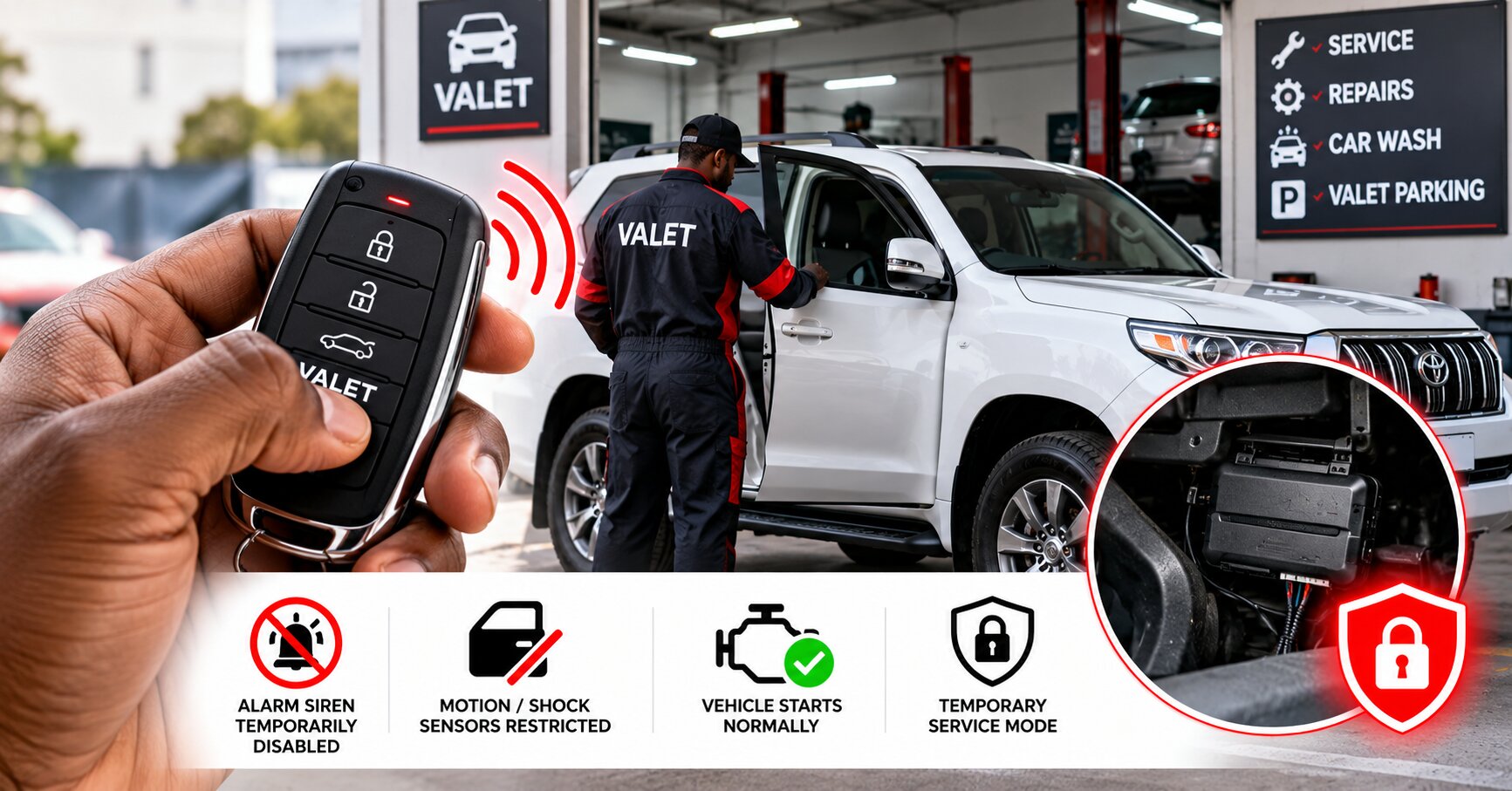
You hand your car keys to a mechanic, car-wash attendant or valet driver, but you do not necessarily want every security function on the vehicle operating normally while someone else is handling it. This is where car alarm valet mode can be useful. Depending on the alarm system installed, valet mode temporarily changes or disables selected alarm functions while still allowing the vehicle to be used normally.
Valet mode is designed for situations where another authorised person needs temporary access to the vehicle. For example, a mechanic may need to start the engine several times during repairs, while a car-wash attendant may repeatedly open doors or move the vehicle short distances. Without valet mode, certain alarm or immobilisation functions could trigger unnecessarily and interfere with the work being carried out.
The exact behaviour depends on the car alarm system installed. Some alarms may temporarily disable automatic arming or certain sensors, while others may allow the vehicle to start without activating selected security features. This does not mean the alarm has been permanently switched off. Once the vehicle is returned to the owner, the system can normally be restored to its usual security mode according to the manufacturer’s procedure.
Valet mode can be particularly helpful with alarms that include a hidden cut-off or immobilisation feature. If the system is designed to prevent the engine from starting under certain conditions, leaving it fully active during workshop repairs may create confusion for a technician who does not know the security setup. Temporarily placing the alarm in the correct service mode allows legitimate work to continue without requiring the owner to remove or bypass the security installation.
Vehicle owners should, however, remember that valet mode usually means reduced security while it is active. It should not remain enabled after the vehicle leaves the garage, car wash or valet parking area. Once you receive the vehicle back, confirm that the alarm has returned to normal operation by testing the remote, door locking, siren and other relevant functions. If the system does not react as expected, have it checked before assuming full protection has been restored.
This is also a good time to confirm that your GPS tracker is still reporting normally. Workshop activity can sometimes involve battery disconnection, dashboard work or electrical repairs that may affect tracking equipment. After collecting the car, check the latest GPS location, ignition status and recent update time. The alarm and tracker perform different roles, so both systems should be confirmed after significant electrical work.
Owners should avoid experimenting with random button combinations when they are unsure how to activate or deactivate valet mode. Alarm systems use different procedures, and incorrect settings may leave the owner believing the vehicle is fully protected when certain functions are still disabled. The safest approach is to follow the specific alarm instructions or contact the installer for guidance.
Finatrack Global Ltd provides professionally installed car alarm systems, advanced alarms with hidden cut-off and GPS tracking solutions for motorists in Kenya. Finatrack’s standard car alarm is available from KES 6,500, while the advanced alarm with hidden cut-off is available at KES 7,500. The wired GPS tracker and car alarm combination is available at KES 20,000. For installation or support, call or WhatsApp 0723 645 810 or visit www.finatrack.co.ke. Valet mode can make temporary vehicle access easier, but the most important step is remembering to return your security system to normal once the vehicle is back in your hands.