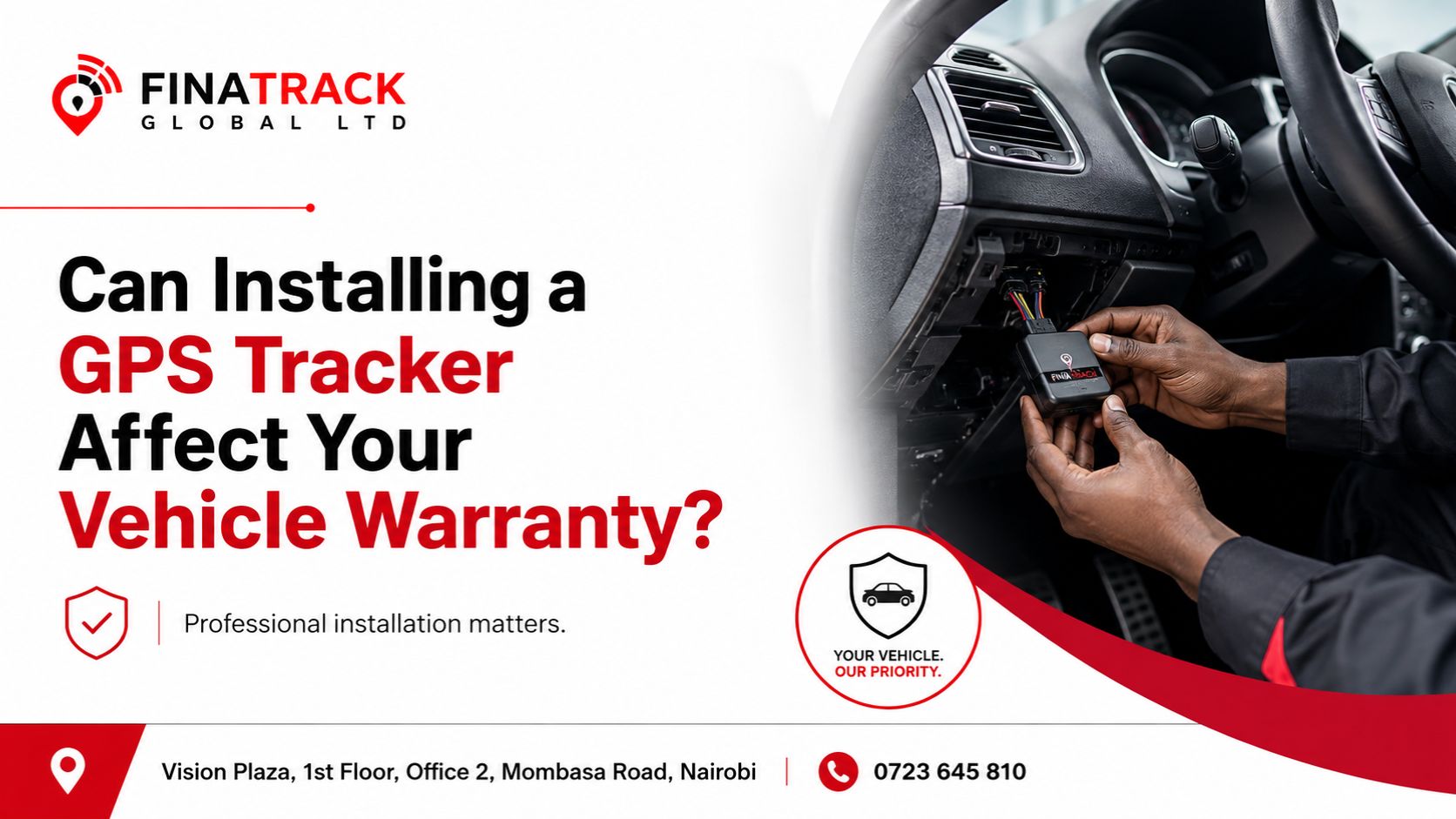
Buying a new or relatively new vehicle often comes with the reassurance of a manufacturer or dealer warranty. When the owner later decides to install a GPS tracker, alarm, dashcam or immobiliser, one concern frequently arises: could modifying the vehicle’s electrical system affect that warranty?
The answer is not a simple yes or no. Installing a GPS tracker does not automatically mean that a vehicle’s entire warranty becomes invalid, but an improper installation or unauthorised modification can create warranty complications if it damages or interferes with the vehicle. The safest approach is to understand the vehicle’s warranty conditions and make sure any aftermarket equipment is installed professionally.
Vehicle warranties are generally designed to cover faults that arise from manufacturing defects within specified conditions. For example, Toyota Kenya material for some new vehicles describes warranty coverage for defects caused by manufacturing faults and separately provides warranty coverage for Toyota genuine accessories. This illustrates an important distinction: manufacturer warranty coverage normally relates to faults attributable to the vehicle or approved components rather than every problem that may occur after an aftermarket modification.
A GPS tracker is an aftermarket electrical accessory in many installations. Depending on the system selected, a technician may need to connect the device to permanent power, ground and an ignition signal. Some security installations may also include additional wiring for remote immobilisation.
The quality of those connections matters.Modern vehicles contain sophisticated electronic systems controlling everything from engine management and airbags to central locking, entertainment systems and driver-assistance functions. A careless technician who connects equipment to the wrong circuit can potentially create electrical faults that did not exist before the installation.
This is where warranty disputes can arise. If a vehicle develops an electrical problem and the dealer determines that poorly installed aftermarket equipment caused the damage, the resulting repair may not be treated in the same way as a genuine manufacturing defect. The exact outcome depends on the warranty terms, the vehicle manufacturer, the dealer and the circumstances of the fault.
That does not mean every electrical problem occurring after tracker installation was caused by the tracker. Batteries fail, alternators develop problems, sensors malfunction and factory wiring can develop faults independently of any aftermarket equipment. The important question is whether there is a reasonable technical connection between the modification and the problem being claimed under warranty.
Suppose a new vehicle develops an engine mechanical problem several months after a professionally installed GPS tracker was fitted. If the tracker only uses properly selected power and ignition connections and has no relationship with the failed mechanical component, the existence of the tracker alone does not automatically explain the fault. The warranty assessment should still depend on the manufacturer or dealer’s applicable terms and technical findings.
The situation becomes different if an installer cuts into sensitive wiring, interferes with an electronic control module or creates a short circuit that damages part of the vehicle’s electrical system. In that case, the dealer may reasonably investigate whether the aftermarket installation contributed to the fault.
This is why professional installation matters much more on newer vehicles than many motorists realise.
Modern GPS tracker manufacturers provide detailed installation instructions because the device cannot simply be attached to any wire that happens to carry electricity. Teltonika’s installation guidance recommends selecting a suitable permanent power source, using a proper ground connection, identifying the correct ignition signal and avoiding inappropriate connections to vehicle control units. It also emphasises securing and insulating wiring properly.
A proper installation should therefore begin with identifying the correct electrical points rather than cutting random dashboard wires. Power should remain stable when required, the ground connection should be secure and the ignition signal should correctly represent when the vehicle is switched on.
This becomes particularly important with newer cars that contain complex electronic control systems. Some circuits may remain powered temporarily after the engine is switched off because the vehicle’s computers are still completing their shutdown process. An installer who does not understand this behaviour may select the wrong wire and create unreliable tracker operation.
Professional tracker installation normally involves testing electrical points with appropriate equipment such as a multimeter. Teltonika’s mounting instructions specifically describe locating suitable power, chassis ground and optional ignition connections before checking that the tracker functions correctly and reassembling the dashboard.
The installer should therefore not be learning the vehicle’s electrical system through trial and error.
A poor installation may first reveal itself through small problems. The tracker may repeatedly go offline, ignition status may appear incorrectly or the vehicle battery may begin discharging unexpectedly. These symptoms can indicate that something about the installation or configuration needs attention.
Ignoring them can make matters worse.
Battery drain is one of the concerns frequently associated with GPS tracking. A wired tracker normally remains connected when the vehicle is parked because it needs power to provide security and location functions. Modern trackers are designed to operate with relatively low power consumption, but an incorrect installation or configuration can contribute to excessive battery drain.
A weak vehicle battery can complicate the picture. A car may already have a deteriorating battery before the tracker is installed, then develop starting problems shortly afterwards. Because the tracker is the newest electrical accessory, it may immediately be blamed even when the battery itself was already approaching the end of its useful life.
The reverse can also happen. If a perfectly healthy vehicle begins experiencing electrical problems immediately after an installation, the tracker wiring should be inspected rather than assuming the timing is coincidental.
The correct approach is diagnosis.
A technician can check the battery condition, charging system and current draw while also inspecting the tracker installation. If excessive electrical consumption is linked to the tracking device or installation, the problem should be corrected rather than accepted as normal.
Remote engine immobilisation requires even greater care. Unlike basic GPS tracking, which may only require power and monitoring connections, immobilisation involves interacting with a circuit that affects whether the vehicle can operate.
Professional telematics manufacturers provide specific guidance around such installations. Teltonika’s secure vehicle-disabling documentation, for example, requires appropriate relays and wiring practices while referring installers back to its recommended mounting and electrical procedures.
An immobilisation feature should therefore never be installed by someone who does not understand automotive electrical systems.
Poorly installed immobilisation can create difficult faults. A loose relay connection may cause intermittent starting problems that appear only occasionally, making the vehicle unreliable even though the GPS tracking portion continues to work normally.
For a vehicle still under warranty, unexplained starting or electrical faults can quickly become complicated if aftermarket wiring has been installed carelessly. The dealer may need to inspect both the original vehicle system and the additional equipment before identifying the actual cause.
Vehicle owners can reduce this risk before installation.
The first step is to read the warranty conditions supplied with the vehicle. Do not assume that every manufacturer, dealer or vehicle model has the same policy regarding aftermarket accessories.
If the vehicle is new and the warranty is commercially important, ask the authorised dealer whether there are specific restrictions on installing tracking devices, alarms, dashcams or immobilisers. Getting clarity before installation is much easier than debating responsibility after a fault appears.
This is particularly important for vehicles purchased through authorised dealerships. Some dealers may offer approved accessories or may have preferred installation requirements for vehicles still under warranty.
The owner should explain exactly what is being installed. Asking whether “a tracker” is allowed may not provide enough information because a simple plug-in monitoring device and a tracker with remote engine immobilisation involve very different levels of electrical modification.
The second step is to select a professional tracking company.
A serious installer should understand that maintaining the integrity of the vehicle is just as important as getting a tracking icon to appear on a phone. The installation should use proper wiring methods, insulation, secure connections and appropriate circuit protection.
The tracker should also be mounted securely. Loose equipment moving behind the dashboard can place unnecessary strain on wiring and create rattles or intermittent connections over time.
Professional installation guidance recommends fastening tracker wiring to stable components, keeping it away from moving or heat-producing parts and restoring insulation where factory protection has been disturbed.
The interior of the vehicle should also look normal after installation.
Dashboard trims should fit properly, clips should not be broken and wires should not be hanging below the steering column. A professional installation should be discreet enough that the driver does not regularly interact with the device or wiring.
Customers should be especially cautious with modern vehicles fitted with advanced electronics. Connecting additional equipment directly to control modules or sensitive wiring without understanding the manufacturer’s architecture can create unnecessary risk.
Teltonika’s installation recommendations specifically warn against connecting tracker wiring directly to vehicle board computers or control units in the manner described for its standard installations.
This does not mean advanced vehicles cannot be tracked.
It means the installation method should match the vehicle.
Some modern trackers can obtain selected vehicle information through specialised interfaces designed for that purpose. Those installations require the correct equipment and technical knowledge rather than improvised connections.
The owner’s documentation can also become important if a warranty question later arises. Keep the invoice or installation record showing who fitted the tracker and when the work was completed.
A professional tracking company should be able to identify the equipment installed and provide technical support if a dealer later needs clarification about the installation.
This can help separate facts from assumptions.
If a dealer raises a concern that the GPS tracker may be responsible for a particular electrical problem, the installer can inspect the tracking system and determine whether its wiring is functioning correctly. Where necessary, the tracker can be temporarily isolated during diagnosis.
The goal should be to determine the cause of the fault rather than immediately placing responsibility on either the vehicle manufacturer or the tracking company.
This becomes particularly important when several aftermarket accessories have been installed.
A vehicle may contain a GPS tracker, alarm, dashcam, entertainment system, additional lighting and other equipment installed by different technicians. When the battery begins draining or an electrical circuit starts behaving strangely, identifying the responsible component becomes more difficult.
Using professional installers and maintaining proper documentation makes troubleshooting easier.
Financed vehicles introduce another consideration. Banks and other lenders may require GPS tracking as part of their security conditions, meaning the vehicle owner may need a tracker even while the vehicle remains relatively new.
In such cases, it is sensible to ensure that the tracking installation meets both the lender’s requirements and appropriate technical standards for the vehicle. The fact that tracking is required by a financier does not make installation quality less important.
Corporate fleets face the same issue at a larger scale.
A company purchasing twenty new vehicles may install trackers across the entire fleet almost immediately. If the same poor wiring method is repeated across every vehicle, one installation mistake can become a fleet-wide maintenance problem.
Businesses should therefore establish installation standards from the beginning.
The fleet manager should know which tracker model is being installed, which company is carrying out the work and what functions are being connected. Basic location tracking, ignition monitoring, fuel sensors and immobilisation should not all be treated as identical installations.
A standard installation procedure can also help when vehicles later visit authorised dealers for service.
The service team can understand that approved tracking equipment is present and avoid accidentally disturbing the wiring during unrelated repairs.
Vehicle owners should also tell their tracking provider before major electrical work is carried out where practical. Battery replacement, dashboard removal, wiring repairs or alarm work can disturb an existing tracker even when the technician is not intentionally modifying it.
After the vehicle returns from the workshop, check the tracking application.
Confirm that the tracker is online, the location is updating and ignition status is behaving correctly. If the tracker stopped communicating immediately after workshop work, have the installation checked before assuming the device itself has failed.
If a dealership asks for aftermarket equipment to be removed before diagnosing a warranty fault, the removal should also be handled professionally. Cutting tracker wires and leaving unfinished connections behind can create new electrical problems that confuse the original diagnosis.
A qualified technician should disconnect or remove the device cleanly and restore affected wiring appropriately.
Customers should also understand the difference between a warranty and insurance.
Installing a GPS tracker may support vehicle security and may even be required by some financiers or insurers in certain situations, but that does not mean the tracker becomes part of the manufacturer’s vehicle warranty.
The GPS equipment normally has its own warranty or service terms provided by the tracking company or device supplier.
Vehicle owners should therefore keep both sets of responsibilities clear.
If the GPS tracker itself fails, the tracking provider should address the device according to its service or warranty terms. If a factory-installed vehicle component develops a manufacturing defect, the vehicle warranty process applies according to the manufacturer’s conditions.
Problems become complicated when the two systems interact, which is why professional workmanship is essential.
The question is not simply, “Will a GPS tracker void my warranty?”
A better question is, “How can I install the security equipment I need without unnecessarily interfering with the vehicle?”
The answer begins with choosing the right equipment, understanding the manufacturer’s warranty conditions and ensuring that the installer uses proper automotive electrical practices.
For an older vehicle that is already outside the manufacturer’s warranty period, the warranty concern may be less significant. Installation quality still matters because poor electrical work can damage the vehicle regardless of its age.
For a brand-new vehicle, however, taking a few extra precautions before installation makes sense.
Ask the dealer about warranty conditions. Tell the tracking provider that the vehicle is still under warranty. Avoid unnecessary cutting or modification of sensitive systems. Where possible, use installation methods appropriate to the specific vehicle model.
The same caution applies to hybrid, electric and highly computerised vehicles. These vehicles may contain electrical systems that differ significantly from conventional older cars, and tracking equipment should be installed by technicians familiar with the relevant vehicle architecture.
Owners should not assume that because a technician has installed hundreds of trackers in ordinary petrol and diesel cars, every new vehicle should be wired in exactly the same way.
Professional installation is partly about knowing when the usual method should not be used.
If an electrical fault appears after a tracker has been installed, document what happened. Note when the problem began, what symptoms the vehicle shows and whether anything else was recently repaired or modified.
Allow both the vehicle technician and tracking provider to inspect their respective systems where necessary.
Avoid immediately removing the tracker yourself.
A clean technical diagnosis is more useful than changing several things at once and then trying to determine which change solved the problem.
Vehicle warranties exist to protect customers from covered faults, while GPS tracking exists to provide security and vehicle visibility. There is no reason the two should automatically be in conflict when the tracking equipment is selected and installed appropriately.
The problems normally arise when electrical modifications are made carelessly.
Finatrack Global Ltd provides professionally installed GPS tracking and vehicle-security solutions for private vehicles and commercial fleets in Kenya. Installations can be configured according to the vehicle, required tracking features and security needs, with particular attention to proper wiring and reliable system operation.
Professional installation can be arranged at the customer’s convenient location or at Vision Plaza, 1st Floor, Office 2, Mombasa Road, Nairobi. Vehicle owners seeking GPS tracking installation can contact Finatrack Global Ltd on 0723 645 810 or visit www.finatrack.co.ke.
If your vehicle is still under warranty, do not choose between protecting the warranty and protecting the car.