The price of a GPS tracker should never be judged by the small black box alone. A working vehicle tracking system normally depends on several components operating together, including the tracking hardware, cellular connectivity, GPS or GNSS positioning, a monitoring platform, professional installation, account configuration and technical support. When one part fails, the vehicle owner may still have a device hidden in the car but no reliable way of knowing where the vehicle actually is.
This is why two GPS trackers that appear almost identical in photographs can provide very different ownership experiences. One may be sold as a standalone device that the customer must configure, wire and maintain independently, while another may arrive as part of a professionally managed tracking solution. The question should therefore be less about which box is cheaper and more about what happens after the box enters your vehicle.
A KES 5,000 tracker advertised through an online marketplace may sometimes represent good value for a technically knowledgeable buyer with a simple requirement. The problem begins when a motorist assumes that low hardware cost automatically means they are receiving the same security, support and reliability offered by a professional vehicle tracking installation. In many cases, the two purchases are solving very different problems.
The first difference is installation quality. A wired vehicle tracker has to be connected to an appropriate electrical supply inside the car and, where required, linked to ignition detection or an immobilisation circuit. Poor installation can create intermittent power, incorrect ignition information or a tracker that repeatedly disappears from the monitoring platform.
Modern vehicles contain increasingly complex electronics, and careless aftermarket wiring can create unnecessary problems. A technician should understand which circuits can safely support the tracker and how to make secure connections without unnecessarily interfering with the rest of the vehicle. Installation should therefore be treated as automotive electrical work rather than simply connecting two wires until the device switches on.
This becomes even more important with newer vehicles, hybrids and electric cars. Their electrical architectures can be more sophisticated than those of older conventional cars, and the installer needs to understand the difference between ordinary low voltage accessory circuits and systems that should not be disturbed. Saving a few thousand shillings on installation can quickly become irrelevant if incorrect wiring later creates a difficult electrical fault.
Professional installation also includes testing. A tracker should not merely show a light when power is connected; the technician should confirm that the device is communicating, that the vehicle appears correctly on the platform and that a test journey is recorded normally. Where ignition monitoring is part of the installation, the system should respond correctly when the vehicle starts and stops.
If remote immobilisation is included, the feature also needs to be tested safely under controlled stationary conditions. The customer should understand what the function does, how to use it and when it should not be activated. A feature that appears in an advertisement but was never installed or tested properly provides very little security value.
The second difference is concealment. A vehicle tracker used for security should not be the first aftermarket device somebody sees after removing a dashboard panel. Poorly placed equipment and obvious wiring make it easier for an unauthorised person to identify and disconnect the tracker.
Professional concealment does not mean hiding the unit randomly in the most inaccessible place possible. The tracker still needs suitable communication conditions, reliable power and eventual access for authorised servicing. The installer has to balance discretion with technical performance.
A cheap DIY installation may work perfectly for ordinary monitoring but provide very little resistance to physical discovery. This becomes particularly important for higher value vehicles where a determined thief may deliberately search for tracking equipment. A professional installation should make that search more difficult without revealing unnecessary technical details about placement.
The third difference is the tracking platform. A GPS device only becomes useful to most motorists when its location information reaches an application or website that they can actually use. The quality of that platform can vary dramatically between different tracking solutions.
A professional platform should make basic information easy to understand. The customer should be able to see the vehicle’s latest location, confirm the last update time, review trip history and identify important alerts without struggling through an unfamiliar technical interface. During a theft or security incident, simplicity becomes particularly important.
Some inexpensive devices depend on generic tracking applications operated by third parties. That does not automatically make them unreliable, but the buyer should understand who runs the server, how long the platform is expected to remain available and who provides support when login or connectivity problems occur. A cheap tracker connected to a platform that later disappears can leave the owner with hardware that has very little practical value.
A professionally managed service gives the motorist somebody to contact when something stops working. If the tracker suddenly goes offline, technical support can help investigate whether the problem involves power, network connectivity, account configuration, the SIM service or the device itself. Without that support, the owner may need to diagnose the problem alone.
This becomes especially important because an offline tracker does not explain why it is offline. The vehicle could be in an area with weak mobile coverage, the battery may have been disconnected or a wiring fault could have developed. Technical support helps separate these possibilities before unnecessary parts are replaced.
The fourth difference is cellular connectivity. Most modern vehicle trackers use mobile networks to transmit GPS information to the monitoring server. The SIM arrangement behind the tracker therefore matters just as much as the positioning technology inside it.
A device purchased cheaply online may require the owner to provide and maintain their own SIM card. That can work, but somebody still needs to manage airtime, data, APN configuration and network service. If the SIM runs out of service or becomes inactive, the tracker can remain powered while the vehicle quietly stops reporting.
A professionally managed tracking service can handle connectivity as part of the overall solution depending on the provider. The customer then focuses on using the tracking platform rather than maintaining the telecommunications side of the device. This convenience forms part of what the customer is paying for.
Network technology should also be considered. A tracker built around ageing cellular technology may still work today, but the buyer should think about how long they expect to keep the device. Vehicle tracking equipment can remain installed for many years, making newer network compatibility increasingly relevant.
Simply seeing the words 4G GPS tracker is not enough, however. The hardware should support appropriate network bands and be suitable for the environment where it will operate. A cheap imported device designed for another region may not automatically provide the experience the buyer expects in Kenya.
The fifth difference is security functionality. Some trackers provide little more than location reporting, while others can support ignition information, geofencing, power loss notifications, selected vehicle alerts and remote outputs depending on the installation. Customers should compare actual functionality rather than assuming every GPS tracker has the same features.
A basic location device can be perfectly adequate for somebody whose only requirement is occasionally checking where a vehicle is. Another motorist may specifically require remote immobilisation, ignition alerts and trip history. The correct solution depends on the problem being solved.
This distinction matters when comparing price. A KES 5,000 device that simply transmits location should not be compared directly with a professionally installed tracker that includes immobilisation wiring, platform access, alerts and support. One may be cheaper because it provides a much simpler service.
Remote immobilisation is a good example. The GPS device itself does not magically switch off the engine simply because the tracking application includes a button. The feature normally requires appropriate hardware, vehicle integration and professional installation.
The immobilisation circuit also needs to be installed responsibly. Incorrect wiring can affect vehicle reliability, while inappropriate use can create road safety risk. This is one area where choosing the cheapest installation can create consequences far beyond the cost of the tracker.
The sixth difference is power management. A wired tracker needs a stable electrical supply while consuming as little power as reasonably practical when the vehicle is parked. Poor configuration or installation can contribute to battery concerns, particularly on vehicles that remain unused for extended periods.
Professional installers should consider how the tracker behaves when the vehicle is stationary and whether the hardware supports suitable power-saving modes. Vehicle usage matters as well, because a car driven daily presents a different battery environment from one parked for several weeks.
Some trackers also contain internal backup batteries. These can allow temporary operation after external vehicle power disappears, depending on the device and battery condition. Buyers should confirm whether backup power exists rather than assuming it is standard on every unit.
An internal backup battery eventually ages just like other rechargeable batteries. The tracking provider should therefore be able to advise on device health when the tracker has been installed for several years. A cheap tracker that is simply installed and forgotten may provide little information about the condition of its backup power later.
The seventh difference is alerts and configuration. A tracker may technically support several alerts, but those functions still need to be configured in a useful way. A system that sends constant unnecessary notifications can become almost as ineffective as one that sends none.
The customer should understand which alerts actually matter. Ignition, geofence, overspeed, power disconnection or unexpected movement may be relevant depending on the vehicle and how it is used. The settings should reflect normal operating behaviour rather than activating every option simply because it exists.
This is particularly important for businesses. A fleet manager responsible for twenty vehicles cannot realistically respond to hundreds of meaningless alerts every day. The system should highlight exceptions that deserve attention.
Professional configuration therefore forms part of the service even though the customer cannot physically see it inside the tracker. Two identical pieces of hardware can produce very different results depending on how they have been programmed and installed. The lowest device price rarely reflects this difference.
The eighth difference is technical support after installation. A GPS tracker is not valuable only on the day it is installed. It may need support months or years later after a vehicle battery replacement, workshop repair, subscription issue or change of ownership.
Consider a vehicle that suddenly stops appearing on the tracking platform after electrical work. The mechanic may have disturbed tracker wiring while repairing something unrelated. A professional tracking provider can inspect the system, restore the connection and verify that the device is operating normally again.
A DIY device may require the owner to locate wiring diagrams, contact an overseas seller or replace the unit without knowing whether the hardware was actually faulty. The money saved initially can quickly disappear if troubleshooting becomes difficult.
The same applies when the customer forgets their password or changes phones. A tracking solution involves an account as well as hardware. Local technical support can make routine account issues much easier to resolve.
Businesses have even greater support requirements because trackers may need to be transferred between vehicles. When a company sells one car and purchases another, the provider can assess whether the existing device is worth moving or whether upgrading makes more sense. The vehicle record on the tracking platform should also be updated correctly.
Without good administration, the new vehicle can appear under the old registration number or inherit reports that belong to another asset. This may sound like a small inconvenience until the business urgently needs tracking information during a theft or accident. Professional fleet management requires accurate vehicle identification.
The ninth difference is documentation. A professional GPS installation can provide an installation certificate or related documentation identifying the vehicle and tracking device where applicable. This can be valuable for businesses, lenders, insurers and future technical support.
A device bought online and installed informally may have no equivalent record. The vehicle owner knows that something is hidden inside the car but may not know the device identifier, installation date or exact service arrangement several years later. This becomes particularly problematic when the original installer is no longer available.
Documentation also creates a useful baseline for mileage. Businesses can record the odometer reading when the tracker is installed and compare future movement information with vehicle records. This improves fleet accountability over time.
The tenth difference is accountability for the installation itself. When a professional company supplies and installs the system, there is a clearly identifiable provider responsible for supporting the tracking service. When hardware, SIM, installation and software come from four unrelated sources, identifying where a problem begins can become difficult.
The hardware seller may blame the SIM, the mobile provider may blame the tracker and the installer may blame the application. The vehicle owner becomes the person coordinating the entire technical investigation. A managed solution reduces this fragmentation.
This does not mean every professionally installed tracker is automatically excellent. Vehicle owners should still compare providers, ask questions and confirm what is included. Professional branding alone is not a substitute for good service.
Motorists should ask whether the company provides technical support, whether the tracking platform can be demonstrated and whether the installer understands the vehicle. They should also confirm any ongoing service charges, warranty terms and what happens if the tracker develops a fault.
Price transparency matters. The customer should know whether the quoted amount covers only installation or whether there are annual or monthly service charges. A low initial price followed by unexpected recurring fees can become more expensive than a solution that was clearly priced from the beginning.
The opposite is also true. A higher installation price does not automatically mean there will never be future costs. Tracking services may require connectivity, server access or maintenance depending on how the provider structures the solution. Customers should compare total ownership cost rather than today’s invoice alone.
A cheap tracker can also become expensive through false confidence. The motorist installs the device, sees the car appear on the map once and assumes the vehicle is protected permanently. Months later, the SIM has stopped communicating or the wiring has failed, but nobody notices because the owner rarely checks the application.
The system then fails at the exact moment it is needed. Discovering that the last GPS update was three months ago after a car has been stolen is a far more serious problem than paying more for a properly maintained service from the beginning.
Whatever tracker is installed, owners should check it periodically. Open the application, confirm the last update is recent and review one recent journey. This simple habit protects against both cheap-device failures and problems affecting premium tracking systems.
The same check should be performed after vehicle battery replacement. Tracker wiring can be disturbed even where installation quality was originally excellent. Professional support makes it easier to inspect the system and restore functionality when necessary.
A second security consideration is backup tracking. Higher-value vehicles should not necessarily depend entirely on one wired GPS unit, regardless of how much that primary tracker costs. A determined thief may eventually locate and disconnect professional equipment too.
An independent wireless tracker or tracking tag can create another layer. If the wired tracker loses vehicle power, the backup device may continue operating according to its own battery and communication method. The purpose is redundancy rather than replacing the primary tracker.
This makes the cheapest-device comparison even less useful for high-risk vehicles. The security question becomes how several layers work together rather than which single tracker costs the least. Vehicle value and risk should determine the appropriate configuration.
Car alarms and hidden immobilisation can strengthen the same strategy. An alarm attempts to discourage intrusion, the immobilisation layer makes unauthorised operation more difficult and GPS provides visibility if movement occurs. No single component needs to carry the entire security burden.
Motorists should also consider where the car is normally parked. A vehicle kept in a secure residential compound may have a different risk profile from one parked on public streets overnight. Commercial vehicles and high-value SUVs can require stronger protection simply because the financial consequences of theft are greater.
Businesses face an additional question: how much money can poor tracking data cost operationally? Fleet management depends on reliable trip history, mileage and vehicle status. A tracker that repeatedly loses journeys can distort reports and make the entire monitoring system less useful.
A company trying to control after-hours vehicle use needs reliable movement records. A fleet manager managing servicing needs accurate mileage, while a dispatcher needs current location information. The value of professional tracking extends far beyond theft recovery when the system is used every working day.
This is why the cheapest tracker can sometimes be the most expensive choice for a business. If managers cannot trust the data, they return to calling drivers, checking logbooks and estimating mileage manually. The company has paid for tracking without actually gaining the operational benefits of telematics.
Small fleets can experience this problem just as easily as large ones. Three company vehicles already create fuel, mileage, maintenance and accountability issues. Reliable tracking can give the business owner much greater visibility without needing a dedicated fleet department.
The right system can also grow with the business. A company may begin with three tracked cars and eventually operate fifteen vehicles. A professional platform capable of managing multiple units provides continuity as the organisation expands.
A collection of unrelated cheap trackers can become difficult to manage as the fleet grows. Different applications, SIM cards and login credentials create unnecessary complexity. Standardising equipment and platform access can become valuable even before the business reaches a large fleet size.
Vehicle security should also consider data protection and account access. The tracking platform contains sensitive information about where the car travels and where it regularly parks. Cheap hardware does not necessarily mean insecure software, but customers should understand who operates the service and who can access the data.
Businesses should control which employees can see fleet location information. Former staff should not continue accessing the platform simply because everybody shared one password. A professional tracking arrangement should support sensible account management.
Private owners need the same basic discipline. Login details should not be shared casually with mechanics, friends or previous drivers. The tracker is partly a digital security system, making account security just as important as the physical installation.
Used-car buyers should be particularly careful when inheriting an existing tracker. The previous owner may still know the login credentials or control the tracking account. Installing a new professional system or formally changing account ownership can provide a cleaner security reset.
Customers should also consider what happens when the vehicle is eventually sold. A professionally installed tracker may be removed and transferred to another vehicle if the hardware is still suitable, or the tracking arrangement may be handed over properly to the buyer. Technical support can guide that transition.
An undocumented DIY installation may simply be forgotten inside the old vehicle. The previous owner may accidentally retain access, creating an obvious privacy concern. Proper tracking administration should follow changes in vehicle ownership.
Another misleading comparison involves device appearance. Many GPS trackers are small black plastic boxes, making inexpensive and professional hardware look almost identical from the outside. The differences are often found in the internal modem, GNSS receiver, power management, firmware, memory and quality control.
Customers cannot evaluate all of these factors from a marketplace photograph. This is why provider reputation, technical support and warranty matter. The purchaser is relying partly on the company supplying the system to select appropriate equipment.
A device specification should still be available when requested. Customers interested in 4G compatibility, backup batteries or specific features should be able to ask what hardware is being installed. Professional service should not require the customer to remain completely uninformed.
The same applies to warranties. A cheap imported tracker may have a manufacturer warranty that is difficult to use from Kenya because returning the device costs time and money. A local provider can often offer a clearer process for diagnosing and resolving equipment problems, depending on its warranty terms.
Customers should ask what happens when hardware fails. Will the provider inspect it, repair the installation or replace the device according to applicable warranty conditions? Knowing the answer before purchase is better than discovering it after the vehicle has been offline for a week.
Motorists also need to distinguish between tracking price and security value. A tracker does not become better simply because it costs more, and an inexpensive device does not automatically mean poor quality. The key is whether the complete solution performs reliably for the owner’s requirement.
Someone tracking a low-risk utility vehicle periodically may be completely satisfied with a basic device. A motorist protecting a high-value SUV may reasonably want professional installation, immobilisation, alerts, backup tracking and dedicated support. Comparing the two purchases only by hardware price is therefore meaningless.
The right question becomes: what happens when something goes wrong? If the vehicle disappears tonight, can you confidently open the application and see a recent position? If the tracker goes offline tomorrow, do you know who to call?
If the vehicle battery is replaced next month, can somebody verify the tracker returned online? If you forget the password in a year, can the account be recovered? These practical questions reveal much more about the value of the system than the initial price tag.
For businesses, another question is whether management can produce reliable reports after twelve months. Can the company review trip history, mileage and vehicle activity without manually rebuilding information from driver records? A professional tracking system should continue creating value long after installation day.
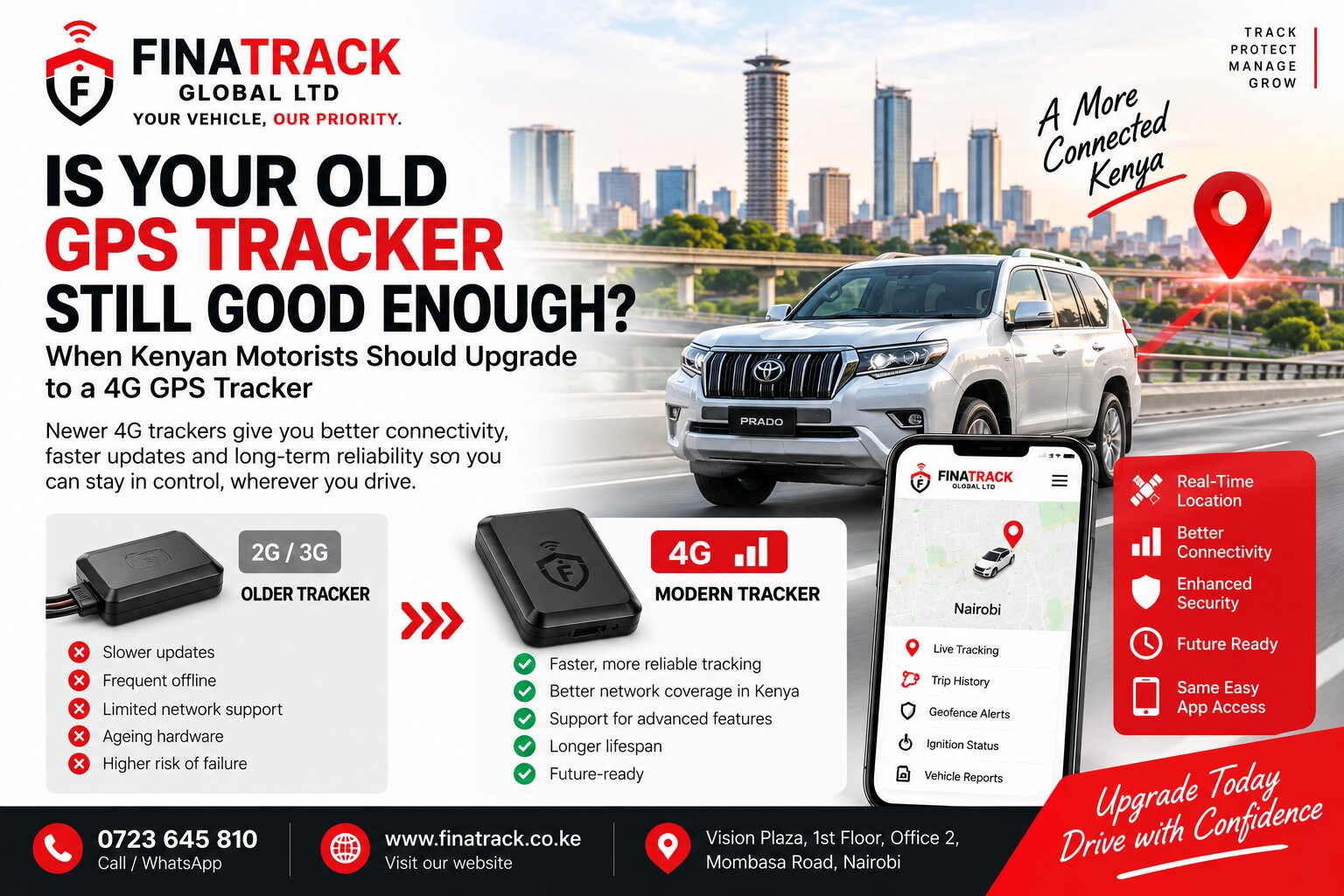
Finatrack Global Ltd provides professionally installed GPS tracking solutions for private motorists and businesses in Kenya. Finatrack’s wired GPS tracking solution is available at KES 15,000, with professional installation and access to vehicle tracking functionality designed to provide ongoing monitoring rather than simply supplying a standalone device.
Customers can also discuss wireless backup tracking, tracking tags, alarms and other vehicle-security layers where their risk requires more than one form of protection. The objective should be selecting the right security configuration for the vehicle rather than purchasing a device only because the advertised price is low.
Professional installation can be arranged at the customer’s convenient location or through Finatrack Global Ltd at Vision Plaza, 1st Floor, Office 2, Mombasa Road, Nairobi. Motorists and fleet operators can contact 0723 645 810 or visit www.finatrack.co.ke for GPS tracking and vehicle-security enquiries.
A KES 5,000 tracker and a KES 15,000 professional tracking installation may both legitimately be called GPS trackers, but that does not mean they represent the same purchase. Hardware cost is only one part of vehicle tracking; installation, connectivity, platform reliability, configuration, support and long-term service determine whether the system is still useful when the vehicle owner actually needs it. Choosing on price alone can save money today, but choosing on total security value is what protects the vehicle tomorrow.