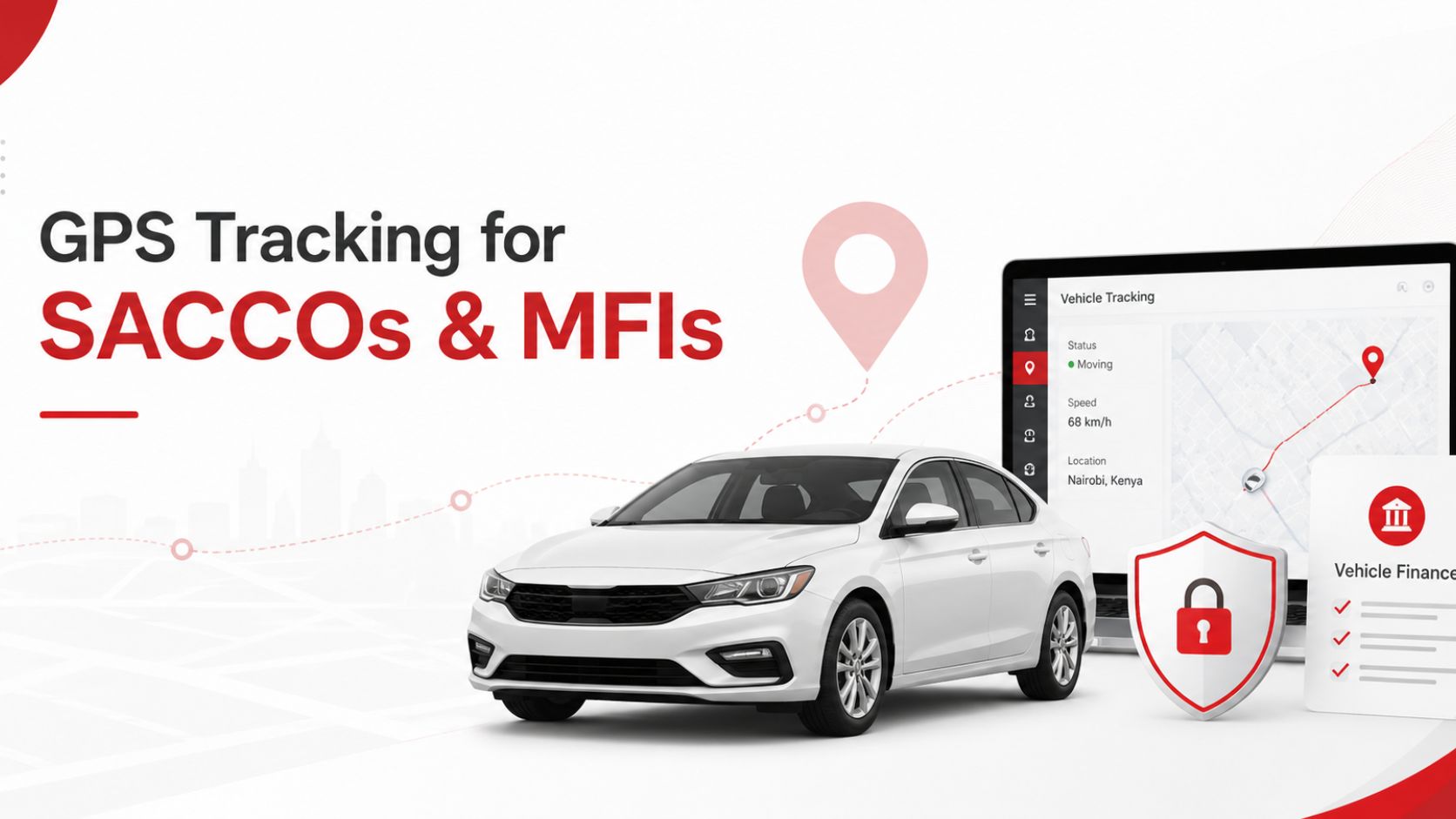
Vehicle financing can open the door to car ownership, business expansion and income generation for borrowers who may not be able to purchase vehicles outright. For SACCOs and microfinance institutions, however, financing a vehicle also creates a distinctive credit risk because the asset securing the loan is mobile, depreciates over time and can potentially be moved far from the location originally declared by the borrower.
This is one reason GPS tracking has become an important risk-management tool in vehicle finance. A professionally installed tracking system can give an authorised lender greater visibility over a financed asset while also providing security benefits to the borrower. When appropriately structured within the financing agreement, tracking can support asset protection, theft response and portfolio management without replacing the legal processes that govern enforcement of secured lending.
The underlying risk is straightforward. A lender may finance a substantial percentage of a vehicle’s purchase price and recover that money through repayments made over several months or years. During that period, the institution remains financially exposed if the vehicle is stolen, deliberately concealed, transferred improperly or otherwise becomes difficult to locate.
Kenya’s Movable Property Security Rights Act provides a framework for the use of movable property as collateral for credit facilities, while the associated regulations expressly recognise motor vehicles as a category of collateral. This reflects the wider principle that vehicles can form part of the security supporting a lending arrangement.
For SACCOs, vehicle financing forms part of a wider credit environment in which member funds must be managed prudently. The SACCO Societies Regulatory Authority describes SACCOs as institutions focused on mobilising member funds and providing credit, while SASRA remains the principal government regulator responsible for supervising regulated SACCO societies in Kenya.
A GPS tracking system can support that credit function by improving visibility over financed vehicles. Depending on the equipment installed, an authorised user may be able to see the vehicle’s current location, review previous trips, monitor ignition activity and receive alerts when the asset moves into or outside specified geographical areas.
For lenders, this information can become particularly valuable when managing a portfolio containing hundreds or thousands of financed vehicles. Without tracking technology, establishing the location of each vehicle would depend heavily on borrower communication, physical inspection and periodic documentation. A digital tracking platform can provide another layer of information that helps the institution monitor assets more efficiently.
The technology should not, however, be confused with ownership or enforcement rights. Knowing where a financed vehicle is located does not automatically give a lender the right to seize it immediately. Where default occurs, the institution must still follow the financing agreement and applicable law before exercising enforcement rights.
This distinction is important because Kenyan courts continue to deal with disputes involving enforcement against vehicles used as security. In a 2025 High Court decision involving a secured motor vehicle, the court referred to provisions of the Movable Property Security Rights Act requiring written notice of default before a secured creditor proceeds with enforcement measures such as taking possession of collateral.
GPS information should therefore be viewed as a risk-management and asset-location tool rather than as a substitute for due process.
One of the strongest arguments for tracking financed vehicles is theft protection. A borrower and lender share a common interest in ensuring that the financed asset does not disappear. If the vehicle is stolen while a substantial loan balance remains outstanding, both parties may face significant financial and administrative consequences.
A professionally installed GPS tracking system can provide useful location information during such an incident. Where the tracker remains active, the vehicle’s movement can be shared with authorised recovery personnel and law enforcement agencies, improving the amount of information available during the search.
This benefit can be particularly important for SACCOs financing commercial vehicles. A member may use a financed car, taxi, van, truck or motorcycle to generate the income required to repay the loan. If that asset is stolen, the borrower may lose both the vehicle and the ability to continue generating income, increasing the likelihood of loan distress.
Vehicle tracking therefore protects more than the lender’s security interest. It can also protect the income-producing asset on which the borrower depends.
Another benefit is the ability to create geofences. A geofence is a virtual geographical boundary configured within a tracking platform. When a vehicle enters or leaves that area, the system can generate an alert depending on the configuration.
For an institution financing vehicles that are expected to operate within a particular region, geofencing can provide useful information when an asset begins moving outside its normal operating territory. Such an alert should not automatically be interpreted as misconduct, because legitimate travel may occur, but it can create an early signal that deserves attention.
Trip history can provide similar value. Historical tracking information may show routes travelled, locations visited and periods when the vehicle was in use. For lenders, these records can help provide context when investigating an asset that has become difficult to locate.
The value increases further when several financed vehicles can be managed from one dashboard. Rather than treating each installation as an isolated tracker, institutions can structure their portfolio around a central asset-monitoring system where authorised administrators can view vehicle status and identify devices that have stopped reporting.
Offline vehicles deserve particular attention. A tracking device may stop communicating because of poor network coverage, a power problem, technical failure or deliberate interference. Fleet-style monitoring allows the lender or tracking provider to identify repeated or prolonged communication failures and investigate the underlying cause.
Installation quality is therefore critical. A financed vehicle tracker should not simply be placed inside the dashboard and forgotten. The device should be professionally integrated into the vehicle, tested and confirmed to be communicating with the tracking platform before the installation is considered complete.
Documentation is equally important. A lender should be able to establish that the correct tracking device was installed in the correct vehicle. A professional installation certificate can help link the vehicle registration number, chassis or VIN, tracking device identifier, installation date and customer information to the relevant financing account.
For SACCOs and microfinance institutions managing many assets, maintaining a central installation register can provide even greater control. Such a register can record the borrower, vehicle registration number, chassis number, tracking device number, installation date, service status and any later device replacement or transfer.
This can become particularly useful where a vehicle changes ownership, is repossessed, is refinanced or exits the institution’s portfolio. Tracking access and records should be updated rather than allowing outdated devices to remain linked to former borrowers or inactive accounts.
Remote immobilisation is another capability sometimes associated with financed-vehicle tracking. A properly configured wired GPS tracker may support a controlled command that prevents the vehicle from being restarted under appropriate conditions.
For lenders, this can appear attractive as an additional asset-protection tool, but it requires careful governance. Immobilisation should never be treated as an informal substitute for lawful recovery procedures, and it should not be used in a manner that creates a road-safety risk.
An institution considering such functionality should therefore establish clear written procedures defining who is authorised to approve immobilisation, under what circumstances it may be used and how the action relates to the underlying finance agreement and applicable legal requirements.
The same discipline should apply to access to tracking information. A SACCO loan officer does not necessarily need unrestricted access to the live location of every financed vehicle. Institutions should determine which roles genuinely require access and apply appropriate controls.
Location information can constitute personal data under Kenya’s data protection framework. The Office of the Data Protection Commissioner identifies location data as information capable of relating to an identifiable individual, while its 2026 transport-sector guidance addresses the processing of GPS and fleet-management information within the transport environment.
This creates responsibilities for lenders and tracking providers.
Borrowers should understand that a tracking device has been installed and why the information is being collected. The finance agreement or related documentation should clearly explain the purpose of tracking, the categories of information processed and the circumstances in which authorised parties may access the data.
A lender should also avoid collecting more information than is reasonably necessary for the purpose of protecting and managing the financed asset. Having technology capable of recording every movement does not mean every employee within the institution should be able to view that information.
The tracking company itself should also be subject to due diligence. If a SACCO or microfinance institution is relying on an external provider to process vehicle location information, the provider becomes part of the institution’s wider technology and data-risk environment.
The lender should consider the provider’s regulatory credentials, technical capability, installation standards, data-protection practices, customer support and ability to manage installations at scale. A tracking company that performs adequately for one private vehicle may not necessarily have the systems needed to support a portfolio containing several thousand financed assets.
Platform reliability is equally important. An institution should be able to identify vehicles easily, manage authorised users, obtain relevant reports and escalate technical problems when devices stop communicating.
The system should also have a clear process for replacing faulty devices. If a tracker is replaced, both the lender’s records and installation documentation should be updated so that the new device is correctly linked to the financed vehicle.
For institutions operating across different counties, installation coverage can influence the effectiveness of the entire programme. A borrower purchasing a vehicle in Nairobi may be easy to serve, but an institution with members throughout Kenya needs a provider capable of coordinating installations and support beyond one location.
The tracking strategy should therefore be designed at portfolio level rather than vehicle by vehicle.
A SACCO financing 20 vehicles may initially manage installations manually. Once the portfolio grows to 200, 500 or several thousand assets, standardisation becomes increasingly important. Installation procedures, certificates, device specifications, user access and escalation processes should be consistent enough for the institution to manage the portfolio efficiently.
Tracking can also provide useful information when a borrower falls into arrears, but lenders should avoid treating every late payment as an immediate vehicle-recovery event. Credit management should continue to follow the institution’s lending policies, borrower engagement procedures and applicable legal requirements.
In many cases, early communication may resolve temporary repayment problems without enforcement. GPS tracking should support risk management rather than replace responsible credit administration.
The borrower relationship is particularly important for SACCOs because members are not merely customers; they are also owners and users of the institution. SASRA describes SACCOs in exactly this member-owned financial-service context, making transparency and fair treatment especially important when introducing new asset-monitoring technology.
Institutions can therefore benefit from explaining tracking positively rather than presenting it only as a repossession mechanism. The same GPS system that protects the lender’s loan can help the borrower protect the vehicle from theft and may provide useful features such as real-time location, trip history and movement alerts.
For commercial borrowers, tracking can offer additional operational benefits. A member financing a delivery van, taxi, truck or other income-generating vehicle may use the same technology to monitor routes and understand how the asset is being used.
Where appropriate, more advanced telematics systems can add information relating to driver behaviour, fuel monitoring and vehicle utilisation. This turns tracking from a purely defensive lender requirement into a tool that can potentially help the borrower manage the financed asset more productively.
The strongest financed-vehicle tracking programme is therefore one where the interests of both parties are recognised. The lender wants to protect the asset supporting the credit facility. The borrower wants to protect the vehicle they are paying for and, in many cases, relying on to generate income.
GPS tracking can help align those interests when it is implemented professionally, transparently and within a clear contractual and legal framework.
For SACCOs and microfinance institutions, the question should not simply be whether to install trackers on financed vehicles. The more important questions are how the devices will be installed, who will access the information, how certificates will be managed, how offline devices will be handled, what happens during default and how the institution will protect borrower data.
Those governance decisions determine whether the tracking programme becomes a useful risk-management system or simply a collection of devices installed across a loan portfolio.
Finatrack Global Ltd provides GPS tracking, vehicle security and telematics solutions for private motorists, businesses and organisations managing financed vehicle portfolios in Kenya.
For SACCOs, microfinance institutions and other lenders seeking professional tracking solutions for financed vehicles, Finatrack Global Ltd can be contacted on 0723 645 810 or through www.finatrack.co.ke.
Vehicle finance provides access to an asset today while repayment takes place over time.
GPS tracking helps ensure that the asset securing that credit remains visible throughout the journey.