Your car may be kilometres away from you, driven by an employee, family member, delivery driver or mechanic, yet that does not necessarily mean you have to remain completely unaware of where it is. With a professionally installed GPS tracker, a vehicle owner can open a tracking application or web platform and check the vehicle’s current or most recently reported location from a phone or computer.
For many Kenyan motorists, this ability is the first reason they consider installing a GPS tracker. A car is a valuable asset, and once somebody else takes the keys it can be difficult to know exactly what is happening until the vehicle returns. GPS tracking provides an additional layer of visibility without requiring the owner to keep calling the driver for location updates.
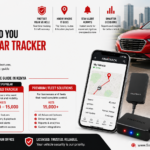
Finatrack Global Ltd’s wired GPS tracking solution allows authorised users to view their vehicle through a tracking platform. When the tracker is communicating normally, the vehicle position is displayed on a digital map, giving the owner a much clearer understanding of where the car is operating.
This can be useful in ordinary situations long before theft becomes a concern. A business owner may want to know whether a company vehicle has reached a customer, while a parent may simply want visibility over a family vehicle that is being used away from home. A fleet manager can check several company vehicles without making repeated phone calls to individual drivers.
The most important information is not only the location pin. Vehicle owners should also pay attention to the time of the latest update because this indicates how recent the displayed position is. A tracker may temporarily lose communication in areas with poor mobile coverage, which means the last visible position may be historical rather than the vehicle’s exact location at that second.
This distinction makes the tracking application easier to use responsibly. A recent position tells the owner where the tracker most recently communicated, while an older timestamp suggests that connectivity should be considered before drawing conclusions. Understanding this basic information is particularly important during a security incident.
Live vehicle visibility also becomes valuable for businesses. Consider a company operating several sales or service cars around Nairobi. When an urgent customer request arrives, management can check which suitable vehicle is already closest instead of automatically dispatching another employee from the office.
The result can be fewer unnecessary kilometres and faster customer response. GPS tracking therefore becomes more than a theft recovery tool. The same technology that protects the vehicle can support everyday operational decisions.
Location visibility becomes even more useful when combined with route history. Knowing where the car is now answers one question, but many vehicle owners also want to know where it has been. The tracking platform can provide historical journey information that allows authorised users to review previous trips.
A business owner may discover that a company vehicle travelled outside its expected territory or accumulated unexpected mileage. Instead of depending entirely on explanations given several days later, management can review the historical movement and understand the journey more clearly.
Route history can also protect drivers from unfair assumptions. An employee questioned about arriving late may be able to show that the vehicle was delayed along a legitimate route. Tracking information can therefore support accountability in both directions.
For private motorists, historical playback can help answer simpler questions. If several family members use the same vehicle, the owner can review where it travelled earlier in the day. If the car was left at a garage, trip history can provide useful visibility over whether it remained at the workshop or was taken on a road test.
The tracking system should still be interpreted with common sense. A vehicle arriving at a particular location does not automatically prove what the driver did there. GPS records vehicle movement, not every human activity surrounding the vehicle.
Another valuable feature is geofencing. A geofence is a virtual boundary created around an important location such as a home, office, parking area, warehouse or project site. Depending on the configuration, the system can alert or record when the vehicle leaves or enters the defined area.
For example, a vehicle that should remain parked at the office overnight can be placed within a geofence. If it unexpectedly leaves the area, the event can provide an early reason for the owner or fleet manager to check what is happening.
A private vehicle owner can use the same feature around home or another regular parking area. The owner does not have to keep the tracking application open continuously because the geofence helps draw attention to movement that matters.
Geofencing should not be confused with physically preventing the vehicle from leaving. It is a monitoring tool that identifies movement in relation to a defined area. Its value comes from providing earlier awareness.
The combination of live location, route history and geofence alerts creates a much stronger tracking experience than simply seeing a vehicle icon on a map. Live location answers where the vehicle is, route history answers where it has been, while geofencing helps answer whether it has left an area you expected it to remain in.
These functions can also support vehicle security. If a car moves unexpectedly, the owner can check its latest location and recent journey. Where appropriate, this information can support the response of authorised security or law enforcement personnel.
Vehicle owners should avoid personally confronting suspected thieves simply because a tracker shows a location. GPS information improves visibility, but personal safety should remain the priority during a recovery situation.
A wired tracker is especially practical for everyday monitoring because it receives power from the vehicle. Once professionally installed, the owner does not normally need to remove and recharge the device after ordinary journeys.
Professional installation also matters because a tracking device needs reliable power and appropriate concealment. A poor electrical connection can create repeated offline periods, while an obvious installation can make the device easier to locate.
After installation, the owner should be shown how to use the tracking platform. They should know how to view the latest position, check the last update time, review previous trips and understand the important alerts available through their particular system.
The tracker should also be checked periodically. A vehicle can continue operating normally even when a tracking device develops a connectivity or wiring problem. Opening the application occasionally and confirming recent trip information provides reassurance that the system remains active.
Tracker health should be checked particularly after battery replacement or electrical repairs. Workshop activity can sometimes disturb aftermarket wiring, and it is better to identify the issue immediately than discover it during an emergency.
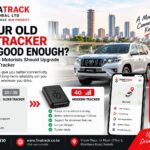
Finatrack Global Ltd provides a wired GPS tracker at KSh 15,000 as a one-off payment, giving vehicle owners access to practical tracking functionality that can improve both security and everyday vehicle visibility.
For motorists and businesses that want to know where their vehicles are, where they have been and when they leave important locations, GPS tracking provides a simple answer to a question that becomes increasingly important once the keys leave your hands.
Wired GPS Tracker: KSh 15,000 one-off payment.
Call or WhatsApp Finatrack Global Ltd on 0723 645 810.