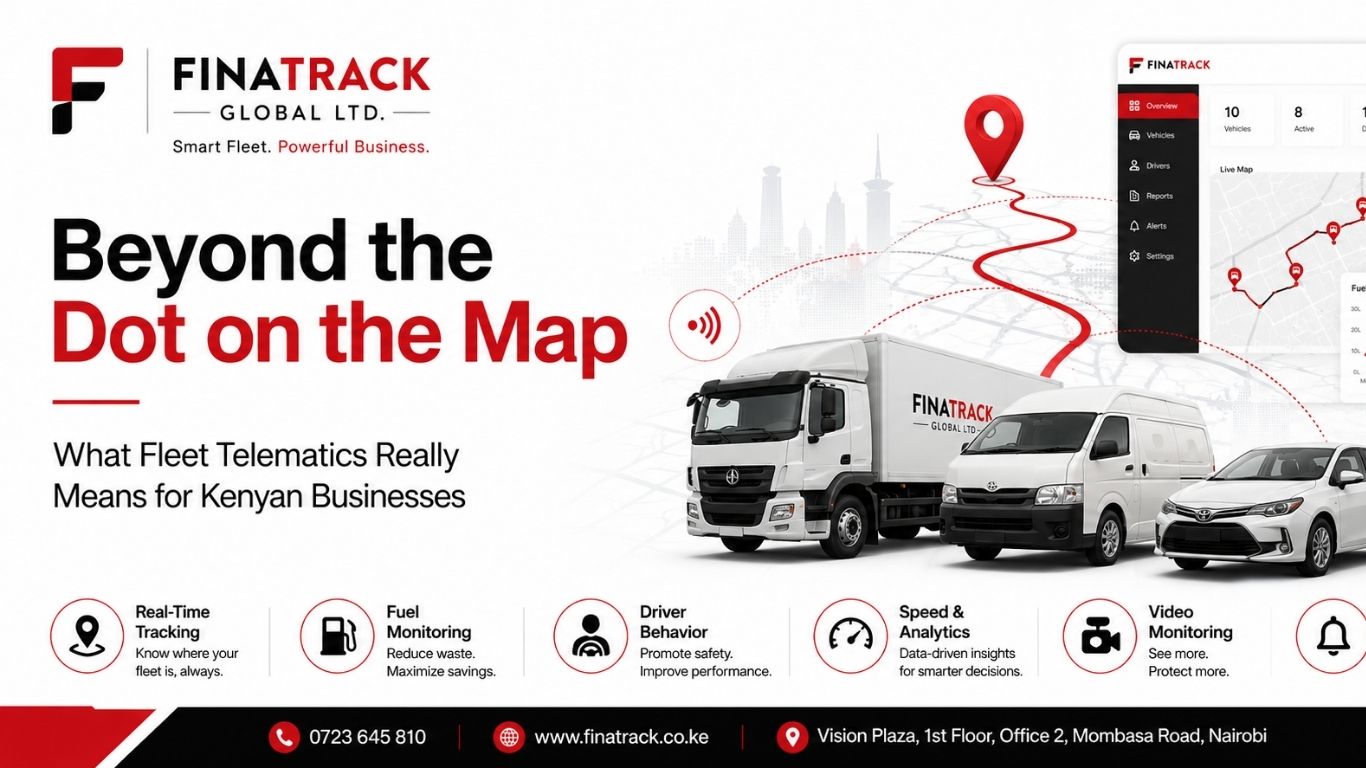
Many businesses use the words GPS tracking and fleet telematics as though they mean exactly the same thing. Both involve vehicle technology, but telematics can go much further than simply showing a vehicle’s position on a map. Understanding that difference helps businesses choose systems based on the decisions they need to make rather than the technology labels used in advertisements.
Basic GPS tracking primarily answers the question, “Where is the vehicle?” Depending on the tracker installed, the platform may also provide trip history, ignition status, speed and selected alerts. For private motorists and smaller fleets, those features can already provide significant security and operational value.
Fleet telematics builds on that foundation by combining location information with other vehicle and driver data. Depending on the equipment, management may monitor driver behaviour, fuel information, vehicle utilisation, video events and additional operational indicators. The tracking platform becomes less about watching vehicles and more about understanding how the fleet is performing.
A logistics company provides a useful example. Basic GPS may show that a truck travelled from Nairobi to Nakuru and then returned. A broader telematics system may help management understand how fast it was driven, how long it remained stationary, whether fuel behaviour was unusual and whether selected driver events occurred along the journey.
This additional information can support cost control. Fuel and maintenance expenses are influenced by how vehicles are driven and used, not simply by where they travel. Telematics gives businesses more context for identifying inefficiencies hidden within everyday operations.
Driver monitoring is one important area. Repeated speeding, harsh braking and acceleration can be recorded depending on the system installed. Managers can then identify patterns and provide targeted coaching instead of depending entirely on complaints or assumptions.
Fuel monitoring can provide another layer for suitable vehicles. Dedicated sensors may allow businesses to compare fuel-level changes and refilling with actual journeys. This is particularly useful for fleets where fuel represents a major percentage of operating expenses.
AI dashcams expand telematics further by adding video. GPS data can show that a harsh-braking event occurred, while the dashcam may provide context about why it happened. This allows fleet managers to investigate incidents more fairly and build stronger road-safety programmes.
Vehicle utilisation is another important telematics concept. A company may own twenty vehicles but discover that several spend much of the working week parked. Understanding utilisation can help management redistribute assets or delay purchasing additional vehicles that may not actually be necessary.
Reports turn these different information sources into useful management tools. Instead of watching individual vehicles every minute, managers can review patterns involving mileage, trips, driver events and other operational indicators. Fleet telematics becomes valuable when those reports influence decisions.
Businesses should still avoid collecting data simply because technology makes it possible. The correct telematics solution depends on the problem being solved. A company with five sales cars may require location and trip history, while a transport company operating fifty trucks may justify fuel monitoring, AI video and advanced driver reports.
Installation and technical support remain fundamental. Sophisticated software cannot compensate for unreliable trackers, poorly installed sensors or equipment that repeatedly goes offline. Businesses should evaluate the hardware, software, connectivity and service provider as one complete system.
Finatrack Global Ltd provides GPS tracking and fleet telematics solutions for businesses operating different types of vehicles in Kenya. Solutions can include tracking, fuel monitoring, AI dashcams and additional fleet-management functionality depending on the organisation’s requirements. Businesses can contact 0723 645 810, visit www.finatrack.co.ke, or visit Vision Plaza, 1st Floor, Office 2, Mombasa Road, Nairobi.
GPS tracking tells you where the fleet is. Telematics can help explain how that fleet is being used, what it is costing and where management has an opportunity to improve.