Buying a used vehicle is an exciting milestone, whether it is your first car, an upgrade from an older model or an additional vehicle for business. Once the payment is completed and ownership changes hands, most buyers immediately think about insurance, servicing, tyres and changing worn parts. Vehicle security, however, should be treated with the same urgency because a newly purchased used car may come with security risks the new owner knows very little about.
Unlike a brand-new vehicle delivered directly from a dealership, a used car already has a history. Previous owners, drivers, mechanics, car wash attendants, dealers and other people may have handled the keys at different times. The new owner may have no reliable way of knowing how many duplicate keys exist, who knows where the vehicle is normally kept or which aftermarket security systems were previously installed and later removed.
Installing a professional GPS tracker soon after purchasing the vehicle can therefore create an important new layer of control. Instead of relying entirely on whatever security arrangements came with the car, the new owner establishes a tracking system that they personally control. From that point forward, the vehicle’s location, movement and selected security events can be monitored through an authorised tracking account.
This is particularly important because changing ownership does not automatically reset everything connected to the vehicle. A used car may still contain an old alarm, immobiliser or tracking device installed by a previous owner. Some systems may still work, others may have been disconnected and some may remain installed without the new owner even knowing they exist.
A vehicle buyer should therefore avoid assuming that because a car has an alarm or tracker sticker, the security system is operational. Professional inspection is the safer approach. The existing equipment can be assessed and the new owner can decide whether to retain, replace or supplement it with a tracking solution registered under their own control.
One of the biggest concerns with a used vehicle is unknown key history. Modern car keys can be expensive and sophisticated, but duplicate keys can still exist. If a previous owner, driver or another person retained a functioning key, the new owner may never realise it until the vehicle disappears without obvious signs of forced entry.
A GPS tracker does not prevent somebody with a valid key from unlocking the vehicle, but it gives the owner visibility if the car begins moving unexpectedly. Ignition or movement information, depending on the tracking system installed, can provide another reason to investigate activity that does not match the owner’s normal use.
This is why GPS tracking should be viewed as one part of a broader ownership reset. When taking over a used vehicle, the buyer should review the keys, alarm system, immobilisation, insurance and tracking arrangements rather than assuming the previous owner’s security setup remains suitable. A new owner should ideally create a security configuration that only authorised people understand.
The same principle applies when buying through a car yard or dealer. A vehicle may have been handled by salespeople, mechanics, cleaners and prospective buyers before the final purchase. None of this automatically means there is a security problem, but it demonstrates why the new owner should take control of the vehicle’s security immediately after acquisition.
GPS tracking becomes especially valuable during the first few weeks of ownership because this is when the buyer is still learning the vehicle. The owner may not yet know the normal battery behaviour, electrical system, parking patterns or previous security installations. Having reliable location visibility provides additional reassurance while those details are being understood.
A professionally installed wired tracker provides a strong starting point for everyday monitoring. Because it is connected to the vehicle’s electrical system, the owner does not need to remember to recharge the device regularly. The tracking platform can remain available whenever the vehicle is operating normally and the tracking service is active.
Depending on the system installed, the owner can access current or recently reported location, trip history, geofencing, ignition information and selected alerts. These features provide much more than a simple dot on a map because they allow the owner to understand how the vehicle moves over time.
Trip history can become useful almost immediately. A newly purchased car may be driven by family members, employees or mechanics while the owner is still organising repairs and paperwork. GPS records give the owner an independent view of where the vehicle travelled and when those journeys occurred.
This can be particularly valuable when the car is left with a garage shortly after purchase. Used vehicles often require servicing, suspension work, tyres, battery replacement or other repairs soon after the transaction. The owner may therefore hand the car over to mechanics only days after taking possession.
GPS trip history can show whether the car remained at the workshop or was taken for legitimate road testing. A short road test after mechanical work may be completely reasonable, while extensive unexplained mileage can justify a conversation with the garage. The objective is not to accuse technicians automatically but to maintain visibility over a newly acquired asset.
The tracker itself should also be checked after workshop repairs. Battery replacement, dashboard work and electrical repairs can accidentally disturb aftermarket security wiring. A vehicle can leave the garage mechanically improved while its tracker remains disconnected.
For this reason, owners should open the tracking application after major repairs and confirm that a fresh location is appearing. A short test drive can also confirm that trip history continues recording normally. Maintaining security after repairs is just as important as installing it initially.
Another reason to install GPS tracking early is vehicle theft recovery. Used vehicles can still represent a substantial financial investment, particularly SUVs, pickups, vans and commercial vehicles. If the car disappears, having access to recent location information can significantly improve the starting point for an organised response.
Owners should nevertheless avoid personally pursuing suspected thieves simply because the tracker shows a location. The safest approach is to use tracking information to support appropriate law enforcement and security procedures. Vehicle recovery should never place the owner or family members in additional danger.
The last update time should always be checked during a security incident. A location pin on the map may represent the last successful communication rather than the vehicle’s exact current position. Understanding whether the information is fresh or historical helps prevent poor decisions.
A tracker can temporarily stop communicating for several reasons. Weak mobile network coverage, power loss, technical faults, underground parking or deliberate interference can all affect reporting. The sequence of events around the communication loss often provides useful context.
For example, unexpected ignition followed by movement and then a power disconnection alert creates a different security picture from a tracker simply losing network coverage in an area known for weak connectivity. Owners should therefore understand the basic alerts provided by their system rather than reacting to every notification in isolation.
A professionally installed GPS tracker can also support geofencing. A virtual boundary can be created around the owner’s home, workplace or another important area depending on the tracking platform. If the vehicle leaves the area, the owner may receive or view the event according to the system configuration.
This can be particularly useful for a newly purchased used car because the owner may still be cautious about who has access to it. If the vehicle is supposed to remain parked at home overnight and leaves unexpectedly, the movement becomes visible without the owner constantly checking the tracking application.
Geofencing can also support businesses purchasing used vehicles for fleet operations. A newly acquired pickup assigned to a construction site, sales team or delivery route can be monitored according to its intended working area. The company can immediately begin building movement records under the new ownership.
This creates a clean operational history from the time the vehicle joins the fleet. The business knows when tracking began, which registration number is associated with the device and how the vehicle has been used since acquisition. This is particularly useful when older service records are incomplete.
Mileage is another reason GPS tracking becomes valuable after purchasing a used vehicle. The odometer shows the vehicle’s recorded lifetime distance, but the new owner may have limited information about exactly how those kilometres were accumulated. Once GPS tracking is installed, future mileage becomes easier to understand.
The installation date and odometer reading can be recorded as a baseline. From that point onward, the owner can compare future odometer increases with GPS trip records. This creates another layer of documentation for servicing and eventual resale.
For businesses, this can improve maintenance planning. A used vehicle may already have high mileage, meaning servicing needs become especially important. GPS trip distance helps management understand how quickly the car is accumulating additional kilometres after joining the company.
A heavily used used-car purchase can reach its next maintenance interval sooner than expected. Without structured mileage monitoring, management may delay servicing and increase mechanical risk. Tracking records help prevent the vehicle from disappearing into normal fleet activity without proper maintenance attention.
The same data can reveal whether the newly purchased vehicle is being overused. One pickup may quickly become the preferred unit because employees consider it newer or more comfortable than the rest of the fleet. As a result, it may accumulate mileage much faster than older company vehicles.
GPS utilisation records can make this workload imbalance visible. Management can decide whether to redistribute assignments so that the new asset does not experience unnecessary wear immediately after purchase. Protecting the investment involves managing how the vehicle is used as well as protecting it from theft.
Fuel expenditure can also be reviewed against movement. Used cars vary significantly in mechanical condition, and a vehicle that appears affordable to purchase may later consume more fuel than expected. Trip history and mileage provide context for evaluating whether fuel costs match actual use.
If the car consumes considerably more fuel than similar vehicles while covering comparable distances, mechanical inspection may be appropriate. Engine condition, tyre pressure, driving behaviour and other factors can affect consumption. GPS tracking helps management establish whether excessive distance or inefficient routes are contributing before assuming the vehicle itself is faulty.
For commercial vehicles, dedicated fuel monitoring can provide even deeper information. Depending on the vehicle and installation, fuel level changes can be compared with location and journey activity. This may be valuable for trucks or businesses where fuel represents a major operating expense.
Security should also extend beyond GPS tracking. A used vehicle may benefit from a professionally installed car alarm and hidden cut-off system, particularly if the previous security equipment is old or its history is unclear. The alarm provides intrusion awareness while the hidden cut-off creates an additional obstacle to unauthorised vehicle operation.
GPS tracking performs another role by maintaining remote visibility. When these technologies are combined, the owner gains protection at several stages. The alarm responds when someone interferes with the vehicle, the immobilisation layer makes operation more difficult and the tracker provides location information if movement still occurs.
This layered approach is particularly appropriate for higher-value used vehicles. Someone purchasing a premium SUV, pickup or commercial vehicle should consider what losing the asset would cost, not only what the security equipment costs. A stronger security system can be proportionate to the size of the financial exposure.
A wireless backup tracker can provide another layer where the risk justifies it. Unlike a wired tracker, the wireless device operates using its own battery and can remain active even if vehicle power is disconnected, subject to battery condition and connectivity. This reduces reliance on one installation point.
The wired tracker remains useful for everyday monitoring because it has continuous vehicle power, while the wireless unit acts as a separate backup. If the primary tracker is discovered or loses power, the owner still has another opportunity to maintain visibility.
The two devices should not be placed together. Backup tracking provides more value when it is independent from the primary installation. Professional guidance can help determine an appropriate approach without unnecessarily exposing security details.
Motorists should also understand the limitations of conventional GPS tracking. A determined criminal may attempt to interfere with satellite or mobile communication, and no security system should be marketed as impossible to defeat. The goal is to make theft more difficult and preserve multiple opportunities for detection and recovery.
This is another reason one tracker should not be treated as the entire vehicle-security strategy. Secure parking, controlled keys, alarms, immobilisation and backup technologies can all contribute. The more valuable the vehicle, the stronger the case for reducing dependence on one layer.
Key control deserves particular attention after buying a used vehicle. The buyer should know how many keys were handed over during the sale and consider whether any missing or undocumented keys create concern. Depending on the vehicle, professional key programming or security assessment may be appropriate.
A GPS tracker complements these precautions because unexpected movement remains visible even where forced entry does not occur. If someone uses a functioning key, the vehicle may not show traditional signs of theft. Remote location monitoring therefore provides an important secondary control.
For businesses, the same issue applies to former drivers and staff. A used company vehicle may pass through several employees during its working life. Key management and tracking account access should be updated whenever responsibilities change.
Only authorised users should have access to the GPS platform. A tracking account can reveal where the vehicle parks, which routes it travels and when it is active. Former employees, previous owners or unrelated people should not retain that visibility.
This is particularly important when the used car already has an existing tracker installed. The new owner should not assume that simply receiving the vehicle means tracking account ownership automatically transferred. The provider should confirm who controls the account and whether previous users still have access.
If the existing tracker is technically suitable, it may be possible to update ownership and user credentials. In other situations, removing the old device and installing a new tracker may provide greater confidence. The correct approach depends on the hardware, provider and service history.
A tracker installed by an unknown provider may also have an expired subscription. The device can remain hidden inside the car while no fresh location data reaches the platform. This is why physical presence of tracking hardware should never be treated as proof that the vehicle is actively monitored.
A fresh installation gives the new owner a clearer starting point. They receive current access credentials, know which provider supports the device and can verify that the car is reporting normally. This removes much of the uncertainty associated with inherited security equipment.
The installation documentation should identify the new owner’s vehicle correctly. Registration number, tracker details and relevant service information should be kept with other vehicle records. This helps during technical support and can also be useful when ownership or fleet assignments change later.
A used vehicle buyer should also check whether the tracker interferes with any existing electrical or security systems. Professional installation should avoid poor wiring practices and unnecessary modification of the vehicle. Modern vehicles increasingly contain sophisticated electronics, making installer competence particularly important.
Hybrid vehicles require additional care because their electrical architecture differs from conventional cars. The tracker should be installed through an appropriate low-voltage system without unnecessary interference with high-voltage components. Owners should inform the installer of the exact vehicle type before work begins.
The same applies to newer luxury vehicles with advanced electronics. A security installation should protect the car without introducing warning lights or electrical faults. Saving money through poor installation can create far greater repair costs later.
GPS tracking can also provide useful information when another person drives the vehicle. A new owner may allow a family member, employee or driver to use the car while still wanting basic visibility over its movement. Trip history allows the owner to verify where the vehicle travelled without constant phone calls.
This should still be managed transparently. Employees using company vehicles should understand that the vehicle is tracked for legitimate purposes such as security, mileage, maintenance and operational accountability. Good tracking practice combines technology with clear policies.
For private families, the same principle can improve coordination. Knowing the vehicle’s location can be useful when several authorised people share the same car. The system should support security and convenience without becoming unnecessary personal surveillance.
A newly purchased used vehicle may also spend time in unfamiliar parking locations. The buyer may not yet have arranged permanent home parking or may be using different garages and offices during the ownership transition. GPS tracking provides additional reassurance during this period.
If the vehicle is left overnight in a location the owner considers higher risk, geofencing and selected alerts can provide another layer of awareness. The owner should still use sensible physical security because GPS tracking does not replace secure parking.
Insurance should also be arranged immediately. Tracking and alarms reduce certain risks, but they do not replace appropriate motor insurance. A vehicle can still be damaged, stolen or involved in an accident despite strong security measures.
Used-car buyers should therefore view the first days of ownership as a risk reset. Insurance, tracking, keys, alarms, maintenance and account access should all move under the new owner’s control. This prevents hidden arrangements from the vehicle’s previous life from creating future problems.
The car’s tracking subscription should also be understood from the beginning. A professional GPS system normally depends on more than the physical device because connectivity and platform services may also be required. The owner should know what ongoing service charges apply and when renewal will be needed.
Tracking account contact information should be registered correctly. Using the new owner’s current phone number and email prevents renewal or security notifications from going to a previous owner. Businesses should use contacts that remain under company control rather than one employee’s personal details where possible.
Regular tracker checks should begin immediately after installation. The owner does not need to stare at the tracking app every day, but occasionally confirming a fresh update helps ensure the system remains healthy. A security device that nobody checks can fail unnoticed.
Trip history can provide an easy verification. If the vehicle has been driven recently but no journey appears, technical support should investigate. Problems are much easier to correct while the vehicle is safely available.
Wireless backup devices require similar attention. Their batteries should be maintained according to the expected operating period. The owner should not assume that because the backup tracker is hidden, it will continue functioning indefinitely.
Buying a used vehicle can also be a useful opportunity to install a completely new security package rather than gradually adding devices over time. GPS tracking, alarm and hidden immobilisation can be installed professionally with a clear understanding of how the systems work together.
For many motorists, this provides greater confidence than trying to understand several inherited devices installed by unknown technicians over the vehicle’s previous ownership history. The new owner knows exactly which systems are active and who has access to them.
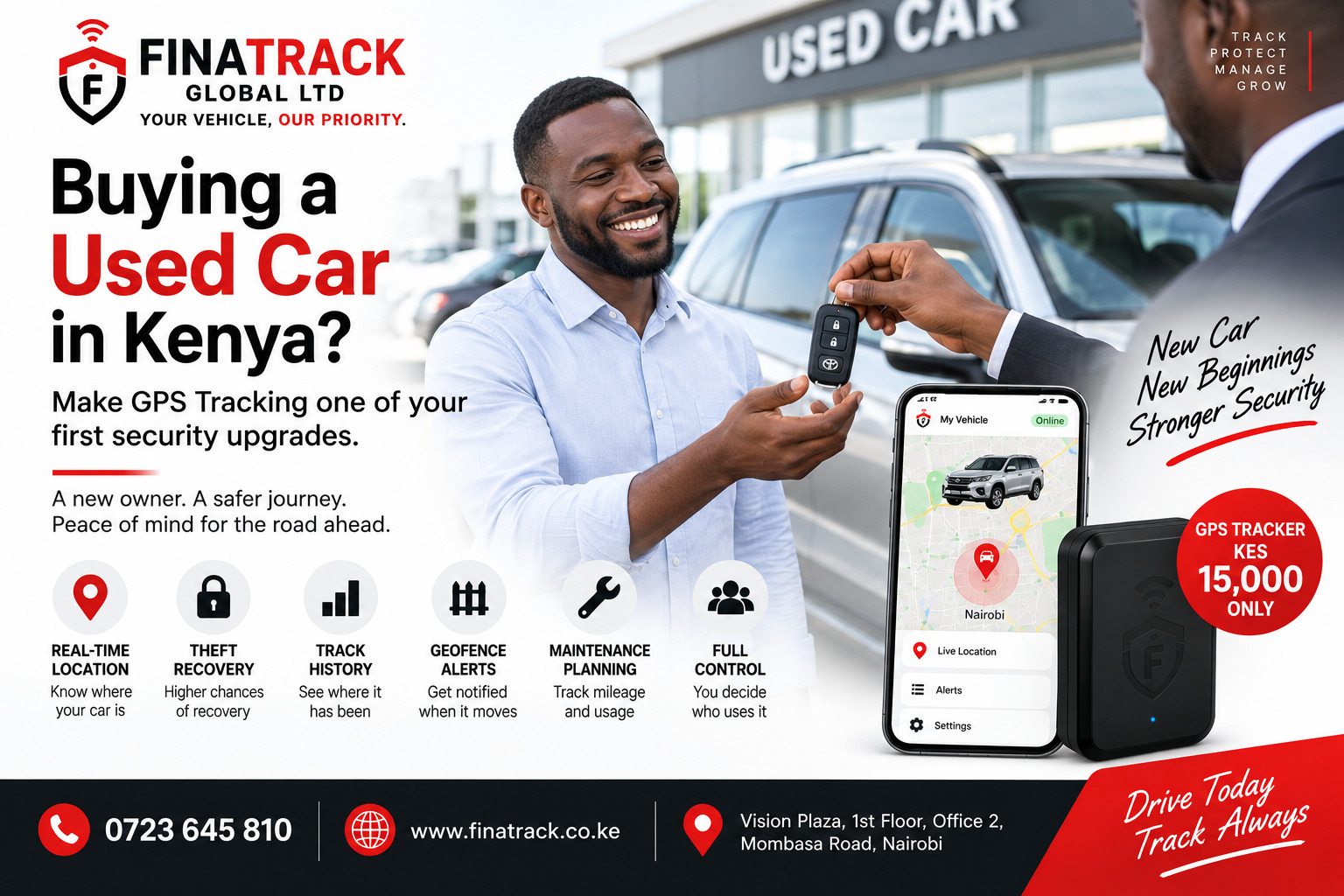
Finatrack Global Ltd currently provides a wired GPS tracker at KES 15,000 for motorists seeking permanent vehicle tracking, while a wireless GPS tracker is also available at KES 15,000 for customers requiring independent or backup tracking. Vehicle owners can choose the solution according to the value of the vehicle and the level of security they want.
Customers seeking stronger layered protection can also combine a wired GPS tracker with an advanced car alarm system at KES 20,000. This provides both remote tracking visibility and an additional intrusion and immobilisation layer, making it particularly suitable for motorists who do not want to depend on GPS alone.
The correct security package should still reflect the vehicle. A modest used car may require a straightforward wired tracker and appropriate alarm, while a higher-value vehicle may justify backup tracking as well. Spending should be guided by risk rather than simply installing the maximum number of devices.
Businesses buying used vehicles should apply the same logic across the fleet. Higher-risk commercial assets can receive additional security layers while lower-risk vehicles use a standardised tracking configuration. This provides stronger protection without making fleet security unnecessarily expensive.
Professional installation can also help establish a clean fleet record from the day the vehicle enters the company. The odometer reading, tracker details, registration and installation date can be recorded together. Management then has a reliable reference for future mileage and maintenance analysis.
This becomes particularly useful when the vehicle is later sold. The business can document how the asset was used while under company ownership and remove or transfer the tracker correctly. Good tracking administration supports the entire vehicle ownership cycle.
A GPS tracker cannot tell you everything about a used vehicle’s past, and it cannot erase the security risks created before you bought the car. What it can do is give you much greater control over what happens from the day ownership becomes yours. The new owner gains an independent record of vehicle movement and a tool that can support security, maintenance and accountability throughout the next stage of the car’s life.
Finatrack Global Ltd provides professionally installed GPS tracking, car alarm and layered vehicle-security solutions for private motorists and businesses across Kenya. Installations can be arranged at the customer’s convenient location or through Vision Plaza, 1st Floor, Office 2, Mombasa Road, Nairobi, depending on the customer’s requirements.
For GPS tracking and vehicle security enquiries, contact Finatrack Global Ltd on 0723 645 810 or visit www.finatrack.co.ke. Installing tracking soon after purchasing a used vehicle allows the new owner to begin with fresh access credentials, known security equipment and greater visibility over an asset that may already have passed through many hands.
Buying a used car should therefore involve more than transferring ownership and driving away. The safest approach is to take control of the vehicle’s security just as quickly as you take control of the keys. A professionally installed GPS tracker provides that new starting point, giving the owner greater visibility over where the vehicle goes while forming the foundation for a stronger layered security strategy.