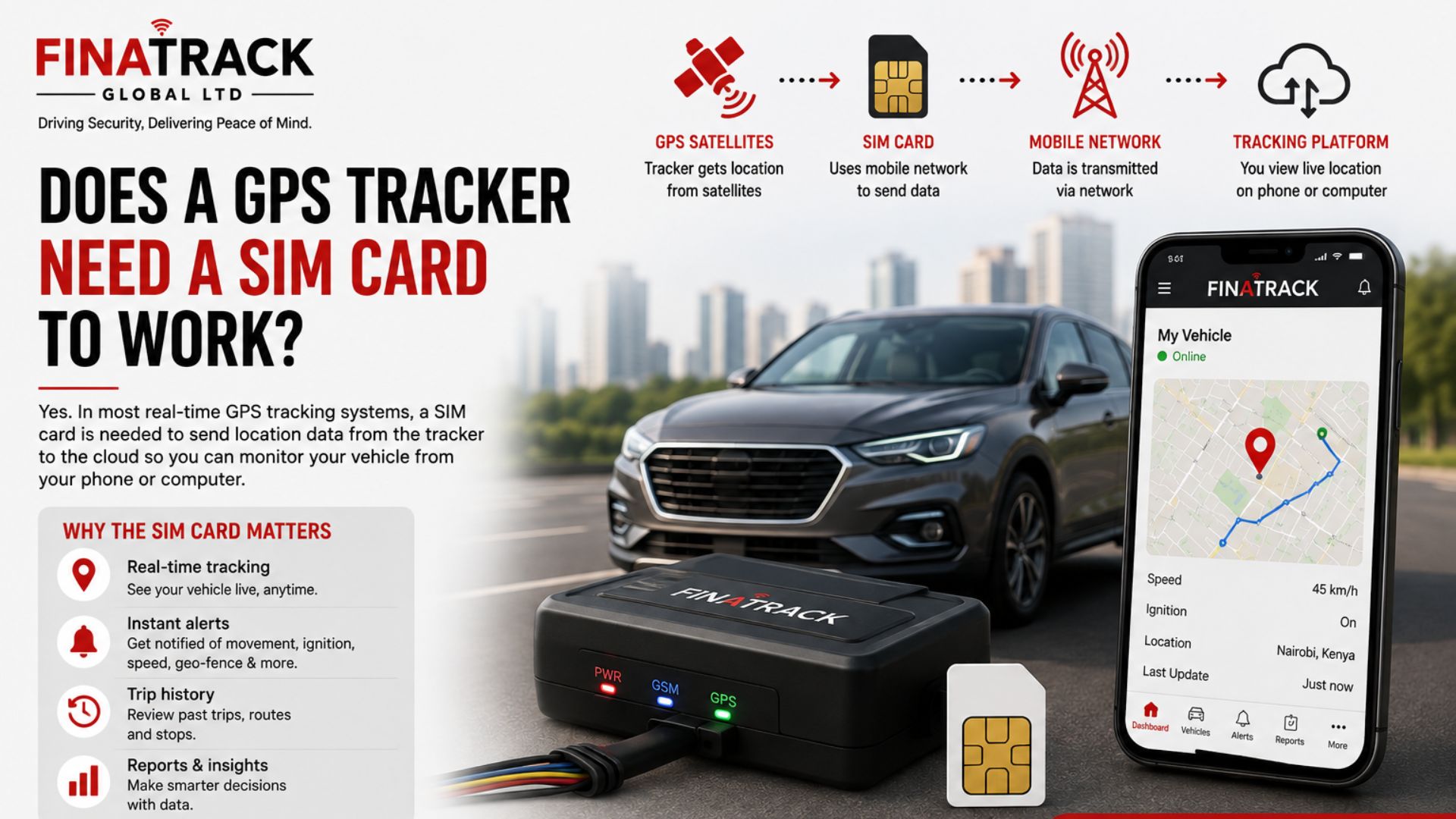
A GPS tracker can identify where a vehicle is without using a SIM card, but in most modern real time vehicle tracking systems, a SIM card plays a crucial role in getting that location information from the vehicle to the person monitoring it. This distinction is important because GPS and mobile communication perform two different jobs inside a vehicle tracking system.
The GPS component determines the vehicle’s geographical position using signals received from satellites. It can calculate information such as latitude, longitude, direction and movement without depending on a mobile SIM card. However, knowing the location inside the tracking device is not particularly useful to a vehicle owner unless that information can be transmitted to a smartphone or computer.
This is where the SIM card normally comes in. Much like the SIM card inside a mobile phone, the SIM installed in a vehicle tracker allows the device to communicate through a mobile network. Once the tracker determines the vehicle’s position, it can send that information through the network to a tracking server, where it becomes available through an application or web based tracking platform.
The process happens continuously in the background. The GPS tracker determines the vehicle’s location, the mobile network carries the information, the tracking platform processes it, and the vehicle owner views the result on a phone or computer. This can happen repeatedly throughout a journey, creating the real time location experience associated with modern vehicle tracking.
For most vehicle owners, this means that a GPS tracker used for live vehicle monitoring will generally require some form of mobile connectivity. A SIM card is one of the most common ways of providing that connection, particularly because mobile networks cover large areas and allow vehicles to remain connected while moving between different locations.
The SIM card itself does not track the vehicle. This is a common misunderstanding. The GPS technology determines the location, while the SIM provides the communication channel that allows the tracker to send that location elsewhere.
This distinction becomes clearer when a vehicle enters an area with weak mobile network coverage. The GPS tracker may still be capable of determining its geographical position because satellite signals remain available, but it may temporarily be unable to send that information to the online tracking platform. As a result, the vehicle may appear to stop updating even though the tracking device itself has not necessarily stopped recording movement.
Some GPS trackers are designed to store location information internally when mobile communication is unavailable. Once the vehicle returns to an area with network coverage, the stored information can be transmitted to the tracking platform. Whether this happens depends on the capabilities and configuration of the device being used.
This is why a temporary loss of live location does not always mean that a GPS tracker has failed. The problem may simply be communication rather than positioning. A good tracking platform will usually display the time of the last successful update, helping the user understand whether the information being viewed is current.
The type of SIM card used in a vehicle tracker also matters. GPS tracking devices generally require mobile data rather than the traditional voice services people associate with ordinary mobile phones. The device sends relatively small amounts of information containing location, vehicle status and other telematics data to the tracking server.
Depending on the tracking provider, the SIM card may already be installed and managed as part of the service. In other arrangements, customers may be responsible for maintaining sufficient airtime or data to keep the tracker communicating.
Vehicle owners should understand this before choosing a tracking package.
A very cheap GPS tracker may look attractive at first, but if the customer is required to maintain the SIM card separately, the long term cost needs to be considered. Other providers may include connectivity within an annual platform fee or incorporate communication costs into the overall tracking package.
When comparing GPS tracker prices in Kenya, customers should therefore ask whether SIM connectivity is included and whether there are monthly or annual charges associated with it.
They should also ask what happens if the SIM runs out of data.
If a tracker cannot communicate with the mobile network because connectivity has expired, the customer may temporarily lose access to real time tracking even though the physical device remains installed in the vehicle.
For someone using a tracker primarily as a security system, this could become a serious problem. The last thing a vehicle owner wants is to discover during a theft incident that the tracker has not been transmitting because the communication service expired several weeks earlier.
Reliable tracking therefore requires both reliable hardware and reliable connectivity.
SIM cards also make it possible for GPS tracking systems to provide much more than simple location information. Depending on the installed device and platform, data transmitted through the mobile network can include ignition status, movement alerts, speed information, geofence events and other vehicle information.
This is how a customer can receive an alert on their phone when the vehicle ignition is switched on or when the car leaves a predefined geographical area.
The GPS tracker detects the event, the communication network transmits it and the tracking platform presents it to the user.
For businesses operating fleets, this flow of information becomes even more valuable. A logistics company may have dozens of trucks operating in different parts of Kenya. Each tracking device continuously sends information to the central platform, allowing fleet managers to see several vehicles from one account.
The business can then review current locations, previous trips, routes and other operational information without calling individual drivers to establish where they are.
This connectivity also supports telematics applications such as driver behaviour monitoring and fuel management. When additional sensors or vehicle information are integrated with the tracking system, the mobile connection can transmit that information alongside GPS location data.
In this way, the SIM card becomes an important communication link between the vehicle and the fleet management platform.
There are, however, some tracking devices that can work without traditional SIM cards.
Certain GPS loggers simply record location information internally and require the device to be physically retrieved before the data can be viewed. These can be useful for specific applications but do not provide the same real time monitoring experience as a connected vehicle tracker.
Other technologies may use specialised communication networks, satellite communications or alternative connectivity systems instead of conventional mobile SIM cards. These solutions are usually designed for particular commercial or remote applications and may cost substantially more than standard cellular GPS tracking.
There are also Bluetooth based tracking tags that operate differently from dedicated GPS trackers. These devices may rely on nearby smartphones or compatible networks to help report their approximate location. While they can provide useful backup security, they should not automatically be treated as replacements for a professionally installed real time vehicle GPS tracking system.
For most private motorists and commercial vehicle operators in Kenya, a cellular GPS tracking system remains one of the most practical solutions because it combines satellite positioning with widely available mobile network communication.
Vehicle owners should also remember that the SIM inside the tracker is not necessarily meant to be removed and used like an ordinary phone SIM. Tracking providers may configure SIM cards specifically for machine communication, and interfering with the card could cause the device to stop reporting.
This is another reason customers should contact their tracking provider when communication problems occur rather than attempting unnecessary changes to the installation.
A professional tracking company should be able to determine whether a device is offline because of network conditions, SIM connectivity, power problems, hardware faults or another technical issue.
The quality of after sales support therefore matters when choosing a tracker.
The physical tracker may remain hidden inside a vehicle for years, but the customer is ultimately depending on an entire service ecosystem consisting of the device, communication network, tracking platform and technical support.
If any part of that chain fails, the quality of the tracking experience can be affected.
Vehicle owners should also consider what happens when travelling outside Kenya. A tracking device that uses a mobile SIM may require roaming capability to continue transmitting information after crossing an international border. Whether this is available depends on the SIM arrangement and tracking provider.
Businesses operating trucks across East Africa should therefore discuss regional coverage with their provider before deploying tracking systems. A tracker designed primarily for domestic operation may have different connectivity arrangements from one configured for cross border fleet tracking.
For private motorists travelling within Kenya, normal mobile network coverage is generally the more immediate consideration. Areas with limited cellular connectivity may occasionally experience delayed tracking updates, particularly in remote regions.
This does not make GPS tracking ineffective. It simply highlights the difference between determining a vehicle’s location and transmitting that location in real time.
The tracker needs GPS satellites to know where the vehicle is.
It usually needs a mobile connection to tell you.
For motorists considering a GPS tracking system, the best approach is therefore to ask the provider exactly how connectivity is managed. Find out whether the SIM card is supplied with the tracker, whether data charges are included, whether there are annual renewal fees and what happens if connectivity is interrupted.
Those questions can prevent unexpected costs and ensure that the tracker remains operational when it is needed most.
Finatrack Global Ltd provides GPS tracking and telematics solutions for private motorists, businesses and commercial fleets in Kenya. Depending on the selected solution, customers can access real time tracking, trip history, geofencing, ignition alerts and other vehicle monitoring features through a smartphone or computer.
So, does a GPS tracker need a SIM card to work?
The GPS technology itself does not require a SIM card to determine location.
However, most real time vehicle tracking systems use a SIM card or another communication connection to transmit that location to the tracking platform.
Without communication, the tracker may know exactly where the vehicle is while the owner has no way of seeing that information remotely.
That is why reliable GPS tracking depends on more than satellites.
It depends on communication too.
For professional GPS vehicle tracking and fleet telematics solutions in Kenya, contact Finatrack Global Ltd on 0723 645 810 or visit www.finatrack.co.ke.