Buying another vehicle does not always mean you need to abandon the GPS tracker installed in your old car. In many cases, a professionally installed GPS tracking device can be removed and transferred to another vehicle, provided the hardware is still suitable and the installation is carried out correctly. The important point is that transferring a tracker is more than unplugging a device from one dashboard and connecting it somewhere else.
For Kenyan motorists and businesses replacing vehicles, transferring an existing tracker can sometimes be more economical than buying an entirely new system. However, the decision should consider the age of the tracker, its communication technology, the condition of the wiring, the features required in the new vehicle and whether the existing device remains compatible with the tracking platform. A professional inspection should therefore come before assuming that every old tracker should automatically be reused.
A wired GPS tracker normally receives power from the vehicle electrical system and may also be connected to ignition detection, an immobilisation relay or other security components. Removing it means those connections have to be identified carefully and disconnected without damaging the old vehicle. The new vehicle then requires a completely fresh installation that matches its own electrical system.
This is particularly important where the tracker includes remote engine immobilisation. The immobiliser circuit installed in one vehicle cannot simply be treated as though it will work identically in another car. Different models use different wiring arrangements, and an installer needs to determine the appropriate and safe connection method for the replacement vehicle.
A poor transfer can create more problems than it solves. Loose wiring, incorrect power connections or a poorly installed relay can result in intermittent tracking, false ignition information or unnecessary electrical problems. The tracker may appear to work immediately after installation while becoming unreliable several days or weeks later.
Professional removal is therefore important even when the old vehicle is being sold. The technician should remove the tracking equipment cleanly and restore any wiring that was altered during the original installation. Leaving exposed wires or bypassed circuits can create electrical and security problems for the next owner.
The old vehicle should also be tested after the tracker has been removed. Ignition, starting and any security functions affected by the original installation should operate normally before the vehicle is handed over. This is particularly important when immobilisation or hidden cut off features formed part of the system.
Once the tracker has been removed, the provider should inspect the device before reinstalling it. A unit that has been operating for several years may still work perfectly, but age alone should not be the only consideration. Hardware condition, network compatibility and the reliability of previous tracking performance all matter.
One of the first questions should be whether the tracker uses communication technology that remains appropriate for current use. Vehicle tracking devices depend on mobile connectivity to send location information to the monitoring platform, and older hardware may use network technologies that are less suitable for a long term installation. Moving to a newer car can therefore be a good opportunity to evaluate whether upgrading the tracker makes more sense than transferring it.
The SIM or connectivity service also needs to be considered. In many professional tracking systems, the SIM is managed together with the tracking service rather than functioning like an ordinary phone SIM. Transferring the physical tracker does not necessarily require replacing the SIM, but the provider may need to update the device and account information after installation.
The vehicle details on the tracking platform should also change. If the tracker previously appeared as registration KAA 123A, the account should not continue displaying that registration after the device has been moved to another car. The new registration number, vehicle description and any other relevant fleet information should be updated so that the platform accurately reflects the vehicle being monitored.
This sounds like a small administrative task, but it becomes extremely important during an emergency. If a vehicle is stolen and the tracking account displays the wrong registration number, the owner or fleet manager can easily become confused while trying to provide information quickly. Accurate vehicle identification should therefore form part of every tracker transfer.
Historical trip data requires careful handling as well. The journeys recorded before the transfer belong to the old vehicle, while future journeys will belong to the new one. Businesses using GPS information for fleet reporting should make sure the transition date is clearly understood so that mileage and trip records from two different vehicles are not accidentally treated as one continuous vehicle history.
Depending on the tracking platform, the provider may update the existing device profile or create a new vehicle entry while retaining the same hardware. The correct approach depends on how the account and reporting system have been structured. Businesses should ask how previous records will be handled before the tracker is reassigned.
This becomes particularly important for companies operating fleets. A tracker transferred from an old delivery van to a new pickup can create inaccurate fleet reports if the system still associates older journeys with the replacement vehicle. Good fleet administration should distinguish between the tracking device and the asset to which it was attached at a particular time.
The same principle applies to mileage records. The new vehicle should not appear to begin its life with kilometres generated by the old car simply because the same GPS tracker has been reused. Businesses relying on telematics for maintenance planning should confirm that reporting is correctly structured after the transfer.
Maintenance reminders may also need to be reset. A tracker previously installed in a high mileage vehicle may have servicing reminders based on that car’s usage. Moving it to a new vehicle without updating those parameters can produce meaningless maintenance notifications.
Geofences normally belong to the tracking account rather than physically to the tracker, but their relevance should still be reviewed. The old vehicle may have been assigned to a construction project while the new car will be used by a sales team in Nairobi. Keeping the previous operating rules without reviewing them can create unnecessary alerts.
Alert settings should therefore be checked after installation. Overspeed thresholds, ignition notifications, geofence alerts, movement alerts and other settings may need to reflect the purpose of the new vehicle. A tracker transferred successfully at hardware level can still create a poor user experience if the software remains configured for the old car.
Vehicle type also matters. Moving a tracker from one ordinary passenger car to another is usually more straightforward than transferring equipment between very different vehicles. A device taken from a private saloon and installed in a truck, motorcycle or specialised machine may not be the best solution without reviewing the hardware and required functionality.
The new vehicle may also need features the old tracker does not support. A business replacing a simple sales car with a commercial truck may want fuel monitoring, driver behaviour information or additional telematics capabilities. In such a situation, keeping the old basic tracker simply because it is available may limit what the company can achieve.
The opposite can also be true. A tracker with several advanced fleet features may be transferred from a commercial vehicle to a private car where the owner only needs location and security. The hardware may still work, but the service plan and configuration should be reviewed so that the new installation matches the actual requirement.
The age and value of the new vehicle should also influence the decision. A business buying a significantly more valuable vehicle may want to strengthen security rather than simply replicate the previous installation. This can be an opportunity to introduce a backup wireless tracker, tracking tag, alarm or other additional security layer.
A single wired tracker provides useful visibility, but higher value vehicles can benefit from layered security. The primary device can handle normal location tracking and trip history, while another independent device provides additional recovery visibility if the first tracker is discovered or disconnected. Transferring an old tracker may therefore form part of the new security system rather than being the entire solution.
Battery condition should also be considered during installation. A tracker normally draws a relatively small amount of power, but it should still be connected correctly to the new vehicle’s electrical system. Poor power management can lead to unnecessary battery concerns, especially if the vehicle remains parked for long periods.
The technician should verify the voltage and power arrangement appropriate for the new vehicle rather than assuming the same installation method used previously is correct. Hybrid vehicles, newer electronic systems and certain specialised vehicles can require additional care. The goal is reliable tracking without unnecessary interference with other vehicle systems.
For vehicles still under warranty, aftermarket electrical work should be carried out professionally and with awareness of the vehicle manufacturer’s or dealer’s warranty conditions. A GPS tracker itself does not automatically invalidate a vehicle warranty, but poorly executed modifications can create disputes if an electrical problem later develops. Professional installation and proper documentation reduce that risk.
Documentation should therefore follow the tracker to the new vehicle. Where an installation certificate is issued, it should reflect the current vehicle registration, tracker details and relevant installation information. An old certificate describing a vehicle the tracker no longer protects should not be treated as valid documentation for the replacement car.
The dealership or buyer of the old vehicle should also know whether the tracker remains installed. If the device is being removed, the sale can proceed without the previous owner retaining tracking access. If the tracker is being left in the car as part of the sale, the account should be transferred appropriately rather than allowing the previous owner to continue seeing the vehicle.
This is an important privacy consideration. A vehicle owner who sells a car should not continue monitoring the buyer merely because the old GPS device remains installed. Tracking access must follow legitimate ownership and authorised use.
Where the tracker will remain in the sold vehicle, the provider should update the account and user permissions. The previous owner’s access should be removed and the new owner’s account configured according to the agreed arrangement. The new owner should also understand how the tracker works and what ongoing service charges may apply.
For company vehicles, staff access should be reviewed during the transfer as well. A device previously assigned to one branch may now be installed in a vehicle belonging to another department. Users who no longer need access should be removed while the appropriate managers are given the permissions required for the new assignment.
This prevents unnecessary exposure of vehicle location information. Fleet tracking accounts should not gradually accumulate former employees, old branch managers and users who no longer have responsibility for the vehicle. A tracker transfer provides a good opportunity to clean up those permissions.
The physical condition of the old device must also be considered. Trackers experience heat, vibration, dust and years of continuous operation inside vehicles. A unit may still appear online while beginning to develop intermittent communication or power problems.
Reviewing its recent history can help. If the tracker frequently went offline in the old vehicle despite good installation and network coverage, transferring it may simply move an existing technical problem into the new car. Replacement could provide better long term value than paying for removal and reinstallation of unreliable hardware.
The tracking provider should also inspect the wiring harness, relay and related components. Not every part of the previous installation necessarily needs to be reused. New wiring or a new relay may be more appropriate even if the actual GPS unit remains in service.
This is particularly important for immobilisation systems. Reusing worn or unsuitable electrical components simply to reduce installation cost can compromise reliability. Security equipment should work when it is urgently needed, not merely pass an installation test on the first day.
A test should be completed after the tracker is installed in the new vehicle. The platform should show a fresh location, the last update time should be recent and the vehicle should record a short test journey normally. Ignition status should also change correctly if that feature is connected.
Any configured alerts should be reviewed during the handover. If geofence, overspeed or ignition notifications are important to the owner, the technician should confirm that they are working as expected. The customer should not leave the installation assuming that everything from the old vehicle automatically transferred correctly.
Remote immobilisation should also be tested under safe stationary conditions where it forms part of the installation. The owner should understand how to issue and cancel the command and when immobilisation should not be used. A feature that has been transferred but never tested provides very little confidence during an emergency.
The mobile application generally does not need to change simply because the tracker moved to another vehicle, provided the account remains with the same customer and platform. The vehicle details shown in the application, however, should be updated. Owners should check that they can identify the new car correctly before relying on the system.
The same applies to web based tracking platforms used by fleets. Vehicle groups, branch allocation and reporting categories may need to change. Reassigning the hardware without reorganising the software can leave the new vehicle appearing in the wrong department.
Businesses should therefore treat a tracker transfer as a small fleet asset transfer rather than merely an electrical installation job. The hardware, data, account permissions, vehicle records and security settings all need to follow the new asset correctly. This creates much cleaner fleet management over time.
There are situations where transferring the old tracker may not make financial sense. If the device is several years old, uses outdated communication technology or lacks features required in the new vehicle, buying a new tracker can provide better value. Paying for removal, inspection and reinstallation only to replace the device shortly afterwards is rarely efficient.
A newer device may also provide improved communication reliability or additional capabilities. Businesses should compare the total cost of transferring the old equipment with the cost and benefits of installing a modern replacement. The cheapest immediate option is not always the most economical long term decision.
Security risk should influence the choice as well. Someone upgrading from an older low value car to a high value SUV may reasonably require stronger protection than before. Reusing the old tracker can still be useful, but it may be better positioned as one layer within a more comprehensive security system.
Conversely, a relatively new tracker that has been professionally installed and has performed reliably may be an excellent candidate for transfer. There is little reason to discard functioning hardware simply because the owner has changed vehicles. Professional removal and reinstallation can extend the useful life of the tracking investment.
Wireless trackers are generally easier to transfer because they are not permanently wired into the vehicle electrical system. A magnetic or battery powered tracker can usually be physically moved more easily, although the account and vehicle identification should still be updated. Battery condition and placement should also be checked before relying on it in the new vehicle.
Wireless devices come with their own considerations. A tracker that was hidden effectively in one car may be obvious in another because available mounting locations differ. The installer should therefore reassess placement rather than simply copying the previous hiding position.
Tracking tags may also be transferable depending on the particular technology. As with wireless trackers, management should ensure that the device remains active, that its battery remains suitable and that account information is associated with the new vehicle. Backup security is only valuable when the backup device itself remains healthy.
Motorcycles require even more installation specific consideration. A GPS device removed from a car should not automatically be assumed to be appropriate for a motorcycle because physical space, weather exposure, vibration and electrical characteristics are different. A motorcycle specific installation may require a more suitable device.
Heavy equipment and machinery create similar challenges. Power systems, operating patterns and network environments can be very different from passenger vehicles. A tracker should be selected for the new application rather than transferred simply because it was available.
Fleet managers should therefore maintain an inventory of tracking equipment just as they maintain records of vehicles. The business should know which tracker is installed in which asset, when it was installed and whether it was previously used elsewhere. This becomes increasingly important as vehicles are sold and replaced over several years.
A proper tracking register can include the vehicle registration, device identifier, installation date and service status. When a tracker is transferred, the register can be updated immediately. This reduces confusion when technical support is needed later.
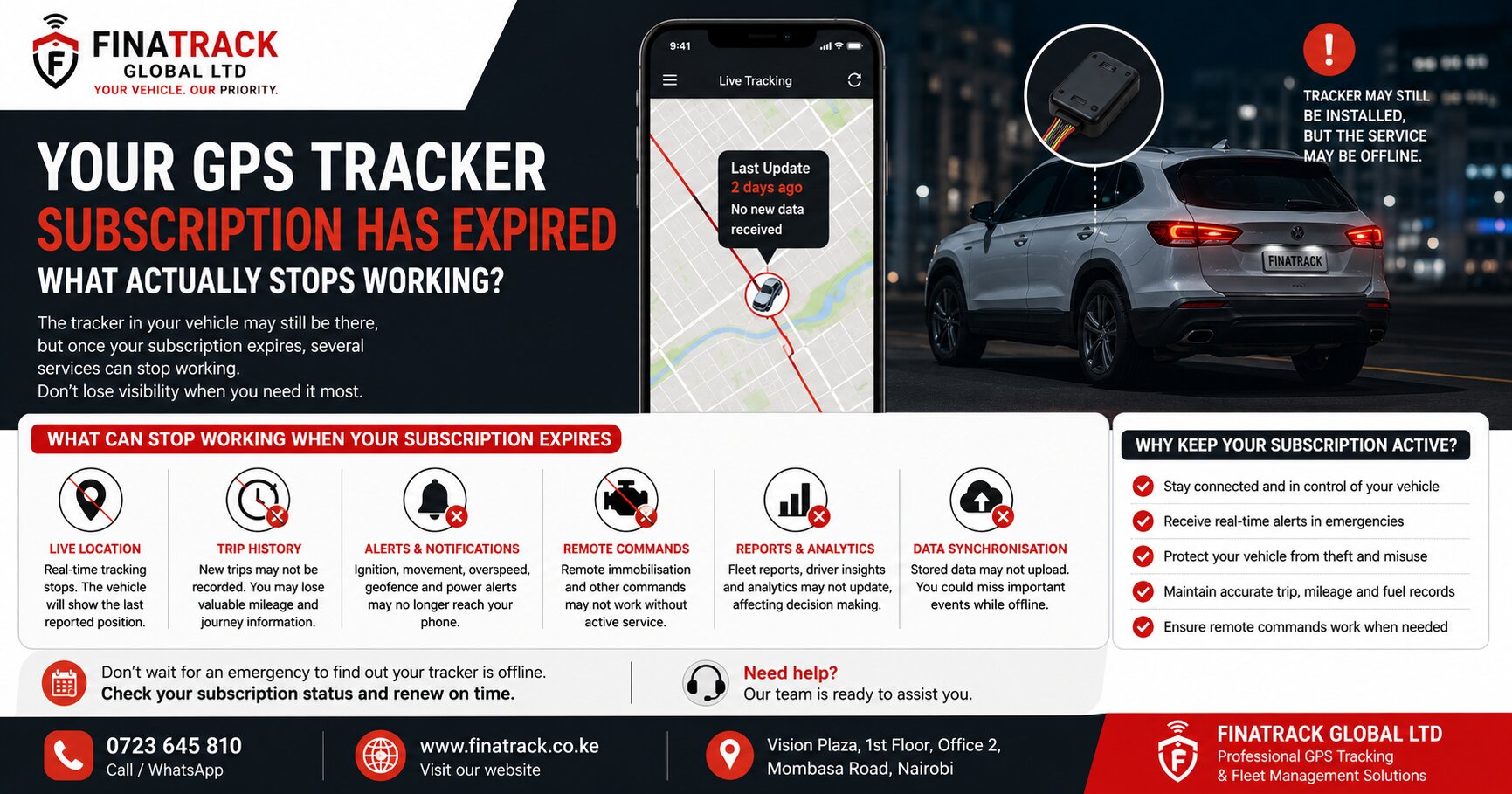
Subscription status should also be checked during the transfer. Moving the physical tracker does not automatically extend or renew its service period. If the tracking subscription is close to expiry, the owner should address both the installation and service status at the same time.
There is little benefit in transferring a tracker perfectly only for the service to stop shortly afterwards. The provider should confirm that connectivity and platform access remain active. Owners should also verify the new vehicle is reporting normally after the transfer is complete.
Vehicle owners sometimes assume that the tracker stores everything permanently inside the device. In reality, much of the information displayed in the application may be stored on the tracking platform. Transferring hardware therefore does not mean the old vehicle’s history disappears or automatically belongs to the new car.
Businesses that need older records should clarify how historical information is retained. This can be relevant for mileage audits, employee disputes, fuel investigations or insurance related enquiries. Data administration is therefore part of a professional tracker transfer.
The timing of the transfer should also be planned carefully. If the old car is sold today and the new vehicle will only arrive several weeks later, the tracker should be stored securely after removal. The provider should know that the device is temporarily not installed so that its status is not mistaken for a technical fault.
The device should not simply be placed in a drawer indefinitely without considering its service status or backup battery. When the new vehicle arrives, the tracker should be checked again before installation. A fresh technical inspection ensures the device has not developed a problem during storage.
Private motorists can keep the process relatively simple. Tell the tracking provider that the vehicle is being changed, arrange professional removal from the old car, have the device inspected and then professionally installed in the new one. After installation, confirm fresh location updates, trip history and any security functions you rely on.
Businesses should take an additional administrative step by updating fleet records and user access. This prevents the new vehicle from carrying the identity or reporting history of the old asset incorrectly. The process should be documented just as the business would document the transfer of any other important equipment.
Finatrack Global Ltd can assist vehicle owners and businesses when changing vehicles by assessing whether an existing GPS tracking device is suitable for transfer and professionally reinstalling the appropriate equipment. Depending on the new vehicle and security requirement, the transfer can also provide an opportunity to strengthen protection with additional tracking or vehicle security layers.
Customers can arrange installation at a convenient location or visit Finatrack Global Ltd at Vision Plaza, 1st Floor, Office 2, Mombasa Road, Nairobi. For assistance with transferring, upgrading or installing a GPS tracker, contact 0723 645 810 or visit www.finatrack.co.ke.
Changing vehicles does not necessarily mean starting your tracking investment from zero. A good GPS tracker can often continue protecting another vehicle, but only when the hardware remains suitable, the electrical installation is professionally redone and the tracking account is updated correctly. Treating the transfer as a complete security and fleet administration process ensures the new car is genuinely protected rather than simply carrying an old tracker.