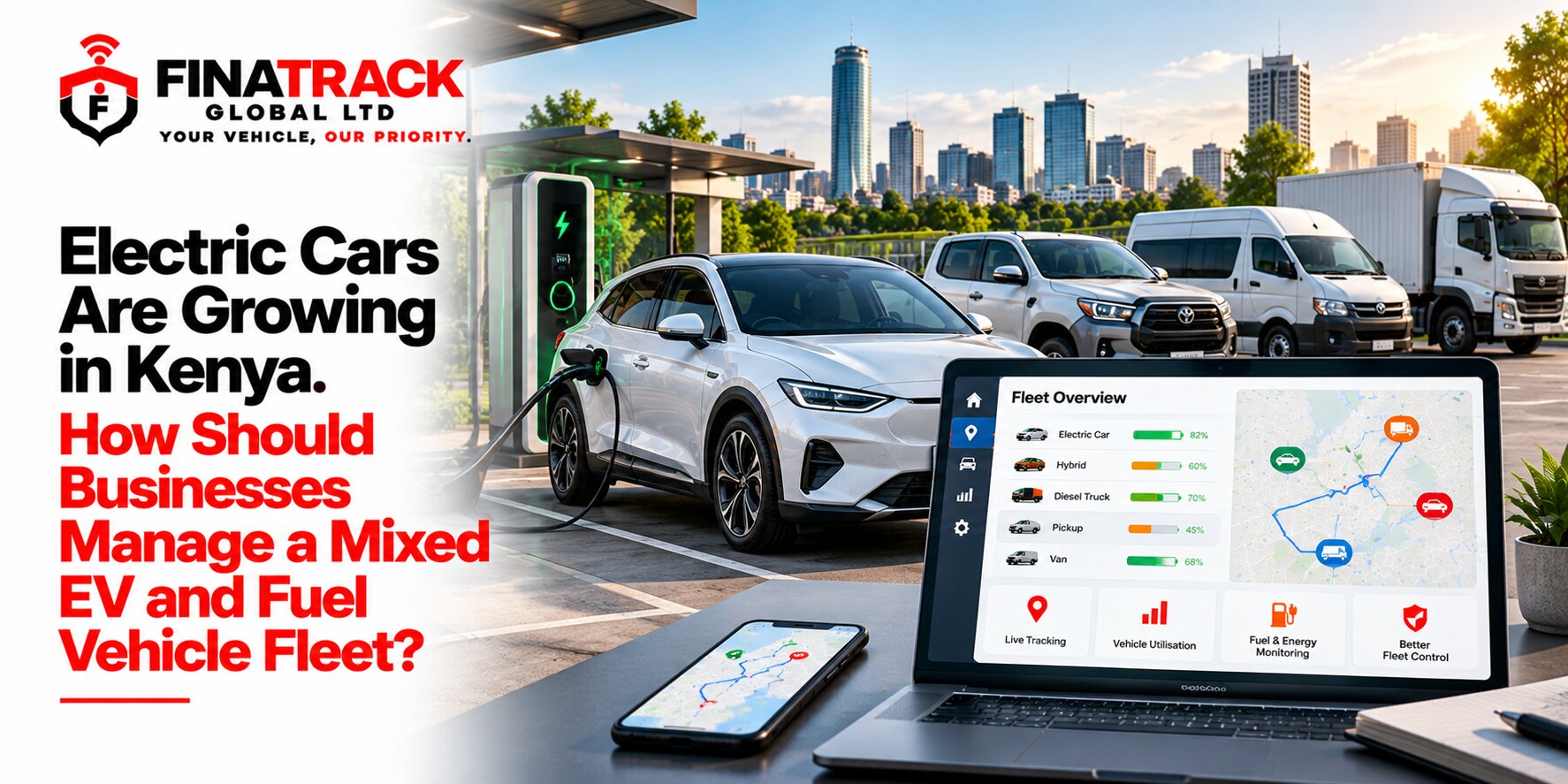
Kenyan businesses are beginning to face a fleet-management question that barely existed a few years ago: what happens when the company parking yard contains petrol vehicles, diesel vehicles, hybrids and fully electric cars at the same time? Kenya officially launched its National Electric Mobility Policy in February 2026, and implementation work has continued through partnerships, technical working groups and plans for charging infrastructure, regulation and private-sector investment. For businesses, this means electric vehicle fleet management in Kenya is increasingly becoming an operational issue rather than simply a future technology discussion.
Moving toward electric vehicles does not necessarily mean replacing an entire conventional fleet at once. A company may purchase a few electric cars for urban sales teams while keeping diesel pickups for field work and long-distance trucks for heavy transport. The result is a mixed fleet where different vehicles have different energy costs, driving ranges and operating requirements. Management therefore needs a common way to understand how every vehicle is being used instead of managing EVs and fuel vehicles as completely separate operations.
GPS tracking can provide that common layer of visibility. Whether a company vehicle is diesel, petrol, hybrid or electric, authorised managers can use professionally installed tracking technology to review location, trip history, mileage and vehicle utilisation depending on the solution installed. This allows a business to compare how frequently different vehicles are moving, which routes they are covering and whether particular assignments are better suited to one type of vehicle. GPS tracking does not automatically show an EV’s battery charge unless it is specifically integrated with compatible vehicle data, but it can still provide valuable information about distance and route patterns.
Route information can become particularly useful when deciding where electric vehicles should be deployed. A company may discover that several vehicles spend most of their working day completing predictable journeys within Nairobi and return to the same office every evening. Those vehicles may present a very different operating profile from a pickup travelling hundreds of kilometres between counties. By reviewing actual journey data before expanding the EV fleet, management can identify routes where charging and range requirements may be easier to plan rather than making purchasing decisions based only on assumptions.
A mixed fleet also changes how businesses compare operating costs. Petrol and diesel vehicles are normally evaluated through fuel consumption, while electric vehicles are more closely associated with electricity use, charging availability and downtime during charging. GPS mileage and utilisation data can provide a common reference point by showing how much work each vehicle actually performs. Businesses can then combine those records with fuel receipts, charging records, maintenance expenses and other operational costs to understand whether different vehicle types are delivering value for the assignments they have been given.
Vehicle utilisation becomes equally important. An electric company car may appear economical to operate, but the investment provides limited value if the vehicle spends most of the week parked because staff are uncertain about charging or range. At the same time, a conventional vehicle may be accumulating unnecessary mileage simply because employees automatically choose it for every assignment. GPS data can help management identify these patterns and develop clearer policies about which vehicles should handle short urban trips, long-distance travel, deliveries or specialised field work.
Security should not be overlooked simply because a vehicle is electric. EVs and hybrids can still benefit from independent location tracking, geofencing, trip history and layered vehicle-security solutions. Professional installation is especially important because modern electric and hybrid vehicles contain sophisticated electrical systems, including high-voltage components that should not be interfered with casually. Tracking equipment should therefore be connected through appropriate low-voltage systems by technicians who understand the vehicle configuration rather than through experimental wiring.
Finatrack Global Ltd provides GPS tracking and fleet-management solutions that can help Kenyan businesses maintain visibility across conventional, hybrid and electric vehicles as fleets evolve. Finatrack’s wired GPS tracker is available at KES 15,000, with professional installation and options for wireless backup tracking, tracking tags, AI dashcams and other fleet-security solutions according to operational requirements. Businesses can call or WhatsApp 0723 645 810 or visit www.finatrack.co.ke. As Kenya’s electric-mobility framework moves from policy toward implementation, the businesses best prepared for the transition will be those that understand how their vehicles are actually being used before deciding which technology should replace what.