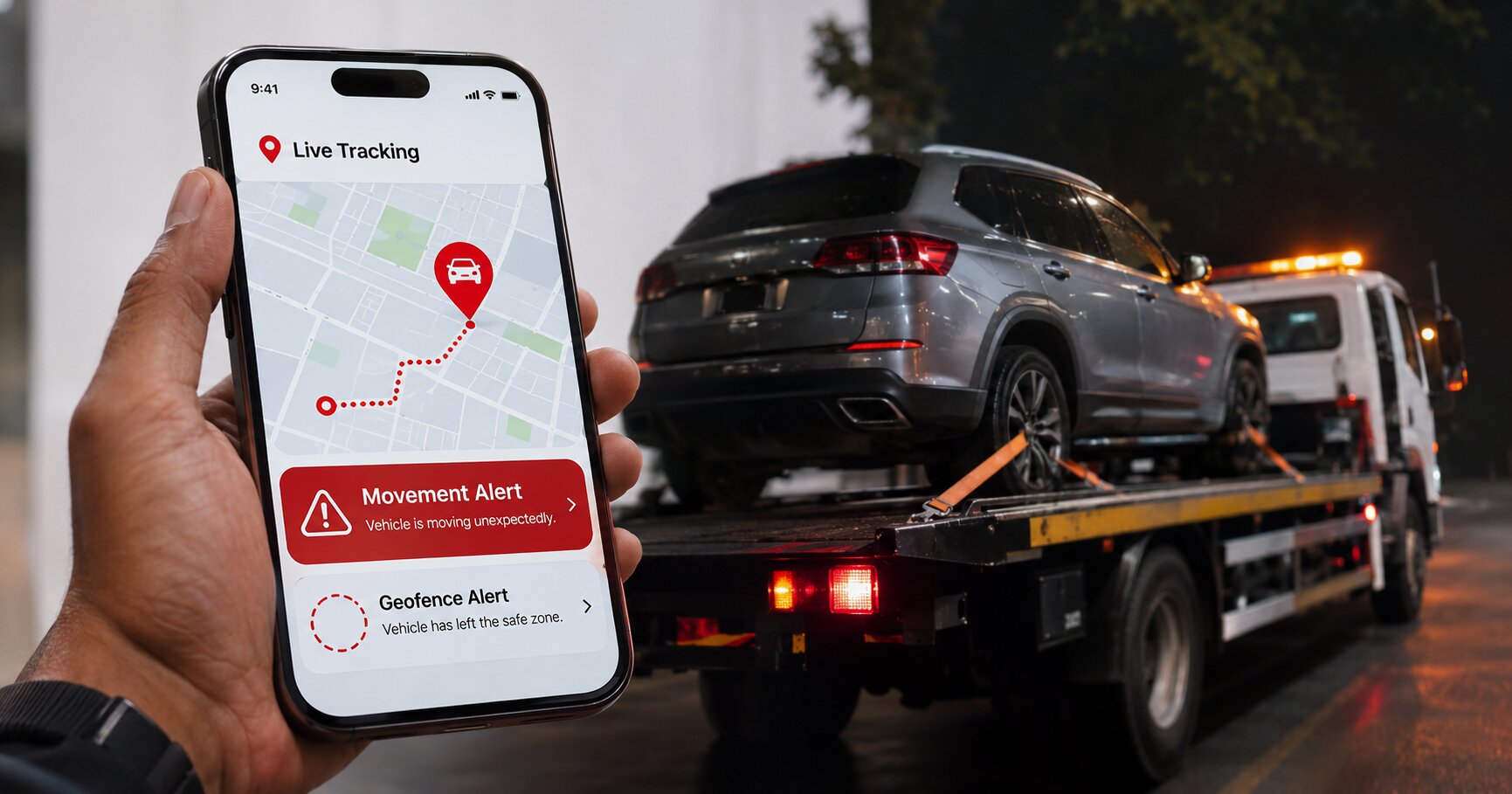
Vehicle security has changed significantly over the years. Many Kenyan motorists still rely on factory-fitted immobilisers, steering locks and traditional car alarms, but these systems are no longer the only options available. As vehicle theft methods become more sophisticated, owners are increasingly looking for security systems that do more than simply make noise when someone interferes with the car. This is where GPS tracking and advanced car alarm systems become especially useful.
Although a GPS tracker and a car alarm both contribute to vehicle security, they perform very different roles. A car alarm is mainly designed to detect interference and draw attention when certain events occur, while a GPS tracker helps you monitor the vehicle’s location and movement. The strongest vehicle security strategy often comes from combining the two rather than choosing one and ignoring the other.
What Does a Car Alarm Actually Do?
A car alarm is designed to detect suspicious activity around the vehicle. Depending on the alarm system installed, it may respond when a door is forced open, when the ignition is tampered with or when the vehicle experiences unusual movement. Once triggered, the alarm can produce a loud siren intended to attract attention and discourage the person interfering with the car.
This makes a car alarm particularly useful during the early stages of an attempted theft. If someone tries to open the vehicle, interfere with the ignition or break into the cabin, the alarm may provide an immediate warning. In a residential compound, office parking area or public parking space, that noise can attract the attention of the owner, guards or people nearby.
The limitation is that a car alarm is most effective when someone is close enough to hear or respond to it. If the vehicle is parked far away from the owner, the alarm may go off without the owner knowing immediately. In addition, people can sometimes ignore alarms because false alarms are common in busy areas. This is why a car alarm works best as one part of a broader vehicle security system.
What Does a GPS Tracker Add?
A GPS tracker provides a different type of protection because it gives the vehicle owner location visibility. Rather than simply alerting people nearby, the tracking device allows you to check where the vehicle is through a mobile application or web platform. Depending on the system installed, you may also be able to review route history, receive geofence alerts, monitor speed and view ignition status.
This becomes important when the vehicle is no longer where you left it. If a car is stolen, moved, towed or used without permission, a tracking system may help you see its current or most recently reported location. Instead of depending entirely on witnesses or hoping someone saw what happened, you have a digital record of the vehicle’s movement.
For businesses, GPS tracking is also useful beyond theft prevention. Fleet managers can monitor company vehicles, review routes, investigate unauthorised trips and improve driver accountability. For private motorists, the same system can provide confidence that the vehicle can be checked even when it is several kilometres away.
GPS Tracker vs Car Alarm: They Solve Different Problems
The main difference between the two systems is simple: a car alarm focuses on detecting interference, while a GPS tracker focuses on location and movement. A car alarm may help you know that someone is tampering with the vehicle, but it may not tell you where the car has gone if the thief manages to move it. A GPS tracker may show you the vehicle’s location, but it may not make a loud sound when someone first attempts to break in.
This is why comparing the two as though one must replace the other can be misleading. They are more effective when used together because each system covers weaknesses in the other. A vehicle owner can receive the benefit of an audible alarm for immediate deterrence and GPS tracking for continued visibility if the vehicle is moved.
For example, imagine that a thief forces open the driver’s door at night. The car alarm may sound and attract attention. If the thief still manages to move the vehicle, the GPS tracker can help the owner monitor where it is heading. In this situation, the alarm acts as the first line of defence while the tracker provides ongoing location information.
Why Layered Vehicle Security Matters
Modern vehicle security works best when several layers are used together. No single system can prevent every possible theft method. A criminal who knows how to bypass an alarm may still have to deal with an immobiliser, while someone who manages to start the vehicle may still be tracked through GPS.
Layered security means combining several different systems that perform different roles. A factory immobiliser may help prevent unauthorised starting, a car alarm may detect interference, a GPS tracker may provide location visibility and a backup tracker may provide additional redundancy if the main tracking device is discovered.
The more layers a thief has to overcome, the more difficult and risky the theft becomes. This does not mean vehicle owners need to install every device available. Instead, they should choose systems that complement one another and match the value, usage and risk level of the vehicle.
For many private car owners, a GPS tracker combined with an advanced car alarm offers a practical balance between prevention and monitoring.
Why a Car Alarm Alone May Not Be Enough
Traditional car alarms were designed mainly to attract attention. This approach still has value, but it does not solve every security problem. In busy urban areas, alarms sometimes go off because of accidental contact, electrical issues or sensitivity settings, and people nearby may not always react immediately.
There is also the possibility that a thief may disable the alarm before moving the vehicle. If the owner has no tracking system installed, they may have very little information about where the vehicle has gone.
A car alarm therefore performs best when supported by another system that continues monitoring the vehicle after the initial alert. GPS tracking provides this additional visibility. Even if the alarm is disabled, the tracker may still provide location information depending on how it is installed and whether it remains operational.
Why GPS Tracking Alone May Also Have Limitations
GPS tracking is powerful, but it should not be treated as a complete replacement for every other security measure. A tracker helps you monitor the vehicle, but in many cases it does not physically prevent someone from entering the car.
If a thief gains access to the vehicle and manages to move it, the tracker becomes extremely useful, but it would still have been better if the attempted break-in had been detected earlier. This is where an alarm system adds value.
Tracking devices can also be targeted by experienced thieves who know that modern vehicles may contain GPS systems. For this reason, installation quality matters. The tracker should be installed discreetly, and high-risk vehicle owners may also consider a secondary backup tracker to provide another layer of protection.
The key point is that GPS tracking is strongest when used as part of a broader security strategy rather than as the only device protecting the vehicle.
How a GPS Tracker and Car Alarm Work Together
When a car alarm and GPS tracker are combined, they create a more complete security system. The alarm focuses on detecting interference, while the tracker focuses on location, movement and historical information.
If someone tries to break into the vehicle, the alarm may sound. If the vehicle is then moved, the tracker can help the owner see where it is going. If a geofence has been configured around the normal parking area, the owner may also receive a notification when the vehicle leaves the zone.
This combination can be especially useful for vehicles that are parked overnight outside homes, apartments, workplaces or commercial premises. It also provides added security for vehicles that travel frequently or are operated by different drivers.
For business owners, the benefits go beyond security. The same GPS tracker used for theft recovery can also support route monitoring, speed alerts, driver accountability and operational control.
Should You Add a Backup Tracker?
Vehicle owners who want an even stronger security setup may consider adding a backup tracking device. A primary wired GPS tracker is usually installed discreetly inside the vehicle, but an experienced thief may eventually search for it.
A secondary tracker provides another possible source of location information if the first device is discovered or disconnected. This creates an additional layer of redundancy and can be especially useful for high-value vehicles or motorists who are particularly concerned about theft.
The ideal setup depends on the vehicle and the owner’s risk level. For some motorists, a GPS tracker and car alarm will provide sufficient protection. Others may prefer a main tracker, car alarm and backup tracking device for greater security.
Which One Should You Install First?
If your vehicle currently has no additional security beyond its factory system, the decision depends on your biggest concern. If you are mainly worried about being able to locate the car after it is moved, a GPS tracker may be the priority. If you are mainly concerned about detecting attempted break-ins around your home or office, an advanced car alarm can provide an immediate deterrent.
However, motorists who want broader protection should consider installing both. The advantage is that you are not relying on a single security method. One system can alert you to interference, while the other helps you monitor movement and location.
This approach also gives vehicle owners more control because they are not depending entirely on a loud siren or entirely on a tracking app. Each tool contributes something different.
Finatrack GPS Tracker and Car Alarm Combo
Finatrack Global Ltd provides both GPS tracking and advanced car alarm solutions for vehicle owners in Kenya. Customers who want to combine the two can choose our Wired GPS Tracker + Advanced Car Alarm combo at KSh 20,000.
The wired GPS tracker provides features such as real-time tracking, route history, geofencing, speed alerts, ignition monitoring and other tracking functions depending on system configuration. The advanced car alarm adds another security layer by helping detect suspicious interference with the vehicle.
For motorists who want additional redundancy, Finatrack also offers a tracking device + backup tracker combo at KSh 25,000. This option is suitable for vehicle owners who want a second tracking layer in case the primary device is interfered with.
Better Vehicle Security Comes From Combining the Right Tools
A GPS tracker and a car alarm should not be seen as competing technologies. They solve different problems and can work together to create stronger vehicle security.
The car alarm helps detect interference and may discourage a thief before the vehicle is moved. The GPS tracker helps you monitor the vehicle’s location and understand what happens if it leaves the expected area. When both systems are installed, the vehicle owner benefits from both immediate detection and continued visibility.
For installation or enquiries, contact Finatrack Global Ltd on 0723 645 810, visit www.finatrack.co.ke, or visit our office at Vision Plaza, 1st Floor, Office 2, Mombasa Road, Nairobi.
Protecting a vehicle is no longer simply about making it difficult to start. It is about detecting interference, monitoring movement and making sure you have enough information to respond when something unusual happens.