A business does not need fifty vehicles before fleet management becomes difficult. For many Kenyan SMEs, the problems begin with just three or four company cars. One vehicle is being used heavily, another is difficult to account for, fuel costs keep rising and drivers increasingly explain delays using information that management cannot independently verify.
This is where GPS tracking begins to move from being a security accessory to becoming a business management tool. A small company operating sales cars, delivery vans, pickups, motorcycles or service vehicles may not have a dedicated fleet manager, yet the vehicles still consume fuel, require maintenance and represent significant capital investment. GPS tracking can help the business owner understand what those vehicles are actually doing without having to supervise every driver personally.
The real question for an SME is therefore not simply whether GPS tracking works. The more important question is whether the information generated by the tracking system can save, protect or recover enough value to justify the investment. For some businesses, the answer becomes clear after preventing one unnecessary journey, identifying excessive mileage or improving vehicle security.
Consider a company operating five vehicles. If management cannot confidently explain where each vehicle is during the working day, when it was last used or how many kilometres it travelled during the month, the fleet already has an information problem. The fact that the fleet is small does not make those costs insignificant.
Small businesses can actually feel inefficient fleet use more strongly because every vehicle represents a larger percentage of the organisation’s transport capacity. If one out of five vehicles becomes unavailable, the business immediately loses 20 percent of its fleet. A company operating fifty vehicles may absorb one breakdown much more easily.
The first benefit of GPS tracking is vehicle visibility. Instead of calling drivers repeatedly to ask where they are, authorised users can check the current or most recently reported location through the tracking platform. This can make dispatching and customer communication much easier.
A plumbing company, for example, may receive an urgent customer request in Westlands while technicians are already operating around Nairobi. Without fleet visibility, management may automatically send another vehicle from the office on Mombasa Road. GPS tracking can help identify whether another technician is already much closer to the customer.
Reducing unnecessary travel has a direct financial effect. Every kilometre avoided saves some fuel while also reducing the rate at which tyres, brakes, servicing intervals and vehicle depreciation accumulate. One more efficient dispatch may appear insignificant, but repeated every working day the savings become more meaningful.
The same principle applies to delivery businesses. A company operating several vans may repeatedly send vehicles across the same areas because assignments are made according to whichever driver calls first or returns to the office. A tracking platform gives management a clearer view of the entire fleet before deciding which vehicle should handle the next job.
Trip history provides another important advantage. The business owner does not need to watch every vehicle throughout the day because historical journeys can be reviewed later. This can show where vehicles travelled, how long journeys took and where significant stops occurred.
For small businesses, this can reduce dependence on handwritten logbooks. A driver may still complete operational records where required, but GPS history provides an independent movement record that can be compared with those documents. The business becomes less dependent on memory when questions arise several days later.
Mileage is one of the most useful records for SMEs because it connects directly to several expenses. Fuel, servicing, tyres and eventual resale value are all influenced by how much the vehicle travels. A company that does not monitor mileage properly can easily underestimate how quickly one asset is being consumed.
GPS tracking can make mileage differences much easier to identify. One sales car may accumulate 4,000 kilometres in a month while another similar unit covers only 1,300 kilometres. Management should understand whether the difference represents legitimate workload or poor allocation.
A high mileage vehicle is not automatically a problem. It may simply be generating more productive customer visits or deliveries. The tracking data becomes valuable because it helps management understand where those kilometres came from rather than simply reacting to the number.
Unnecessary mileage is where the financial case becomes more obvious. A company vehicle used for unauthorised personal journeys after working hours consumes company asset life even when the driver personally buys the fuel. Tyres, maintenance and depreciation still belong to the business.
Clear vehicle policies should therefore work together with GPS tracking. Employees should understand whether vehicles may be taken home, what personal use is permitted and what constitutes an authorised journey. The technology then helps verify compliance with rules that are already understood.
After-hours vehicle movement can also create additional security exposure. A car used outside approved working periods is on the road for longer and therefore exposed to accidents, theft and mechanical wear for activities that may not benefit the business. Historical tracking information can make repeated patterns visible.
Fuel is another area where SMEs frequently struggle. Owners often know the total amount spent at petrol stations but cannot easily explain which vehicle or journey produced the cost. Fuel receipts provide a financial record, but they do not always explain operating behaviour.
Mileage and route information give those receipts context. If one vehicle consumes considerably more fuel but also travels significantly farther, the higher expenditure may be reasonable. If fuel rises while mileage remains stable, management has a reason to investigate further.
The explanation may involve idling, traffic, mechanical condition, driver behaviour or another legitimate factor. GPS data does not automatically prove fuel theft or misuse, but it reduces the number of unknowns. Better questions generally lead to better fleet decisions.
Businesses with trucks or other fuel intensive vehicles may require more detailed fuel monitoring. Dedicated fuel sensors can provide additional information about fuel-level changes, refilling and possible unusual drops depending on the system installed. This can be especially valuable where fuel represents one of the largest monthly operating expenses.
Idling should also be considered. A company vehicle can burn fuel while covering no additional distance at all. Delivery vans, trucks and service vehicles may spend substantial time waiting at warehouses, customer locations or project sites.
Some of this waiting is unavoidable. The important question is whether the business knows where the delays occur and whether anything can be changed. GPS and ignition data can help reveal repeated patterns that may otherwise disappear inside the monthly fuel bill.
A van spending forty minutes at one customer may be normal. Five vehicles each spending ninety minutes at the same warehouse every morning may indicate a loading problem that management can address. The tracking system has then identified a business process problem rather than simply a driver problem.
Maintenance is another area where GPS tracking can produce value. Small businesses often rely on drivers to remember when vehicles require servicing, especially where there is no dedicated fleet department. This can result in maintenance being delayed until the driver notices that the vehicle is already overdue.
Mileage records make maintenance planning more structured. A heavily used pickup can reach its next service requirement much earlier than another vehicle purchased at exactly the same time. The business can plan workshop visits according to actual vehicle usage instead of relying solely on calendar dates.
Preventive maintenance reduces the risk of discovering vehicle problems during an important customer assignment. A delivery business that loses one of four vans to an avoidable breakdown immediately creates pressure on the remaining three. The operational cost can easily exceed the cost of the repair itself.
Downtime also has to be considered. A vehicle in the garage may require the company to hire temporary transport, postpone customer visits or overload another unit. These hidden costs make reliable fleet maintenance particularly important for smaller organisations.
GPS tracking does not diagnose mechanical faults, but it provides operating information that supports better planning. Management can see which vehicles are accumulating the highest mileage or unusually intensive usage and give those assets closer attention. Mechanical inspection and manufacturer recommendations should still determine the actual maintenance work required.
Driver behaviour creates another potential return on investment. Depending on the telematics system, businesses can review repeated speeding, harsh braking or acceleration events. This information can help identify drivers who may need coaching.
The objective should be safety and cost control rather than punishment. Aggressive driving can contribute to fuel consumption, tyre wear, brake wear and accident risk. Improving driving behaviour therefore has both financial and safety benefits.
One event should not be treated as proof of poor driving. Kenyan roads can require sudden braking because of traffic, motorcycles, pedestrians or potholes. Patterns across several journeys provide a much stronger basis for management discussions.
Accidents can be especially expensive for small fleets. Damage to one company vehicle may remove a substantial percentage of operational capacity while insurance and repairs are being processed. Better driver monitoring cannot prevent every accident, but it can help management identify recurring risky patterns before something more serious happens.
Businesses requiring more advanced safety visibility can combine GPS tracking with AI dashcams. Video can provide additional context around harsh driving events or road accidents. This is particularly relevant for commercial vehicles carrying staff, customers or valuable goods.
Security remains one of the strongest reasons small businesses install tracking. A company vehicle is often one of the organisation’s most valuable physical assets. Losing one can create both a financial loss and immediate disruption to operations.
A wired GPS tracker can provide location information and selected alerts while the vehicle operates. If theft occurs and the tracker remains active, authorised users can view the vehicle’s latest reported location and provide relevant information to appropriate recovery or law-enforcement channels.
Owners should not personally pursue suspected thieves simply because the vehicle location is visible. A tracking system is an information tool, not an invitation to confront potentially dangerous people. Personal safety should always come before asset recovery.
Layered security may make sense for vehicles whose loss would seriously affect the business. A primary wired tracker can be combined with an alarm, immobilisation or independent wireless backup tracking device. This reduces dependence on one security system.
Small businesses should choose those layers according to risk. A company car used mainly for local sales appointments may require a different security setup from a truck carrying valuable cargo. Spending should reflect the value of the asset and the financial consequences of losing it.
The value of GPS tracking becomes especially clear when the business has shared vehicles. When several employees use the same pickup or van, responsibility can become unclear. Damage, unexpected mileage or fuel discrepancies may appear after several drivers have already used the vehicle.
Combining GPS trip history with a simple key or vehicle booking system creates much stronger accountability. The booking record identifies who had responsibility for the car while the tracking platform shows when and where it moved. This reduces disputes based on memory.
The same principle applies to businesses with several branches. A company may have underused vehicles at one branch while another location repeatedly complains about a shortage. Without central visibility, management may even consider purchasing another car.
GPS utilisation data can reveal the imbalance. Reallocating a vehicle the business already owns may solve the problem without creating another insurance premium, maintenance schedule and depreciation expense. Avoiding one unnecessary vehicle purchase can produce a return far larger than the tracking cost.
This is why fleet utilisation should be part of the calculation. Tracking is not only about controlling drivers; it also helps management determine whether the organisation is using its assets efficiently. A vehicle that rarely moves may represent capital that could be used more productively elsewhere.
Low utilisation does not automatically mean the car should be sold. It may exist for emergency response or specialised tasks. The tracking data simply gives management the evidence needed to ask whether that capacity remains justified.
For a growing SME, this becomes valuable before fleet expansion. Employees may say that vehicles are always busy, but historical records can show whether the shortage is genuine. A fleet that is already being used efficiently may justify another purchase, while an inefficiently allocated fleet may need better management first.
GPS tracking can therefore support capital decisions as well as daily operations. The business begins using actual utilisation rather than assumptions to decide when another vehicle is required. This makes fleet investment more disciplined.
Customer service can improve as well. When a client asks where a delivery or technician is, the business can check the vehicle’s latest location before responding. This reduces vague promises such as “the driver is on the way” when nobody actually knows how far away they are.
Better information allows the company to communicate delays more professionally. Traffic can still change arrival times, but management has a more realistic starting point. For service businesses, this can improve the customer’s perception of reliability.
GPS visibility can also help in breakdowns. A driver may struggle to describe their exact location, particularly on an unfamiliar rural road or project site. The fleet platform can provide a location reference to support dispatch of a mechanic or recovery vehicle.
For small businesses without a dedicated fleet department, this central visibility is particularly useful. The owner or operations manager can supervise several vehicles while also managing other parts of the company. The tracking system reduces the amount of manual communication needed to maintain basic fleet awareness.
Account access should still be controlled carefully. A GPS platform can reveal customer locations, employee movement and where company vehicles regularly park. Not every employee needs to see the entire fleet.
The business should decide who needs administrator access and who only requires limited operational visibility. Former employees should have access removed promptly when they leave. Fleet tracking information is a business asset in its own right.
Employees should also know that company vehicles are tracked. Transparent policies make it clear that the objective is vehicle security, cost management, maintenance and accountability. Secretive monitoring can create unnecessary distrust and may complicate responsible use of the information.
Technical reliability is another part of the cost equation. Installing the cheapest device available provides little value if it repeatedly goes offline or technical support is difficult to obtain. A small business needs a tracking solution that works consistently because it may not have internal technicians available to troubleshoot problems.
Professional installation matters for the same reason. Poor wiring can cause power interruptions or inaccurate ignition information. A professionally installed system is more likely to provide the reliable data management decisions depend on.
Tracker health should be checked periodically. A vehicle can continue operating normally even after the GPS device has stopped communicating. Management may assume tracking is active for months unless somebody checks the last update time.
This should form part of a simple fleet routine. Once every week or month, confirm that each actively used vehicle is reporting normally and that recent journeys appear on the platform. Identifying one offline unit takes far less effort than discovering missing information during an emergency.
Tracking should also be checked after battery replacement or major electrical repairs. Mechanics can accidentally disturb tracker wiring while completing unrelated work. The vehicle may leave the garage repaired while the telematics system remains disconnected.
Subscription costs must also be considered when calculating value. A professional tracking service may depend on connectivity, server access and platform support in addition to the physical device. Businesses should understand both installation cost and any ongoing service requirements before comparing providers.
The cheapest initial offer is not always the lowest long-term cost. A system that provides poor reliability, limited support or inaccurate information may save money at installation but fail to deliver operational value. SMEs should evaluate what they actually receive rather than comparing device prices alone.
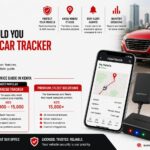
Finatrack Global Ltd currently provides a wired GPS tracker at KES 15,000, giving Kenyan businesses access to a professionally installed tracking solution for individual vehicles and fleets. Businesses requiring additional security can also consider wireless backup tracking, tracking tags or alarm and immobilisation solutions according to the risk of the vehicle.
Whether KES 15,000 is worthwhile depends on how the business uses the system. If the tracker is installed and the owner never looks at the data unless the car is stolen, much of its operational value remains unused. If management uses trip history, mileage, location and alerts to reduce unnecessary journeys or improve vehicle allocation, the system can support everyday business decisions.
A simple return-on-investment approach can help. The business can compare the cost of tracking against avoidable fuel, unnecessary mileage, maintenance problems, lost driver time and the financial exposure associated with vehicle theft. The objective is not to pretend every tracker produces a fixed monthly saving, because each business operates differently.
Suppose better route planning saves only a modest amount of fuel each week across several vehicles. Add reduced unnecessary mileage, better maintenance planning and faster dispatching, and the accumulated value may become meaningful over a year. The benefits are spread across several cost areas rather than appearing as one obvious saving.
The security value is harder to measure because theft may never occur. This is similar to many forms of risk management: the organisation benefits from having visibility and response capability available when needed. For a business whose operations depend heavily on one or two expensive vehicles, that protection can be particularly valuable.
Small businesses should therefore ask a few practical questions before deciding whether GPS tracking is worth the investment. Do we know where our vehicles are during the day, can we explain monthly mileage, are fuel expenses easy to verify, do vehicles get used outside authorised hours and can we quickly identify which vehicle is closest to a customer?
If several answers are no, the business already has fleet management gaps. GPS tracking may provide useful information for closing those gaps. The value increases as the number of vehicles and drivers grows.
A business operating only one vehicle may primarily value tracking for security and trip history. Once the company reaches three, five or ten vehicles, utilisation, driver management, maintenance and dispatching become increasingly important. The tracking system can grow from a security product into a basic fleet management platform.
Different industries will experience that value differently. A delivery company may focus on routes and customer arrivals, while a field-service company cares more about dispatching the nearest technician. A construction business may prioritise project-site movement and after-hours use.
A sales organisation may focus on mileage and customer territories, while a logistics operator may place greater emphasis on fuel, driver behaviour and security. The correct GPS solution should reflect these operational priorities rather than giving every business the same generic configuration.
This is why businesses should discuss their actual fleet problems before installation. A provider should understand whether the concern is theft, fuel, mileage, driver control, dispatching or several issues at once. Tracking becomes more useful when alerts and reports are configured around real management questions.
Management should then review the results after installation. After thirty days, the company can compare vehicle mileage, routes, long stops, after-hours use and utilisation. The first month of data often reveals patterns that were previously hidden.
Actions should follow the findings. One route may be changed, a vehicle reassigned, a tracker repaired or a driver coached on unnecessary idling. The following month provides another opportunity to determine whether the change produced an improvement.
This continuous review is where GPS tracking generates its strongest business value. The technology itself does not save fuel or improve productivity; management decisions based on the information create those results. A tracker becomes valuable when it changes how the business operates.
Finatrack Global Ltd provides professionally installed GPS tracking and fleet telematics solutions for Kenyan SMEs operating company cars, vans, motorcycles, pickups and commercial vehicles. Depending on the selected solution, businesses can access real-time or recently reported location, trip history, geofencing, mileage information and selected operational alerts.
Professional installation can be arranged at the customer’s convenient location or through Finatrack Global Ltd at Vision Plaza, 1st Floor, Office 2, Mombasa Road, Nairobi. Businesses seeking to improve vehicle security and fleet visibility can contact 0723 645 810 or visit www.finatrack.co.ke.
GPS tracking becomes worth the cost when the information helps a business protect valuable assets, eliminate avoidable kilometres, improve driver accountability or make better use of vehicles it is already paying to own. A small fleet does not mean small costs, and even three company vehicles can generate significant waste when nobody has reliable visibility over how they are being used. For Kenyan SMEs, the real return comes from turning vehicle movement into information that management can actually use.