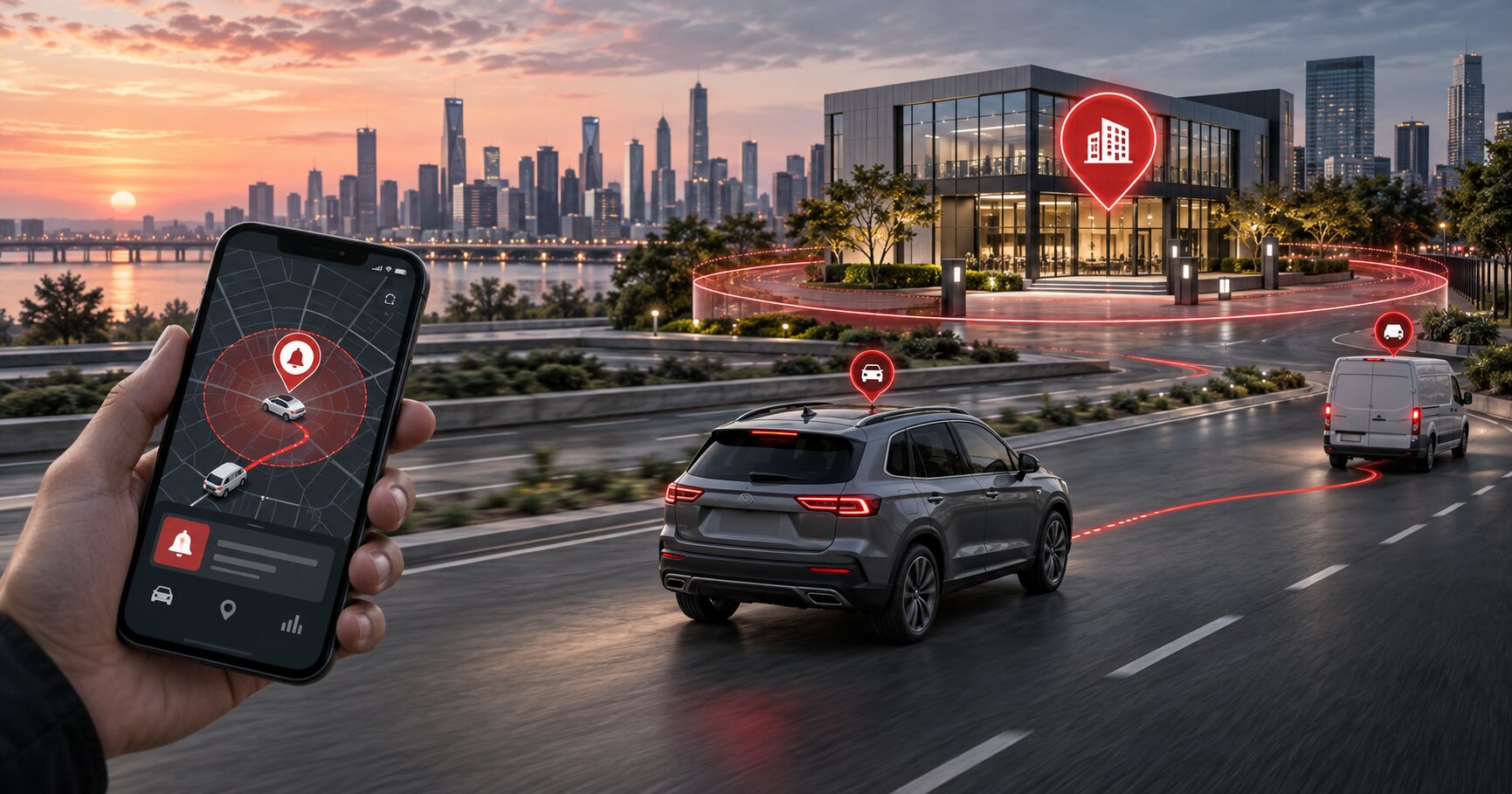
Vehicle tracking has moved far beyond simply showing a car on a map. Modern GPS tracking systems now give motorists and fleet operators tools that can help them monitor movement, detect unusual activity and respond faster when a vehicle is used outside expected areas. One of the most useful of these tools is geofencing.
A geofence is a virtual boundary created around a selected location or area. Once the boundary is set on a GPS tracking platform, the system can generate an alert when a vehicle enters or leaves that area. This gives the vehicle owner or fleet manager an additional level of visibility without having to watch the tracking map continuously.
For private motorists, geofencing can be used around homes, offices, schools, parking areas or other important locations. For businesses, it can be used around depots, customer premises, delivery zones, work sites and approved operating areas.
Turning a Map Into an Active Security Tool
A conventional GPS tracker can show where a vehicle is located, but geofencing makes that information more active. Instead of waiting for the owner to manually check the vehicle’s position, the tracking system can automatically notify them when a predefined boundary is crossed.
This can be useful when a vehicle is expected to remain within a particular area or when the owner wants to know whenever it leaves a familiar location.
For example, a vehicle owner may create a geofence around a residential compound. If the vehicle leaves the area unexpectedly, an alert can help the owner notice the movement sooner and investigate what is happening.
The same principle can be applied to businesses managing several vehicles across different locations.
Useful for Managing Company Vehicles
Businesses often struggle to monitor where company vehicles go after leaving the office or depot. Drivers may take unapproved routes, operate outside assigned zones or use company vehicles for journeys that were not authorised.
Geofencing can help management identify these situations more easily.
A fleet manager can create virtual boundaries around approved operating zones, customer locations or delivery areas. When a vehicle leaves or enters those areas, the system can record the movement and generate an alert depending on the settings used.
This can improve accountability and reduce the need to rely entirely on verbal updates from drivers.
Helping Control Unauthorised Vehicle Use
Unauthorised vehicle use can be difficult to detect if the owner only checks the tracking system occasionally. A driver may leave an approved area, make a personal trip or move a vehicle at an unexpected time without management immediately noticing.
Geofence alerts can help bring such activity to attention sooner.
For businesses, this can support internal policies on vehicle use and improve supervision of company assets. For private motorists, it can provide an extra layer of awareness when a vehicle is being driven by family members, employees or other authorised users.
The technology does not replace communication or good vehicle-use policies, but it provides information that can help vehicle owners make better decisions.
Geofencing Can Support Vehicle Security
Geofencing can also form part of a wider vehicle security setup.
If a vehicle is parked within a known location and later leaves that area unexpectedly, the owner may receive an alert indicating that the vehicle has moved. Combined with ignition alerts, live GPS tracking and remote immobilisation capability, this can help the owner respond more quickly to suspicious activity.
A fast response can be especially important in cases involving unauthorised vehicle movement.
For this reason, geofencing should not be viewed only as a fleet management feature. It can also be useful for private car owners who want greater awareness of where and when their vehicles are moving.
Monitoring Delivery and Service Areas
Businesses involved in deliveries, field services, logistics and transport can also use geofencing to improve operational visibility.
A company may create virtual boundaries around customer locations or delivery points. The system can then help management see when vehicles arrive or leave specific areas.
This information can support better coordination between drivers, customers and office staff. It can also make it easier to verify whether vehicles reached assigned destinations.
For larger fleets, such information can contribute to better route management and customer service.
Better Oversight Without Constant Monitoring
One of the biggest advantages of geofencing is that the vehicle owner does not have to continuously monitor the tracking screen.
Once the geofence is created, the system can automatically generate alerts based on vehicle movement. This allows owners and fleet managers to focus on other tasks while the tracking platform monitors the selected areas in the background.
The result is a more practical form of vehicle supervision that depends on alerts rather than constant manual checking.
Combining Geofencing With Other GPS Features
Geofencing becomes more useful when combined with other tracking features.
Speed alerts can notify the owner when a vehicle exceeds a selected speed. Ignition alerts can show when the vehicle is switched on or off. Historical route playback can help the owner review where the vehicle travelled, while live tracking shows its current position.
Together, these features provide a broader picture of how a vehicle is being used.
For businesses managing fleets, the combination can help improve driver accountability, route monitoring and general fleet control.
Suitable for Both Individual Vehicles and Fleets
Geofencing is useful whether an owner has one vehicle or an entire fleet.
A private motorist may use one or two geofences around important locations, while a business may create several zones around branches, depots, customer locations and project sites.
The value of the feature depends on how the vehicle is used and what the owner wants to monitor. The most important step is setting practical boundaries that match normal vehicle operations.
Professional Setup Makes a Difference
For geofencing to work effectively, the GPS tracking device must be installed correctly and configured with a reliable tracking platform.
Finatrack Global Ltd provides GPS tracking solutions that allow customers to monitor vehicle location, view historical movement and access features such as geofencing and alerts depending on the system installed.
Customers are also guided on how to use the tracking platform so that they can create suitable zones and understand the alerts generated by the system.
Smarter Monitoring Through GPS Technology
As vehicle tracking technology continues to improve, motorists and businesses are gaining access to tools that provide more than just location information.
Geofencing turns vehicle tracking into a more proactive monitoring system by allowing owners to define where vehicles should or should not operate and receive alerts when those boundaries are crossed.
For businesses, this can improve fleet visibility and accountability. For private motorists, it can add another useful layer of awareness and security.
Finatrack Global Ltd provides GPS tracking, geofencing, vehicle alerts, remote immobilisation, car alarm systems, AI dashcams and other vehicle monitoring solutions.
For enquiries or installation, contact Finatrack Global Ltd on 0723 645 810 or visit www.finatrack.co.ke. The company’s Nairobi office is located at Vision Plaza, 1st Floor, Office 2, Mombasa Road.