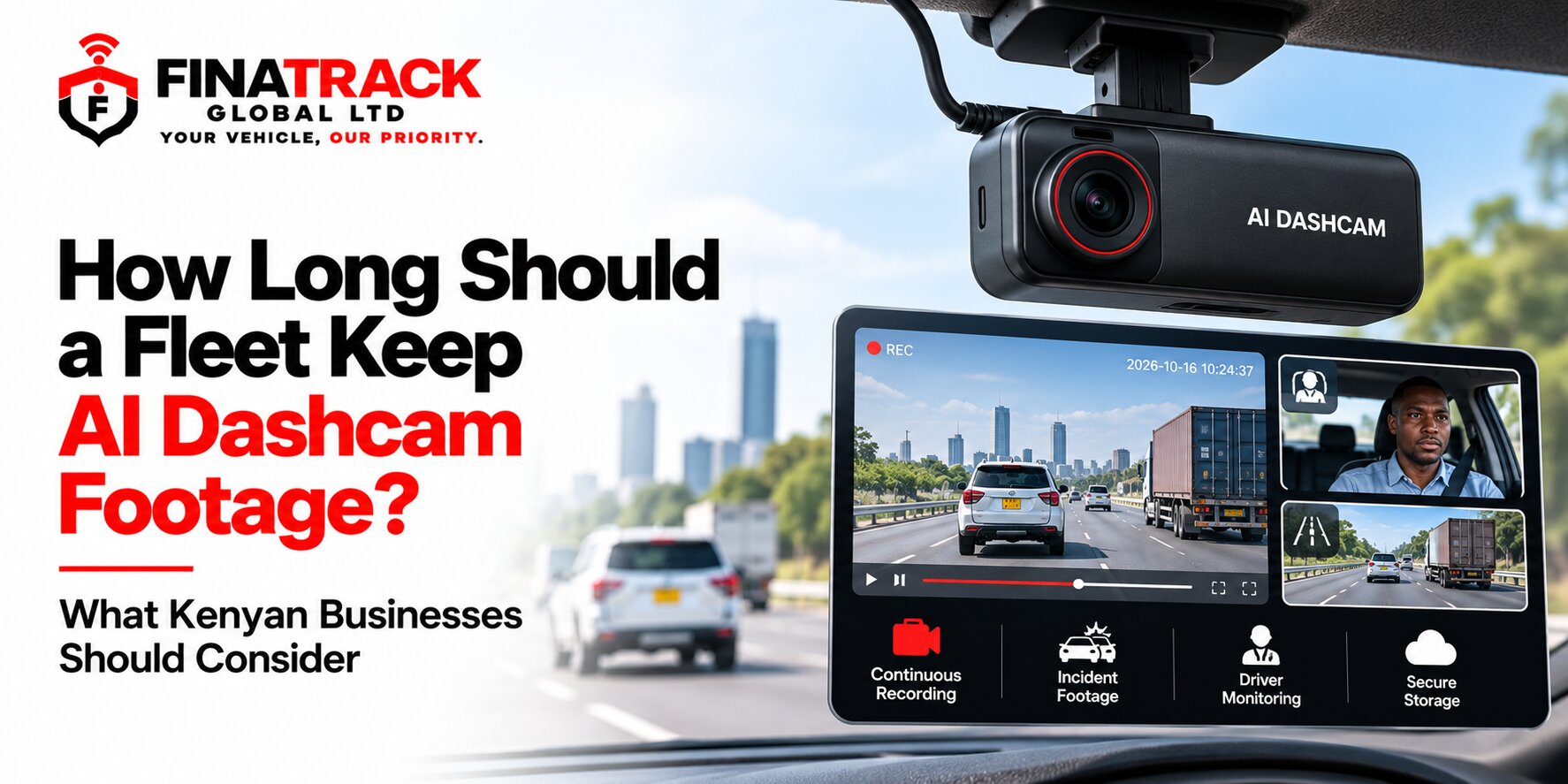
AI dashcams can record far more than ordinary road video. Depending on the system, a fleet may collect road-facing footage, driver-facing video, GPS location, timestamps and selected driving events such as distraction or fatigue alerts. This information can be extremely useful after an accident or when reviewing driver behaviour, but keeping every recording indefinitely is rarely necessary. For businesses using AI dashcams in Kenya, a clear video-retention policy should be part of the fleet-management system from the beginning.
There is no single retention period that is automatically suitable for every fleet. A delivery company operating hundreds of journeys each week may have different requirements from a construction business with ten vehicles or a long-distance transport company handling high-value cargo. Kenyan data-protection principles require personal data to be kept only for as long as necessary for the purpose for which it was collected, while the Office of the Data Protection Commissioner also treats video and audio recordings as forms of personal data where individuals can be identified.
For everyday driving footage where nothing unusual happens, businesses may choose a shorter operational retention period and allow older recordings to be overwritten according to the system’s storage configuration. The important thing is that the company should be able to explain why it keeps footage for the period it has selected. The ODPC itself describes retention periods as depending on the purpose of processing as well as relevant legal or regulatory requirements, rather than applying one fixed period to every situation.
Accident or incident footage should normally be treated differently from ordinary recordings. If a collision, theft attempt, disciplinary issue or serious safety event occurs, the relevant video may need to be preserved for longer so that management can complete its investigation or respond to an insurer, lawyer, regulator or other authorised party. Instead of keeping every journey permanently, fleet managers can identify important clips and preserve only the footage connected to a genuine operational or legal purpose.
Access control is just as important as retention time. Dashcam footage may show drivers, passengers, pedestrians, customer premises and vehicle locations, so businesses should decide who is authorised to view or export recordings. A fleet manager investigating an accident may need access, while an employee with no operational role may not. The ODPC’s guidance on recorded media emphasises issues including storage, access control, data retention, security and transparency when audiovisual information is processed.
Fleet managers should also distinguish between continuous video and event-based footage. An AI dashcam may generate selected clips when configured events occur, such as distraction, fatigue warnings or other safety alerts. These short clips may be more useful for driver coaching than storing hours of uneventful road footage. A practical retention policy can therefore give different treatment to routine recordings, safety events and serious accident footage rather than applying the same rule to everything.
Drivers should know that dashcam monitoring is taking place and understand the business purpose for which the footage is being collected. The objective should be clearly connected to legitimate fleet needs such as road safety, accident investigation, vehicle security and driver coaching. Businesses should also document their retention approach so that footage is deleted or overwritten when it is no longer required instead of accumulating indefinitely simply because storage space is available.
Finatrack Global Ltd provides AI dashcam solutions with DMS and ADAS capabilities for private vehicles and commercial fleets in Kenya. Finatrack’s AI Dashcam is available at KES 35,000, with professional installation and support for businesses seeking better visibility over driver behaviour and road incidents. For enquiries, call or WhatsApp 0723 645 810 or visit www.finatrack.co.ke. The best dashcam strategy is not to keep every second of video forever, but to retain useful footage for a clear purpose, protect access to it and remove recordings when the business no longer has a legitimate reason to keep them.