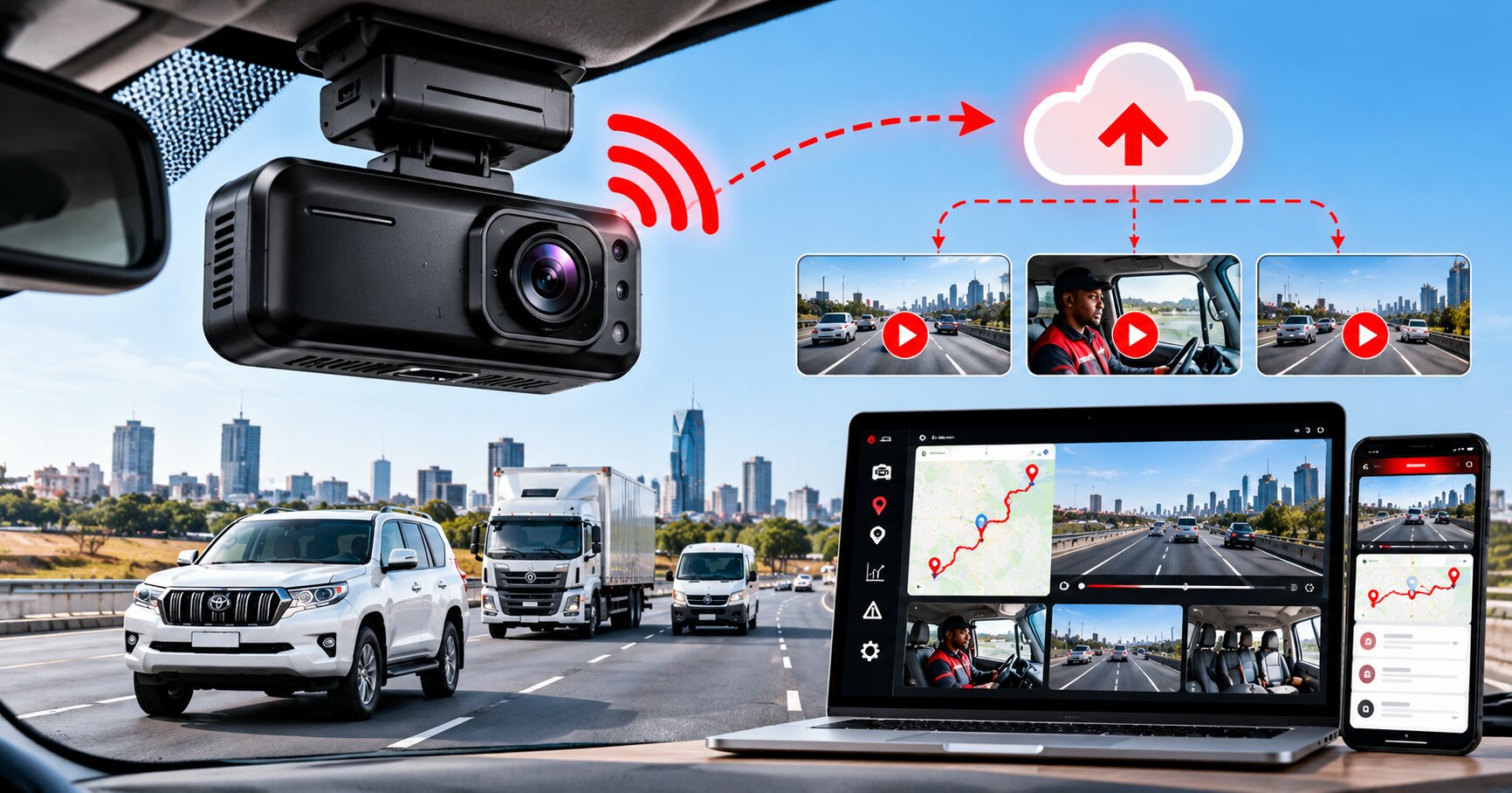
Installing an AI dashcam can give fleet managers access to video, driver monitoring and safety events, but it also introduces another operating cost that businesses should understand: mobile data. Unlike an ordinary dashcam that mainly stores footage locally, a connected AI dashcam may use a mobile network to send event clips, GPS information, alerts or live video to the fleet platform. For businesses planning to install cameras across several vehicles, understanding AI dashcam data usage in Kenya can help avoid unexpected connectivity costs.
There is no single amount of data that every AI dashcam will consume. Usage depends on how the system has been configured, the video resolution, the number of cameras, how often events are uploaded and whether managers regularly use live viewing. A dashcam that sends only short clips after important events will normally use far less data than one that constantly uploads video or is frequently viewed remotely. This means businesses should evaluate the intended use of the camera before choosing a data plan.
Live video viewing is usually one of the biggest contributors to data consumption. When a fleet manager opens a real-time camera feed, video has to be transmitted through the mobile network. Watching a vehicle for a few seconds is very different from leaving the live feed open for long periods. For this reason, live viewing is often best reserved for situations where management genuinely needs immediate visual confirmation rather than being used continuously throughout the working day.
Event-based recording can make AI dashcams more efficient. Depending on the system, the camera may detect selected events such as driver distraction, fatigue-related behaviour, harsh driving or other configured safety incidents and upload a short clip for review. Instead of transmitting an entire eight-hour journey, the platform may send only the portions that require management attention. This can reduce both data consumption and the amount of footage fleet managers need to review.
Video quality also matters. Higher-resolution footage contains more information and therefore requires more storage and potentially more mobile data when transmitted. A business operating ten vehicles may barely notice the difference on one camera, but the impact becomes much greater when the same settings are multiplied across fifty or one hundred vehicles. Fleet managers should therefore balance image quality with the practical need for identifying road events, driver behaviour and incident details.
Local storage can also reduce dependence on mobile data. Many dashcam systems store video on the device while transmitting only selected information or event clips to the platform. If management later needs a longer recording, it may be retrieved according to the capabilities of the installed system. Businesses should confirm how their specific dashcam handles local storage, cloud uploads and video retrieval instead of assuming every recording is automatically uploaded to the internet.
Companies should also monitor data use after installation. The first few weeks can reveal whether cameras are generating unusually large numbers of events, whether managers are using live view excessively or whether settings need adjustment. If one vehicle consistently consumes far more data than the rest of the fleet, the cause may be frequent event generation, different camera settings or unusually heavy remote viewing. Reviewing usage allows the business to optimise the system rather than simply purchasing larger data bundles indefinitely.
Finatrack Global Ltd provides AI dashcam solutions with DMS and ADAS capabilities for private vehicles and commercial fleets in Kenya. Finatrack’s AI Dashcam is available at KES 35,000, with professional installation and support for businesses that want video telematics, driver monitoring and better road-safety visibility. For enquiries, call or WhatsApp 0723 645 810 or visit www.finatrack.co.ke. The most efficient AI dashcam setup is not necessarily the one that sends the most video; it is the one that delivers the information fleet managers actually need while keeping connectivity, storage and operating costs under control.