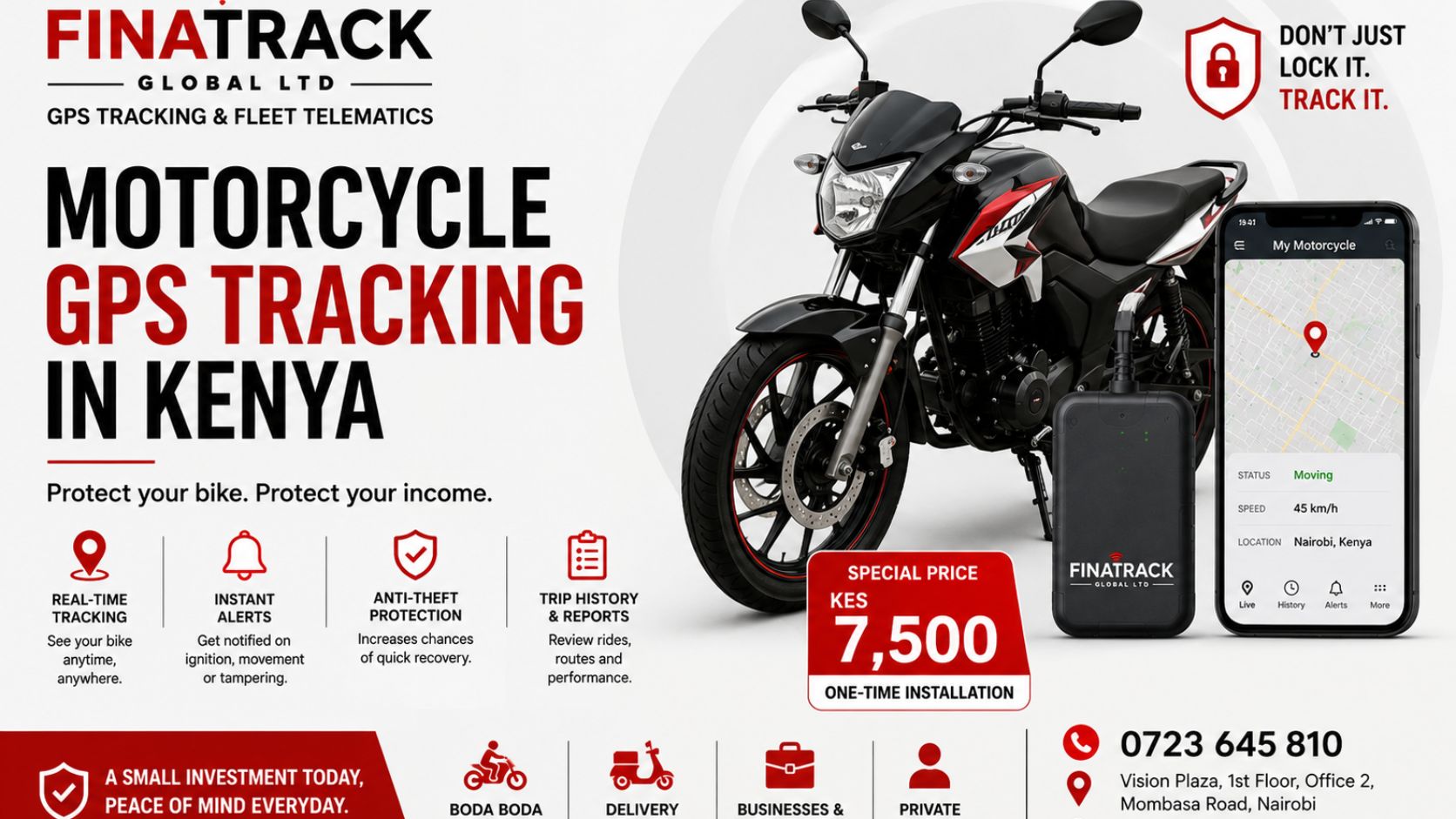
Motorcycle GPS Tracking in Kenya: How to Protect Your Bike From Theft
Motorcycles have become an essential part of everyday transport and commerce in Kenya. They are used by individual riders, delivery businesses, boda boda operators, courier companies and organisations whose employees need fast and flexible mobility. Their convenience, however, also creates a security challenge because motorcycles are relatively easy to move, conceal or transport once stolen.
For a motorcycle owner, traditional security measures such as steering locks, padlocks and alarms can make theft more difficult, but they may not provide any information once the bike disappears. GPS tracking adds another layer by allowing an authorised owner to monitor the motorcycle’s location through a smartphone or computer and, depending on the system installed, receive alerts when suspicious movement occurs.
A motorcycle GPS tracker works using the same general principle as a vehicle tracking system installed in a car or truck. The device determines its geographical position using satellite signals and sends that information through a mobile communication network to a tracking platform. The owner can then log into an application or web portal to view the motorcycle’s location.
The value of this technology becomes clear when a motorcycle moves unexpectedly. Instead of discovering several hours later that the bike has disappeared, an owner using a properly configured tracking system may receive information showing that the motorcycle has moved from its normal parking location. Early detection can provide more useful information during a theft response.
Real time tracking is therefore one of the most important features to consider. A suitable motorcycle tracker should allow the owner to see the most recent available location rather than simply recording data that can only be viewed later. The tracking platform should also show when the latest update was received so that the rider can distinguish current information from an older position.
Ignition alerts can provide another useful layer of protection. If the motorcycle ignition is switched on at a time when the owner knows the bike should remain parked, the tracking system may generate an alert. This gives the rider an opportunity to investigate before the motorcycle has travelled a significant distance.
Movement alerts can serve a similar purpose. A motorcycle can sometimes be pushed, loaded onto another vehicle or moved without the engine being started. A system capable of identifying unexpected movement can therefore provide useful information even where ignition monitoring alone would not detect the event.
Geofencing can also improve motorcycle security. The owner can create a virtual geographical boundary around a home, workplace, parking area or another location where the motorcycle is expected to remain. If the bike leaves that area, the tracking system can notify the authorised user.
For commercial motorcycle operators, geofencing can also support operational control. A delivery company may assign riders to specific areas, while a business with motorcycles allocated to employees may want visibility when assets move outside authorised territories. The objective should be asset protection and legitimate fleet management rather than unnecessary monitoring of employees.
Trip history provides another useful feature. A GPS tracking platform can maintain records showing where the motorcycle travelled and the routes used during previous journeys. This can help owners investigate unusual movement and allow businesses to understand how company motorcycles are being utilised.
For a private rider, trip history may help establish where a motorcycle travelled after it was borrowed by another authorised person. For a delivery company, the same information can support route management and help confirm whether a motorcycle reached expected customer locations.
The size of a motorcycle creates particular challenges for GPS installation. Cars and trucks provide relatively more concealed space for wiring and security equipment, while a motorcycle offers fewer locations where a tracking device can be installed discreetly. This makes professional installation especially important.
A motorcycle tracker should be positioned in a location that balances concealment with reliable communication. Hiding the device in a place that completely obstructs satellite or mobile signals may reduce tracking performance, while placing it somewhere obvious makes it easier to discover.
The installation must also account for vibration, moisture and exposure to weather. Motorcycles operate in environments where electronic components may experience more direct exposure than devices installed inside a vehicle cabin. Equipment and wiring should therefore be suitable for the intended application and installed carefully.
Power consumption is another important consideration. A wired motorcycle tracker normally draws a small amount of power from the motorcycle electrical system. While tracking devices are generally designed for low power use, the condition of the motorcycle battery and the quality of installation still matter.
A weak battery may become more sensitive to continuous electrical loads, particularly if the motorcycle remains unused for extended periods. A professional installer should therefore use suitable equipment and configure the tracker appropriately for motorcycle use.
Some tracking devices include an internal backup battery. This can allow the tracker to continue communicating for a limited period if the main motorcycle battery is disconnected or the primary power supply is interrupted. The length of backup operation depends on the equipment and configuration.
Power disconnection alerts can also be valuable. If someone attempts to interfere with the motorcycle battery or tracker wiring, the system may notify the owner that external power has been lost. An unexpected power alert should not automatically be assumed to mean theft, but it should be investigated promptly.
Motorcycle owners should also consider what happens if the primary tracker is discovered. Because the available installation space is limited, a determined thief may eventually locate a wired device if given enough time. This is where layered security becomes particularly important.
A compact backup tracker or tracking tag can provide another independent layer. The primary wired device may provide continuous real time monitoring, while a separately powered backup device is concealed elsewhere on the motorcycle or associated equipment.
If the primary tracker is found and disconnected, the second device may provide another opportunity to locate the motorcycle. The effectiveness of a backup system depends on its technology, battery condition, placement and communication method, but redundancy can reduce dependence on one device.
Physical security should still remain part of the strategy. A GPS tracker is valuable because it helps provide location information, but it does not physically stop somebody from moving the motorcycle. A strong lock, secure parking arrangement, alarm or other anti theft device can make the initial theft more difficult.
The strongest approach is therefore to combine prevention and tracking.
A physical lock creates an obstacle.
An alarm can attract attention.
A GPS tracker provides location visibility.
A backup tracking device provides another layer if the primary system is compromised.
No individual system can guarantee that a motorcycle will never be stolen, but combining several independent measures makes theft more difficult and gives the owner more options if it occurs.
Parking habits also play an important role. A motorcycle fitted with advanced security technology can still face unnecessary risk if it is routinely left in poorly lit, isolated locations. Where possible, riders should use secure parking areas and avoid leaving the motorcycle unattended in locations where somebody can interfere with it for a long period without being noticed.
The tracker should also be checked periodically. Owners should not install a GPS device and then ignore the tracking platform for months. The application should be opened occasionally to confirm that the motorcycle is online, the location is updating and important alerts are functioning.
This simple habit can identify problems before an emergency. Discovering that a tracker stopped communicating several weeks earlier only after the motorcycle has been stolen significantly reduces the value of the system.
A tracker going offline does not always mean that someone has removed it. Poor mobile network coverage, loss of power, SIM connectivity issues, device faults and other technical problems can interrupt communication. The tracking provider should be contacted when a motorcycle repeatedly disappears from the platform.
Account security deserves similar attention. A hidden GPS tracker can still be undermined if the owner uses a weak password or shares tracking credentials widely. Anyone with unauthorised access to the account may potentially see sensitive information about where the motorcycle is located.
Riders should therefore protect login details and change credentials when they believe another person may have gained access. Businesses managing several motorcycles should provide platform access only to employees who genuinely require it.
Motorcycle tracking can be particularly valuable for businesses operating delivery fleets. Once several motorcycles leave the office, management may have limited visibility over where they are and whether they are being used for assigned work. GPS tracking can provide location, routes and journey records through one central platform.
This can help businesses improve dispatching and accountability. A company can identify which motorcycle is closest to a particular customer, review completed journeys and investigate unusual movements without repeatedly calling every rider.
For boda boda operators and motorcycle owners using their bikes as income generating assets, security has an additional financial dimension. Losing the motorcycle may mean losing both the asset and the ability to earn income. A tracking system therefore protects more than transportation; it can help protect the rider’s livelihood.
Financed motorcycles create another layer of risk. Where a SACCO, microfinance institution or other lender has financed the motorcycle, both the borrower and lender have an interest in protecting the asset. Depending on the financing arrangement, a lender may require tracking or other security measures.
Owners should confirm any lender requirements before installing a tracking system. The provider may also need to issue professional installation documentation identifying the motorcycle and tracking device.
Insurance should be considered separately. Installing a GPS tracker may strengthen the motorcycle’s security, but riders should not automatically assume that it will reduce an insurance premium or change the terms of cover. Any insurance benefit should be confirmed with the relevant insurer or insurance intermediary.
If a tracked motorcycle is stolen, the owner should avoid attempting to recover it alone even when the location appears on a smartphone. Tracking information can be valuable, but it does not reveal who has the motorcycle or whether the people involved may be armed.
The safer response is to report the theft to the police and provide relevant location information to the authorities and tracking provider. A motorcycle can be replaced; confronting suspected thieves can place the owner’s safety at much greater risk.
The same principle applies if the tracking system shows the motorcycle entering an unfamiliar compound or private property. The owner should resist the temptation to enter the location personally. The information should support an organised recovery effort rather than an individual confrontation.
Businesses should establish this procedure before an incident happens. Riders should know who to contact when a company motorcycle disappears, while management should know who communicates with the tracking provider and law enforcement. Clear responsibilities can reduce confusion during the first important moments after a theft.
The cost of motorcycle GPS tracking should also be evaluated against the value of the asset. Selecting the cheapest device available may save money during installation but provide poor reliability, weak support or limited tracking functionality.
Motorcycle owners should ask whether installation is included, how connectivity is managed and whether the system has recurring platform or SIM charges. They should also understand what happens if the tracker develops a fault and whether technical support is available after installation.
The tracking application should be demonstrated before the owner leaves. The rider should know how to find the motorcycle, check its status, review journey history and interpret important alerts. A system is only useful if the person responsible for the motorcycle knows how to operate it confidently.
For businesses, reporting capabilities deserve additional attention. A company managing a motorcycle fleet may require more than live location. Trip history, geofencing, speed information and utilisation reports can help management understand how motorcycles are being used across the organisation.
The decision should therefore be based on the intended purpose.
A private motorcycle owner may primarily want theft protection and location visibility.
A delivery company may require security, trip history and route management.
A lender may need tracking together with professional documentation.
A higher risk motorcycle may justify both primary and backup tracking.
The best system is the one that addresses the actual risks surrounding the motorcycle rather than simply providing the longest list of features.
Finatrack Global Ltd provides GPS tracking and vehicle security solutions for private and commercial motorcycles in Kenya. Motorcycle owners can use tracking technology to gain greater visibility over their bikes while combining GPS with other security measures for stronger protection.
The question is therefore not simply whether a motorcycle can be tracked.
It is how quickly the owner can know when something unusual happens and what information remains available if the bike disappears.
For many riders, a motorcycle represents transport, investment and income at the same time.
Protecting it should reflect that value.
For professional motorcycle GPS tracking and vehicle security solutions in Kenya, contact Finatrack Global Ltd on 0723 645 810 or visit www.finatrack.co.ke.