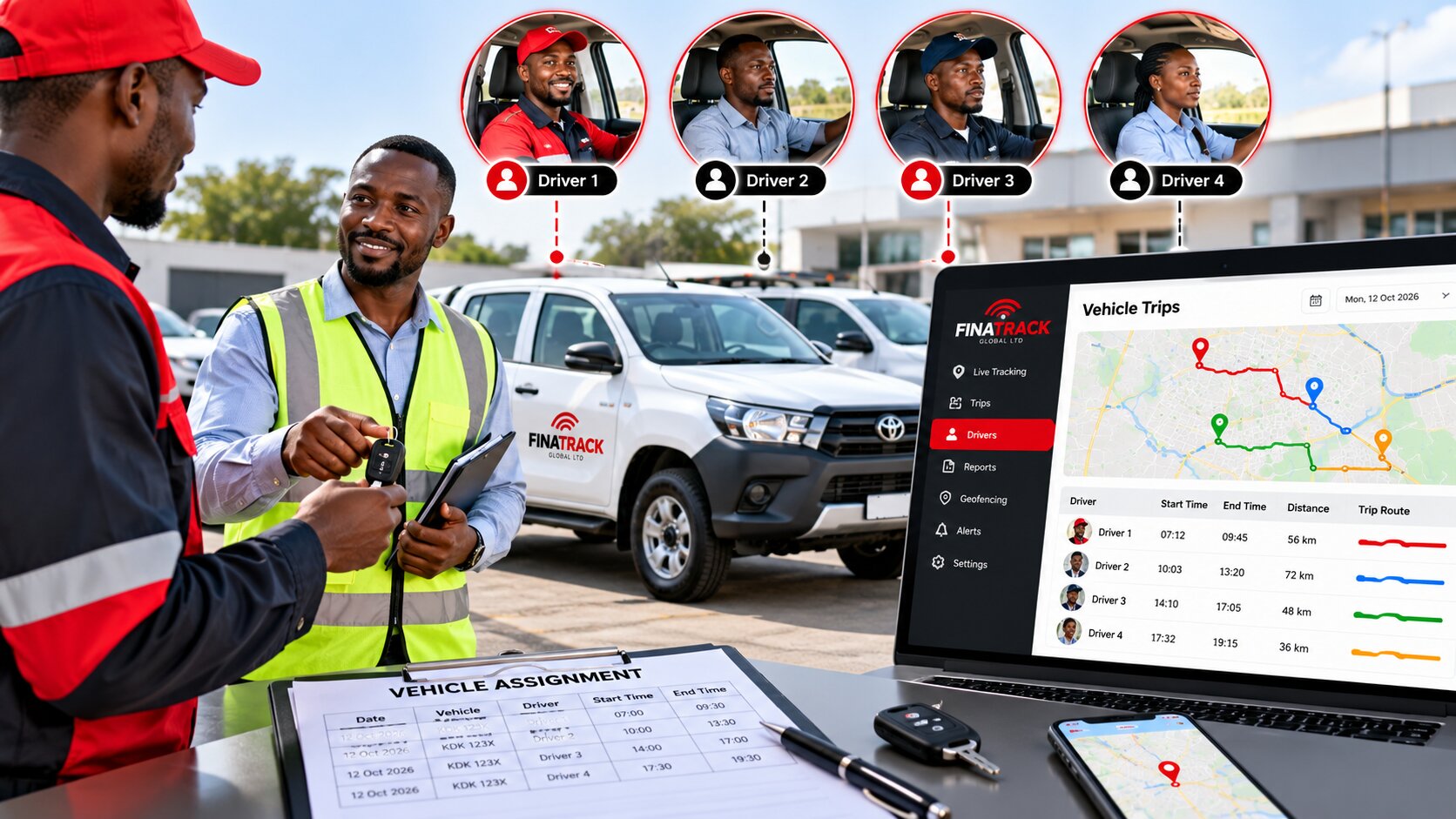
A company vehicle may be driven by several employees during the same week, making it difficult for management to know who was responsible for a particular trip, speeding event or unusual stop. GPS tracking can show where the vehicle travelled, but location information alone does not always identify the person behind the wheel. For businesses operating shared vehicles, driver identification in fleet GPS tracking can make vehicle records more useful by connecting particular journeys with the employees assigned to them.
The problem is especially common in delivery fleets, field service companies, construction businesses and organisations that operate pool vehicles. A pickup may leave the office with one employee in the morning and later be used by another team without a formal handover. If management later notices an unauthorised trip or excessive speeding, the GPS history may identify the vehicle but not automatically confirm which employee was driving it. Clear driver assignment procedures can therefore complement the tracking system.
Driver identification can be managed in different ways depending on the fleet system and operating procedures. Some businesses use driver login systems, identification tags or assigned vehicle schedules, while smaller fleets may simply maintain a clear daily vehicle allocation record. The important point is that the driver record should match the GPS trip information. This creates a stronger audit trail than relying on memory several days after the journey occurred.
The information can also improve driver accountability and coaching. If a particular driver repeatedly records speeding, harsh braking or unusual after-hours trips, management can address the behaviour directly instead of questioning everyone who uses the vehicle. At the same time, accurate identification protects responsible drivers from being blamed for events that occurred when somebody else was using the same vehicle. The objective should be fair and accurate fleet management rather than surveillance for its own sake.
Driver identification becomes particularly useful when investigating accidents or customer complaints. A client may report that a company vehicle arrived at a location at a certain time, while management can review the GPS trip history and identify which employee had been assigned the vehicle. The tracking record provides useful context, although it should still be combined with delivery records, work orders, dashcam footage or other evidence where necessary.
Businesses can also use driver records to understand how vehicles are being shared. If one employee consistently uses a particular vehicle while another unit remains underutilised, management may decide to rebalance assignments. Where several employees share a small fleet, better allocation can reduce unnecessary mileage, improve scheduling and prevent disputes over who used a vehicle at a particular time.
Companies should still establish clear policies around access to driver and location information. Employees should understand how company vehicles are monitored and why the business collects trip information. Fleet managers should also restrict platform access to authorised users and avoid sharing tracking credentials unnecessarily. Good fleet management depends on both accurate information and responsible handling of that information.
Finatrack Global Ltd provides GPS tracking and fleet management solutions for businesses in Kenya, helping organisations monitor vehicle location, trip history, geofencing and other operational information depending on the configured system. Finatrack’s wired GPS tracker is available at KES 15,000, with professional installation for private and commercial vehicles. For installation or enquiries, call or WhatsApp 0723 645 810 or visit www.finatrack.co.ke. When several employees share the same vehicle, knowing where the vehicle went is useful, but knowing who was responsible for the trip can make the information far more valuable.