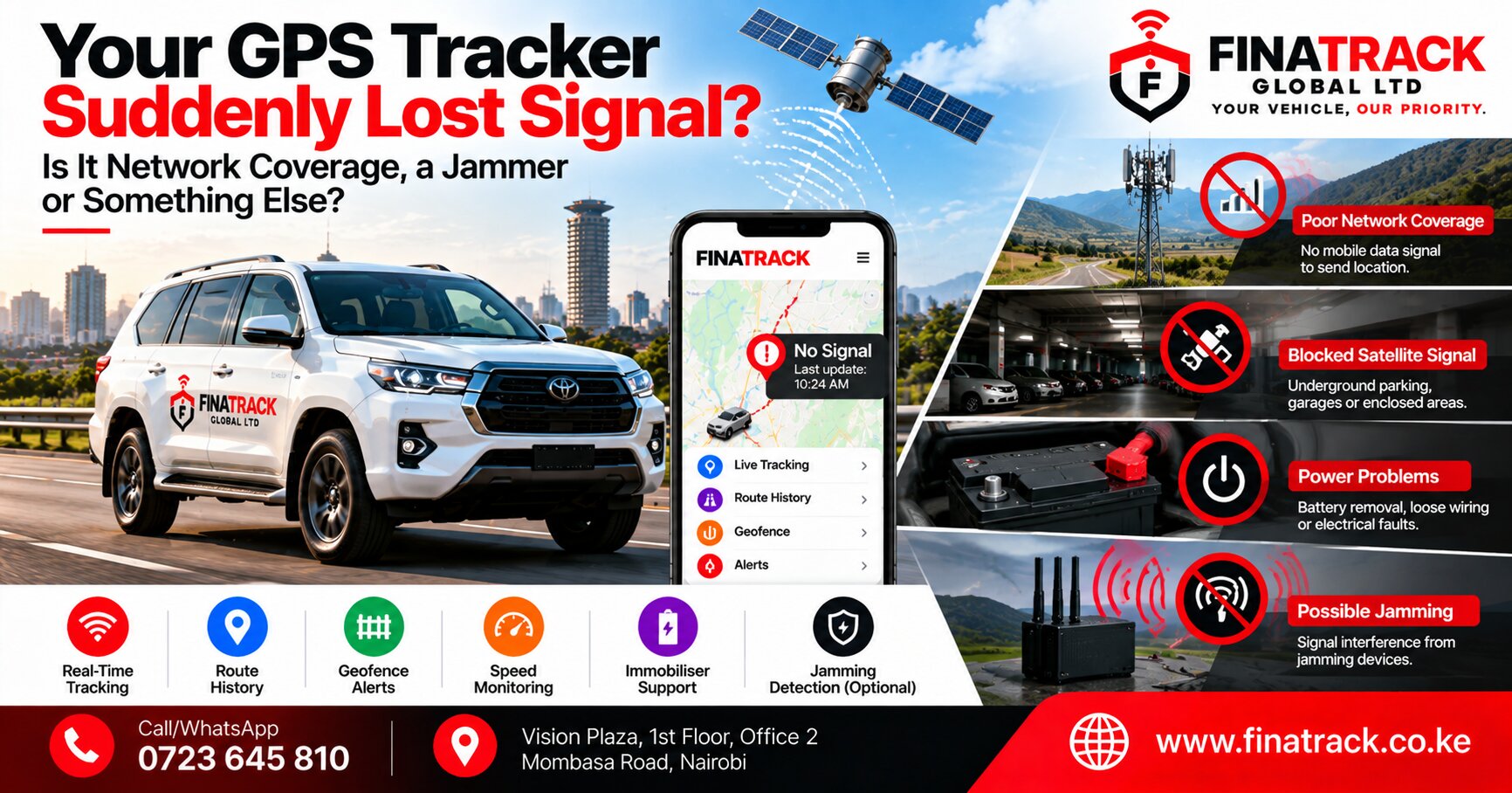
A vehicle that normally appears clearly on your tracking platform suddenly goes offline. The first thought for many motorists is that someone may have tampered with the tracker, but signal loss does not automatically mean theft or jamming. A GPS tracking device depends on several systems working together, including satellite positioning, vehicle power, the tracker itself and mobile communication used to send information to the tracking platform. When any part of that chain is interrupted, the vehicle may temporarily stop appearing in real time.
One of the most common causes is mobile network coverage. A GPS tracker can determine its position using satellite signals, but most vehicle trackers rely on a SIM card and mobile data network to transmit that location to the monitoring platform. If a vehicle enters an area with weak or unavailable network coverage, the tracker may continue collecting location information but temporarily fail to send it. Depending on the device and configuration, stored information may later upload when communication is restored.
Location can also become difficult when the vehicle is inside places where satellite signals are heavily obstructed. Underground parking, basements, enclosed garages and certain structures can reduce the tracker’s ability to receive a clear satellite signal. In such situations, the platform may display the vehicle’s last known position rather than a fresh location. This is why users should always check the last update time instead of assuming that the vehicle is still exactly where the map icon appears.
Power problems are another major cause of tracker outages. A wired GPS tracker normally depends on the vehicle’s electrical system, so battery replacement, loose wiring, electrical repairs or deliberate power disconnection can interrupt tracking. If the tracker stops reporting shortly after workshop work or battery maintenance, the installation should be checked. Where the system supports power-disconnection alerts or an internal backup battery, those features can provide useful additional information when external power is interrupted.
Signal interference or deliberate jamming is possible, particularly for vehicles exposed to higher security risks, but it should not be the first explanation assumed every time a tracker goes offline. Jamming equipment can interfere with GPS or mobile communication, preventing a conventional tracker from reporting normally. The more useful approach is to examine the sequence of events: where the vehicle was located, whether power was disconnected, when the last update occurred and whether communication later returned. Businesses carrying high-value cargo or operating higher-risk vehicles may consider tracking devices with jamming-detection capability together with additional backup tracking.
This is also why layered vehicle tracking can be stronger than depending on one device. A professionally installed wired GPS tracker can provide everyday monitoring, while a separate wireless tracker or tracking tag can provide additional visibility if the primary device loses power or is compromised. The backup unit should be positioned and managed independently so that failure of one tracking method does not automatically remove all visibility. No security system is impossible to defeat, but multiple layers can make a vehicle significantly harder to monitor or interfere with unnoticed.
When a tracker goes offline, vehicle owners should avoid immediately assuming the worst. First check the last reported location and timestamp, contact the authorised driver where appropriate, determine whether the vehicle recently underwent battery or electrical work and observe whether communication returns after the vehicle moves into an area with better coverage. If the tracker remains offline unexpectedly, professional inspection is advisable. Where theft or deliberate interference is suspected, tracking information should be shared through appropriate security or law-enforcement procedures rather than attempting to confront suspected thieves personally.
Finatrack Global Ltd provides GPS tracking and layered vehicle-security solutions for private motorists and commercial fleets in Kenya. Finatrack’s wired GPS tracker is available at KES 15,000, while businesses or motorists with higher security requirements can consider options such as wireless backup tracking, tracking tags and a jamming-detection GPS tracker available at KES 18,000. Professional installation can be arranged at Finatrack’s office or at a convenient customer location. For enquiries, call or WhatsApp 0723 645 810 or visit www.finatrack.co.ke. When a tracker suddenly loses signal, the important question is not simply whether the vehicle is offline, but why it went offline and whether your security setup gives you another way to maintain visibility.