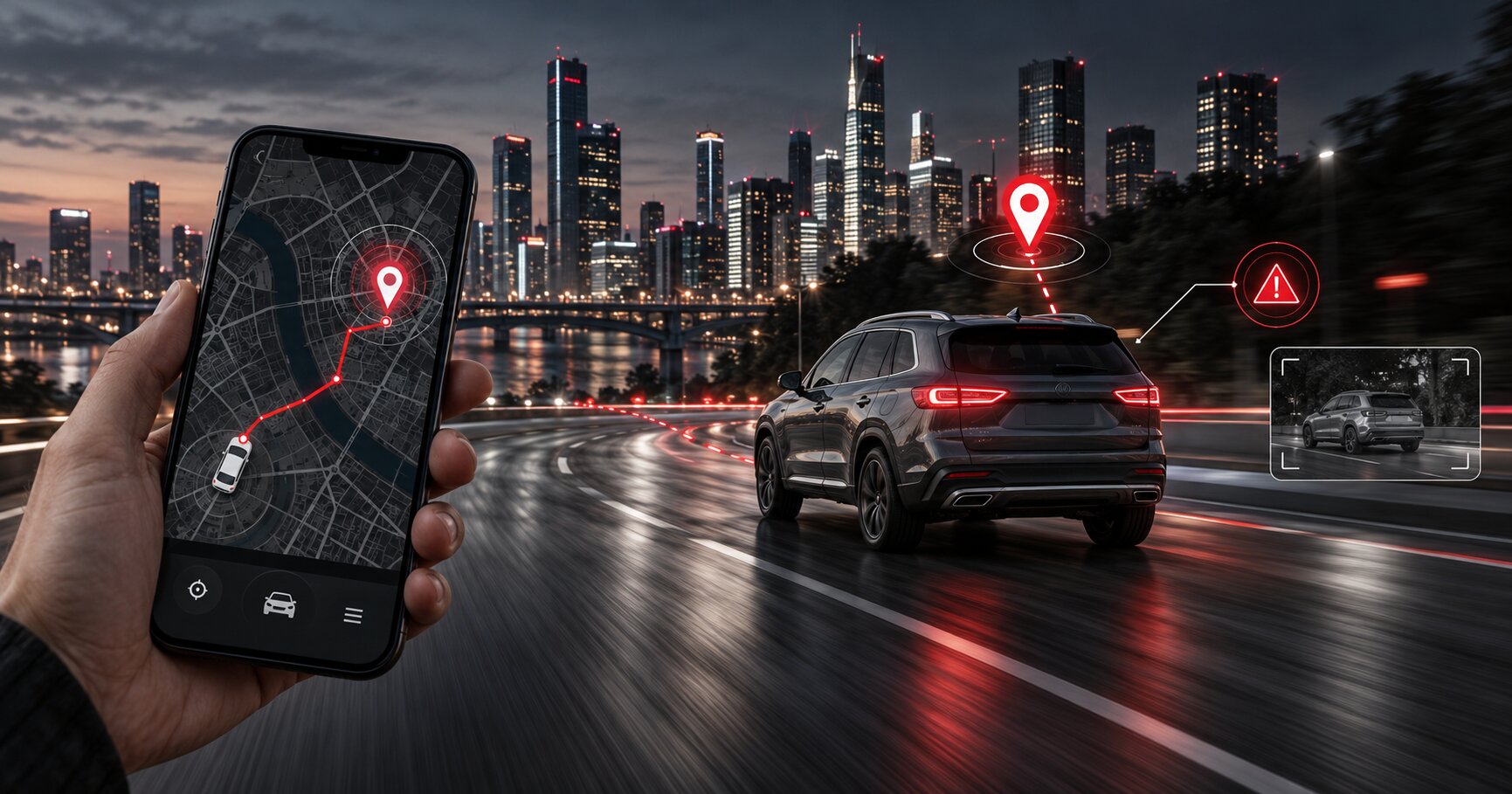
Vehicle theft remains one of the most serious risks facing motorists and businesses that depend on vehicles for daily operations. While no security system can guarantee that a vehicle will never be stolen, GPS tracking can provide valuable information that may improve the chances of locating a vehicle after it has been taken. The ability to see a vehicle’s location, movement and travel history can make a major difference during the first stages of a theft incident, when accurate information is often most important.
A properly installed GPS tracking device allows the vehicle owner to monitor the vehicle through a mobile phone or computer. If the vehicle is moved without permission, the owner can check its current position and review the route it has taken. This information can then support communication with the police, security personnel or recovery teams handling the incident.
The value of GPS tracking is especially clear when a stolen vehicle continues moving across different areas. Without a tracking system, the owner may have very little information about where the vehicle went after it disappeared. With live tracking, the movement can be followed as it happens, making it easier to understand the direction of travel and identify possible stopping points.
Historical route playback can also become important during recovery. Even when the vehicle is no longer moving, the system may show the route it followed before stopping. This can help build a clearer picture of the incident and provide useful information to those involved in the search.
For many vehicle owners, alerts provide the first warning that something unusual has happened. Movement alerts, ignition notifications and geofence alerts can help the owner notice activity that may otherwise go unnoticed until much later. The earlier suspicious movement is identified, the earlier the owner can investigate and decide whether further action is necessary.
Geofencing can be particularly useful in this regard. A virtual boundary can be created around a home, office, yard or parking area, allowing the system to generate a notification if the vehicle leaves that location. This does not prevent theft by itself, but it can shorten the time between unauthorised movement and the owner becoming aware of it.
Remote immobilisation can add another level of control in suitable installations. Depending on how the tracking system has been configured, an authorised user may be able to prevent the vehicle from being restarted or immobilise it under appropriate conditions. This feature should always be used carefully and with safety in mind, but it can form part of a wider response strategy when a vehicle is being used without permission.
The effectiveness of vehicle recovery can also be strengthened by having more than one layer of tracking. A primary wired GPS tracker may handle everyday monitoring, while a second wireless tracker or tracking tag provides an additional source of location information. If one device is discovered, disconnected or stops reporting, the backup device may still provide useful information.
This layered approach is becoming increasingly important for high-value vehicles and commercial fleets. Trucks, company cars, delivery vans and other business vehicles may carry valuable equipment, goods or cargo, making the financial impact of theft much greater than the value of the vehicle alone. For such businesses, tracking is not only a security tool but also part of a broader risk-management strategy.
Vehicle recovery is also more effective when tracking is combined with good security habits. Car alarm systems, secure parking, controlled key access and responsible driver management all contribute to reducing risk. GPS tracking adds visibility to these measures by giving the owner information about where the vehicle is and how it is moving.
Professional installation remains important because a poorly fitted tracker may be easier to identify or may not communicate reliably. A good installation should place the device in a suitable location, connect it correctly and ensure the customer understands how to use the tracking platform. The owner should also know how to access the system quickly in an emergency rather than trying to learn the platform after the vehicle has already been taken.
Finatrack Global Ltd provides GPS tracking and vehicle security solutions for private motorists, fleet owners and businesses. The systems can support real-time tracking, historical playback, alerts, geofencing and remote immobilisation depending on the tracking solution installed. Customers can also combine primary trackers with backup tracking devices for additional security.
When theft happens, speed and accurate information can be critical. GPS tracking does not replace law enforcement or professional recovery services, but it can provide the vehicle owner with valuable location data that helps support the recovery process. For motorists and businesses, this makes vehicle tracking an important part of a broader security plan rather than simply a tool for checking where a car is parked.
For GPS tracker installation, backup tracking devices, vehicle alarms and other security solutions, contact Finatrack Global Ltd on 0723 645 810 or visit www.finatrack.co.ke. The company’s Nairobi office is located at Vision Plaza, 1st Floor, Office 2, Mombasa Road.