A company vehicle can look perfectly normal on Monday morning and still be several hundred kilometres overdue for service. The driver may not remember the last oil change, the fleet manager may be relying on a handwritten logbook, and the odometer may only be checked when the vehicle finally enters the workshop. By that time, a simple maintenance delay can already be creating unnecessary mechanical risk and higher operating costs.
For businesses operating several vehicles, this problem becomes even harder to manage. A sales car moving around Nairobi will not necessarily accumulate mileage at the same rate as a pickup travelling between counties, a delivery van making dozens of stops every day or a truck operating on long-distance routes. Treating all vehicles as though they require maintenance at the same calendar intervals can therefore create gaps in fleet management.
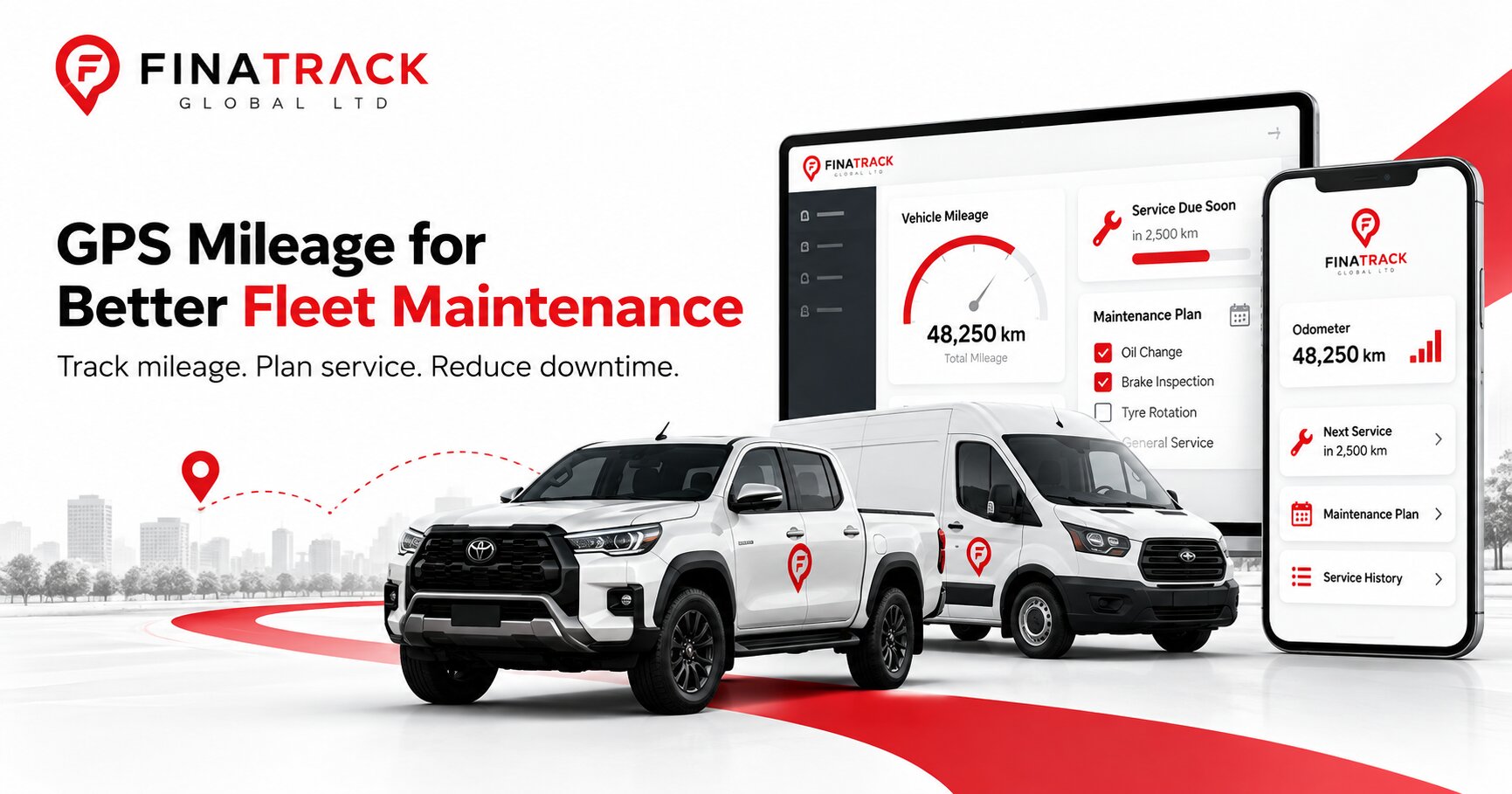
This is where GPS mileage monitoring can become useful. A GPS tracking system can provide an additional record of how far each vehicle has travelled, allowing fleet managers to identify which units are approaching important maintenance intervals. Instead of depending entirely on drivers to remember when service is due, management can review vehicle usage more consistently from the tracking platform.
Consider a business with ten company vehicles. Five operate mainly within Nairobi, while the others regularly travel to Nakuru, Eldoret, Mombasa and other counties. Even if all ten vehicles were serviced on the same day, they are unlikely to become due for the next service at the same time because their weekly mileage can differ significantly.
One vehicle may cover 300 kilometres in a week while another covers 1,500 kilometres. After several weeks, the difference becomes substantial. A calendar reminder telling the business to service every vehicle after three months may therefore be too early for some vehicles and too late for others.
GPS mileage data helps management move toward a more usage-based approach. The fleet manager can review how quickly each vehicle is accumulating distance and compare that information with the appropriate maintenance schedule. The actual service requirements should still follow manufacturer guidance and advice from qualified mechanics, but tracking data makes it easier to see which vehicle is getting closer to the next milestone.
This can be particularly valuable for vehicles that rarely return to head office. A company pickup assigned to a project in another county may remain away from Nairobi for weeks. The driver may continue using it every day while the fleet manager has no opportunity to physically check the odometer.
With GPS tracking, management can still maintain visibility over the vehicle’s movement and approximate accumulated mileage. If the vehicle is approaching a planned service interval, the business can arrange maintenance before a mechanical problem becomes the reason the vehicle finally enters the workshop.
Preventive maintenance is important because breakdowns rarely happen at convenient times. A delivery van can fail while carrying customer orders, a sales vehicle can become unavailable during an important trip or a project pickup can develop problems hundreds of kilometres from the nearest company office. The cost is not limited to repairs. Downtime can also affect customers, employees and business operations.
GPS data can help management identify which vehicles are being worked hardest. A vehicle that accumulates significantly more mileage than the rest of the fleet may need more frequent attention to tyres, brakes, suspension and other wear-related components. The tracking system does not diagnose mechanical faults, but it can highlight the usage patterns that make closer maintenance monitoring sensible.
Mileage information can also improve tyre management. Tyres do not wear according to the calendar alone. Their condition depends on kilometres travelled, road surfaces, vehicle loading, driving style and maintenance such as alignment and pressure management.
If one vehicle covers twice the distance of another, its tyres may naturally reach replacement or inspection points sooner. Fleet managers can use GPS mileage as one reference for deciding which vehicles deserve closer tyre checks instead of waiting for drivers to report visible problems.
The same principle can apply to engine oil, filters and other service items. If the manufacturer or mechanic recommends attention after a certain amount of vehicle use, GPS mileage records can help the fleet manager anticipate that point rather than discovering it afterwards.
For commercial fleets, this becomes especially useful when vehicles operate under different workloads. A courier van making daily deliveries around Nairobi, for example, may accumulate mileage quickly while also experiencing frequent stopping and starting. A management vehicle used mainly for occasional meetings may cover far less distance during the same period.
Both vehicles belong to the same company, but their maintenance needs should not automatically be treated as identical. Better fleet data helps management recognise those differences.
Another useful application is identifying unexpected mileage increases. Suppose a company vehicle normally covers around 2,000 kilometres in a month but suddenly records 3,500 kilometres. The increase may result from legitimate new assignments, but it could also reflect inefficient routing, unauthorised use or changes in the territory being covered.
Reviewing trip history can help explain the difference. Management can determine whether the extra mileage came from genuine business activity or whether the vehicle is accumulating distance that provides little value to the company.
This matters because every unnecessary kilometre brings future maintenance closer. Extra mileage affects tyres, servicing intervals, depreciation and eventually resale value. Fuel may be the most visible vehicle expense, but it is not the only cost created when a vehicle moves.
GPS tracking can therefore connect maintenance planning with cost control. A fleet manager who understands mileage patterns can estimate which vehicles are likely to require service sooner and plan workshop visits more efficiently.
Instead of several vehicles becoming due for maintenance at the same time, servicing can be scheduled according to actual usage where appropriate. This can reduce situations where too many vehicles are unavailable at once and leave departments without transport.
The data can also help with workshop planning. If the fleet manager can see that three vehicles are approaching important mileage thresholds, appointments can be arranged in advance rather than waiting for drivers to report that servicing is overdue.
For businesses operating vehicles in remote areas, this becomes even more valuable. A vehicle may need to be serviced in the county where it is currently working instead of travelling all the way back to Nairobi. Knowing that service is approaching gives management time to identify an appropriate workshop and make arrangements.
Tracker information can also be reviewed after the vehicle has been serviced. If the tracking device was connected to the vehicle’s electrical system, battery replacement or workshop repairs can sometimes affect aftermarket wiring. Checking that the tracker is still reporting properly after maintenance helps prevent a situation where the vehicle returns to service while the tracking system remains offline.
Fleet managers should therefore consider adding a simple tracker check to the vehicle’s post-service inspection. The location should update correctly, ignition information should behave normally where supported, and trip history should begin recording again when the vehicle moves.
GPS records are also useful when several employees share the same vehicle. One driver may not know how much distance the previous driver covered, which makes personal memory an unreliable maintenance system. Centralised tracking gives management a continuous record regardless of who was behind the wheel.
However, GPS mileage should not completely replace the vehicle’s physical odometer or workshop records. Differences can occur depending on how the tracking platform calculates distance and the quality of available data. For important maintenance decisions, businesses should compare the available records and follow appropriate mechanical guidance.
The strongest fleet-maintenance system combines several sources of information. GPS tracking helps show vehicle usage, the physical odometer provides another mileage reference, workshop records show what work has already been completed and mechanical inspections reveal the actual condition of the vehicle.
Together, these records provide a much better picture than relying on a driver’s memory alone.
Finatrack Global Ltd provides GPS tracking and fleet-management solutions that can help businesses maintain better visibility over vehicle activity. Depending on the tracking solution installed, authorised users can review vehicle location, trip history, mileage information, geofencing, ignition activity and selected operational alerts through the tracking platform.
For companies operating several vehicles, this information can support not only security but also everyday fleet decisions such as route planning, utilisation reviews and maintenance scheduling. Finatrack’s wired GPS tracker is available at KES 15,000, with professional installation available at the office or at a customer’s convenient location depending on the arrangement.
Businesses that require additional fleet visibility can also consider fuel-monitoring systems, AI dashcams, wireless tracking solutions and other telematics options according to their operational needs. Finatrack Global Ltd can be reached on 0723 645 810 or through www.finatrack.co.ke, with its Nairobi office located at Vision Plaza, 1st Floor, Office 2, Mombasa Road.
A vehicle should not have to break down before management realises that maintenance was overdue. GPS mileage data gives fleet managers another practical way to understand how quickly each vehicle is being used and which units may require attention sooner. For businesses trying to reduce downtime, control maintenance costs and keep vehicles productive, knowing how far every vehicle has travelled can be just as important as knowing where it is.