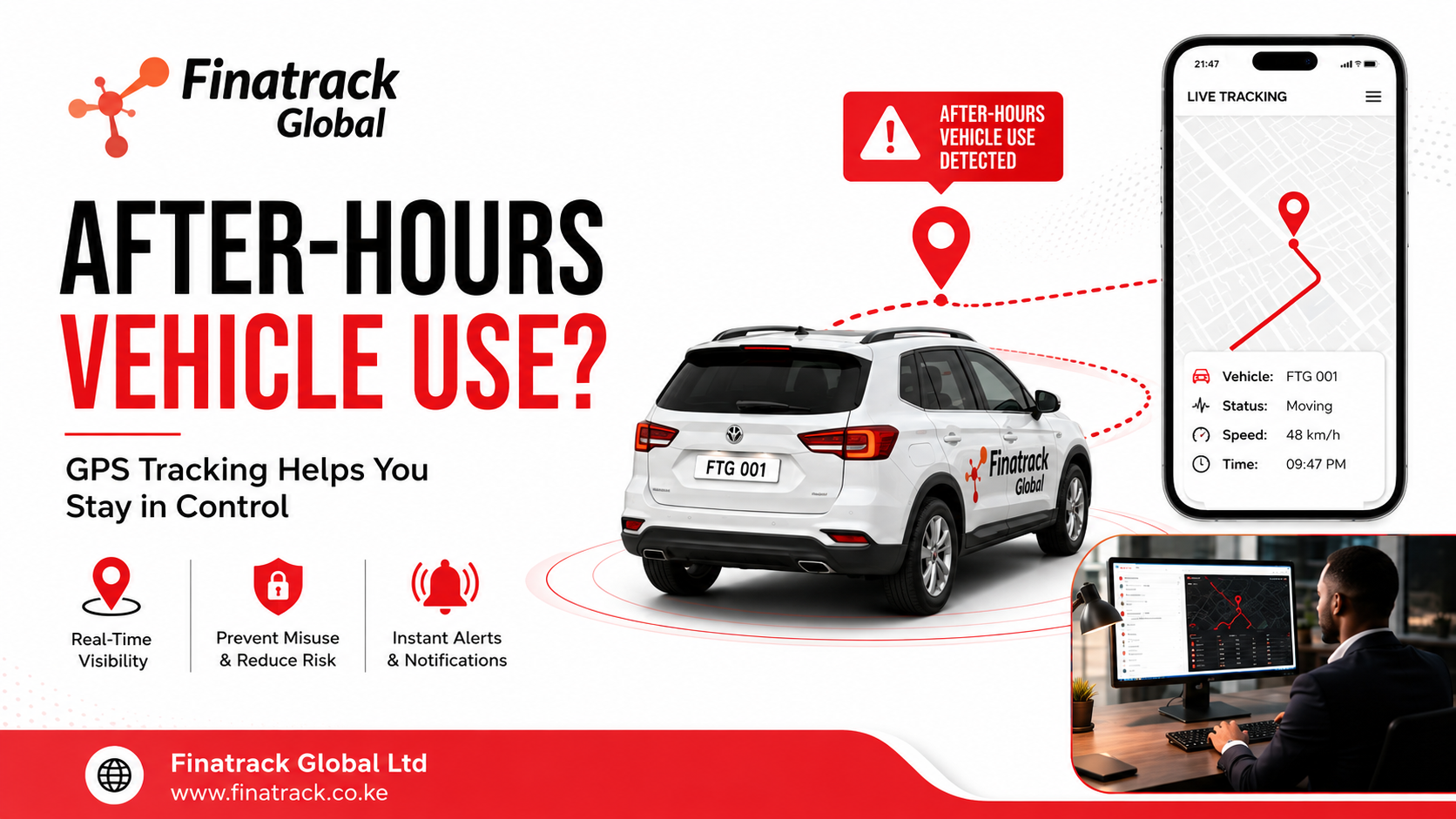
A company vehicle may be parked outside the office at 5 p.m., but that does not always mean its working day has ended. Across many businesses, vehicles assigned to employees continue moving in the evening, on weekends and during public holidays, sometimes with management having little visibility of where they are going or why.
The problem is rarely noticed immediately. It often begins with rising fuel bills, unexpected mileage, frequent servicing or tyres wearing faster than expected. By the time management starts asking questions, thousands of kilometres may already have been added to vehicles through journeys that were never part of the company’s operations.
For businesses operating several vehicles, unauthorised after-hours use can quietly become a significant operating expense. A single unnecessary journey may appear insignificant, but when personal trips are repeated several evenings each week across an entire fleet, the cost begins to accumulate through fuel, maintenance, depreciation and increased exposure to accidents.
The challenge for management is proving what is actually happening. Without reliable vehicle data, employers may only see fuel receipts, mileage readings and maintenance invoices. A driver may explain that increased mileage resulted from official duties, traffic diversions or an unexpected assignment, leaving management with little independent information to confirm the explanation.
GPS tracking changes that conversation by creating a digital record of vehicle movement. An authorised fleet manager can see when a vehicle started moving, where it travelled, where it stopped and when the journey ended. Instead of discovering unusual mileage during the next service, the company can identify unexpected movement much earlier.
This is particularly useful after normal working hours. If a company vehicle is normally expected to remain parked between 7 p.m. and 6 a.m., movement during that period can immediately become something worth reviewing. The objective is not to assume that every evening journey is misconduct, but to give management enough information to distinguish authorised assignments from personal use.
Many businesses allow employees some flexibility with company vehicles. A salesperson may take a vehicle home because they need to visit a customer early the following morning, while a technician may be required to respond to emergency calls outside normal office hours. These are legitimate operational requirements, but they also make traditional vehicle supervision difficult.
Tracking allows a company to maintain that flexibility without completely losing visibility. Management can still allow employees to take vehicles home while establishing clear expectations about when and where those vehicles should be used.
Geofencing can provide an additional level of control. A business can create virtual boundaries around offices, employee parking locations, project sites or approved operating areas. Depending on the tracking system configuration, an alert can be generated when a vehicle enters or leaves one of those areas.
For example, a company vehicle that is expected to remain at an employee’s residence overnight could generate an alert if it begins moving late at night. Management can then verify whether the journey relates to an authorised assignment before unnecessary mileage accumulates.
Time-based monitoring can make these alerts even more useful. A vehicle leaving an office at 3 p.m. may be entirely normal, while the same movement at 1 a.m. may require explanation. Combining location information with time therefore provides much more operational context than simply knowing where a vehicle is.
Weekend use is another area that can easily go unnoticed. Many businesses close on Saturday afternoon and reopen on Monday morning, creating a long period during which assigned vehicles may be outside direct supervision.
A vehicle used for personal errands throughout the weekend may return to work on Monday without attracting attention. The only visible evidence may be reduced fuel and additional mileage, both of which can easily be absorbed into normal fleet expenses.
Trip history makes these journeys easier to review. Fleet managers can examine previous routes and identify vehicles that consistently record movement during periods when the business is closed. Patterns are often more useful than isolated events because they help management separate exceptional operational requirements from repeated behaviour.
The financial impact extends well beyond fuel. Every additional kilometre contributes to tyre wear, oil changes, suspension wear, brake maintenance and eventual depreciation. A vehicle that accumulates unnecessary mileage may reach major service intervals earlier and lose resale value faster.
This means a company may effectively be paying for an employee’s private transport without recognising the full cost. Fuel is simply the most visible expense. Maintenance and depreciation can continue affecting the business long after the personal journey has ended.
Insurance exposure should also be considered. The more time a vehicle spends on the road, the greater the opportunity for accidents, theft or other incidents to occur. An accident involving a company vehicle during an unauthorised personal trip can create a complicated situation for management.
Even where insurance responds according to the applicable policy terms, the business may still face vehicle downtime, excess payments, administrative costs and disruption to operations. The vehicle may have been intended for a customer visit the following morning but instead be unavailable because of an incident that occurred during private use.
Security risks can also increase when company vehicles travel to locations the business would not normally approve. A vehicle that should be parked securely overnight may instead spend several hours at an unfamiliar location with a higher theft risk.
Real-time tracking gives fleet managers the ability to identify such movement while it is happening rather than discovering it after the vehicle has already returned. For higher-value vehicles, additional security layers such as alarms, immobilisation systems or backup tracking devices may provide further protection.
GPS information can also reduce unfair accusations. Without tracking data, management may become suspicious whenever fuel consumption rises or mileage appears unusual. Employees may feel they are being blamed without evidence.
Objective vehicle records create a better foundation for discussion. If the trip history shows that the vehicle remained within authorised operations, the driver has evidence supporting their explanation. If repeated unauthorised journeys appear, management can address the issue based on information rather than assumption.
For this reason, GPS tracking should be accompanied by a clear company vehicle policy. Employees should understand when vehicles may be used, whether they can be taken home, what constitutes authorised after-hours travel and what procedures apply when emergency work is required.
Technology works best when expectations are already clear. A company should not install tracking devices and then expect software to replace proper fleet management. GPS information should support a policy rather than become the policy itself.
The same principle applies to employee communication. Businesses should be transparent about the legitimate operational reasons for tracking company vehicles. Employees should understand that the objective is to protect company assets, manage operating costs, improve security and ensure vehicles are used for authorised purposes.
Access to the tracking platform should also be limited. Location information should normally be available only to authorised employees responsible for fleet operations, security or management. Giving unnecessary access to large numbers of staff increases the possibility of misuse.
After-hours tracking can also reveal problems that have nothing to do with employee misconduct. A driver may be taking a vehicle home because the business lacks secure overnight parking. Vehicles may be making late journeys because customer schedules are poorly planned or because staff are routinely being asked to work outside normal hours.
Fleet data should therefore be used to ask questions, not simply issue accusations. The real objective is to understand how vehicles are being used and whether that use makes commercial sense.
Businesses can also use tracking information to establish more realistic fleet policies. If data consistently shows that certain employees genuinely require vehicles after hours, management can formally recognise those requirements. Other employees whose work ends at the office may be required to leave vehicles at designated parking locations.
This creates a more structured approach than treating every company vehicle exactly the same.
For businesses operating larger fleets, unauthorised use can become particularly difficult to detect manually. A company with three vehicles may notice unusual mileage quickly. An organisation managing 30 or 100 vehicles can easily lose thousands of kilometres in unnecessary travel before anybody sees the pattern.
Fleet reports can help management review activity across multiple vehicles rather than examining them one by one. Vehicles with unusual mileage, excessive weekend movement or repeated late-night trips can be identified for further review.
That information can turn GPS tracking from a security device into a management system.
The strongest return often comes from small improvements repeated across the fleet. Preventing one unnecessary 30-kilometre journey may not transform a company’s finances. Preventing hundreds of unnecessary journeys over a year can.
The same applies to fuel, servicing and vehicle replacement. Small amounts of waste become substantial when multiplied across vehicles, drivers and months of operation.
Company vehicles are purchased to support the business. Every kilometre should therefore have a reasonable operational purpose.
Finatrack Global Ltd provides professionally installed GPS tracking, fleet telematics, vehicle security, fuel monitoring, AI dashcams and backup tracking solutions for businesses operating vehicles in Kenya. Tracking systems can help authorised managers monitor vehicle movement, review trip history, manage geofences and identify unusual fleet activity.
Installation can be arranged at the customer’s convenient location or at Vision Plaza, 1st Floor, Office 2, Mombasa Road, Nairobi.
For businesses seeking greater visibility over company vehicles during working hours and after the office closes, contact Finatrack Global Ltd on 0723 645 810 or visit www.finatrack.co.ke.
The office may close at five. Your fleet management should not.