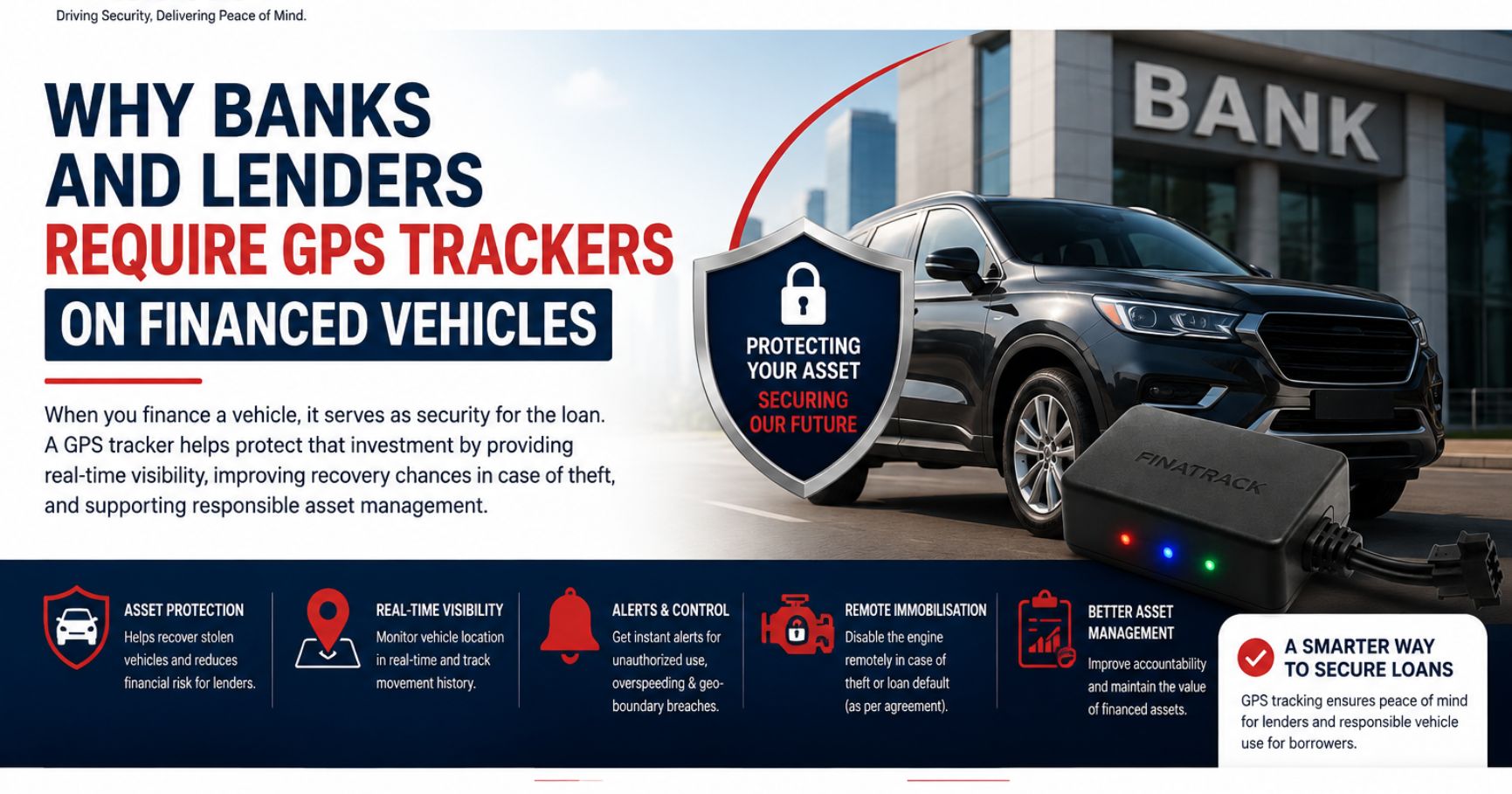
Buying a vehicle through asset finance makes vehicle ownership more accessible, but until the loan is fully repaid, the vehicle is not simply a means of transport. It is also a valuable financial asset securing the lender’s money.
That is one of the main reasons banks, microfinance institutions, SACCOs and other asset finance companies may require a GPS tracking system to be installed before a financed vehicle is released to the borrower.
When a lender finances the purchase of a vehicle, it is taking a significant financial risk. Depending on the financing arrangement, the bank may provide a substantial percentage of the vehicle’s purchase price while the customer repays the balance over several months or years.
During this repayment period, the vehicle normally serves as security for the financing facility. Stanbic Bank Kenya, for example, describes its vehicle and asset finance arrangement as one where the financed asset itself serves as security.
This creates a simple problem for lenders. A motor vehicle is valuable, but unlike land or buildings, it is highly mobile.
A financed vehicle can travel hundreds of kilometres in a single day. It can be moved from Nairobi to another county, transferred between drivers, hidden, stolen or potentially taken outside its normal operating area.
A GPS tracking system helps address this risk by providing authorised parties with better visibility over the financed asset where the applicable financing agreement permits such monitoring.
The primary reason lenders require vehicle trackers is therefore asset protection.
If a financed vehicle is stolen, locating it quickly can significantly improve the ability of the vehicle owner, security professionals and law enforcement agencies to respond. A properly installed GPS tracker can provide location information that may assist during a vehicle recovery operation.
This is particularly important to a lender because theft does not necessarily eliminate the outstanding loan obligation. If a financed vehicle disappears while a significant balance remains unpaid, both the customer and lender can face a complicated financial situation.
Comprehensive motor insurance remains extremely important for financed vehicles, but tracking provides another layer of risk management. Insurance primarily deals with the financial consequences of an insured loss, while GPS tracking can help provide information about the location and movement of the physical asset.
The two therefore perform different but complementary roles.
The importance of tracking financed vehicles is also reflected in some Kenyan financing frameworks. Kenya’s 2026 subsidiary legislation governing a particular motor vehicle loan arrangement expressly provides for installation of a tracking and security system on financed motor cars, illustrating how tracking technology can form part of formal asset protection requirements.
However, borrowers should understand that there is no single GPS tracker rule that applies identically to every vehicle loan offered by every financial institution in Kenya. Requirements depend on the lender, financing product, type of vehicle, risk profile and terms contained in the financing agreement.
When a tracking system is required, the objective is usually much broader than simply watching where a borrower drives.
For an asset finance provider, the real concern is protecting the security attached to the loan.
Imagine a bank financing a commercial vehicle worth KES 5 million. If the borrower has only repaid a small portion of the financing when the vehicle disappears, a substantial amount of the lender’s capital remains exposed.
A reliable vehicle tracking system provides an additional tool for managing that exposure.
Tracking becomes even more valuable when lenders finance large portfolios of vehicles.
A financial institution may have hundreds or thousands of financed vehicles spread across different parts of Kenya. Manually establishing the location and status of every asset would be impractical.
Vehicle tracking technology makes it possible to manage financed assets more systematically, subject to the lender’s contractual rights and applicable data protection requirements.
Another important consideration is loan default.
Most borrowers take vehicle financing with every intention of completing their repayments. Circumstances can nevertheless change. Businesses can experience cash flow problems, individuals can lose sources of income and commercial vehicles can experience periods of reduced productivity.
When serious loan default occurs, lenders normally follow the processes provided in the financing agreement and applicable law.
Where lawful repossession eventually becomes necessary, knowing the location of the financed asset can make asset recovery more efficient.
Without tracking information, locating a movable asset can become extremely difficult, particularly if the vehicle is no longer operating from the address originally provided by the borrower.
Some asset financing arrangements therefore combine GPS location capabilities with vehicle immobilisation functionality.
Remote immobilisation allows an authorised command to prevent a vehicle from being restarted or operated under specific circumstances, depending on how the system has been installed.
This capability requires careful professional implementation.
A vehicle should never be immobilised in a manner that creates an unnecessary road safety risk. Any immobilisation process should therefore follow the lender’s agreed procedures, contractual rights and appropriate safety controls.
GPS tracking can also help lenders identify unusual movement patterns associated with financed assets.
For example, geofencing technology can create predefined geographical areas around a vehicle’s expected operating territory.
Depending on the tracking configuration, alerts can be generated when a vehicle enters or leaves particular areas.
For commercial asset finance portfolios, this can provide an additional layer of visibility without requiring continuous manual monitoring.
Tracking systems can also maintain historical trip records.
Where access to such information is authorised and appropriate, historical data can provide useful information about the movement of an asset over time.
This is one reason the quality of the tracking platform matters just as much as the physical GPS device.
A lender does not simply need a tracker installed inside the dashboard.
It needs a dependable system.
The tracker must communicate reliably. The platform should provide accessible information. Installation should be professional. Technical support should be available when required. The provider should also have appropriate systems for protecting sensitive vehicle location data.
For borrowers, lender approved GPS tracking can have benefits as well.
The same tracking technology protecting the lender’s financial interest can also help protect the customer’s vehicle.
If your financed vehicle is stolen, you have just as much interest in recovering it as the financing institution does.
A good GPS tracking solution can allow authorised users to monitor vehicle location, review previous journeys and receive important alerts.
Some systems can provide ignition notifications when the vehicle is switched on.
Geofencing can notify users when the vehicle moves into or outside selected geographical areas.
Speed monitoring can help identify excessive speeding.
Trip history can provide information about previous journeys.
For businesses financing several vehicles, the benefits can extend beyond security.
A company financing delivery vans, trucks, sales vehicles or other commercial assets can use telematics information to improve operational visibility.
Instead of viewing GPS installation purely as a lender requirement, the business can use the same technology to understand vehicle utilisation, routes, driver activity and movement patterns.
This can turn what initially appears to be a financing condition into a useful fleet management tool.
The quality of GPS installation is particularly important for financed vehicles.
Poor installation can undermine the entire purpose of installing the tracker.
If the device is installed in an obvious location, it may be easier to discover and remove. If electrical connections are poorly made, the tracker may become unreliable or create unnecessary problems within the vehicle electrical system.
Professional installation should therefore focus on reliability, appropriate concealment and correct integration with the vehicle.
The lender should also consider what happens after installation.
Who confirms that the tracker is active?
Who provides the installation documentation?
Who supports the system if the tracker stops communicating?
Can the institution confirm the identity of the vehicle associated with the tracker?
How quickly can technical assistance be provided during a security incident?
These questions become increasingly important when managing a large asset finance portfolio.
Documentation is another important part of the process.
Depending on the lender’s requirements, a GPS tracking installation certificate may identify the financed vehicle, its registration details, the tracking device installed and other relevant installation information.
For financial institutions, this creates a clearer record showing that the required security system has been fitted to the correct asset.
It also helps distinguish professional asset finance tracking from simply purchasing an inexpensive consumer GPS device and placing it inside a vehicle.
Vehicle location information is sensitive data.
Banks, lenders and tracking companies should therefore take data protection seriously.
Access to tracking information should be controlled, and the handling of personal and vehicle location information should comply with applicable legal and contractual requirements.
A borrower should also understand the tracking provisions contained in the financing agreement, including circumstances under which the lender may access or use location information.
This is why selecting the right GPS tracking company matters.
Asset finance institutions should look beyond the price of the tracker and consider the reliability of the technology, installation capability, technical support, documentation, data management practices and ability of the tracking provider to support multiple vehicles.
Finatrack Global Ltd provides GPS tracking, telematics and vehicle security solutions for both individual vehicle owners and organisations in Kenya.
The company also supports asset finance and insurance partners requiring vehicle security solutions and reporting support. Finatrack provides onsite installations and supports deployments for individual vehicles, SMEs and corporate fleets.
For an asset finance institution, this means GPS tracking can be approached as part of a broader risk management strategy rather than simply as a device installation.
The objective is to protect the financed asset throughout the financing period while providing reliable technology, professional installation and appropriate support.
For the borrower, a lender’s request for a GPS tracker should therefore not necessarily be viewed as an unnecessary additional expense.
The vehicle is securing a financial obligation that may continue for several years. Protecting that vehicle protects both parties.
The lender wants to protect the money it has advanced.
The borrower wants to protect the vehicle they are working towards fully owning.
A properly installed GPS tracking system helps bring those two interests together.
If you are financing a private vehicle, commercial vehicle, truck or fleet, confirm your lender’s tracking requirements before installing a system. Different lenders may have specific requirements regarding the tracking provider, installation certificate, immobilisation capability, monitoring arrangements and documentation they will accept.
For banks, SACCOs, microfinance institutions, asset finance companies and other organisations seeking professional GPS tracking solutions for financed vehicles, Finatrack Global Ltd provides solutions that can be tailored to individual vehicles and larger asset portfolios.
For enquiries, contact Finatrack Global Ltd on 0723 645 810 or visit www.finatrack.co.ke.
You can also visit Finatrack Global Ltd at Vision Plaza, 1st Floor, Office 2, along Mombasa Road in Nairobi.
Financing makes it possible to acquire the vehicle today and pay for it over time.
GPS tracking helps ensure that the asset securing that investment does not simply disappear tomorrow.