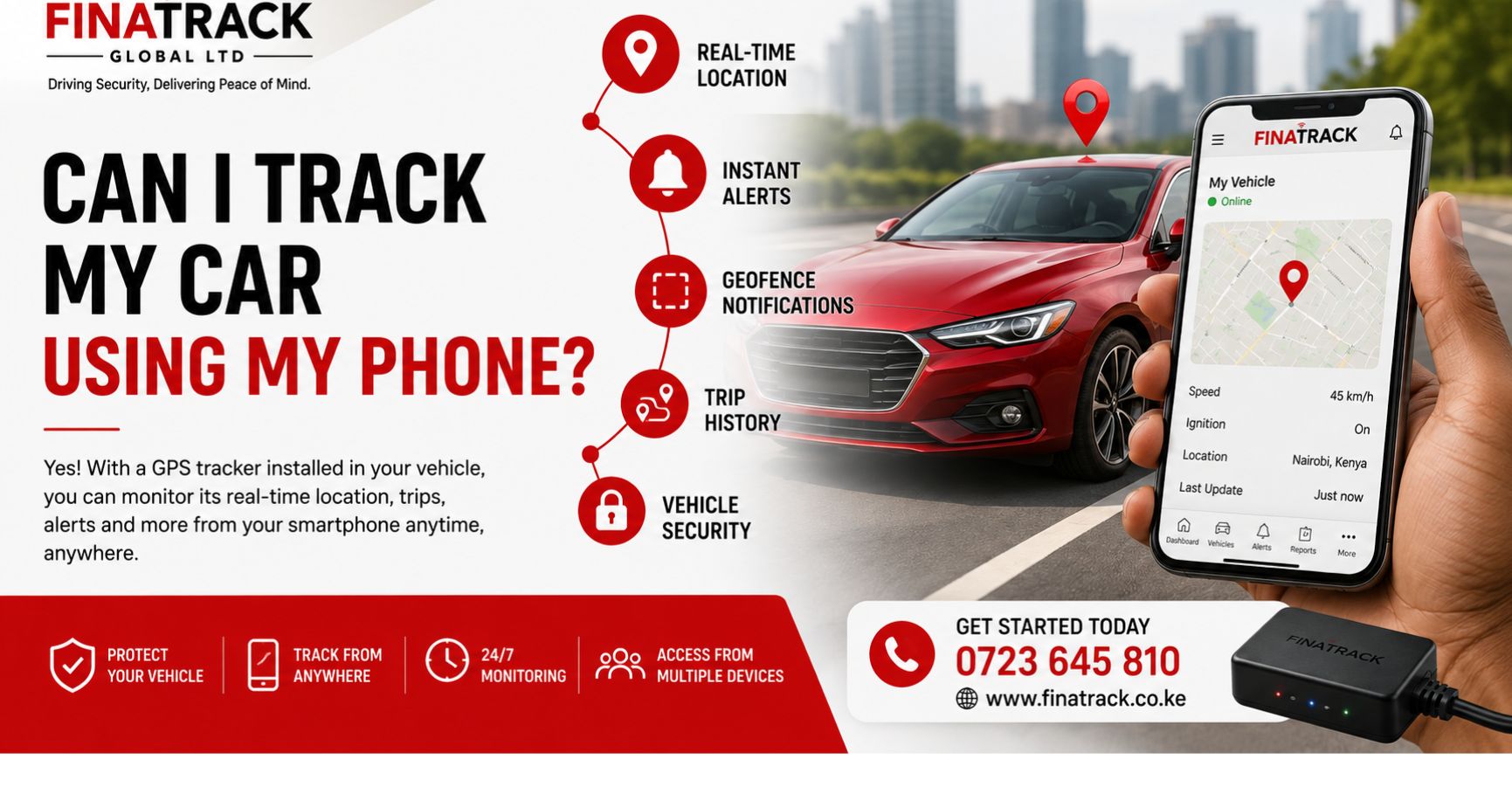
For many vehicle owners, the idea of checking a car’s location directly from a mobile phone once sounded like technology reserved for large transport companies. Today, it has become one of the most practical features of modern vehicle security. With a professionally installed GPS tracker and an internet connected smartphone, a vehicle owner can monitor the location of a car from almost anywhere.
The technology is particularly useful in Kenya, where private motorists, businesses, taxi operators, logistics companies and fleet managers increasingly rely on GPS tracking to improve vehicle security and operational visibility. Instead of calling a driver repeatedly to ask where the vehicle is, an authorised user can open a tracking application or web platform and view the vehicle’s current location.
The process begins with a GPS tracking device installed inside the vehicle. The tracker communicates with satellites to determine its location and then sends that information through a mobile network to a tracking server. The vehicle owner accesses the information through a mobile application or browser using their personal login credentials.
This means the phone itself is not directly tracking the vehicle. The phone is simply giving the owner access to information transmitted by the GPS device installed in the car. As long as the tracker is functioning, has network connectivity and the tracking platform is online, the authorised user can monitor the vehicle remotely.
One of the biggest advantages of smartphone based vehicle tracking is convenience. Most people carry their phones throughout the day, which means vehicle information is always within reach. If a vehicle moves unexpectedly, the owner does not need to return to an office computer or contact a control room before checking its location.
Modern tracking platforms can provide much more than a simple map position. Depending on the system installed, users may be able to see whether the vehicle is moving or parked, its current speed, ignition status and the time of the most recent location update. Some systems also provide information about previous journeys, allowing the owner to review where the vehicle travelled earlier in the day, week or another available period.
Trip history can be particularly useful when a vehicle is shared with employees, family members or drivers. A business owner can review whether a company vehicle followed its authorised route, while a private owner may use the same feature to understand where a vehicle has travelled when another person was using it.
Geofencing adds another layer of control. This feature allows the vehicle owner to create a virtual geographical boundary around a particular area. The tracking system can then generate an alert when the vehicle enters or leaves that area.
A business may create a geofence around a warehouse, customer location or operating territory. A private vehicle owner may create one around a home, office or parking area. The purpose is not simply to watch a vehicle continuously, but to receive useful information when movement occurs outside expected patterns.
Ignition alerts can also make mobile tracking more valuable. If the system detects that the ignition has been switched on, the vehicle owner may receive a notification through the tracking platform. This can provide an early warning where the vehicle should not be in use.
For example, if a car is parked overnight and the owner receives an unexpected ignition or movement alert, they can immediately open the tracking application and check what is happening. In a theft situation, those first few minutes can be extremely important.
Some wired GPS trackers can also be connected to vehicle immobilisation systems. When professionally installed and safely configured, this feature can allow an authorised user to send a command that prevents the vehicle from being restarted under appropriate circumstances.
Remote immobilisation should not be confused with simply switching off a moving vehicle at any moment. Vehicle safety must come first, and responsible systems are configured and used in a way that avoids creating unnecessary danger to the driver, passengers or other road users.
Mobile phone tracking can therefore transform a GPS tracker from a passive security device into an interactive vehicle management tool. The owner is not only able to see where the car is, but may also receive alerts, review journeys and access selected security controls from the same platform.
For businesses, the benefits can be even greater. A company operating several vehicles can monitor an entire fleet from one account rather than relying on separate phone calls with each driver. Managers can review routes, identify unnecessary trips, check whether vehicles are operating within approved areas and investigate unusual movement.
This can be especially useful for logistics companies, distributors, field service businesses, construction firms and other organisations whose vehicles spend most of the working day away from the office. A smartphone effectively gives the fleet manager access to important operational information without requiring them to remain behind a desk.
However, vehicle owners should understand that not every tracker offers the same mobile experience. Some basic devices provide little more than location information, while more advanced systems include trip history, geofencing, speed alerts, ignition monitoring, fleet reporting and security controls.
Before installing a tracker, it is therefore useful to ask the provider to demonstrate the tracking platform. The customer should understand how to log in, how to locate the vehicle and what information is included in the selected package.
Another common concern is whether the tracking account is tied to a single phone. In most properly designed systems, it is not. The account is normally linked to login credentials rather than one specific handset.
This means an authorised user may be able to access the same tracking account from another smartphone, tablet or computer by entering the correct username and password. This is useful when a phone is replaced, lost or unavailable.
It also means account security becomes extremely important. Anyone who obtains the login credentials may potentially gain access to sensitive vehicle location information. Vehicle owners should therefore avoid sharing passwords unnecessarily and should update credentials if they suspect that an unauthorised person has gained access.
Businesses should apply even stricter controls. Access to fleet tracking systems should be given only to employees who genuinely require the information. A fleet manager may need access to every vehicle, while another employee may only require information relating to a specific branch or vehicle.
The usefulness of mobile GPS tracking also depends on communication coverage. GPS satellites help determine the vehicle’s location, but the tracker usually relies on a mobile network to transmit that information to the tracking platform. If the vehicle temporarily enters an area with poor network coverage, live updates may be delayed until communication is restored.
This does not necessarily mean the tracker has stopped working. Some devices can store movement information and transmit it later when the mobile network becomes available again, depending on the technology and platform.
Vehicle owners should also distinguish between a GPS tracker and simple phone based location sharing. A smartphone placed inside a vehicle can sometimes share its location, but this is not the same as installing a dedicated vehicle tracking system.
A phone can be switched off, removed from the vehicle, run out of battery or be disconnected from mobile data. A professionally installed wired GPS tracker is designed specifically for vehicle monitoring and can remain powered directly from the vehicle electrical system.
This makes a dedicated GPS tracker more suitable for long term security and monitoring.
Wireless magnetic trackers are another option. These devices have their own batteries and can be positioned without permanent wiring. They can be useful for discreet or backup tracking, but their batteries eventually require recharging or replacement.
For many vehicle owners, the most practical arrangement is a professionally installed wired tracker as the main tracking system, with mobile access through a smartphone. Higher risk vehicles may also benefit from an independent backup tracking solution.
Cost is another factor vehicle owners consider before installing GPS tracking. The price depends on the device, installation, features, platform and whether the provider charges recurring subscription fees. Customers should always ask what is included before deciding which system offers the best value.
The cheapest tracker may not necessarily provide the best mobile application, technical support or security functionality. A reliable tracking platform becomes particularly important during an emergency, because a device is only useful when the customer can access accurate information when it matters.
Professional installation is equally important. A poorly installed tracker may experience power problems, communication interruptions or become easier for a thief to locate. A trained technician should install the device discreetly, test communication and confirm that the customer can access the vehicle from the tracking platform before the installation is complete.
For vehicle owners in Kenya, mobile GPS tracking has made vehicle security significantly more accessible. A technology that was once associated mainly with corporate fleets is now available to individual motorists at relatively affordable prices.
The real value is convenience combined with visibility. A car may be kilometres away, but the owner can still check its location within seconds.
For businesses, that same visibility can support accountability and better fleet management. For private motorists, it provides an additional layer of security and peace of mind.
So, can you track your car using your phone?
Yes, provided the vehicle has a suitable GPS tracking system installed and you have authorised access to the tracking platform.
Your phone becomes the window through which you see what is happening with the vehicle.
The tracker remains inside the car.
The mobile network carries the information.
The tracking platform brings it together.
And your smartphone puts that information in your hands.
For professional GPS vehicle tracking solutions in Kenya, Finatrack Global Ltd provides tracking systems for private vehicles, businesses and commercial fleets.
For enquiries, contact Finatrack Global Ltd on 0723 645 810 or visit www.finatrack.co.ke.