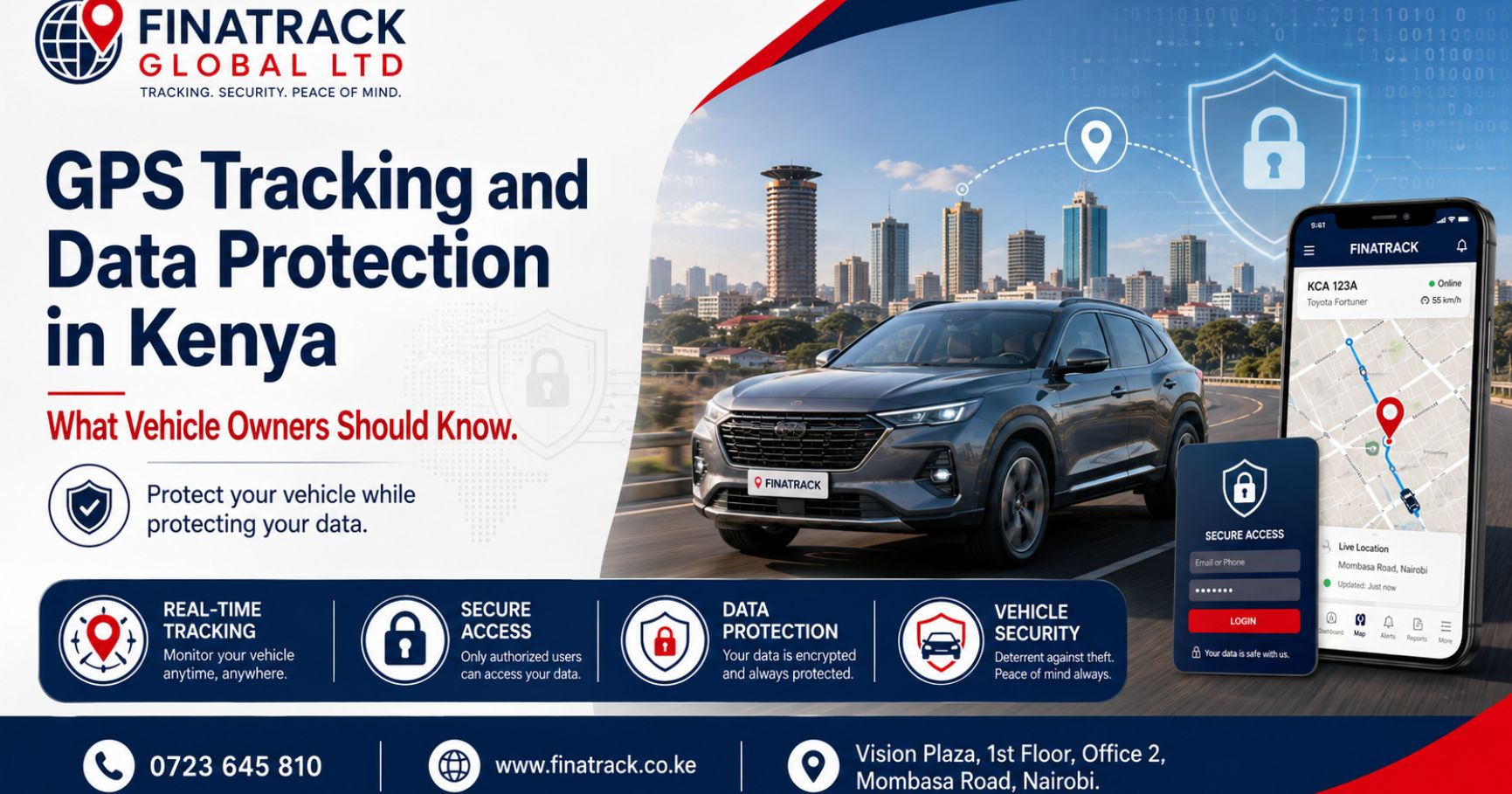
GPS tracking has become a common feature in vehicle security across Kenya, giving motorists and businesses the ability to monitor vehicles in real time, review previous journeys and respond more quickly when something goes wrong.
But as tracking technology becomes more sophisticated, another issue is becoming just as important as vehicle security: the protection of the data generated by these systems.
A GPS tracker does more than show where a car is located. Over time, it can reveal where a person lives, where they work, the routes they regularly use and the places they frequently visit. In a commercial setting, tracking data can also reveal customer locations, delivery routes, operating territories and employee movement.
This makes GPS tracking both a security tool and a data protection issue.
Kenya’s Data Protection Act, 2019 provides the legal framework governing the collection, processing, storage and protection of personal information. Location information can fall within the definition of personal data where it can be linked to an identifiable individual.
For vehicle owners, one of the most important questions is therefore not only whether a tracking system works, but who can access the information it generates.
Most customers assume that vehicle location information is visible only to the person holding the tracking account. In practice, access may also be available to authorised administrators, technical support personnel, fleet managers or other parties depending on how the system is configured.
In a corporate fleet, for example, a manager may need access to several vehicles. In an asset finance arrangement, a lender may have agreed monitoring rights over a financed vehicle. A company may also track vehicles allocated to employees for security, operational control or fleet management purposes.
The central issue is whether that access is authorised, necessary and properly controlled.
For businesses, this means access to vehicle tracking systems should be treated in the same way as access to other sensitive company information. Employees should only be given the level of access they need, and permissions should be reviewed when people change roles or leave the organisation.
For individual motorists, the same principle applies on a smaller scale.
A professionally installed tracker can still become a security risk if the account password is weak or widely shared. Giving tracking credentials to several people can undermine the protection offered by the physical device itself.
Vehicle owners should therefore use strong passwords, avoid sharing login details unnecessarily and change credentials where there is any concern about unauthorised access.
The issue becomes even more sensitive when tracking systems include functions such as remote engine immobilisation.
Some professionally installed wired trackers allow authorised users to send commands that can prevent a vehicle from being restarted under appropriate conditions. While this can be valuable during theft or unauthorised use, it also means account security becomes critical.
Access to vehicle location is sensitive. Access to vehicle control is even more sensitive.
Employers also face an additional responsibility when using GPS tracking on company vehicles.
Businesses may have legitimate reasons for monitoring their fleets. These can include protecting company assets, confirming deliveries, improving route planning, controlling fuel use, investigating unauthorised trips and improving driver accountability.
However, where vehicle tracking can also identify the movements of individual employees, privacy and data protection considerations come into play.
Employees should understand that the vehicles they use are being tracked, why the technology has been installed and how the information may be used.
This transparency is important because a vehicle tracking system should have a defined purpose.
A company that installs GPS trackers for fleet security and operational management should be careful about using the same information for unrelated purposes without considering its legal and data protection obligations.
Another important issue is the retention of trip history.
Modern tracking systems can store detailed records showing where a vehicle travelled, where it stopped and how it moved over time.
This information can be useful when investigating theft, confirming customer visits, reviewing routes or resolving operational disputes.
But historical tracking information should not necessarily be retained indefinitely.
Businesses and tracking providers should consider why the information is being stored, how long it is genuinely needed and who should continue to have access to it.
The security of the tracking platform itself is equally important.
If criminals or unauthorised individuals gain access to vehicle tracking information, they may be able to identify where a car is parked, when it is regularly unattended or how a commercial fleet operates.
For logistics companies and other businesses, location information can also reveal commercially sensitive information about routes, customers and operations.
This means choosing a GPS tracking company should involve more than comparing devices and prices.
Customers should ask how their information is protected, who can access it, how accounts are managed and what happens when a vehicle changes ownership.
Selling a vehicle without properly transferring or deactivating its tracking account can create a significant privacy problem.
A previous owner who still has access to the tracking account could potentially continue viewing the vehicle’s location after it has been sold.
Buyers of second hand vehicles should therefore establish whether an existing GPS tracker is installed and who controls it.
Where necessary, the device should be transferred to a new account, professionally reconfigured or replaced.
The same principle applies to commercial fleets when vehicles are sold or reassigned.
Tracking access should be reviewed as part of the handover process rather than treated as an afterthought.
The increased use of cloud based tracking platforms also raises questions about where vehicle information is stored.
Many GPS systems rely on remote servers that allow customers to access vehicle information through mobile applications and web platforms.
For most users, the technical details of server infrastructure may not be visible, but the company providing the tracking service should understand how customer information is handled and protected.
This is where regulatory compliance becomes important.
The Office of the Data Protection Commissioner oversees Kenya’s data protection framework, while organisations processing personal information may have obligations relating to registration, security and responsible data handling.
For consumers, regulatory compliance should form part of the wider due diligence carried out before choosing a vehicle tracking provider.
Licensing, technical capability, professional installation, customer support and data protection should all be considered together.
A cheap tracker may offer attractive upfront savings, but the true value of a tracking system becomes clear when the customer needs technical assistance, account recovery or support during a theft incident.
Customers should know who they are dealing with, where the company operates from and how quickly they can obtain help when something goes wrong.
Finatrack Global Ltd provides GPS tracking, vehicle security, fuel monitoring and fleet telematics solutions for private motorists and businesses in Kenya.
Depending on the solution installed, vehicle owners can access features such as real time tracking, trip history, ignition alerts, geofencing, speed monitoring and remote engine immobilisation.
However, technology alone does not guarantee security.
Vehicle owners must also protect their login details, monitor who has access to their accounts and ensure tracking access is updated whenever vehicles or authorised users change.
For businesses, internal policies governing GPS tracking can be equally important.
Companies should define who can access fleet data, why tracking information is collected, how long it is retained and what happens when employees leave the organisation.
The growing use of GPS tracking in Kenya reflects the increasing role of technology in vehicle security and fleet management.
But with greater visibility comes greater responsibility.
A GPS tracker can answer one of the most important questions a vehicle owner can ask: where is my vehicle?
Data protection introduces another question that is just as important.
Who else can see it?
For enquiries about GPS tracking, fuel monitoring and fleet telematics solutions, Finatrack Global Ltd can be contacted on 0723 645 810 or through www.finatrack.co.ke.
The company’s offices are located at Vision Plaza, 1st Floor, Office 2, Mombasa Road, Nairobi.