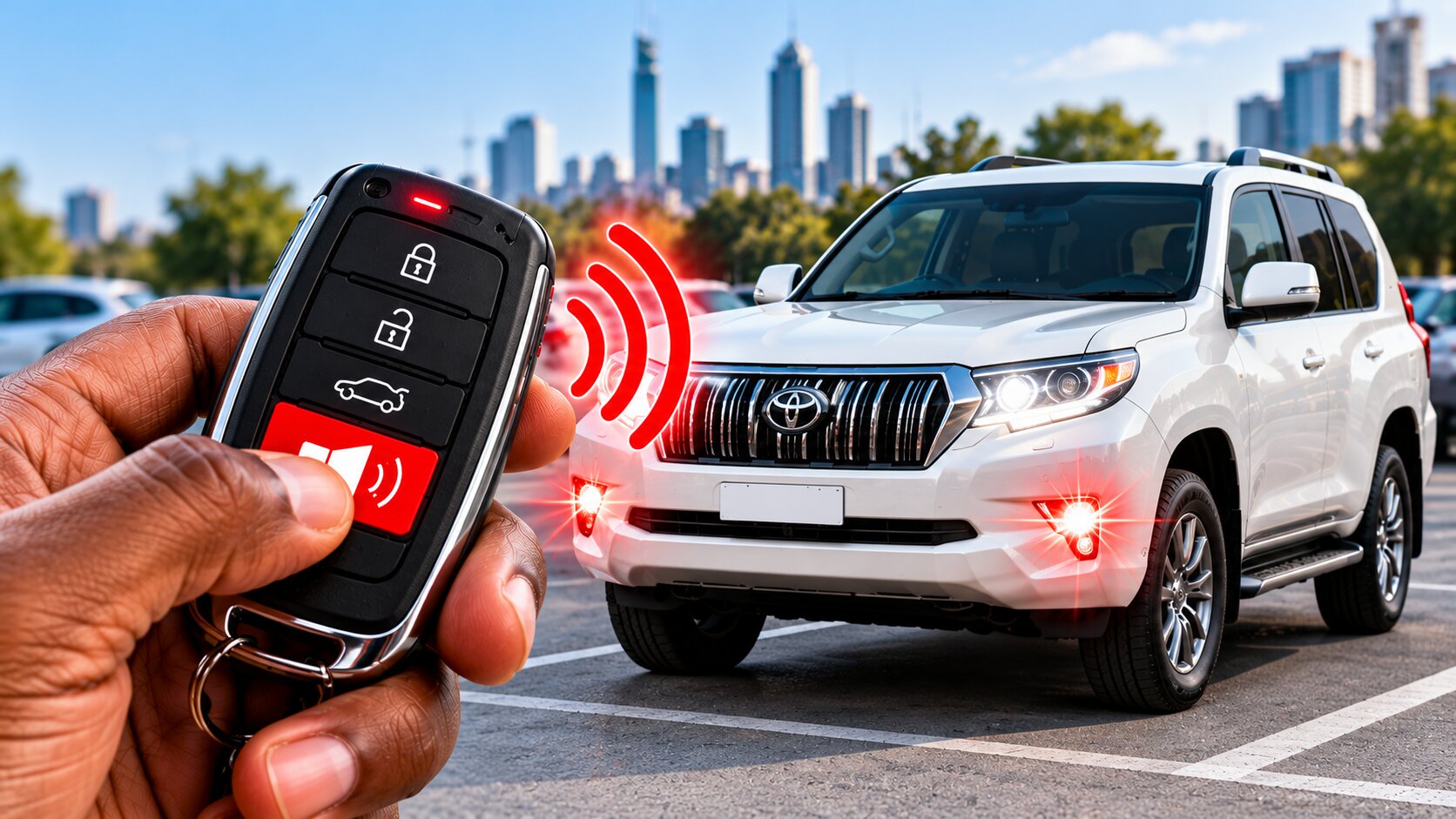
Many motorists carry a car alarm remote every day without using all the buttons available on it. One of the least understood is the panic button, usually marked with a horn, alarm or sound symbol. When activated, the feature is designed to trigger the vehicle’s alarm siren manually rather than waiting for a door, shock sensor or other security trigger. For motorists searching for information about a car alarm panic button in Kenya, understanding how it works can make the feature more useful during both everyday and emergency situations.
The panic button can be useful when a vehicle owner notices suspicious activity around the car. If someone is interfering with the vehicle while the owner is nearby, activating the alarm can attract attention and may discourage further interference. It should not be treated as a guarantee against theft, but it gives the owner a quick way to activate the alarm without physically approaching the vehicle.
It can also help when locating a car in a large parking area. A driver who forgets exactly where the vehicle was parked may activate the panic function briefly so that the siren or lights help identify the car. This can be useful at shopping centres, office parking areas or large events, although the feature should be used responsibly to avoid causing unnecessary disturbance.
The operating range of the panic button depends on the alarm system, remote battery condition and surrounding environment. If the remote battery is weak, the owner may need to move closer to the vehicle before the alarm responds. Buildings, underground parking areas and other obstacles can also affect remote communication. If the normal lock and unlock buttons are working but the panic function does not respond, the alarm settings or remote may require inspection.
Vehicle owners should also understand that the panic button and GPS tracking perform very different roles. The alarm can create an immediate audible warning when the vehicle is nearby, while a GPS tracker can help an authorised user check the vehicle’s current or most recently reported location when it is farther away. If a vehicle is moved despite the alarm sounding, GPS tracking becomes important because the siren alone cannot show where the vehicle has gone.
A stronger security approach therefore combines several layers. A car alarm can attract attention, a hidden cut off or immobilisation function can create another obstacle to unauthorised movement, while GPS tracking provides location visibility. Higher risk vehicles can also use a wireless backup tracker or tracking tag so that security does not depend entirely on one device or one method.
If the panic button activates accidentally, the alarm can normally be cancelled using the remote according to the alarm system’s operating procedure. Owners should familiarise themselves with the remote before an emergency occurs rather than experimenting with buttons under pressure. If the panic function stops working, the remote battery, siren, wiring or alarm configuration may need professional inspection.
Finatrack Global Ltd provides professionally installed car alarm systems, advanced alarms with hidden cut off and GPS tracking solutions for motorists in Kenya. Finatrack’s standard car alarm is available from KES 6,500, while the advanced alarm with hidden cut off is available at KES 7,500, and the wired GPS tracker plus car alarm combination is available at KES 20,000. For installation or enquiries, call or WhatsApp 0723 645 810 or visit www.finatrack.co.ke. The panic button may be a small feature on your alarm remote, but knowing when and how to use it can make it a useful part of a wider vehicle security strategy.