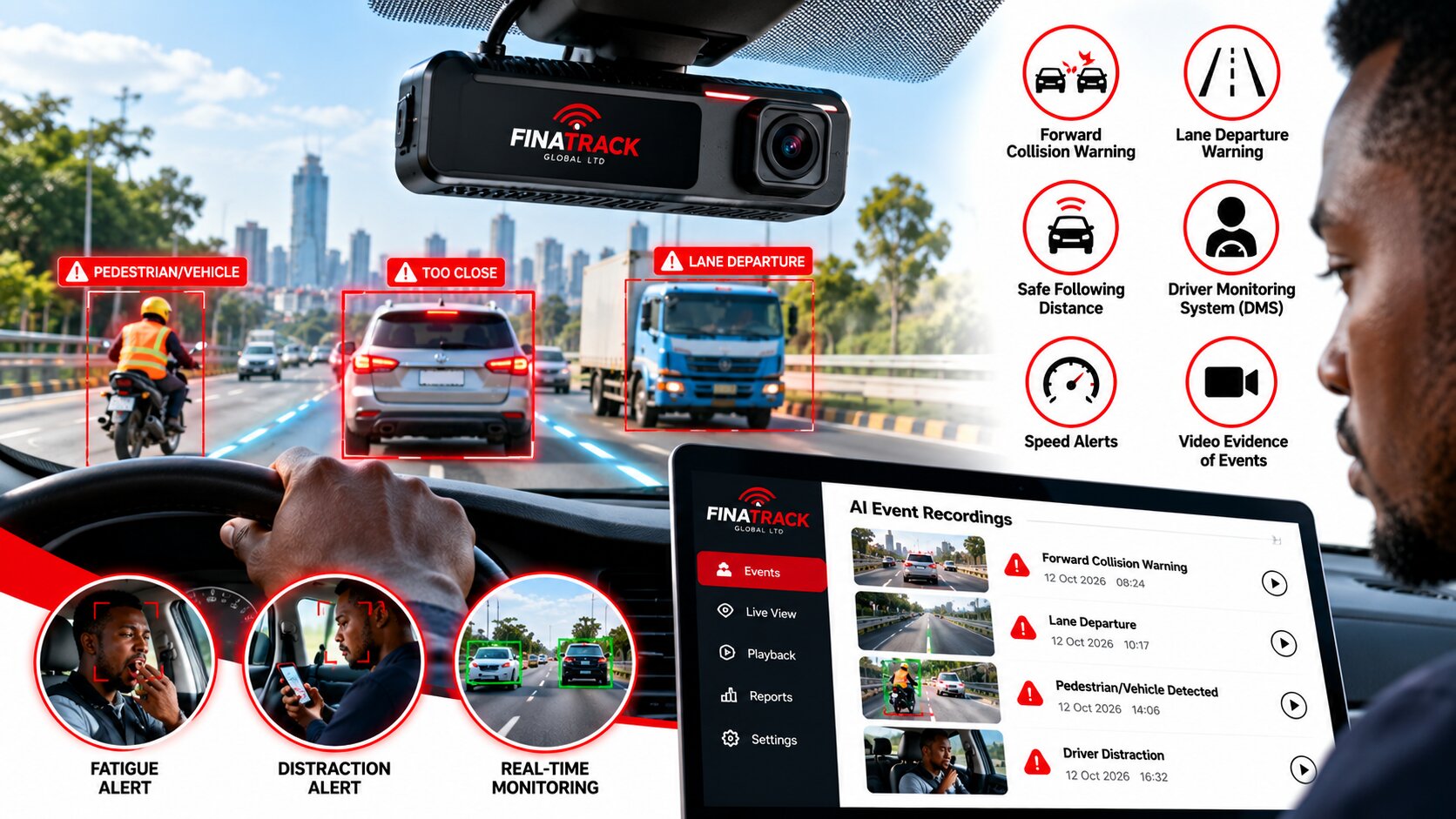
Not every dangerous driving situation ends in a collision. A driver may brake suddenly to avoid a motorcycle, drift toward another lane before correcting the vehicle or follow another car too closely before increasing the distance. These moments can disappear within seconds and may never be reported to management because no damage occurred. For businesses using AI dashcams in Kenya, however, near-miss events can provide valuable information about risks that exist in the fleet before they eventually contribute to a serious accident.
A near miss is essentially an event where a collision or other dangerous outcome was narrowly avoided. The vehicle may complete the journey normally, but the circumstances can still reveal something worth investigating. Repeated harsh braking, sudden steering corrections, unsafe following distances or distraction-related events can indicate that a driver, route or operating environment is creating unnecessary risk. Waiting until an accident occurs before reviewing these patterns means the business may lose an opportunity to intervene earlier.
Modern AI dashcams can combine road-facing video with ADAS and Driver Monitoring System technology. Depending on the installed equipment and configuration, ADAS may generate warnings associated with risks such as following distance or lane behaviour, while DMS can identify selected driver behaviours such as distraction or signs associated with fatigue. When one of these events is detected, the system may preserve a short video clip that allows fleet managers to review what was happening around that moment.
Video makes these alerts much more useful. A harsh-braking event recorded by GPS or telematics tells management that the vehicle slowed suddenly, but footage may help explain why. The driver may have been travelling too closely behind another vehicle, a pedestrian may have entered the road unexpectedly or another motorist may have changed lanes dangerously. Without this context, management could easily interpret the data incorrectly.
This is why near-miss analysis should focus on patterns rather than isolated alerts. One emergency braking event may represent good defensive driving rather than poor driving. Ten similar events involving the same driver over several weeks may deserve closer investigation. Fleet managers can review the route, traffic conditions, time of day and available footage to understand whether the problem is driving behaviour, scheduling pressure, difficult operating conditions or another factor.
Near-miss information can be particularly valuable for driver coaching. Instead of waiting for an accident and then discussing what went wrong, management can use real examples from normal fleet operations to show how risk develops. A driver who repeatedly follows other vehicles too closely may not consider the behaviour dangerous until the recorded footage demonstrates how little reaction distance was available. Coaching based on actual fleet events can therefore be more practical than relying only on general road-safety instructions.
AI dashcam alerts should still be treated as decision-support information rather than automatic proof of wrongdoing. Road markings may be unclear, weather conditions can affect camera performance and unusual road situations can generate alerts even when the driver acted appropriately. Fleet managers should review the video and operational context before taking disciplinary action. The technology becomes most useful when it helps management ask better questions rather than automatically making the final judgement.
Businesses can also compare near-miss patterns across routes. If several drivers repeatedly generate harsh-braking or collision-risk events at the same junction, the problem may not be an individual driver at all. The location itself may have heavy traffic, poor visibility or difficult merging conditions. Management could respond by changing the route, adjusting delivery times or warning drivers about the particular risk area.
The financial value of this approach is difficult to measure from one event because the accident that did not happen has no repair invoice attached to it. However, identifying repeated risky behaviour before a collision can potentially help reduce vehicle downtime, insurance claims, repair costs and injuries. For commercial fleets, prevention becomes more valuable when the information is used consistently rather than reviewed only after something goes wrong.
Finatrack Global Ltd provides AI dashcam solutions with DMS and ADAS capabilities for private vehicles and commercial fleets in Kenya. Finatrack’s AI Dashcam is available at KES 35,000, with professional installation for businesses that want stronger visibility over road events and driver behaviour. GPS tracking can also provide location and trip information that adds context to recorded video events. For enquiries, call or WhatsApp 0723 645 810 or visit www.finatrack.co.ke. The most valuable accident may be the one that never happens, and near-miss data can help fleet managers recognise warning signs before the next event has a more serious outcome.