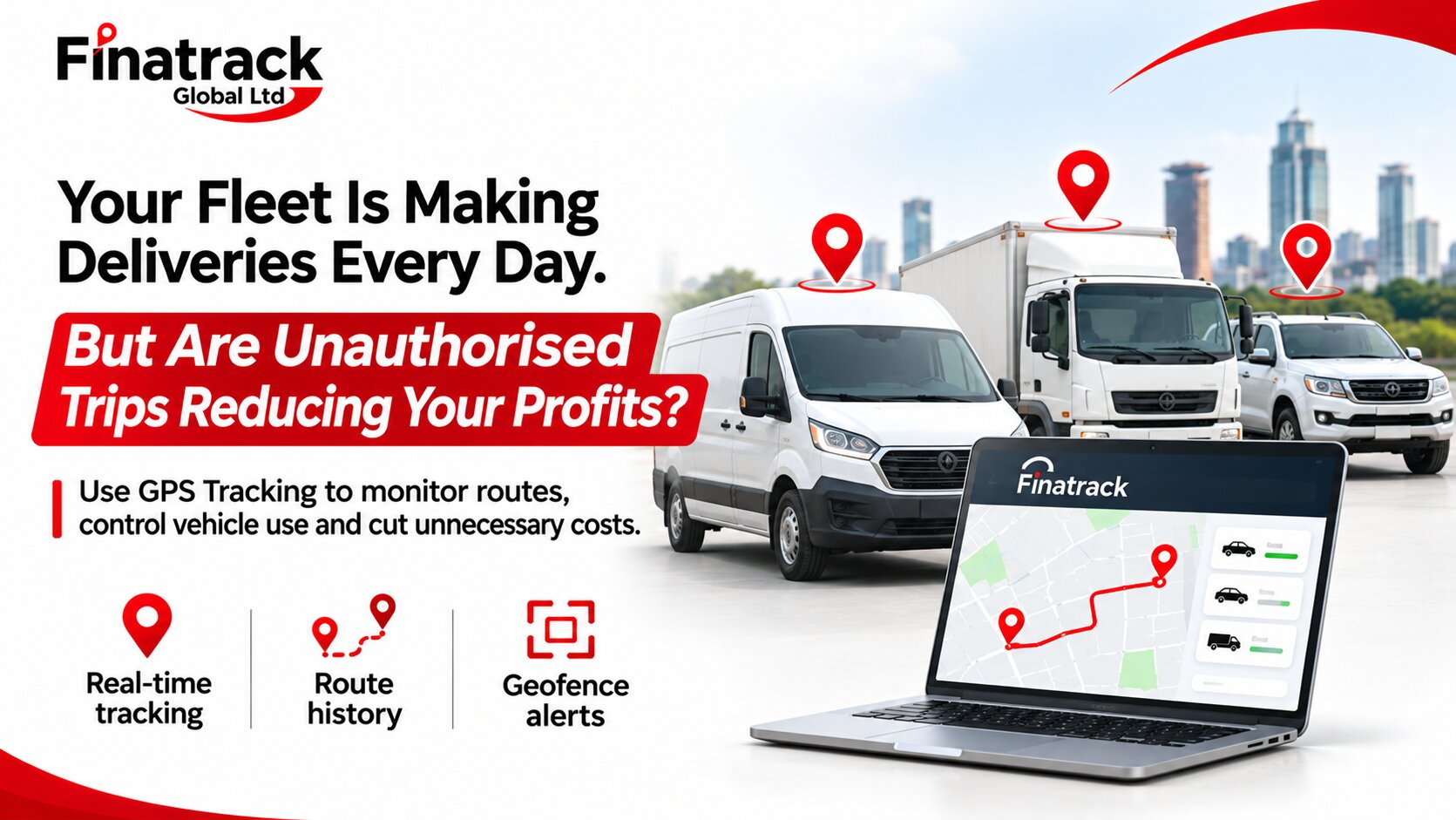
Running a transport business in Kenya involves more than purchasing vehicles, hiring drivers and securing customers. Every kilometre travelled, litre of fuel consumed and hour spent on the road contributes to the overall cost of operations. While many fleet owners concentrate on fuel prices, vehicle maintenance and delivery schedules, one important source of financial loss often goes unnoticed: unauthorised vehicle movements. A truck may complete all its assigned deliveries, a company van may return to the yard on time, and a driver may submit the expected reports, yet the business could still be losing money through unnecessary trips.
For companies operating delivery vans, commercial trucks, staff transport vehicles and service fleets, understanding how vehicles are used outside scheduled assignments is essential for controlling costs. Unauthorised trips can increase fuel consumption, accelerate vehicle wear and create additional risks without generating corresponding revenue. GPS tracking technology provides fleet owners with a practical way to review vehicle movements, identify unusual routes and improve accountability without relying entirely on driver explanations.
What Are Unauthorised Trips in Fleet Management?
An unauthorised trip occurs when a company vehicle is used outside the activities or permissions established by the business. This may involve using a delivery vehicle for personal errands, making unnecessary detours, travelling outside approved working hours or operating a commercial truck on assignments that have not been approved by management.
For example, a delivery van assigned to distribute products within Nairobi may complete its scheduled deliveries before being used for an additional personal journey. Although the vehicle eventually returns to its designated parking location, the extra distance results in fuel consumption, tyre wear and additional mileage that the business must pay for.
However, not every unexpected route is evidence of misconduct. Drivers may change their routes because of traffic congestion, road closures, customer requests or emergency situations. Fleet owners should therefore distinguish between legitimate operational adjustments and movements that violate company policies. Reliable location information can help establish what happened before management makes a decision.
How Unauthorised Vehicle Movements Affect Business Profits
The financial impact of unauthorised vehicle usage often extends beyond the fuel consumed during an unnecessary journey. Additional mileage contributes to tyre wear, servicing requirements, depreciation and the gradual deterioration of vehicle components. When these costs are distributed across an entire fleet, they can significantly affect profitability.
Consider a company operating ten delivery vehicles in Nairobi. If each vehicle travels an additional 20 kilometres daily on trips that are not related to company operations, the fleet accumulates 200 unnecessary kilometres every working day. Over 26 working days, that amounts to 5,200 kilometres of additional vehicle movement.
If the vehicles average 10 kilometres per litre, those journeys would consume approximately 520 litres of fuel. At an illustrative diesel price of KSh 180 per litre, the business would spend KSh 93,600 on fuel alone. This example excludes additional maintenance, tyre wear and other vehicle operating costs.
These figures are illustrative rather than a measurement of actual fleet losses, but they demonstrate how seemingly small deviations can become expensive when repeated across multiple vehicles. For transport businesses operating on tight profit margins, controlling unnecessary mileage can make a meaningful difference.
Why Fleet Owners Often Fail to Notice Unauthorised Trips
Many transport businesses still rely on manual vehicle logbooks, driver reports, delivery notes and fuel receipts to monitor daily operations. Although these documents are important, they do not always provide a complete picture of how a vehicle was used throughout the day.
A driver may report that a truck travelled directly from Nairobi to Nakuru and completed the delivery successfully. Without independent movement records, the fleet manager may have limited information about any additional stops or route changes that occurred during the journey.
The problem becomes more complicated when a business operates several vehicles across different counties. Supervisors cannot physically accompany every driver, and frequent telephone calls may interrupt operations without providing reliable historical information.
GPS tracking can address part of this visibility gap by recording vehicle locations and movements. Instead of depending entirely on verbal reports, fleet managers can review available journey records and investigate activities that appear inconsistent with authorised assignments.
How GPS Tracking Helps Identify Unauthorised Vehicle Use
A GPS tracking device determines a vehicle’s position using satellite navigation signals and transmits location information to a monitoring platform through a supported communication network. Depending on the tracking system, fleet managers can access live location information, historical routes, movement records and selected security notifications.
For example, a logistics company operating trucks between Nairobi and Mombasa may establish approved delivery routes and expected operating schedules. If a vehicle makes an unexpected detour, the manager can review available tracking information to establish where the truck travelled and how much additional distance may have been covered.
The system can also provide information about unusual movements outside working hours. A company vehicle that is expected to remain parked overnight may record an unexpected journey, prompting management to investigate whether the movement was authorised.
GPS tracking does not independently establish why a vehicle travelled along a particular route. The information should be compared with delivery instructions, driver explanations and other operational records before management determines whether the movement was improper.
Can Route History Reveal Where Your Vehicles Have Been?
Historical route playback is one of the most valuable features of modern vehicle tracking systems. It allows authorised users to review recorded vehicle movements from previous periods, helping them understand where a vehicle travelled rather than relying solely on its current location.
For a delivery business operating within Nairobi, route history may reveal the sequence of locations visited during a working day. Fleet managers can compare this information with the planned delivery schedule and identify journeys that require clarification.
For example, a truck assigned to deliver goods from Industrial Area to Thika may record a route that includes an unexpected diversion through another location. Reviewing the route history can help management determine when the deviation occurred and whether it affected delivery performance.
Historical playback is also useful when investigating customer complaints or disagreements about delivery times. A customer may claim that a vehicle never reached the agreed destination, while the driver reports that the delivery was attempted. Available location records can provide supporting information about the vehicle’s movements.
However, GPS records should not be treated as conclusive proof that goods were delivered or that a particular driver completed an assignment. Location history is most useful when combined with delivery confirmations and other business records.
How Geofencing Can Help Control Fleet Movements
Geofencing allows fleet managers to establish virtual boundaries around selected geographical locations. These may include company premises, warehouses, delivery zones, customer locations or designated parking areas.
When a compatible GPS tracking device detects that a vehicle has entered or exited a configured area, the monitoring system may generate an alert. This allows managers to receive notifications about selected vehicle movements without continuously watching the tracking platform.
For example, a company may establish a geofence around its vehicle yard in Nairobi. If a truck leaves the premises outside approved operating hours, the system may notify an authorised manager. The manager can then investigate whether the departure was scheduled or unexpected.
Geofencing can also support delivery coordination. A fleet operator may configure boundaries around frequently visited customer locations to help monitor vehicle arrivals and departures.
The effectiveness of geofencing depends on location accuracy, reporting intervals and communication availability. Fleet managers should therefore understand that alerts may occasionally be delayed or triggered by positioning inaccuracies.
Can GPS Tracking Help Reduce Fuel Expenses?
Fuel is a significant operating expense for transport businesses, and unnecessary vehicle movements directly increase consumption. A truck that travels additional kilometres without a corresponding commercial purpose uses fuel that could otherwise support revenue-generating assignments.
GPS tracking provides information about vehicle movements that can help businesses identify unnecessary travel, inefficient routes and selected operating patterns. When combined with fuel consumption records, the information becomes more useful for understanding where expenses originate.
For example, a fleet manager may discover that one delivery vehicle consistently covers more kilometres than other vehicles performing comparable assignments. Reviewing its routes may reveal avoidable detours, repeated personal trips or differences in delivery planning.
Fuel monitoring technology can provide further insight by measuring fuel-level changes and identifying unusual consumption patterns. Kenyan industry reporting has highlighted how combining vehicle tracking with fuel sensors can help transport businesses investigate fuel losses, idling and unauthorised route changes. Business Daily
However, GPS tracking alone does not directly measure every litre of fuel consumed. Fleet owners seeking detailed fuel information may need additional sensors or compatible vehicle data systems.
Why After-Hours Vehicle Monitoring Matters
Company vehicles are frequently parked at business premises, employee residences or designated yards after working hours. During these periods, owners may assume that the vehicles remain stationary until the next scheduled assignment.
However, unexpected movement outside operating hours can create financial and security concerns. A vehicle used for personal travel after work may accumulate additional mileage, consume fuel and create liability exposure for the business.
A suitable GPS tracking system can help identify movement during designated periods. Depending on the device’s capabilities, managers may configure ignition or geofence notifications to alert them when a vehicle is started or moved unexpectedly.
For example, a company that operates delivery trucks only between 6:00 a.m. and 7:00 p.m. may establish procedures for reviewing movements outside those hours. If a vehicle records an overnight journey, management can investigate whether the trip was authorised.
The objective should be to protect company assets and enforce reasonable operational policies, while recognising that emergency assignments, approved overtime and other legitimate activities may occur outside normal schedules.
How Vehicle Tracking Supports Driver Accountability
Driver accountability is an important part of fleet management, particularly when employees operate valuable vehicles away from direct supervision. Businesses need to know that vehicles are being used for authorised purposes, routes are being followed appropriately and operating resources are being managed responsibly.
GPS tracking provides additional information that can support discussions between fleet managers and drivers. When unexpected movements are identified, management can review the records and seek clarification rather than relying entirely on assumptions.
For example, a company driver may report that a delivery was delayed because of traffic congestion. Historical vehicle movements can provide supporting context about the route taken and the time spent at particular locations.
However, responsible monitoring requires transparency. Drivers should understand that company vehicles are fitted with tracking devices, what information is collected and how the records may be used.
In April 2026, Kenya’s Office of the Data Protection Commissioner published guidance for the transport sector addressing GPS tracking, fleet management systems and the handling of personal data. The guidance emphasises lawful, transparent and secure processing of information relating to drivers and other individuals. odpc.go.ke
Businesses should therefore establish appropriate monitoring policies, restrict access to tracking records and comply with applicable data protection requirements.
Can GPS Tracking Improve Delivery Efficiency?
Beyond identifying unauthorised trips, GPS tracking can help fleet operators improve the organisation of legitimate business activities. Understanding where vehicles are located and how they move between destinations can support better dispatch decisions and more efficient route planning.
A company managing deliveries across Nairobi may use location information to identify which available vehicle is best positioned to handle an additional customer request. Instead of assigning a vehicle from the opposite side of the city, the dispatcher can consider one operating closer to the destination.
Historical journey records may also reveal recurring delays, inefficient delivery sequences or unnecessary travel between customer locations. By reviewing this information, businesses can identify opportunities to improve scheduling and reduce avoidable mileage.
For companies operating commercial trucks across Kenya, route visibility can support communication with customers and help managers respond more effectively to delays.
However, GPS tracking information should be interpreted alongside real operating conditions. Traffic congestion, road restrictions, weather and delivery requirements can influence which route is most appropriate.
Why Fleet Owners Should Monitor Vehicle Mileage
Mileage is an important indicator of vehicle usage and operating costs. Every kilometre travelled contributes to maintenance requirements, tyre wear and eventual vehicle depreciation.
For businesses managing several vehicles, accurate mileage information can support maintenance planning and improve the allocation of operating expenses. Where supported, GPS tracking systems can estimate the distance travelled during recorded journeys and provide historical movement reports.
For example, a vehicle that consistently covers more kilometres than expected may require closer investigation. The additional distance could result from unnecessary trips, poor route planning or a legitimate increase in assignments.
Fleet managers should compare mileage information with delivery records and servicing schedules to understand whether vehicle usage is consistent with operational expectations.
It is also important to recognise that GPS-derived distance estimates may differ from odometer readings because of reporting intervals, signal accuracy and data gaps. Businesses should use suitable measurement methods when precise maintenance records are required.
How Much Does Fleet GPS Tracking Cost in Kenya?
The cost of fleet GPS tracking depends on the number of vehicles, the tracking devices selected, installation requirements and the monitoring services included.
At Finatrack Global Ltd, our Wired GPS Tracker is available at KSh 15,000 as a one-off payment without an annual tracking subscription. Customers can alternatively choose an installation package of KSh 10,000 with an annual subscription of KSh 3,000.
For businesses seeking additional vehicle security, Finatrack also offers a GPS Tracker + Backup Tracker Combo at KSh 25,000. The secondary tracking device provides an additional potential source of location information if the primary device becomes unavailable, subject to battery condition and connectivity.
Fleet operators can discuss their requirements with the Finatrack team to determine the appropriate tracking arrangement for their vehicles. Businesses managing delivery vans, commercial trucks, service vehicles and staff transport fleets may have different monitoring priorities, making it important to select equipment that supports their operational needs.
The investment should be evaluated against the potential benefits of improved vehicle visibility, reduced unnecessary mileage, stronger accountability and better fleet coordination.
Is GPS Tracking Worth Investing In for Fleet Management?
For businesses operating several vehicles, GPS tracking can provide useful information that would otherwise be difficult to obtain consistently. Instead of relying entirely on manual reports and telephone calls, managers can access location information, review historical movements and investigate selected operating activities.
The financial benefits depend on how businesses use the information. Installing GPS trackers does not automatically eliminate unauthorised trips or guarantee lower fuel expenses. Managers must establish clear vehicle usage policies, review relevant records and address identified problems through appropriate procedures.
When combined with driver training, efficient scheduling, proper maintenance and transparent monitoring policies, GPS tracking can contribute to more effective fleet management.
For Kenyan transport businesses operating in competitive markets, better visibility over vehicle movements can support more informed decisions about costs, operational efficiency and asset security.
Take Greater Control of Your Fleet With Finatrack Global Ltd
Your vehicles may be completing their assigned deliveries every day, but that does not necessarily mean every kilometre travelled contributes to business revenue. Unnecessary trips, unauthorised vehicle movements and inefficient route planning can gradually increase operating expenses without attracting immediate attention.
GPS tracking gives fleet owners additional information to understand where vehicles travel, review movement history and investigate unusual activities. By improving visibility over operations, businesses can identify opportunities to reduce unnecessary expenses and strengthen accountability.
Finatrack Global Ltd provides GPS tracking and fleet management solutions for logistics companies, commercial fleet operators, contractors, delivery businesses and organisations managing vehicles across Kenya. Our solutions support vehicle location monitoring, route history, geofencing and selected security notifications, depending on the tracking equipment installed.
Our Wired GPS Tracker costs KSh 15,000 as a one-off payment, with an alternative package of KSh 10,000 installation plus KSh 3,000 annually.
To learn more about our fleet tracking solutions or arrange professional installation, contact Finatrack Global Ltd on 0723 645 810 or visit our office at Vision Plaza, 1st Floor, Office 2, Mombasa Road, Nairobi. You can also explore our solutions at www.finatrack.co.ke.
Your business pays for every kilometre your vehicles travel. Make sure those kilometres are contributing to your business rather than quietly reducing your profits.