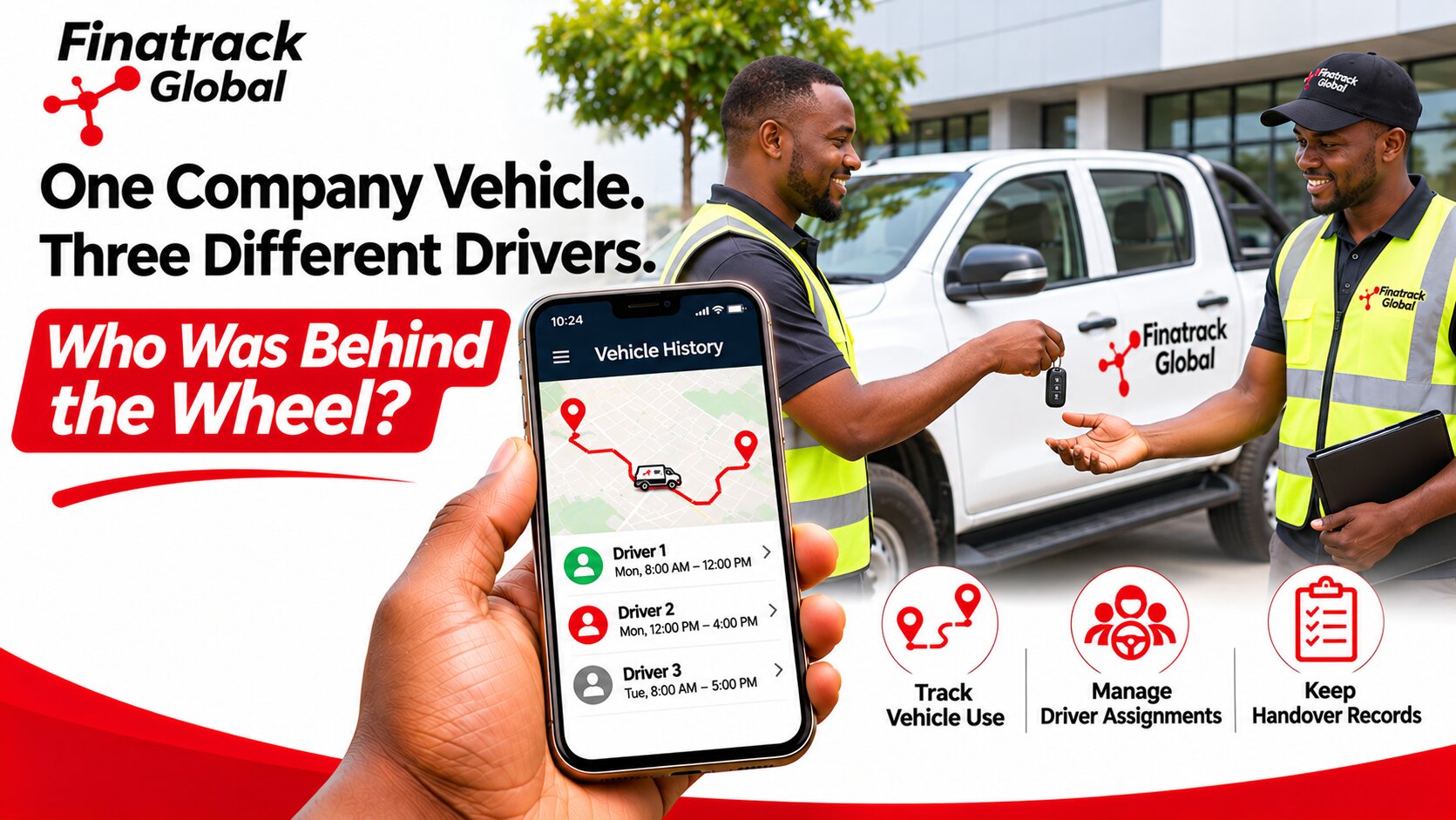
For many businesses in Kenya, a company vehicle is not permanently assigned to one driver. Logistics companies, construction contractors, delivery businesses and organisations operating staff transport often rotate drivers depending on work schedules, employee availability and operational requirements. A pickup may be driven by one employee in the morning and another in the afternoon, while a delivery truck may be assigned to different drivers throughout the week. Although these arrangements allow businesses to make better use of their vehicles, they can also create challenges when management needs to establish who was responsible for a particular journey.
The problem often becomes apparent when something unexpected happens. A vehicle may accumulate additional mileage, receive a speeding complaint, return with unexplained damage or be involved in an incident during a period when several employees had access to it. If the company does not maintain accurate driver assignment records, determining who was operating the vehicle can become difficult. GPS tracking provides valuable information about where a vehicle travelled, when it moved and how it was used, but location information alone does not necessarily reveal who was behind the steering wheel. Combining vehicle tracking with proper driver identification and handover procedures can help businesses improve accountability without unfairly blaming employees.
Why Shared Company Vehicles Create Accountability Challenges
Many Kenyan businesses rely on shared vehicles because allocating a separate car or truck to every employee would be expensive and inefficient. A company may operate three pickups that are used by different departments depending on daily assignments, while a distribution business may rotate drivers to accommodate shift changes, leave days and varying delivery schedules. These arrangements are practical, but they require reliable records to establish responsibility whenever a vehicle changes hands.
Consider a construction company with several projects in Nairobi, Machakos and Kiambu. One company pickup may be used by a site supervisor to deliver materials in the morning before being handed over to a procurement officer in the afternoon. The next day, a different employee may use the same vehicle to visit suppliers. If the vehicle later develops damage or management notices an unexpected journey, identifying the responsible driver can become complicated when assignments were communicated informally.
Some companies rely on verbal instructions, telephone calls or messages to allocate vehicles. Although these methods are convenient, they may not provide a complete record of when a particular employee received the keys, where the vehicle was supposed to go or when it was returned. As the number of vehicles and employees increases, the possibility of conflicting explanations also increases.
A structured vehicle allocation process helps address these challenges. By recording who is authorised to use each vehicle and the period of responsibility, businesses can maintain clearer accountability even when drivers change frequently.
Why GPS Tracking Cannot Automatically Identify the Driver
A common misunderstanding about GPS tracking is the assumption that once a vehicle has a tracking device, the business can automatically establish who drove it during every journey. In reality, a conventional GPS tracker primarily provides information about the vehicle’s location and movements. It does not independently identify the person sitting behind the steering wheel unless the installation includes additional supported driver identification technology or is connected to a reliable driver assignment system.
For example, a delivery truck may leave a warehouse in Industrial Area at 8:00 a.m., travel to several customer locations and return in the afternoon. A GPS tracking platform may provide a record of that journey, including the route travelled and selected stop information. However, if two employees had access to the truck during the day, the tracking record alone may not establish which person was driving at a particular time.
This distinction becomes important when reviewing speed alerts, route deviations or other events associated with a vehicle. Management may know that the truck exceeded a configured speed threshold, but assigning responsibility to a specific employee requires reliable information about who was operating it at the time.
Businesses should therefore avoid treating GPS journey records as automatic proof of individual driver behaviour. The information becomes more useful when combined with driver handover records, dispatch schedules and, where available, compatible identification systems.
How Proper Vehicle Handover Records Improve Accountability
A vehicle handover procedure establishes responsibility whenever a company car, pickup or truck moves from one employee to another. Rather than simply passing over the keys, the business records essential information about the vehicle’s condition, the person receiving it and the assignment being undertaken. This creates a documented connection between the vehicle and the employee responsible during a particular period.
Consider a logistics company operating several delivery vans in Nairobi. At the beginning of a shift, the assigned driver receives the vehicle and confirms its registration number, odometer reading, approximate fuel level and any visible damage. The employee also records the time of collection and the work assignment. When the vehicle is returned or transferred to another driver, the next handover records its condition and mileage.
This process helps reduce disagreements when vehicle damage, missing equipment or unusual movements are discovered. If the tracking platform shows that a vehicle travelled to an unexpected location, management can compare the journey with the relevant driver’s assignment and determine whether the movement was authorised.
Handover records should remain practical and easy to complete. Some businesses may use a paper register, while others may adopt a digital form or fleet management application. Regardless of the method, the important requirement is that records are completed consistently and reviewed when discrepancies arise.
GPS tracking strengthens the process by providing an independent record of vehicle movements. However, it should complement rather than replace clear allocation procedures and physical vehicle inspections.
Can Driver Identification Technology Improve Fleet Monitoring?
Businesses with frequent driver changes may benefit from technologies that associate particular journeys with identified drivers. Depending on the tracking equipment and platform, supported arrangements may include driver identification tags, authorised credentials or integrated fleet management systems that record which employee has been assigned to a vehicle.
For example, a transport company with twenty vehicles may want to review journey information according to the driver rather than the vehicle alone. A compatible identification system may help associate recorded trips with a particular employee, making it easier to review assignments across vehicles. This can be useful when drivers rotate regularly or when the same employee operates several vehicles during a working week.
However, driver identification is not automatically included with every GPS tracker. Some systems require additional hardware, appropriate software integration or manual assignment records. Businesses should confirm these requirements before purchasing equipment.
Even when identification technology is available, it must be used correctly. A driver could forget to identify themselves, share a credential or hand over a vehicle without updating the system. Such situations can create inaccurate records unless the business has appropriate operational procedures.
For this reason, technology should support a well-managed driver allocation process rather than become the only source used to establish individual responsibility.
How GPS Route History Helps Investigate Vehicle Use
Historical route playback is one of the most valuable GPS tracking features for businesses operating shared vehicles. It allows authorised managers to review recorded movements over a selected period and compare them with approved assignments. When a vehicle is used by several employees, these records can help establish when particular journeys occurred and whether they correspond with the company’s operational schedule.
Imagine a business operating a pickup shared between its sales and procurement departments. The vehicle is assigned to a sales representative in the morning and a procurement officer later in the day. At the end of the week, management notices that the pickup has accumulated considerably more mileage than expected. Instead of questioning both employees based on assumptions, the company can review the recorded journeys and compare them with the allocation register.
If the GPS records indicate an additional trip outside the scheduled operating area, management can establish when the movement occurred and identify the employee assigned to the vehicle during that period. The employee can then explain whether the journey related to an approved customer visit, supplier collection or another legitimate assignment.
This approach is also useful when reviewing complaints about late deliveries, unauthorised use or vehicle movements outside working hours. However, GPS information should be interpreted in context because traffic diversions, emergency assignments and changes to instructions may provide reasonable explanations for unexpected activity.
The objective is to use reliable records to understand what happened, rather than automatically associate every unusual movement with misconduct.
Why Driver Accountability Should Include Fairness and Privacy
Vehicle tracking can improve organisational accountability, but businesses must also consider how monitoring affects employees. Location information associated with a particular driver may reveal details about working patterns, assignments and movements during the workday. When this information identifies an individual, its collection and use may involve personal data protection responsibilities.
In Kenya, employers should consider the Data Protection Act, 2019, and applicable requirements when implementing employee-related tracking arrangements. Workers should understand the legitimate purpose of vehicle monitoring, the information collected, who can access it and how the records may be used.
For example, a company may have a legitimate reason to review the journeys of a delivery truck during working hours. However, managers should avoid using tracking information to make unsupported conclusions about an employee’s personal conduct. A vehicle stopping near a particular location does not establish what the driver was doing, and a GPS record cannot independently confirm who was operating the vehicle.
Businesses should establish transparent policies that distinguish between routine fleet monitoring and investigations into specific incidents. Where a complaint arises, employees should have an opportunity to explain the circumstances before management reaches conclusions.
Fair monitoring practices can help businesses improve accountability while maintaining professional relationships with drivers and other employees responsible for company vehicles.
How Much Does GPS Tracking for Shared Company Vehicles Cost in Kenya?
For businesses operating vehicles used by different drivers, a wired GPS tracker can provide a practical starting point for monitoring journeys and improving vehicle visibility. The system allows authorised users to review reported locations, historical routes and selected notifications through a compatible tracking application.
At Finatrack Global Ltd, our Wired GPS Tracker costs KSh 15,000 as a one-off payment without an annual tracking subscription. Customers can alternatively choose an installation package of KSh 10,000 followed by KSh 3,000 annually.
Depending on the installed device and configuration, supported features may include real-time location monitoring, historical route playback, geofencing, speed alerts and selected ignition notifications. These functions can help businesses review vehicle activity and compare recorded journeys with internal driver allocation records.
Companies requiring automated driver identification should discuss their needs before installation to confirm whether compatible hardware or platform features are available. A standard tracking installation should not be assumed to include individual driver recognition without the necessary equipment and configuration.
For businesses operating several vehicles, the most effective arrangement often combines GPS monitoring with clear procedures for allocating vehicles, recording handovers and reviewing operational information.
Improve Shared Vehicle Management With Finatrack Global Ltd
A business does not need to assign one vehicle permanently to every employee to maintain proper accountability. Shared vehicle arrangements can support efficient operations when companies establish clear rules governing who may use each vehicle, when assignments begin and end, and how vehicle condition is documented.
GPS tracking adds another layer of visibility by providing information about where vehicles travel and when particular movements occur. When combined with accurate driver records, authorised assignments and consistent handover procedures, this information can help businesses investigate unexpected journeys, understand mileage differences and manage shared vehicles more effectively.
Finatrack Global Ltd provides professional GPS tracking solutions for businesses, logistics companies, construction contractors and organisations operating commercial fleets across Kenya. Our Wired GPS Tracker is available at KSh 15,000 as a one-off payment, with an alternative package of KSh 10,000 installation plus KSh 3,000 annually.
For enquiries and professional installation, contact Finatrack Global Ltd on 0723 645 810, visit our office at Vision Plaza, 1st Floor, Office 2, Mombasa Road, Nairobi, or visit www.finatrack.co.ke.
Knowing where a company vehicle travelled is important. Knowing who was authorised to drive it, and when responsibility changed hands, is equally essential for effective fleet management.