Vehicle theft does not usually happen because a car has absolutely no security. In many cases, the vehicle already has a factory immobiliser, central locking, an alarm or even a GPS tracker, yet criminals still look for ways around individual systems. This is why more Kenyan motorists are beginning to think beyond installing one security device and instead asking how different systems can work together.
A car alarm and a GPS tracker perform different jobs. The alarm is designed mainly to detect or discourage unauthorised access, while a GPS tracker helps the owner know where the vehicle is and how it is moving. When the two systems are combined professionally, the vehicle gains both an immediate local security response and a remote monitoring layer.
This difference is important because many vehicle owners assume that installing a tracker automatically prevents theft. A GPS tracker can provide valuable location information, trip history, ignition alerts and other security information depending on the system installed, but it does not necessarily stop somebody from forcing entry into the vehicle. Likewise, a car alarm may create noise and attract attention, but it cannot normally tell the owner where the vehicle has gone after it leaves the parking area.
The strongest protection therefore comes from understanding that the two systems complement one another. One helps make unauthorised access more difficult or noticeable, while the other helps maintain visibility if the vehicle is moved. This layered approach can make vehicle security more resilient than relying on one system alone.
A modern car alarm normally responds to specific security events depending on the system installed. These may include door opening, impact, vibration or another intrusion signal. The objective is to make the vehicle less attractive to someone attempting to enter or interfere with it.
The alarm creates an immediate response around the vehicle. A loud siren can attract attention from the owner, security guards, neighbours or people nearby. In some situations, this can be enough to discourage an opportunistic thief before the vehicle is actually driven away.
The limitation is that alarms depend heavily on the surrounding environment. In a busy Nairobi parking area, people may hear a car alarm and assume it has been triggered accidentally. Modern motorists have also become accustomed to hearing alarms, meaning the sound alone does not guarantee that somebody will investigate.
Professional installation therefore matters. A poorly configured alarm that triggers constantly because of harmless vibration can quickly become ineffective because everyone begins ignoring it. A good security system should detect meaningful events without producing unnecessary false alarms.
Some advanced alarm systems can also include a hidden cut off or immobilisation function. This provides an additional layer by making it more difficult for the vehicle to start or continue operating under unauthorised conditions. The exact installation depends on the vehicle and security system being used.
The hidden cut off is particularly valuable because it does not rely only on sound. Even if somebody manages to enter the vehicle, the additional immobilisation layer can make normal vehicle operation more difficult. This gives the alarm system a stronger role than simply producing a siren.
A GPS tracker performs a different function. Instead of focusing primarily on the physical intrusion, it focuses on vehicle visibility. The owner can use a mobile application or web platform to monitor the vehicle’s current or recently reported position depending on connectivity and system status.
Trip history provides additional information about where the vehicle travelled. If the car moves unexpectedly, the owner can review the route and determine whether it is following an authorised journey. This is especially useful for company vehicles, family cars shared between drivers and vehicles left with garages or other service providers.
Ignition information can provide another security indicator. Depending on the installation, the tracking platform may detect when the vehicle ignition changes state. An unexpected ignition event late at night can give the owner a reason to verify what is happening.
A GPS tracker can also support geofencing. A virtual boundary can be created around a home, company yard, office or other approved area. If the vehicle leaves that zone, the tracking system may generate an alert depending on how the platform is configured.
This becomes particularly useful when the vehicle should remain parked for long periods. A company car expected to remain at the office over the weekend should not normally leave the yard unless somebody has authorised the movement. A geofence alert makes that movement visible without management continuously watching the map.
Some wired GPS tracking systems can also support remote vehicle immobilisation. Depending on the installation, an authorised user may be able to send a command that prevents the vehicle from continuing normal operation under appropriate circumstances. This creates another security layer beyond location monitoring.
Remote immobilisation must always be used responsibly. Attempting to disable a moving vehicle in unsafe conditions can create a serious road hazard. Vehicle owners should understand how the system works and use the feature only under suitable circumstances.
This is where the combination of an alarm and GPS tracking becomes more powerful. The alarm acts first by responding to intrusion or interference, while the tracker continues providing information about what the vehicle is doing. If the vehicle still manages to leave, the owner is not left relying only on the fact that a siren sounded several minutes earlier.
Imagine a vehicle parked outside a residence during the night. Someone attempts to force entry, triggering the alarm. The noise may cause the person to abandon the attempt immediately, which is the best possible outcome because the vehicle never leaves.
If the thief continues despite the alarm and manages to start the car, the GPS system can provide another layer of information. The owner may receive ignition or movement information and can check the tracking application to see whether the car is still at the parking location. If it begins moving, the response can shift from intrusion prevention to vehicle recovery.
This is fundamentally different from using an alarm alone. Once a vehicle with only an alarm has disappeared, the owner may have very little information about where it went. The siren performed its role, but the security system no longer provides visibility after the car leaves.
Using only GPS presents the opposite weakness. The owner may receive information after the car moves, but there may have been little immediate deterrence when the initial intrusion happened. The tracker tells the owner what is happening, but the thief may already be inside the vehicle.
Combining both systems covers more stages of the theft process. The alarm can respond during attempted entry, the immobilisation layer can make operation more difficult and the GPS tracker can help maintain visibility if movement still occurs. The result is not a theft-proof vehicle, but it is a more complete security strategy.
The combination can also provide valuable power-disconnection information. A wired GPS tracker normally receives power from the vehicle electrical system, and certain devices can generate an alert if that supply disappears. If somebody disconnects the battery or interferes with tracker wiring, the owner may receive additional information depending on the system configuration.
Battery disconnection does not automatically indicate theft. Mechanics may disconnect vehicle power during repairs, battery replacement or electrical work. The owner should therefore interpret the alert according to the time, location and circumstances.
During an active security incident, however, a sequence of events can become important. An alarm event followed by ignition activity, movement and then power disconnection creates a very different picture from one isolated notification. The tracking platform helps the owner understand the sequence rather than reacting to one event alone.
This is why alerts should be configured intelligently. Receiving notifications every few minutes about ordinary vehicle activity can lead to alert fatigue. The owner may eventually stop paying attention when a genuinely important security event arrives.
A practical setup focuses on meaningful exceptions. Unexpected ignition, movement outside an approved area, power disconnection and prolonged tracker offline status may deserve more attention than ordinary daytime journeys. The correct alert settings depend on how the vehicle is normally used.
Vehicle owners should also understand that one GPS tracker can still be found or disabled. Professional concealment makes this more difficult, but determined criminals may search common installation areas and attempt to disconnect aftermarket equipment. This is another reason layered security is valuable.
For higher value vehicles, a wireless backup tracker or tracking tag can provide an additional recovery layer. If the wired tracker loses power or is discovered, the second device may continue operating independently depending on its battery, location and communication method. The backup should be positioned separately rather than installed beside the primary tracker.
This creates a security system with several independent barriers. The alarm responds to intrusion, the immobilisation layer restricts vehicle operation, the wired tracker provides everyday monitoring and a separate backup tracker creates another recovery opportunity. A thief would need to defeat several different systems rather than one.
The appropriate number of security layers depends on the vehicle. A modest family car may not need the same security investment as a high-value SUV, commercial truck or financed vehicle. Security should reflect the financial impact and operational risk associated with losing the asset.
Commercial vehicles often justify stronger security because losing one can interrupt business operations immediately. A delivery van may contain goods, a truck may be carrying expensive cargo and a company pickup may be essential for daily field work. Vehicle theft therefore creates both an asset loss and an interruption to revenue-generating activity.
Businesses should also consider how many people have access to vehicle keys. A company vehicle driven by several employees presents a different security environment from a private car used by one family member. GPS tracking adds accountability by recording journeys, while the alarm and immobilisation system provide protection when the vehicle is parked.
The tracker can help management identify unusual after-hours use as well. A vehicle may not technically be stolen, but unauthorised personal journeys still create fuel, maintenance and depreciation costs. Trip history allows the business to distinguish normal operations from movement that deserves investigation.
The car alarm does not provide that operational information. It protects the vehicle from certain physical security threats, while GPS provides ongoing fleet visibility. This difference is why businesses should not view the two systems as competing products.
A combined installation can also be more convenient when completed professionally at the same time. The technician can evaluate the vehicle’s electrical system, identify appropriate connections and ensure that the security components do not interfere unnecessarily with one another. This reduces the risk of multiple installers modifying the same vehicle independently without understanding earlier work.
Professional installation is especially important on newer vehicles. Modern cars contain sophisticated electrical systems, control modules and sensors that require greater care than older vehicles. Security equipment should be integrated correctly rather than simply connected to whatever wire appears convenient.
Hybrid and electric vehicles deserve even more technical caution. Security installation should respect the low-voltage accessory system and avoid unnecessary interference with high-voltage components or advanced electronics. Vehicle type should always be discussed with the installer before work begins.
A good installation should also remain discreet. Visible alarm wiring or an obvious tracker location can reduce the effectiveness of the system because criminals can identify what they need to disable. Security equipment should remain difficult to locate while still being accessible to authorised technicians when service is required.
The car alarm itself should not be excessively sensitive. Nairobi parking environments can involve passing motorcycles, loud trucks, heavy rain and other vibration. If the alarm is triggered constantly by harmless events, the owner may eventually disable it or ignore the siren.
Reliable configuration helps maintain trust in the system. The same principle applies to GPS notifications. Security technology is most effective when the owner believes an alert deserves attention.
GPS tracker health should also be checked periodically. A hidden device can remain inside a vehicle long after it has stopped communicating. The owner may continue assuming the car is tracked without realising the last update occurred several weeks earlier.
Opening the tracking application occasionally is therefore important. The owner should check the last update time and confirm that recent journeys appear normally. This simple habit can identify problems before a theft or other security incident occurs.
Battery replacement and workshop repairs deserve particular attention. A mechanic working on the vehicle may accidentally disturb tracker or alarm wiring. The car can leave the garage operating normally while one of its security systems remains disconnected.
After significant electrical work, the owner should confirm that both the alarm and GPS tracker still function properly. Test the alarm according to the installer’s guidance, verify that the tracking platform shows a recent location and confirm that any important ignition or immobilisation features still behave normally.
Wireless backup trackers require their own maintenance. Because they use independent battery power, they eventually need charging or battery replacement depending on the device. A backup tracker with an exhausted battery creates security confidence without actual protection.
The owner should therefore know when the device was installed, its expected battery performance and how its status can be checked. Backup security should be maintained with the same discipline as the primary system.
Tracking subscriptions also matter. A physical GPS tracker may remain installed while platform access or connectivity becomes inactive if the required service period expires. The customer should understand any ongoing service fees when purchasing the system.
An alarm generally does not depend on the same remote platform relationship. This means one system may continue functioning while another has become inactive. The owner should therefore maintain each security layer according to its own requirements.
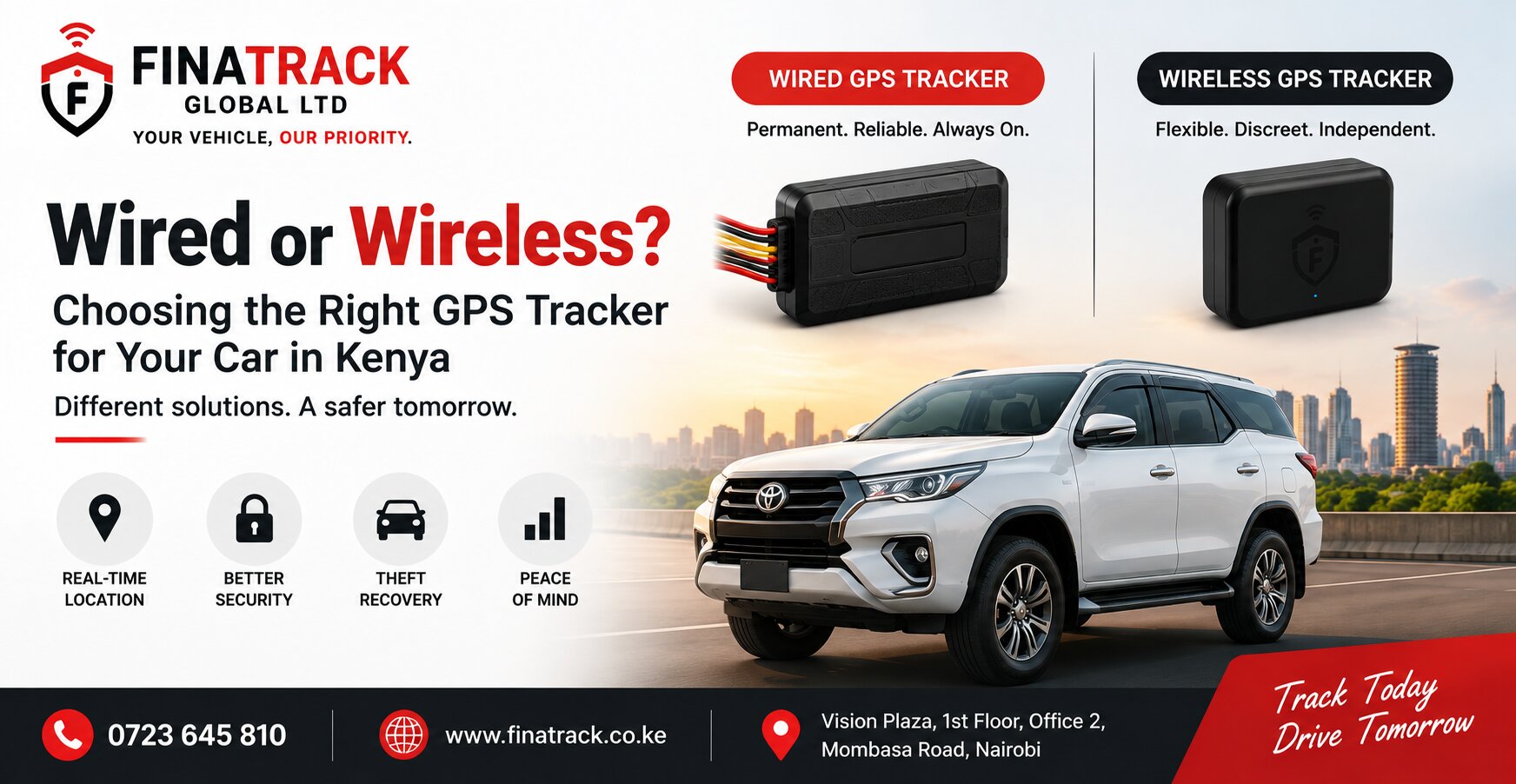
For many motorists, price naturally affects the decision. Finatrack Global Ltd offers an advanced car alarm system with hidden cut-off at KES 7,500, while a wired GPS tracker is offered at KES 15,000. Customers looking for both layers can take advantage of the wired GPS tracker plus advanced alarm package at KES 20,000, providing a more complete vehicle-security setup at a lower combined cost than purchasing the systems separately.
The value of the combination should not be judged only by adding the prices of two devices. The real benefit comes from the fact that each system covers a weakness in the other. The alarm focuses on intrusion and deterrence, while the tracker focuses on visibility, monitoring and recovery support.
A motorist who already has a factory alarm may still benefit from GPS tracking. Factory security can provide useful protection, but it usually does not give the owner independent real-time location, trip history or geofence information through a separate tracking platform. The GPS layer adds functionality that the alarm was never designed to provide.
The reverse is also true. A vehicle with a tracker but no effective intrusion protection may still benefit from an additional alarm or immobilisation system. The tracker may help after movement occurs, but preventing or delaying the theft in the first place is preferable whenever possible.
Vehicle owners should therefore think in terms of prevention, detection, delay and recovery. No single device performs all four functions perfectly. A layered system distributes those responsibilities across several technologies.
The alarm provides detection and deterrence around the vehicle. The hidden cut-off creates delay or additional difficulty. GPS tracking provides remote detection and recovery visibility, while backup tracking can strengthen recovery if the primary device is compromised.
Physical security should remain part of the picture too. Secure parking, controlled vehicle keys, steering locks where appropriate and sensible parking habits can complement electronic systems. Technology works best when the owner also reduces obvious opportunities for theft.
Key control is especially important for businesses. A sophisticated tracker and alarm system cannot prevent misuse if unauthorised employees have easy access to vehicle keys. Companies should know who is allowed to drive each vehicle and maintain clear procedures around spare keys.
Owners should also avoid leaving security remotes or spare keys inside the vehicle. Keeping all security components together can make it easier for someone who gains access to defeat several systems at once. Good security includes simple everyday habits as well as technology.
Insurance remains important regardless of how many security systems are installed. A tracker, alarm and immobiliser can reduce risk and support recovery, but they cannot guarantee that theft will never occur. Appropriate insurance protects the financial value of the vehicle when prevention and recovery are unsuccessful.
Vehicle security should therefore be understood as risk reduction rather than absolute protection. The objective is to make theft more difficult, identify suspicious activity earlier and improve the owner’s ability to respond. Layered security increases the number of things that have to go wrong before the owner completely loses visibility and control.
Private motorists can keep the approach simple. A wired GPS tracker combined with a professionally installed alarm and hidden cut-off provides a strong foundation for everyday vehicle security. Higher risk vehicles can then add an independent backup tracking device.
Businesses can apply the same principle selectively across the fleet. Standard vehicles may receive the basic tracker and alarm combination, while higher value vehicles, trucks or assets carrying expensive cargo receive additional backup tracking. Security spending becomes proportionate to risk rather than identical across every unit.
Fleet managers should also consider driver training. Employees need to understand what to do when the alarm triggers, what tracking alerts mean and how to report suspected theft quickly. Technology is much more effective when the people responsible for the vehicles know how to use it.
More than one authorised person should understand the tracking platform for company vehicles. If the only fleet administrator is unavailable during an incident, valuable time can be lost trying to recover login details. Access should remain controlled but practical.
Tracking credentials should not be shared widely. A GPS account can reveal where vehicles are parked, which routes they use and where valuable assets travel. Giving unnecessary people access creates a new security problem while trying to solve another one.
Customers should also understand what happens after a vehicle is sold. The GPS tracker can be removed and professionally transferred, or access can be handed over appropriately if the device remains with the vehicle. The previous owner should not continue seeing the new owner’s vehicle location.
The car alarm may remain installed with the vehicle, but any remotes, codes or related security information should be transferred correctly. A clean handover protects both the buyer and seller.
Regular security reviews are useful as the vehicle ages. A system installed several years earlier should occasionally be checked to confirm that the alarm, tracker, immobilisation and backup equipment still work as intended. Security should not be treated as a one-time installation that never requires attention again.
Vehicle risk can also change over time. A car that was initially used privately may later become a company vehicle, or a business may begin transporting higher-value goods. The security setup should evolve when the operating risk changes.
Finatrack Global Ltd provides professionally installed vehicle tracking, car alarm and layered security solutions for private motorists and businesses in Kenya. Customers can combine GPS tracking with an advanced alarm and hidden cut-off system to create stronger vehicle protection rather than relying on one security device alone.
Professional installation can be arranged at the customer’s convenient location or through Finatrack Global Ltd at Vision Plaza, 1st Floor, Office 2, Mombasa Road, Nairobi. Vehicle owners interested in the wired GPS tracker plus advanced alarm package at KES 20,000 can contact 0723 645 810 or visit www.finatrack.co.ke.
A car alarm and a GPS tracker should not be viewed as alternatives competing for the same job. The alarm helps respond when somebody interferes with the vehicle, while the GPS tracker helps the owner maintain visibility if the vehicle moves. When the two are professionally combined with immobilisation and sensible everyday security practices, the result is a stronger vehicle protection strategy than depending on one device and hoping it can do everything.