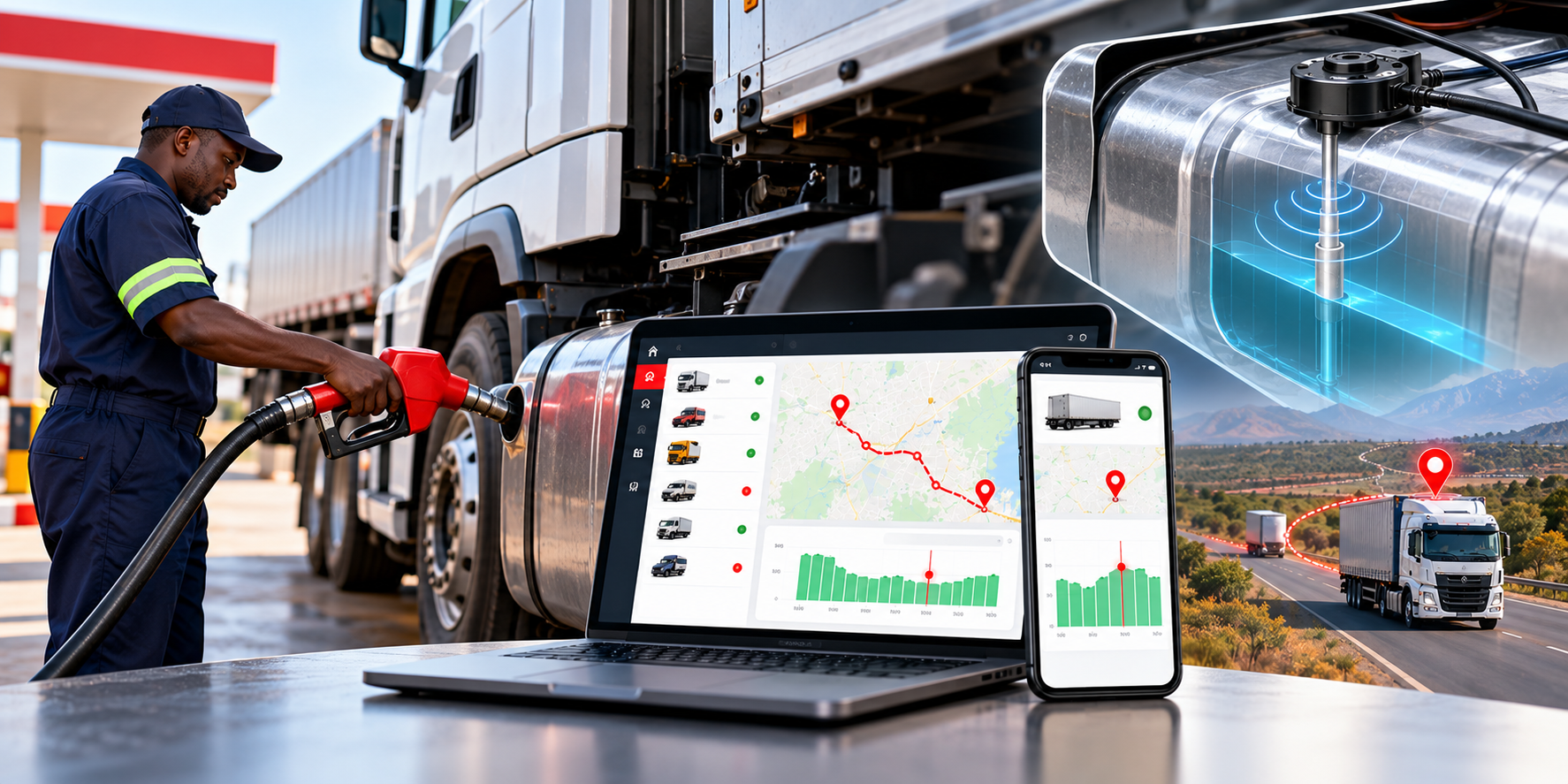
Refuelling is one of the most difficult fleet expenses to control because a business may know how much money was spent without knowing exactly how much fuel actually entered the tank. A driver may present a receipt showing 200 litres, but management still needs to understand whether the recorded increase matches what was purchased. This is where fuel refuelling monitoring in Kenya can help businesses compare fuel-level changes with GPS location, time and vehicle activity instead of relying only on paperwork.
A properly installed fuel monitoring system can record changes in the fuel level before and after refuelling. When a truck stops at a filling station, management can review whether the tank level increased and approximately when the event occurred. If the recorded increase appears significantly different from what was reported, the discrepancy does not automatically prove fraud, but it provides a reason to investigate further.
GPS location adds important context. If a refuelling receipt shows that fuel was purchased at a particular station, fleet managers can compare that information with the vehicle’s location history. A normal event might show the truck stopping at the expected fuel station before the fuel level rises. A reported refuelling event that does not match the vehicle’s recorded location may require additional verification.
Managers should also look at what happens immediately after refuelling. A fuel level may rise normally and then fall sharply a short time later while the vehicle is parked at another location. That pattern can deserve closer attention because it may indicate drainage, leakage or another event affecting the tank. Fuel data works best when it is reviewed together with location, ignition status and stop duration rather than interpreted by itself.
Not every mismatch means something suspicious has happened. Tank shape, vehicle angle, fuel movement and sensor calibration can influence the first reading after fuel is added. A truck refuelled on uneven ground may initially show a slightly different level from the one recorded after the fuel settles. Fleet managers should therefore focus on meaningful and repeated discrepancies rather than treating every small difference as evidence of misconduct.
A stronger control process combines fuel monitoring, receipts and fleet reports. Businesses can compare the litres shown on the receipt, the increase recorded by the sensor, the location of the vehicle and the mileage covered before the next refuelling. When the same vehicle repeatedly shows unusual differences, management has enough information to carry out a more focused investigation instead of applying suspicion across the entire fleet.
Refuelling data can also improve budgeting. By reviewing how much fuel each vehicle receives and how far it travels afterwards, fleet managers can begin building realistic consumption patterns for different trucks, routes and drivers. If one vehicle consistently requires more fuel than comparable vehicles doing similar work, the issue may be inefficient driving, excessive idling, mechanical condition or inaccurate fuel records. The purpose of monitoring is therefore not only theft prevention but better operational control.
Finatrack Global Ltd provides fuel monitoring and GPS tracking solutions for commercial fleets in Kenya, helping businesses compare fuel-level events with vehicle location and trip information. Finatrack’s fuel monitoring solution is available from KES 35,000, with a KES 1,000 monthly maintenance and system fee, depending on configuration. For installation and enquiries, call or WhatsApp 0723 645 810 or visit www.finatrack.co.ke. When a vehicle is refuelled, the business should not have to depend on a receipt alone; combining fuel and GPS data can provide a much clearer picture of what actually happened.
S