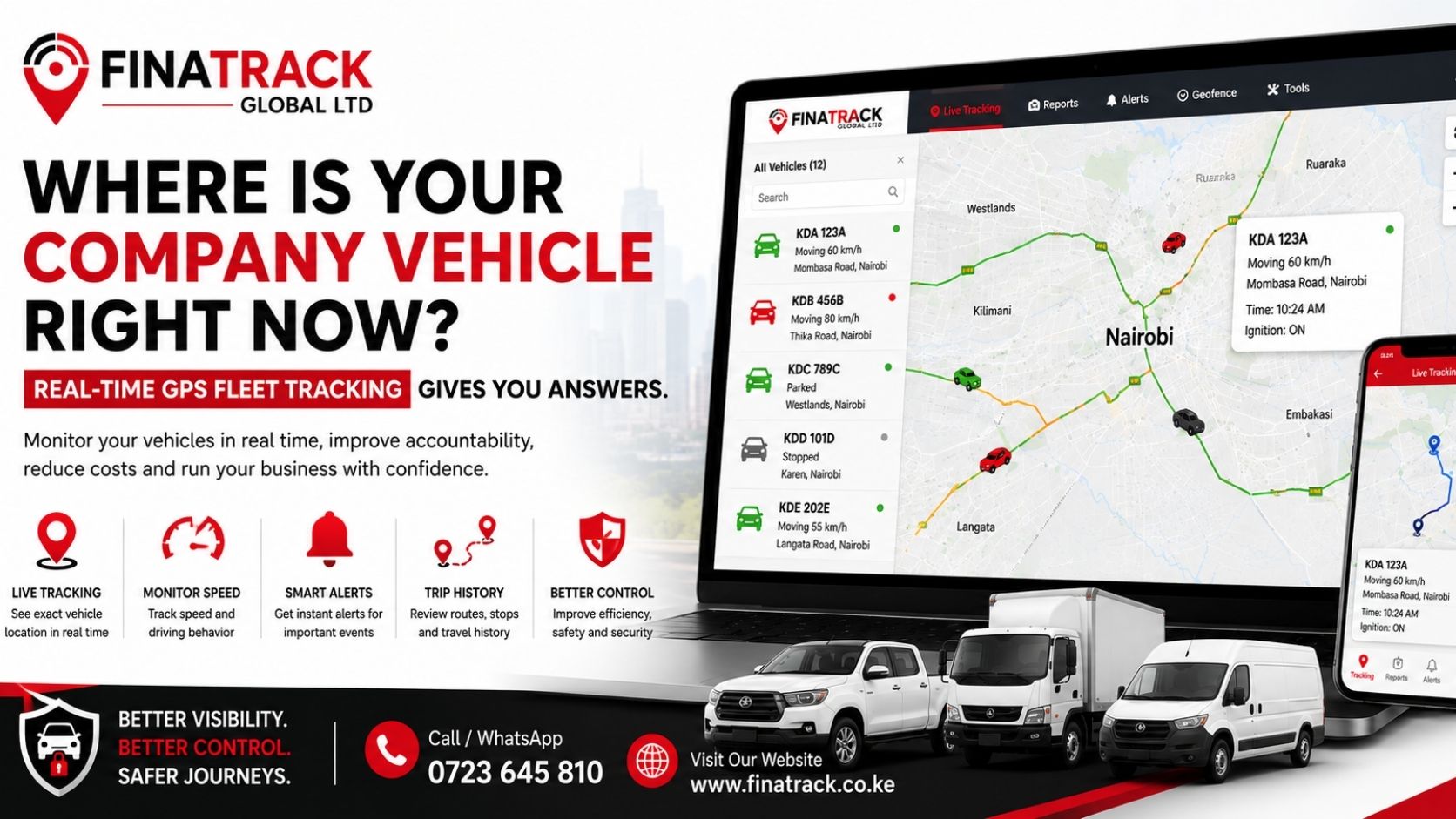
For many Kenyan businesses, company vehicles are constantly moving between customers, warehouses, construction sites, branches and delivery points. Once a vehicle leaves the office, however, managers can easily lose visibility unless they have a reliable way to monitor what is happening on the road.
Real-time GPS fleet tracking changes that by allowing businesses to see the latest location and status of their vehicles from a computer or smartphone. Instead of calling drivers repeatedly to ask where they are, managers can check vehicle activity directly from a GPS tracking platform.
For businesses operating delivery vans, trucks, field-service vehicles, sales cars, motorcycles or other commercial vehicles, this visibility can make everyday fleet management easier and more efficient.
What Is Real-Time GPS Fleet Tracking?
Real-time GPS fleet tracking uses a GPS tracking device installed in a vehicle to determine its location and transmit that information to an online tracking platform. The vehicle owner or fleet manager can then log into the system and view the latest reported position on a digital map.
Depending on the tracker and platform being used, the system may also display information such as vehicle speed, ignition status, direction of travel and the time of the most recent location update. This gives the business a clearer picture of what each vehicle is doing at a particular moment.
For companies managing several vehicles, the same dashboard can normally display multiple units at once. A manager can therefore move from checking one vehicle to reviewing the entire fleet without having to contact every driver individually.
Where Is Your Vehicle Right Now?
This is one of the most basic questions fleet managers deal with every day, but it can also be one of the most difficult to answer when vehicles are operating across different locations.
A delivery manager may want to know whether a truck has reached a customer. A construction company may need to confirm whether a vehicle has arrived at a project site, while a service business may want to identify which technician is closest to the next customer.
With real-time GPS tracking, the manager can open the tracking dashboard, select the vehicle and check its latest reported location. This can reduce unnecessary calls to drivers while helping managers make faster operational decisions.
See Whether a Vehicle Is Moving or Parked
Knowing the location of a vehicle is useful, but understanding what it is doing is even more important. Most GPS tracking systems can help managers distinguish between vehicles that are moving, parked or inactive.
A vehicle that should be travelling to a customer but has remained in one location for an unusually long period may require attention. At the same time, a manager can quickly see which vehicles are available at the office or parked near a particular location.
This type of visibility becomes especially useful when a business operates a larger fleet. Instead of trying to establish vehicle status through phone calls and messages, management can review the information from one dashboard.
Monitor Vehicle Speed in Real Time
Speed information is another important part of GPS fleet monitoring. A tracking system can show how fast a vehicle is travelling at the time of the latest update and may also maintain historical speed information for previous trips.
For businesses, this can help identify repeated overspeeding and support safer driving policies. Managers can use the information to investigate unusual driving behaviour rather than relying entirely on complaints, assumptions or driver explanations.
Supported systems may also allow overspeed alerts to be configured. If a vehicle exceeds a selected speed threshold, the platform can generate a notification that draws the fleet manager’s attention to the event.
Check Ignition Status
GPS tracking systems can also help managers determine whether a vehicle’s ignition is ON or OFF. This may appear to be a small detail, but it can provide useful context when reviewing vehicle activity.
For example, a vehicle may appear parked at a customer’s location while the ignition remains ON. Another vehicle may be stationary at the office with the ignition OFF, indicating that it is probably not currently in use.
When location, speed and ignition information are viewed together, the manager gets a more complete understanding of the vehicle’s status.
Know Where Your Vehicles Have Been
Real-time tracking answers the question, “Where is the vehicle now?” Trip history answers another important question: “Where has it been?”
Most GPS fleet tracking platforms allow users to review previous vehicle movements by selecting a date or period. The recorded route can then be displayed on a map, giving the manager a clearer picture of how the vehicle was used.
This can be useful when confirming customer visits, checking delivery routes or investigating claims about where a company vehicle travelled. Businesses can also review stops along the journey and compare actual routes with expected ones.
Reduce Unnecessary Calls to Drivers
Without a tracking system, fleet management can easily become dependent on constant communication.
A manager may call a driver to ask where they are, whether they have reached the customer, whether they have left the warehouse or how far they are from the next job. Multiply these calls across several vehicles and a significant amount of time can be spent simply trying to establish locations.
Real-time GPS tracking allows many of these questions to be answered from the dashboard. Drivers can concentrate on their work while managers still maintain visibility over fleet operations.
Improve Dispatching and Customer Response
Real-time vehicle visibility can also help businesses respond faster to customers. If an urgent request comes in, a dispatcher can review the fleet and identify which suitable vehicle is closest to the location.
A field-service company, for example, may have technicians operating across Nairobi. Instead of assigning a job based only on assumptions about where each employee should be, the dispatcher can use vehicle location information to make a more informed decision.
The same principle can apply to delivery companies, maintenance businesses, security firms and other organisations operating mobile teams.
Monitor Vehicles Operating After Working Hours
Unauthorised vehicle use outside business hours can increase fuel costs, mileage, maintenance requirements and exposure to unnecessary risks.
GPS tracking can help businesses identify when company vehicles are moving at unexpected times. If a vehicle that is normally parked overnight begins moving, the activity can be seen through the tracking platform and may trigger configured alerts.
Managers can then review the movement and determine whether the journey was authorised. This creates greater accountability without requiring someone to physically supervise every vehicle.
Use Geofencing to Monitor Important Locations
Geofencing allows fleet managers to create virtual boundaries around selected locations such as offices, warehouses, customer premises, construction sites or delivery zones.
Once the boundary has been created, the GPS tracking system can monitor when vehicles enter or leave the defined area. Supported platforms may also send alerts when these events occur.
For a logistics company, this can make it easier to confirm arrival at important customer locations. For construction or field-service businesses, geofencing can help management monitor whether vehicles are operating within approved areas.
Review Vehicle Stops and Idle Time
A vehicle may appear to be working throughout the day while spending significant periods parked in different locations. GPS tracking data can make these patterns easier to identify.
Fleet managers can review stops and compare them with expected customer visits or work schedules. Long or unexplained stops may indicate delays, inefficient routing or unauthorised vehicle use.
This information should be interpreted in the context of the business operation, but it can provide useful starting points for conversations about fleet efficiency.
Manage Multiple Vehicles From One Dashboard
The benefits of GPS tracking become more significant as the size of a fleet grows.
Managing two vehicles through phone calls may be possible, but trying to supervise ten, twenty or more vehicles manually becomes increasingly difficult. Real-time fleet tracking creates one central view where managers can see vehicle status and access historical information.
A business can therefore monitor different types of vehicles from the same system, provided the units are properly connected to the account. This can make fleet management more organised as the company expands.
Real-Time Tracking Can Improve Driver Accountability
Company vehicles are valuable business assets, and the way they are used can have a direct effect on operating costs.
When drivers know that vehicle routes, speed and activity can be reviewed, there may be greater accountability in how company vehicles are handled. Managers also gain objective information that can support discussions about unusual vehicle use.
GPS tracking should not be viewed simply as a tool for watching drivers. When implemented properly, it can help create clearer expectations about how business vehicles should be used and provide information that supports fairer fleet management decisions.
GPS Tracking Can Support Better Fuel Management
Real-time location tracking does not directly reduce fuel consumption, but it can reveal behaviour that contributes to unnecessary fuel use.
Unexpected trips, excessive mileage, poor routing and long vehicle movements outside approved operations can all increase fuel expenses. GPS reports and trip history can help managers identify these patterns and investigate them further.
Businesses using dedicated fuel monitoring systems can go a step further by combining location information with fuel-level data. This can provide a more detailed picture of how fuel is being consumed across the fleet.
GPS Tracking Is Useful for More Than Theft Recovery
Many vehicle owners in Kenya first think about GPS trackers as security devices used to locate vehicles after theft. While vehicle recovery support is an important benefit, modern tracking systems can provide much more operational value.
The same device can help a business monitor daily routes, driver activity, vehicle speed, working hours and fleet utilisation. This turns GPS tracking from a purely security-focused investment into a broader fleet management tool.
For companies that depend heavily on vehicles to serve customers or move goods, this everyday operational visibility may be just as valuable as the security benefits.
What Happens When a Vehicle Goes Offline?
A GPS tracking platform may occasionally show a vehicle as offline or indicate that it has not updated recently.
This does not automatically mean that the tracking device has failed. Temporary network conditions, underground parking, poor signal areas, loss of power or other technical factors can affect communication between the tracker and the platform.
If a vehicle remains offline unexpectedly, the owner should contact the tracking service provider so that the device status can be checked. Regular system monitoring and servicing can help ensure that tracking equipment continues to operate correctly.
Which Kenyan Businesses Can Benefit From Fleet Tracking?
Real-time GPS tracking can be useful for almost any organisation that relies on vehicles as part of its daily operations.
Logistics companies can monitor deliveries and transport routes, while construction businesses can track vehicles travelling between project sites. Sales organisations can gain better visibility over field vehicles, and service companies can coordinate technicians more efficiently.
Schools, SACCOs, courier businesses, car-hire companies, security firms, NGOs and companies operating motorcycles can also benefit from improved vehicle visibility depending on their operational needs.
Is GPS Tracking Useful for Small Fleets?
A business does not need dozens of vehicles before GPS tracking becomes useful.
Even a company with two or three vehicles can benefit from knowing where its vehicles are, reviewing previous trips and receiving important alerts. In smaller businesses, owners often manage operations personally, making quick access to vehicle information particularly valuable.
Starting fleet monitoring early can also make it easier to establish good vehicle-management practices before the fleet becomes larger and more difficult to supervise.
Get More Value From Your GPS Tracking System
Installing a GPS tracker is only the beginning. Businesses get more value from the technology when they regularly use the information available on the platform.
Fleet managers should review vehicle activity, understand the reports available and configure alerts that are relevant to their operations. The information can then be compared with fuel records, maintenance expenses, customer schedules and driver performance.
Over time, this creates a more complete picture of how company vehicles are being used and where operational improvements may be possible.
Track Your Vehicle or Fleet with Finatrack Global Ltd
Finatrack Global Ltd provides GPS tracking and fleet management solutions for private vehicles and commercial fleets in Kenya. Our solutions can help businesses monitor vehicle locations, review trip history, receive important alerts and access useful fleet information through web-based and mobile tracking platforms.
Whether you operate a single company vehicle or manage a growing fleet, having better visibility can help you improve security, accountability and operational control. Instead of wondering where your company vehicle is, you can check the tracking platform and make decisions using the information available.
For GPS tracking and fleet management solutions, contact Finatrack Global Ltd on 0723 645 810 or visit www.finatrack.co.ke.