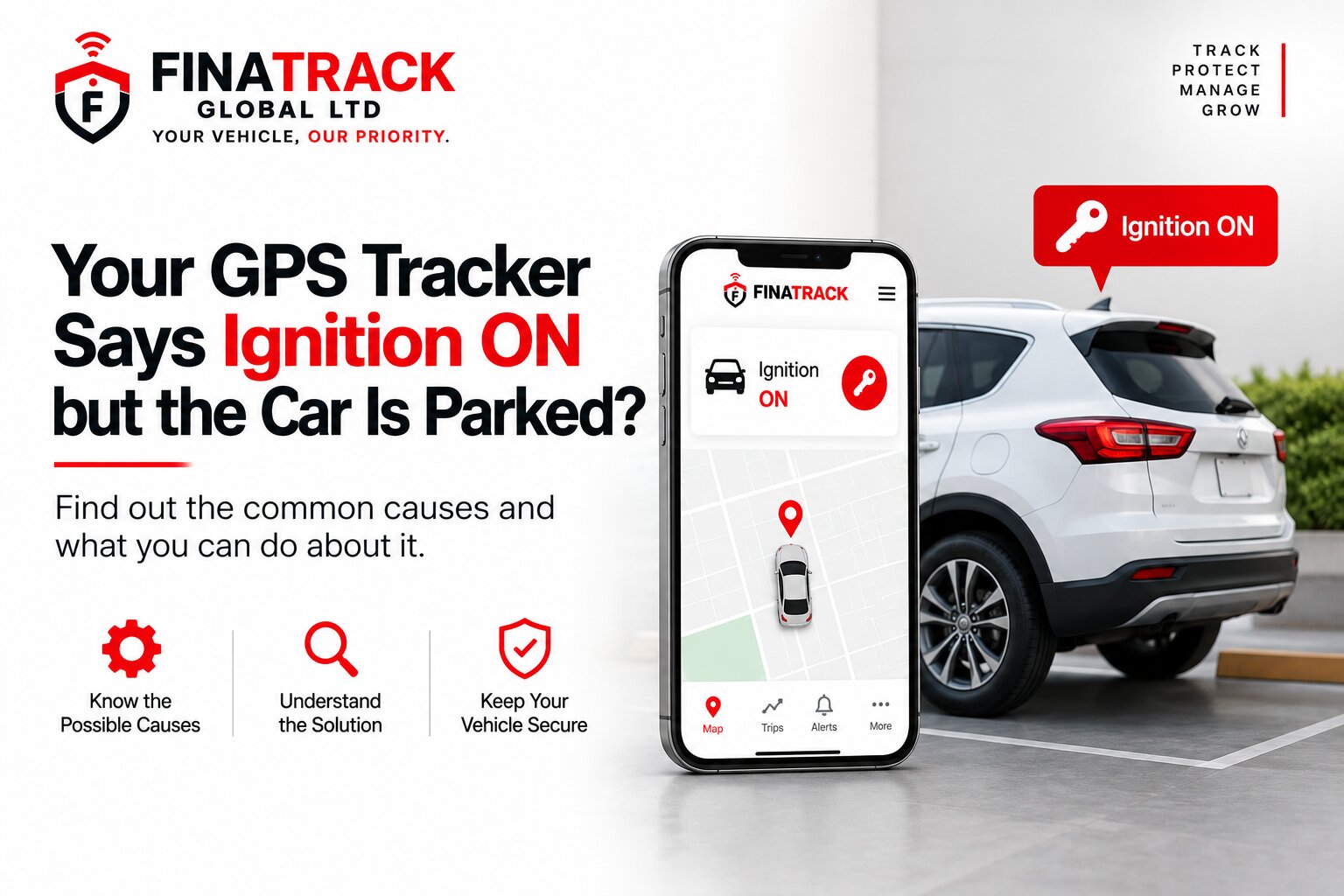
A vehicle owner opens the GPS tracking application and notices something worrying. The car is clearly parked, the engine is off and the keys may even be inside the house, yet the tracking platform continues showing Ignition ON. For someone relying on the tracker for vehicle security, this can immediately raise concerns that the car has been started, somebody is interfering with it or the tracking system is not working properly.
In many cases, however, an incorrect ignition status does not mean the vehicle is moving or being stolen. GPS trackers determine ignition activity using information from the vehicle electrical system or through configuration methods supported by the device. If that signal is wired incorrectly, delayed or interpreted wrongly, the platform can continue displaying ignition ON even when the vehicle is safely parked.
Understanding the difference between vehicle location and ignition status is therefore important. The GPS portion of the tracker identifies where the vehicle is, while the ignition input helps the system understand whether the vehicle has been switched on. These are related pieces of information, but they do not come from exactly the same source.
A tracker can therefore show an accurate parked location while reporting incorrect ignition information. The vehicle icon may remain exactly where the owner left it, trip history may show no movement and the tracker may still display ignition ON. Looking at all three pieces of information together provides a much clearer picture than reacting to one status indicator.
One of the most common causes is incorrect ignition wiring. During a wired GPS installation, the technician may connect the tracker to a circuit intended to indicate when the vehicle ignition is active. If the wrong wire is selected, the tracker may receive voltage even after the engine has been switched off.
Some electrical circuits remain powered for a period after the vehicle is parked. Others may remain permanently live because they support memory functions, entertainment systems or other vehicle electronics. Connecting the ignition input to one of these circuits can cause the tracker to believe the vehicle is still switched on.
This is why professional installation matters. A technician should not simply identify any wire carrying voltage and assume it represents ignition. The selected circuit should behave consistently when the vehicle is started, running and fully switched off.
Modern vehicles make this more complicated because electrical systems are increasingly controlled by computers. Some cars keep certain modules awake for several minutes after the driver removes the key or switches off the engine. The tracker can therefore continue seeing electrical activity even though the vehicle is no longer being driven.
This behaviour is particularly common in newer vehicles with keyless entry, push button start systems and sophisticated body control electronics. The car may continue powering selected systems while doors lock, windows close, infotainment shuts down or electronic modules complete their shutdown routines. A tracker connected to the wrong circuit can interpret that normal behaviour as ignition activity.
A short delay is therefore not always a fault. If ignition status changes from ON to OFF after several seconds or minutes, the vehicle may simply be completing its normal electronic shutdown process. The important question is whether the status eventually changes as expected.
If the platform continues showing ignition ON for hours after the vehicle was parked, the installation should be checked. Long term incorrect ignition status can affect more than one icon on the tracking application. It can also influence trip history, idle reports, engine hour estimates and other fleet information depending on how the system is configured.
For businesses, this can become particularly problematic. A fleet manager may review reports and conclude that one vehicle remained running for twelve hours when it was actually parked outside the office. Decisions about fuel use, idling or driver performance can then be based on inaccurate information.
This is why incorrect ignition data should be corrected before it is used for management decisions. Tracking reports are most valuable when the underlying installation is reliable. A small wiring problem can make an otherwise functioning GPS system produce misleading operational information.
Another possible cause is voltage remaining on an accessory circuit. Some vehicles have electrical circuits that remain active until the driver opens a door, locks the vehicle or waits for a timed shutdown. A tracker connected to such a circuit may continue showing ignition ON temporarily.
A practical test can help identify this pattern. Park the vehicle, switch it off, exit normally and lock the doors. After several minutes, check whether the ignition status changes without touching the car again.
If the status consistently changes after a predictable delay, the system may simply be reflecting the vehicle’s electrical behaviour. If the tracker remains permanently ON, technical inspection is more appropriate. The technician can test the selected ignition source and determine whether another connection point would provide more reliable information.
Loose or poor wiring connections can create the opposite problem as well. The tracker may alternate between ignition ON and OFF even though the vehicle state has not changed. Vibration, road movement and temperature changes can affect weak connections and produce inconsistent signals.
This type of fault may appear only occasionally, making it difficult for the owner to reproduce while the car is parked at the tracking office. Historical records can therefore be useful. If ignition status changes randomly during periods when the vehicle remained stationary, the technician has a useful clue that the signal may be unstable.
Workshop repairs are another common source of ignition problems. Dashboard work, stereo installation, alarm fitting, battery replacement or other electrical repairs can disturb tracker wiring even when nobody intentionally touches the GPS device. The car may leave the garage operating normally while one tracking connection has changed.
Vehicle owners should therefore check the GPS platform after significant electrical work. Confirm that the location updates normally and verify that ignition status changes when the vehicle is switched on and off. This simple check can identify problems before inaccurate reports accumulate for weeks.
Battery replacement deserves particular attention. Disconnecting the vehicle battery temporarily removes power from the tracker and other electronics. Once the new battery is installed, the GPS device should reconnect and return to normal operation.
If ignition status becomes inaccurate after battery work, a connection may have been loosened or the tracker may need technical inspection. The issue should not automatically be blamed on the new battery itself. The timing simply provides a useful clue about when the tracking problem began.
Incorrect tracker configuration can also cause ignition status problems even when the wiring is physically correct. GPS tracking devices often contain settings that determine how electrical signals are interpreted. If those settings are changed, the platform may classify vehicle activity incorrectly.
A tracker can sometimes use more than one method to detect movement or ignition. Depending on the hardware, it may rely on a physical ignition input, voltage changes, motion sensors or other configured behaviour. The selected method needs to match the vehicle and installation.
This is why technical troubleshooting should include both hardware and software. Rewiring a vehicle unnecessarily will not solve a problem caused by configuration, while changing software settings will not fix a poor physical connection. A competent technician should identify which side of the system is creating the incorrect status.
Hybrid vehicles can introduce additional complexity. A hybrid car may remain ready to move even when its petrol engine is not continuously running. The internal combustion engine can switch on and off automatically while the vehicle remains operational.
Someone looking only at engine sound may therefore assume the car is off when the vehicle’s electrical system still considers it active. Tracking equipment on hybrid vehicles should be installed and configured according to the vehicle’s actual electrical state rather than simply whether the petrol engine can be heard.
Electric vehicles create a similar distinction. An electric vehicle does not have a conventional engine start event, yet the car still has a clear operational state indicating that it is ready to drive. A GPS tracker needs an appropriate method of recognising that state if ignition information is required.
This is another reason installers should know what type of vehicle they are working on. A method that performs perfectly on an older petrol sedan may not behave the same way on a modern hybrid or electric SUV. Vehicle technology should determine the installation approach.
Remote start systems can also create legitimate ignition activity while nobody is physically inside the car. Some vehicles allow the engine or selected systems to be activated remotely for climate control or other functions. A tracker may correctly report ignition activity even though the owner believes the car has not been driven.
Aftermarket alarm systems can introduce similar behaviour depending on how they interact with the vehicle electrical system. If the tracker and alarm have been installed independently by different technicians, one system may influence signals used by the other. Coordinated installation can reduce this risk.
This is particularly relevant for vehicles that have accumulated several aftermarket modifications over the years. A car may contain an alarm, tracker, immobiliser, stereo amplifier and other accessories installed at different times. Electrical wiring can gradually become more complicated if every technician adds new connections without reviewing what already exists.
A professional security inspection can help simplify such installations. Obsolete wiring can be identified, active security equipment documented and the tracker connected through a more appropriate circuit. Good vehicle security should not depend on a collection of undocumented wires hidden behind the dashboard.
Another possibility is that the tracker is showing ignition ON because the vehicle has actually been switched on briefly. A family member, employee, mechanic or security guard may have started the vehicle without moving it. Because the car remained in the same location, the owner assumes nothing happened.
Trip history may show no journey, but ignition records can reveal that the vehicle was active. This is one reason location and ignition should be reviewed together. A stationary vehicle can still be switched on.
For businesses, this can help identify unnecessary idling. A company vehicle may remain in the parking area while the driver keeps the engine running for air conditioning, charging devices or other reasons. The map shows no movement, but ignition activity continues.
Repeated patterns can affect fuel expenditure. A vehicle may cover relatively few kilometres yet consume more fuel than expected because it spends long periods running while stationary. Ignition and location information together provide valuable context when management investigates the difference.
One isolated event should not automatically be treated as misuse. Drivers may need to start vehicles for legitimate mechanical checks, loading activities or operational reasons. Fleet management should focus on repeated patterns and understand the circumstances before making conclusions.
Tracker sleep settings can also influence how quickly ignition information appears to change. Some GPS devices reduce communication when vehicles remain stationary to save power or data. The tracker may therefore take time to send a fresh status after ignition changes depending on its configuration.
This can make the application appear delayed. The vehicle may already be switched off while the last transmitted record still shows ignition ON. Once the tracker sends another update, the status may correct itself.
The timestamp is therefore extremely important. If the platform displays ignition ON but the last update occurred twenty minutes earlier, the system may simply be showing the last known state. A fresh location and fresh timestamp provide much stronger evidence about what the vehicle is doing now.
Motorists should develop the habit of checking three things together: location, last update time and ignition status. This prevents unnecessary panic and makes troubleshooting much easier. A fresh location with incorrect ignition suggests a different problem from an old location with an old ignition record.
Mobile network connectivity can also create delays. The tracker may detect that the vehicle has been switched off but temporarily fail to transmit the new information because network communication is weak. The application continues displaying the previous ignition state until a new record reaches the server.
This behaviour may be more common in remote areas, underground parking or places with weak mobile coverage. Once communication improves, updated information may appear. A vehicle operating regularly in Nairobi but consistently experiencing long ignition delays deserves more investigation than one travelling through remote areas with intermittent connectivity.
The tracking platform itself can occasionally contribute to confusion. An application may display cached information or take time to refresh. Before assuming the vehicle installation is faulty, the owner can refresh the platform or compare information using another authorised device or the web portal where available.
If the tracker information is correct on one interface but outdated on another, the issue may relate to the application rather than the vehicle. Technical support can help identify this distinction. Rewiring the tracker would obviously not solve a display problem on one phone.
For fleet managers, inaccurate ignition information can affect idling reports significantly. Many fleet systems identify idling by combining ignition ON with little or no vehicle movement. If ignition status remains permanently ON, the platform can generate unrealistic idle periods.
Management may then conclude that drivers are wasting fuel when the data is actually wrong. This is why telematics should never become a punishment system without verifying data quality. Reliable management begins with reliable installation.
Engine hour reports can also be affected. Some fleet systems estimate operating hours partly from ignition activity rather than direct engine management data. A false ignition ON signal can therefore exaggerate the apparent operating time of the vehicle.
The difference matters for maintenance planning. A fleet manager could believe one vehicle has accumulated far more operating hours than it actually has. Understanding how the tracking system measures engine or ignition time is therefore essential before using those reports to schedule servicing.
Mileage itself may remain accurate because GPS movement is recorded separately. This creates a strange situation where a vehicle reports low mileage but unusually high ignition hours. Instead of immediately blaming the driver, management should first confirm that ignition detection is working correctly.
The relationship between these numbers can actually help identify the fault. If a vehicle has been parked for several days but continues accumulating ignition time, the data is clearly inconsistent with reality. Technical inspection becomes much easier to justify.
An ignition issue can also interfere with trip detection. Some trackers begin and end journeys partly according to ignition status. If the system never sees ignition OFF, multiple journeys may appear as one unusually long trip.
The opposite can happen if ignition flickers between ON and OFF because of unstable wiring. One ordinary journey may be divided into several short trips. Fleet reports can then become confusing and mileage analysis more difficult.
Correcting the ignition input restores cleaner trip records. This is why customers should not dismiss inaccurate ignition status as a minor cosmetic issue. The signal can influence several other parts of the tracking system.
Geofencing, however, normally depends primarily on location rather than ignition. A vehicle leaving a defined area can still generate a geofence event even if ignition information is imperfect, depending on the system configuration. This provides another example of why different tracker functions should be understood separately.
Security alerts should also be reviewed carefully. An ignition ON notification can be valuable when a vehicle is supposed to remain parked overnight. The usefulness of that alert depends completely on the system’s ability to recognise ignition accurately.
If the tracker produces false ignition alerts constantly, the owner may begin ignoring them. Eventually a real unauthorised start event can occur and receive no attention because the system has lost credibility. Correct installation therefore improves both technical accuracy and human response.
For private motorists, one practical test is simple. Park the vehicle in a safe open location, confirm the tracking application is updating and then switch the car off completely. Lock it normally and wait several minutes without interacting with the vehicle.
Check the platform again and look at the timestamp. If a fresh record still shows ignition ON after the vehicle has clearly entered its normal parked state, contact the tracking provider. Avoid dismantling wiring yourself, particularly where the tracker is connected to immobilisation or alarm equipment.
The technician can test whether the ignition input still carries voltage when the vehicle is off. They can also check tracker configuration and compare server records with the physical vehicle state. This is considerably more reliable than guessing from the application.
If the problem occurs only occasionally, document the time when it happens. A screenshot showing location, timestamp and ignition status can help technical support compare the event with device records. Providing specific examples often makes intermittent faults easier to diagnose.
Businesses should take a more systematic approach. If one vehicle in a fleet shows abnormal ignition behaviour, compare it with similar vehicles. A problem affecting only one car is more likely to involve installation or that vehicle’s electrical system than a platform wide issue.
If every vehicle suddenly shows incorrect ignition information at the same time, the problem may be software or server related. This distinction can prevent unnecessary technician visits to several vehicles. Fleet management benefits from looking for patterns before acting.
Tracker age should also be considered. Electronics can remain functional for many years, but ageing hardware may eventually develop inconsistent behaviour. If an older tracker repeatedly produces inaccurate data despite correct wiring and configuration, replacement may be more practical than continuing to troubleshoot it.
A modern 4G tracker can be a sensible upgrade where older hardware is no longer reliable, but network generation alone does not solve ignition problems. The new tracker still requires correct installation. A poorly wired 4G device can display the same incorrect ignition status as an older unit.
This is why installation quality remains more important than marketing terminology. Customers should choose a tracking provider that understands both vehicle electronics and the tracking platform. The device and technician need to work together.
Motorists should also ask what exactly the platform means by Ignition ON. Some applications use terms such as ACC, engine status, ignition or vehicle active. Those labels can represent slightly different signals depending on the hardware.
The provider should be able to explain the meaning clearly. If the platform is showing ACC ON rather than actual engine runtime, the customer needs to understand that distinction. Clear terminology prevents false expectations.
Finatrack Global Ltd provides professionally installed GPS tracking solutions with features including real time or recently reported vehicle location, trip history, geofencing, ignition monitoring and selected security alerts depending on the installed configuration. Customers who notice inaccurate ignition status can have the tracking system checked rather than assuming the vehicle or tracker has failed completely.
Professional inspection is particularly important after vehicle battery replacement, electrical repairs, alarm installation or other work that may have affected existing tracker wiring. A proper check should confirm device power, ignition detection, location reporting and communication before the vehicle returns to normal use.
Finatrack Global Ltd offers its wired GPS tracker at KES 15,000, with professional installation for private and commercial vehicles. Customers requiring additional vehicle security can also discuss alarm, immobilisation, wireless backup tracking and other suitable solutions according to the vehicle and level of risk.
Installation and technical support can be arranged at the customer’s convenient location or through Finatrack Global Ltd at Vision Plaza, 1st Floor, Office 2, Mombasa Road, Nairobi. For GPS tracking installation or troubleshooting, contact 0723 645 810 or visit www.finatrack.co.ke.
When your tracker says ignition ON while the car is parked, the correct response is not to assume immediately that somebody is stealing the vehicle. Check whether the location is current, confirm the timestamp and look for actual movement before deciding what the status means. If the ignition indication remains wrong consistently, professional inspection can determine whether the cause is wiring, vehicle electronics, configuration or delayed communication and restore confidence in the tracking system.