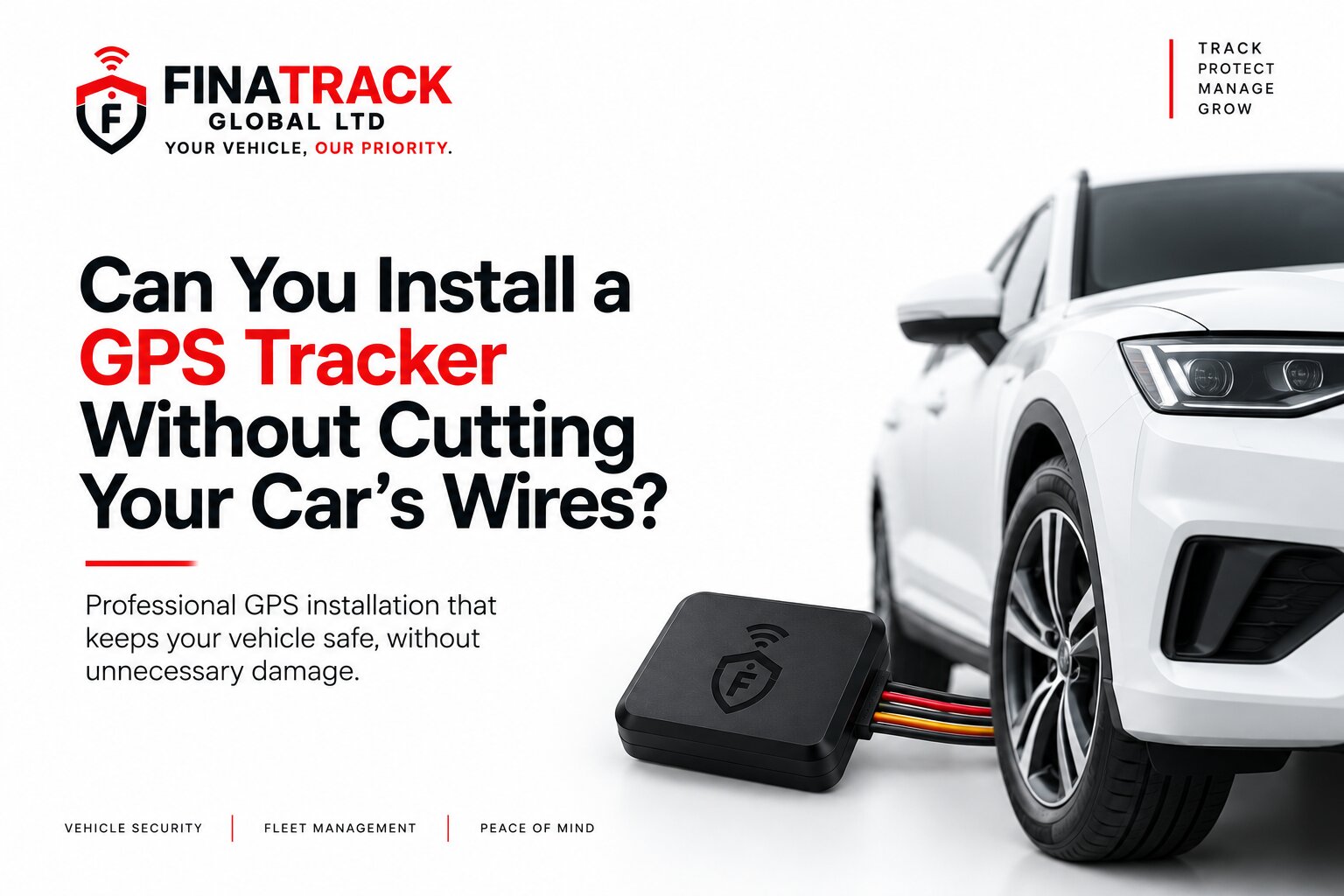
A vehicle owner can be completely comfortable with the idea of GPS tracking and still become nervous the moment a technician starts opening dashboard panels and working around electrical wiring. This concern is particularly common among owners of newer cars, hybrids, luxury vehicles and recently imported vehicles where electrical repairs can be expensive. The good news is that professional GPS installation does not always require unnecessarily cutting or damaging a vehicle’s original wiring, although the correct installation method depends on the car, tracker and functions the owner wants.
The phrase “no wire cutting” needs to be understood correctly. A permanently installed wired GPS tracker still requires a reliable source of electrical power and may also need appropriate connections for functions such as ignition detection or remote immobilisation. The objective of a professional installation is therefore not necessarily to avoid every electrical connection, but to integrate the tracker without careless modification of the manufacturer’s wiring.
This distinction is important because motorists sometimes compare a professional installation with a completely plug-and-play tracking device and assume they are identical. A portable or wireless tracker can operate without permanent vehicle wiring because it has its own battery, while a wired tracker is designed to remain powered directly from the vehicle. The wired solution therefore normally requires some level of electrical integration.
How that integration is performed can vary considerably. Some vehicles provide suitable accessory connections that allow aftermarket equipment to be installed with minimal alteration, while other cars require carefully made permanent connections. Professional technicians should assess the vehicle before choosing the installation method rather than using exactly the same approach on every car.
Modern vehicles are increasingly sensitive to poor electrical work. A car that once contained relatively simple wiring may now have multiple computers, sensors, communication networks and control modules operating throughout the vehicle. An installer who treats every wire as an ordinary power cable can create problems that are far more expensive than the tracker itself.
This is why a customer should be cautious when the only question an installer asks is, “Where should I hide the tracker?” Concealment matters for security, but reliable integration matters just as much. The technician should first understand the vehicle’s electrical architecture and the functionality required from the tracker.
A basic wired GPS installation normally needs a stable power source and ground connection. Depending on the system, an additional vehicle signal may be used to establish when the ignition is active. More advanced installations can involve other functions, including a professionally configured immobilisation circuit.
None of these requirements automatically means the vehicle’s factory loom has to be randomly cut apart. There are installation methods that can preserve the original wiring more carefully, depending on the vehicle. The appropriate solution should be selected after technical assessment rather than promised universally before the technician even sees the car.
This is particularly relevant for owners who search online for GPS tracker installation without cutting wires in Kenya. The phrase can describe several different things, from completely wireless tracking to non-destructive wiring methods used for permanent equipment. Customers should therefore ask the installer exactly what “no cutting” means in the proposed installation.
One option is a wireless GPS tracker. Because the device contains its own battery, it can normally be positioned in the vehicle without connecting directly to the electrical system. This provides the cleanest answer for someone who wants tracking with no permanent wiring modification at all.
Wireless tracking has advantages, but it also introduces a different responsibility. The internal battery eventually needs charging or replacement depending on the device and configuration. A wireless tracker can therefore provide excellent backup or temporary tracking, but it may not be the ideal primary solution for every motorist who wants continuous everyday monitoring.
A wired tracker avoids that routine charging requirement because it receives power from the vehicle. This is why permanently installed trackers remain popular with private motorists, lenders and commercial fleets. The owner can use the tracking system every day without repeatedly thinking about the tracker’s battery.
The trade-off is that installation quality becomes more important. A poorly connected tracker can experience power interruptions, incorrect ignition readings or repeated offline periods. If the system also includes immobilisation, poor electrical work can potentially affect vehicle operation.
A professional installer should therefore minimise unnecessary interference while still creating secure and dependable connections. The aim is not simply making the tracker switch on during installation day. The system should continue operating correctly through vibration, normal servicing, battery replacement and years of vehicle use.
This becomes especially important when owners purchase newer imported vehicles. Many cars arriving in Kenya contain electronic systems that are significantly more sophisticated than those found in older vehicles. Dashboard electronics, body-control modules and factory security systems can all communicate digitally.
The installer should understand that simply probing wires until voltage appears is not a professional diagnostic process. Electrical connections should be selected carefully and tested properly. The tracker should function without introducing warning lights, battery problems or unusual electronic behaviour.
Hybrid vehicles require additional caution. These vehicles combine conventional low-voltage electrical systems with high-voltage components used for propulsion. Normal GPS tracking equipment should be integrated through an appropriate low-voltage system rather than unnecessarily interfering with the high-voltage traction system.
The same principle applies to fully electric vehicles. An EV may contain a large propulsion battery, but accessories and control electronics commonly operate through a separate low-voltage architecture. GPS installation should be designed around the appropriate vehicle system rather than treating the main traction battery like a conventional car battery.
Owners of hybrids and electric vehicles should therefore inform the tracking company about the exact vehicle before installation. The technician can assess whether the intended tracker and security functions are appropriate. A standard installation method that works perfectly on an older petrol car should not automatically be applied to every modern EV.
Luxury vehicles deserve similar care. Modern European and Japanese premium cars can contain complex electronics throughout the cabin. Poorly executed aftermarket installations can lead to electrical issues that are difficult to diagnose because the problem may appear far away from the point where wiring was modified.
This is one reason professional installation should prioritise reversibility where practical. If the tracker is later removed because the vehicle is sold or the system is upgraded, the original electrical system should ideally be left in a clean and professionally restored condition. Security equipment should not leave behind a collection of damaged cables and improvised connections.
Vehicle owners often ask whether installing a tracker will affect the manufacturer’s warranty. The correct answer depends on the vehicle, warranty terms, installation and whether the aftermarket equipment actually causes a problem. It is therefore unwise to make broad promises that every installation can never affect any warranty issue.
A more responsible approach is to minimise unnecessary modifications and use professional installation practices. Owners of very new vehicles can also ask their dealer or manufacturer representative whether there are specific recommendations for aftermarket electrical accessories. Keeping installation documentation can also be useful if questions arise later.
The important principle is that a GPS tracker should not require destructive work merely because it is an aftermarket device. Good installation considers the existing vehicle first. The tracking solution is then integrated around the vehicle’s design as carefully as possible.
Customers should also understand that not cutting wires does not automatically mean the installation is better. A poorly secured temporary connection can be less reliable than a professionally made permanent connection. The quality of the electrical work matters more than whether the technician can advertise the installation using the words “no cutting.”
Reliability is especially important for vehicle security. A tracker may remain unnoticed for months until the day the car is stolen. At that moment, the owner needs the device to remain powered and communicating, not to discover that a supposedly non-invasive connection gradually became loose.
Vibration is one of the reasons this matters. Vehicles experience constant movement, particularly on rough roads and construction sites. Connections that look perfectly stable while the car is parked can become unreliable after thousands of kilometres of vibration.
Heat can also affect poorly installed equipment. Components placed in unsuitable areas may experience unnecessary temperature exposure, while badly secured wiring can move against surrounding vehicle parts. Professional installation considers the environment in which the tracker will remain for years.
Moisture is another concern, particularly for motorcycles, trucks and vehicles operating under demanding conditions. Tracking hardware and wiring should be positioned and protected appropriately for the type of asset. The same installation technique should not be assumed to work equally well across every vehicle.
Customers should therefore evaluate the technician as carefully as the GPS device itself. A high-quality tracker installed poorly can produce disappointing results, while appropriate hardware installed professionally can provide years of reliable service. Installation is part of the tracking product, not simply a small extra task performed after purchase.
The difference becomes clearer when ignition detection is required. The tracking platform may need to recognise when the car is switched on or off so that trips and certain alerts are recorded correctly. If this connection is made improperly, the application can show the wrong ignition status.
A vehicle may appear permanently switched on even after being parked, or the tracker may think the ignition is off while the car is moving. This can affect trip reports and other fleet information. Professional testing should therefore confirm ignition behaviour before the installation is considered complete.
Remote immobilisation adds another level of responsibility. A wired GPS system can sometimes support an output that works with a professionally installed relay to restrict unauthorised vehicle operation. Because this interacts more directly with the vehicle’s electrical system, installation should be handled carefully.
This function should not be added merely because a customer wants every available feature. The technician should determine whether the vehicle is suitable and which approach can be used safely. Some modern vehicles require more specialised consideration than older cars with simpler circuits.
Customers should also understand that immobilisation does not require the technician to unnecessarily damage the vehicle wiring. A professional installation should integrate the feature using an appropriate method while keeping the security system discreet. The objective is adding security without creating a new reliability weakness.
The immobilisation function should be tested safely after installation. The customer needs to understand how it works, how normal vehicle operation is restored and when the function should be used. Remote commands affecting vehicle operation should never be treated casually.
A tracker installed for fleet management may require different functionality from a tracker installed mainly for theft recovery. Businesses may want ignition reporting, mileage, trip history and driver-management information. These additional requirements can influence the best installation method.
A private motorist may have a simpler objective. They may want dependable location monitoring, trip playback, alerts and remote immobilisation. The installer should configure the system according to those needs rather than adding unnecessary complexity.
This is another reason a proper consultation should happen before installation begins. Customers should explain whether the vehicle is private, commercial, financed, shared between employees or operating as part of a larger fleet. The right tracking installation depends partly on how the vehicle will be used.
For financed vehicles, the lender may also have specific tracking requirements. A bank, SACCO or microfinance institution may expect a professionally installed tracker, immobilisation or particular documentation. A wireless tracker with no wiring may be convenient for the owner but may not satisfy the requirements of a financing arrangement.
Customers should therefore confirm any lender requirements before choosing the installation type. The cheapest or least invasive solution is not automatically the correct solution if it does not meet the security purpose for which tracking is required.
A professional installation should also include documentation. The vehicle registration, tracker information and installation date can be recorded, particularly where an installation certificate is required. Businesses can also note the vehicle’s odometer reading when tracking begins.
This creates a useful baseline for future mileage analysis. If the tracker is later moved to another vehicle, the transfer should be documented correctly. Good administration prevents one device’s historical records from being confused with another vehicle.
The tracker should also be tested on the monitoring platform before the technician leaves. The customer should see the vehicle’s location and understand how to confirm whether the tracker is online. A short test journey can then verify that trip history is recording as expected.
The customer should be shown how to check the last update time. This is one of the most important pieces of information on any tracking platform because it reveals how fresh the displayed location is. A vehicle icon may remain on the map even after communication has stopped.
A newly installed tracker that appears online but does not update properly should be investigated immediately. The customer should not accept the explanation that “it will probably start working later” without a clear technical reason. Installation day is the best time to confirm the complete system.
After installation, the owner should occasionally check tracker health. The device may operate normally for years, but workshop repairs or battery work can interfere with tracking equipment. A quick periodic check prevents long periods of unnoticed failure.
This is particularly important after battery replacement. A mechanic may disconnect and reconnect the battery without any problem, but tracker wiring can occasionally be disturbed during the process. The car can then function normally while the tracker remains offline.
Electrical repairs deserve the same attention. Dashboard work, alarm installation, audio upgrades and other aftermarket work may occur close to security wiring. The owner should confirm that the tracking application is still receiving fresh information afterwards.
This is another advantage of professional installation. A tracking company that understands its original work can inspect and restore the system if another technician later disturbs it. Customers who use several unrelated installers over the years may eventually end up with electrical wiring that nobody fully understands.
A clean vehicle-security installation should avoid this accumulation. GPS tracking, alarms and immobilisation should ideally be considered as one coordinated security system. The fewer improvised electrical modifications inside the car, the easier future maintenance becomes.
Motorists worried about wiring should also consider a layered approach. A wired tracker can provide continuous primary tracking while an independent wireless tracker provides backup visibility without another permanent power connection. This gives the owner both reliability and redundancy.
If the primary tracker loses vehicle power, the wireless device can continue operating according to its battery condition. The two trackers should serve different roles rather than simply duplicating one another. This can be particularly valuable for higher-value vehicles.
A tracking tag can provide another independent layer depending on the technology used. Again, the objective is not filling the car with devices for the sake of it. The security configuration should reflect the value of the vehicle and the potential impact of theft.
A modest family vehicle may be adequately protected using a professionally installed wired tracker and alarm system. A high-value SUV or commercial vehicle carrying valuable goods may justify additional backup tracking. Security investment should remain proportional to risk.
Vehicle owners should not reveal precise tracker placement unnecessarily. Professional installation aims to make the primary device difficult for an unauthorised person to identify quickly. Publishing detailed installation photographs or repeatedly showing people where the tracker is located weakens that advantage.
At the same time, concealment should not damage the vehicle. A tracker should not be forced into an unsuitable location simply because it is difficult to find. The device still needs appropriate communication performance and future access for authorised service.
This balance is what separates professional concealment from random hiding. The best location is not simply the most difficult place to reach. It is a location that supports reliable operation while remaining discreet.
Owners should also be cautious with extremely cheap installation offers. Low price does not automatically mean poor workmanship, but vehicle electrical work requires time and skill. If an installer promises to fit complex security equipment in a few minutes without checking the vehicle, the customer should ask what work is actually being done.
The cost of repairing a damaged electronic module can be far greater than the amount saved on installation. Motorists should therefore consider installation quality as part of protecting the vehicle itself. GPS tracking should reduce risk, not introduce another source of electrical problems.
Businesses have an even stronger reason to standardise installation quality. If twenty fleet vehicles are wired by different technicians using inconsistent methods, troubleshooting becomes difficult. One vehicle may report ignition correctly while another produces unreliable data despite using the same tracking platform.
Professional fleet installation should aim for consistency. Vehicle differences still need to be respected, but the provider should maintain clear installation and device records across the fleet. This makes future support easier.
Fleet managers should also review installation whenever a tracker repeatedly goes offline. The problem may involve network coverage or device configuration, but wiring should not be ignored. An intermittent electrical connection can create tracking gaps that look like communication problems.
The pattern can provide useful clues. If the tracker becomes unreliable only after the vehicle travels over rough roads, vibration-related wiring issues may deserve investigation. If several devices experience problems in the same remote region, network coverage may be the more likely explanation.
This demonstrates why good technical support matters after installation. Customers should have someone who can investigate device logs, communication and physical wiring rather than simply selling another tracker. Professional tracking is a service relationship as much as a hardware purchase.
The question of whether a GPS tracker can be installed without cutting original wiring therefore has no single answer for every vehicle. In some installations, non-destructive or plug-compatible approaches may be practical. In others, a carefully executed permanent connection is required to provide the functionality the owner wants.
The more important question is whether the installation is necessary, professional, secure and appropriate for the vehicle. Cutting should never be done carelessly, while avoiding cutting should never be used as an excuse for creating unreliable connections. Good workmanship sits between those two extremes.
Customers should ask the installer how the tracker will receive power, whether original wiring will be altered and whether the installation can be restored cleanly if the tracker is removed later. They should also ask which functions require additional integration.
If the system includes ignition detection or remote immobilisation, the owner should understand that these features naturally require deeper vehicle integration than basic wireless location tracking. Transparency before installation prevents misunderstandings after panels have already been opened.
For motorists who absolutely do not want any permanent wiring work, a wireless GPS tracker may be the most appropriate choice. It provides location visibility without connecting directly to the car’s electrical system. The trade-off is remembering that the device’s battery must be maintained.
For owners who want continuous tracking without routine charging, a professionally installed wired tracker normally provides the stronger everyday solution. The installation should simply be carried out in a way that respects the vehicle’s electrical system. Professional wiring is not the same thing as careless wiring.
For higher-risk vehicles, combining the two can provide the best balance. The wired tracker handles everyday tracking while the wireless device provides an independent backup. The vehicle owner gains redundancy without relying entirely on either battery power or one electrical connection.
Finatrack Global Ltd provides professionally installed GPS tracking and vehicle-security solutions for private motorists and businesses in Kenya. The wired GPS tracker is available at KES 15,000, with installation designed around the vehicle and the required tracking functionality rather than treating every car as electrically identical.
Customers who prefer independent tracking without permanent vehicle power connections can also consider a wireless GPS tracker at KES 15,000. For motorists seeking stronger protection, wired and wireless solutions can be combined as part of a layered vehicle-security strategy.
Professional installation can be arranged at the customer’s convenient location or through Finatrack Global Ltd at Vision Plaza, 1st Floor, Office 2, Mombasa Road, Nairobi. For GPS tracking installation and vehicle-security enquiries, contact 0723 645 810 or visit www.finatrack.co.ke.
The best GPS installation is not the one that cuts the most wires or the one that proudly claims to touch none of them. It is the installation that gives the tracker dependable power, accurate vehicle information and long-term reliability while interfering with the original vehicle systems only where genuinely necessary. For Kenyan motorists protecting increasingly sophisticated vehicles, that balance is far more important than the marketing phrase “no wire cutting.”