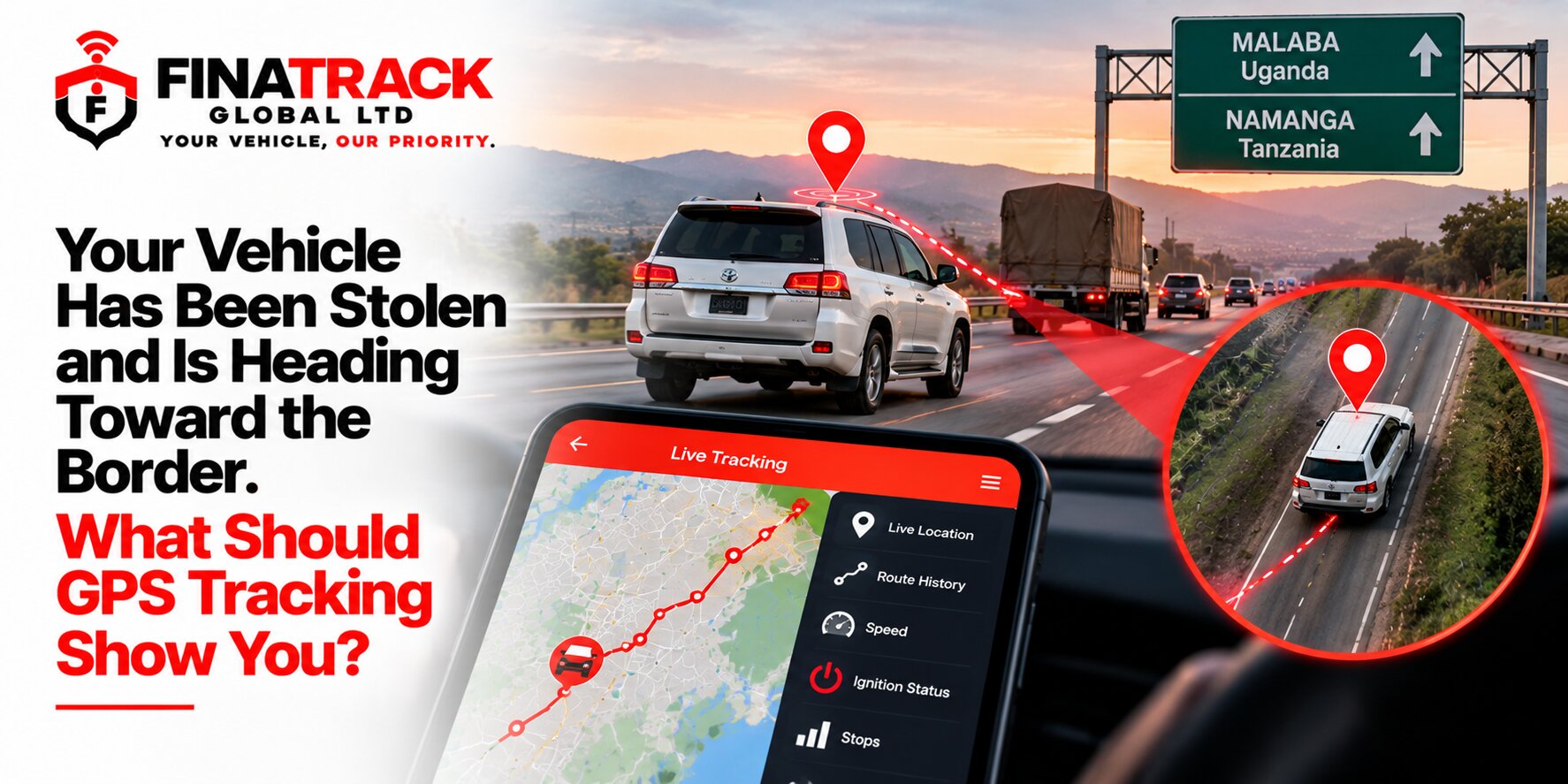
A vehicle disappears from a parking area in Nairobi and within a short time begins moving rapidly away from the city. For the owner, the most important question is no longer simply whether the car has been stolen, but where it is going and whether its movement can still be followed. This is where stolen vehicle GPS tracking in Kenya becomes particularly valuable. The Directorate of Criminal Investigations has previously reported stolen Kenyan vehicles being sold locally or moved into neighbouring countries, including Uganda and Tanzania, making the first hours after a suspected theft especially important.
The first information an owner should check is the vehicle’s latest reported location and timestamp. A map icon alone can be misleading if the tracker has not updated recently, so the time of the last report matters just as much as the location itself. If the vehicle is still communicating, the tracking platform may show whether it is moving, which direction it is travelling and how recently the position was updated. This information can help establish whether the vehicle is stationary nearby or already travelling a considerable distance from where it was taken.
Trip history can provide the next important clue. Instead of focusing only on the vehicle’s current location, an authorised user can review the route followed from the point where the suspicious movement began. This may show major roads used, unusual stops and changes in direction. In August 2026, DCI reported recovering an Isuzu FRR lorry that had been stolen in Naivasha the previous day after officers intercepted it in Teso South, illustrating how quickly a stolen commercial vehicle can move far from the location where it disappeared.
Fleet managers and private vehicle owners should also review ignition, power and tracker-status information where their system supports it. If the tracker suddenly reports external power disconnection, stops updating shortly after unusual movement or shows another abnormal event, this may indicate a technical issue or possible interference. It does not automatically prove that thieves have discovered the tracker, because battery problems, poor network coverage or wiring faults can produce similar symptoms. The timing of the outage, location and sequence of events therefore matter.
This is one reason higher-risk vehicles may benefit from layered tracking. A wired GPS tracker can provide everyday monitoring, while a separate wireless tracker or tracking tag can offer another independent source of location information if the primary device loses power or is removed. The backup unit should operate independently and be positioned discreetly. No tracking system guarantees recovery, but relying on more than one tracking method can reduce the risk of losing all visibility when one device stops communicating.
Vehicle owners should not attempt to personally chase or confront suspected thieves simply because they can see the car moving on a map. Location information should be passed quickly to the police, security personnel or appropriate recovery team together with the vehicle registration details, last known location, direction of travel and relevant tracking history. DCI has urged motorists to use anti-theft devices and to provide timely information to law-enforcement agencies as part of efforts to combat motor-vehicle theft and cross-border movement of stolen vehicles.
Cross-border movement can also affect tracking performance. A GPS device still needs suitable satellite visibility and a communication network to send its location to the tracking platform, and whether it continues reporting outside Kenya can depend on the SIM, roaming arrangement, network coverage and tracker configuration. Vehicle owners who regularly travel internationally, or whose assets carry higher theft risk, should therefore confirm in advance whether their tracking solution is designed to continue communicating across borders rather than discovering the limitation during an emergency.
Finatrack Global Ltd provides GPS tracking and layered vehicle-security solutions for private motorists and commercial fleets in Kenya. Finatrack’s wired GPS tracker is available at KES 15,000, with additional options including wireless GPS trackers, tracking tags, alarms and other vehicle-security solutions for customers who require additional protection. For professional installation and enquiries, call or WhatsApp 0723 645 810 or visit www.finatrack.co.ke. When a vehicle is stolen, GPS tracking cannot replace the police or guarantee recovery, but accurate location, route history and backup tracking can provide vital information during the period when every kilometre matters.