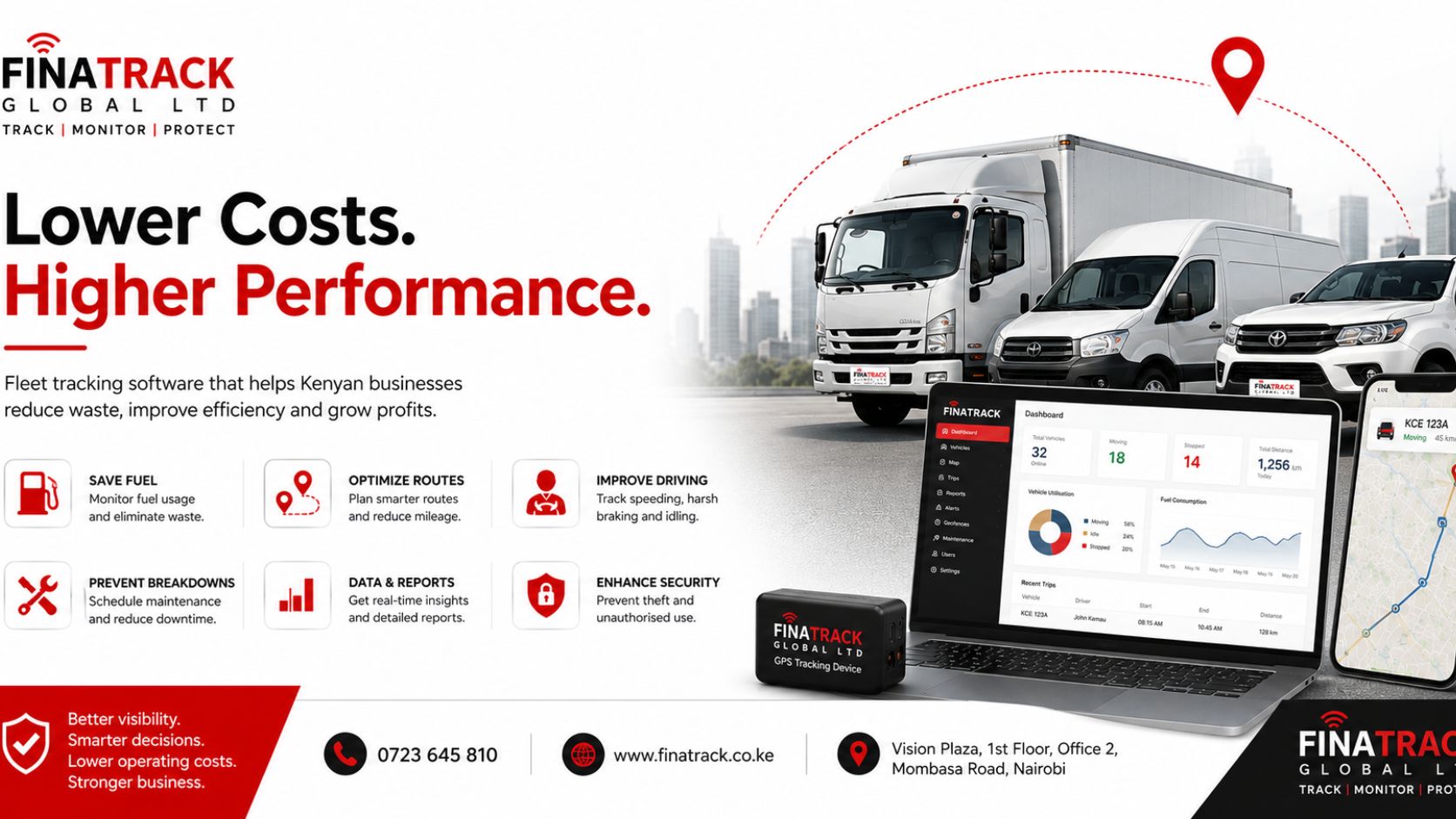
Running a vehicle fleet is expensive, and the largest costs do not always appear as obvious losses. Fuel wastage, unnecessary mileage, excessive idling, poor route planning, unauthorised journeys and delayed maintenance can gradually increase the cost of operating every vehicle. When these inefficiencies are repeated across a fleet throughout the year, they can significantly affect profitability.
Fleet tracking software gives businesses better visibility over how vehicles are actually being used. Instead of relying entirely on fuel receipts, driver reports and occasional odometer readings, management can review vehicle location, journeys, mileage, stops and other operational information from a central tracking platform. The value of the system comes from turning this information into decisions that reduce avoidable costs.
Fuel is one of the first areas where businesses can benefit from better visibility. A company may know how much it spends at petrol stations each month without understanding whether that expenditure is consistent with the work its vehicles are performing. When management can compare fuel costs with mileage and trip activity, unusual consumption becomes easier to identify.
A vehicle that suddenly begins consuming substantially more fuel while covering approximately the same routes deserves investigation. The cause may be mechanical, such as poor engine performance or tyre pressure, but it could also involve excessive idling, unnecessary journeys or aggressive driving. Fleet tracking provides the operational context needed before management decides where the problem is coming from.
For businesses requiring greater fuel control, GPS tracking can also be combined with dedicated fuel-monitoring technology where suitable. Depending on the vehicle and equipment installed, management may be able to monitor refilling activity and changes in fuel levels alongside actual vehicle movement. This provides a much stronger basis for fuel management than receipts alone.
Receipts remain important accounting documents, but they only confirm that fuel was purchased. They do not explain where the vehicle travelled afterwards, how long the engine remained running or whether the fuel consumption was reasonable for the distance covered. Combining financial records with telematics information gives managers a more complete view of fleet expenditure.
Unnecessary mileage is another significant source of operating costs. A delivery van may take a longer route than necessary, a salesperson may travel back and forth across the same area because customer visits were poorly scheduled, or a company vehicle may be used for personal journeys after working hours. Each additional kilometre consumes fuel while also accelerating wear on tyres, brakes and other vehicle components.
Trip history allows management to see where those kilometres are being generated. If several vehicles regularly make inefficient journeys, routes can be redesigned and customer visits grouped more logically. Better planning can reduce distance without reducing the amount of productive work completed.
This can have a direct impact on fuel expenditure, but the financial benefit extends further. Reducing unnecessary kilometres can delay servicing intervals, tyre replacement and eventual vehicle replacement. A fleet that travels fewer wasteful kilometres is generally less expensive to operate over its lifetime.
Route planning can become particularly important for distribution businesses. A company may have several deliveries within Nairobi but send drivers back and forth between distant neighbourhoods because orders were dispatched in the sequence they were received. Tracking data can reveal these patterns and help management reorganise deliveries around geography rather than administrative order.
The objective should not be to force drivers onto one rigid route regardless of traffic conditions. Nairobi traffic can change quickly, and drivers sometimes need to avoid congestion, accidents or road closures. Fleet tracking allows management to compare planned and actual movement so that route decisions can become more realistic over time.
Idling is another cost that can remain invisible when businesses focus only on distance travelled. A vehicle can consume fuel while stationary if the engine remains running during loading, customer visits, queues or waiting periods. Some idling is unavoidable, but repeated long periods can gradually increase operating costs without contributing productive mileage.
Fleet tracking software can help identify vehicles that spend unusually long periods with the ignition active while remaining stationary, depending on the tracker configuration. Managers can then determine whether those periods are necessary or whether operating procedures should change. The goal is not to eliminate every minute of idling but to reduce behaviour that adds cost without supporting the business.
Consider a fleet of twenty vehicles where each one wastes only a small amount of fuel every working day through unnecessary idling. The cost may appear insignificant when viewed per vehicle, but the combined annual impact can become substantial. Fleet management is often about finding these small inefficiencies before they multiply.
Driver behaviour can also influence operating costs. Repeated rapid acceleration, harsh braking and excessive speed can contribute to higher fuel consumption and accelerate wear on tyres, brakes and suspension components. A vehicle driven aggressively may therefore cost more to maintain than another performing similar work under smoother driving conditions.
GPS telematics can help identify repeated driver-behaviour patterns depending on the system installed. Managers can use the information to support coaching and improve driving standards rather than waiting until mechanical expenses or accidents expose the problem. Behaviour should always be evaluated over several journeys because individual events can be caused by unavoidable road conditions.
Speeding deserves particular attention because it combines financial and safety risk. A driver may attempt to save time by driving faster, yet excessive speed can increase fuel consumption and expose the company to accidents, vehicle damage and downtime. The few minutes gained on one journey may therefore create much larger costs later.
Fleet tracking gives businesses an independent record that can support better driver supervision. Where repeated speeding appears, managers can investigate whether the cause is driver behaviour, unrealistic schedules or pressure created by poorly planned routes. Solving the underlying problem is usually more effective than simply issuing warnings.
Vehicle utilisation is another area where fleet software can produce significant savings. Businesses sometimes purchase additional vehicles because employees report that the existing fleet is always busy, yet actual tracking data may show that some units remain parked for long periods. Better allocation may therefore increase available capacity without immediately buying another vehicle.
This is particularly important because the cost of a new vehicle goes far beyond the purchase price. Insurance, tracking, servicing, tyres, fuel and depreciation all become recurring expenses once the vehicle joins the fleet. Avoiding an unnecessary purchase can therefore save the business substantially over several years.
The opposite finding can also be valuable. If tracking information shows that every vehicle is operating intensively and accumulating significant mileage, management has stronger evidence that additional fleet capacity is genuinely required. Data allows the investment decision to be based on actual utilisation rather than assumptions.
Vehicle allocation can also be improved within departments. One branch may have several lightly used vehicles while another struggles to meet transport demand. Fleet tracking helps management understand whether assets should be transferred before new vehicles are purchased.
Maintenance planning represents another major opportunity for cost reduction. Vehicles that are serviced too late can develop preventable mechanical problems, while servicing every vehicle according to the same calendar schedule may not reflect how differently they are used. A vehicle travelling long regional routes reaches mileage-based maintenance requirements much sooner than one used mainly for short local journeys.
Fleet tracking provides mileage and usage information that can support more informed maintenance planning. Managers can identify heavily utilised vehicles and make arrangements before they reach critical service intervals. Preventive maintenance is generally less disruptive than dealing with a breakdown during an important delivery or customer assignment.
Unexpected breakdowns create costs beyond the repair bill. A delivery may be delayed, employees may lose productive time, customers may need to be compensated and a recovery vehicle may have to be sent. When the affected vehicle is part of a small fleet, the business may also struggle to replace its capacity during the repair period.
GPS tracking can help reduce the operational impact when breakdowns still occur. Management can see the vehicle’s reported location and direct a mechanic or recovery team more accurately. For larger fleets, the company may also identify another nearby vehicle that can assist with the disrupted assignment.
After-hours use is another source of hidden fleet expenditure. A company car expected to remain parked at the end of the working day may continue accumulating mileage during evenings or weekends. If those journeys are not authorised business activities, the company is effectively paying for fuel, maintenance and depreciation associated with private use.
Trip history can make this activity visible. Managers can review when vehicles travelled and whether those journeys occurred within normal operating schedules. Clear company policies should then define when personal use is permitted and how exceptions are authorised.
The purpose of tracking should not be unnecessary surveillance of employees. Businesses have legitimate reasons to monitor company vehicles, including security, operational efficiency and cost control, but employees should understand those reasons and how the information is used. Transparent policies generally create better fleet discipline than secretly monitoring vehicles and confronting employees later.
Geofencing can help businesses control operating areas without manually reviewing every journey. Virtual boundaries can be created around offices, warehouses, construction sites or other important locations. Depending on the system configuration, management can identify when vehicles enter or leave those areas.
For a company operating project vehicles, this can make unauthorised movement easier to recognise. A pickup assigned to a construction site may be expected to remain within a particular project area for most of the week. Repeated trips far outside that area can then be reviewed before unnecessary mileage becomes routine.
Fleet security also has a direct connection to operating costs. Vehicle theft can create one of the largest losses a fleet experiences, especially when a company vehicle also carries tools, products or equipment. GPS tracking cannot eliminate theft risk, but it can provide current or recent location information that supports a faster response.
Unexpected ignition activity, movement or power interruption can also provide valuable context depending on the installed system. When those events occur outside normal operating hours, authorised managers can check whether the activity is legitimate. Earlier awareness can help the company respond before an incident becomes a complete loss.
Some businesses may require layered security for higher-value vehicles. A wired GPS tracker can serve as the primary tracking system while a wireless tracker or tracking tag provides an additional recovery layer. Alarms and immobilisation systems may also be appropriate depending on the vehicle and risk environment.
Avoiding theft is not the only security saving. Vehicle misuse, unauthorised borrowing and unapproved route deviations can all generate costs even when the vehicle eventually returns. Greater visibility makes it easier to address these patterns before they become normal operating behaviour.
Customer service can also influence fleet costs indirectly. When a customer asks where a delivery is, businesses without tracking may spend time calling drivers and dispatch staff to locate the vehicle. This interrupts both the office and the driver while providing the customer with an uncertain answer.
Real-time tracking allows the dispatcher to check the vehicle’s position directly. More accurate information can reduce unnecessary communication while helping the company give customers better arrival estimates. For businesses competing on reliability, improved delivery visibility can also strengthen customer retention.
The same visibility can improve dispatching. When an urgent request arises, management can identify which suitable vehicle is closest rather than automatically sending one from the office. Choosing the nearest available vehicle can reduce response time and unnecessary mileage.
This can be especially useful for field service companies, sales teams, delivery businesses and technical support fleets. A technician may already be operating near the next customer without management realising it. Fleet tracking turns vehicle location into information that can support more efficient job allocation.
Reporting is what allows businesses to turn all these individual observations into long-term savings. A good fleet tracking platform should help managers review mileage, journeys, stops, utilisation and selected driver behaviour without manually checking every vehicle throughout the day. Patterns become easier to see when information is organised consistently.
Monthly reports may reveal that one vehicle regularly covers significantly more kilometres than similar units. Another may spend much longer stationary, while a third may show repeated speeding or after-hours activity. Management can then investigate the reason behind each pattern and decide whether operational changes are required.
The financial benefit of tracking should therefore be evaluated across the entire operation. Saving fuel is valuable, but reducing unnecessary mileage, preventing breakdowns, improving vehicle allocation and extending asset life can create additional savings. Fleet tracking becomes more valuable when management uses several of these opportunities together.
Businesses should also avoid assuming that installing trackers automatically reduces costs. The technology provides information, but management still has to act on what it reveals. A company can continue wasting fuel despite having excellent fleet reports if nobody reviews the information or follows up on recurring problems.
Clear responsibility is therefore important. Someone within the organisation should know who reviews fleet performance, who investigates unusual activity and who coordinates technical support when trackers stop communicating. A tracking system works best when it becomes part of normal fleet-management procedures rather than something opened only during theft emergencies.
The quality of the tracking equipment and installation matters as well. An unreliable device that repeatedly goes offline creates gaps in the very information management is using to control costs. Professionally installed trackers should have stable power, secure wiring and suitable configuration for the vehicle and business requirement.
Technical support should also be considered part of the operating solution. Vehicles may change, trackers may need inspection and new units may be added as the company grows. Access to support ensures that the tracking system remains useful rather than gradually deteriorating as individual devices develop faults.
Businesses should periodically check whether every tracker is still reporting. A vehicle icon remaining on the map does not necessarily mean the device is currently online, so managers should pay attention to last-update times and recent journeys. Identifying a tracker fault during routine operations is much easier than discovering it during a theft or urgent delivery.
Fleet tracking software is most effective when management understands what success looks like. A company may want to reduce unnecessary mileage, improve response times, reduce fuel losses or control after-hours vehicle use. Establishing clear objectives makes it easier to determine whether the tracking system is actually improving operating performance.
For a small business with five vehicles, even modest improvements can make a difference. Reducing unnecessary journeys, improving route planning and avoiding one major vehicle loss can justify the investment in tracking. For a company operating dozens of vehicles, the potential savings become even more significant because every small inefficiency is multiplied across the fleet.
The real value of fleet tracking is therefore not simply seeing vehicles move across a screen. It is understanding what those movements are costing the business and identifying where unnecessary expenditure can be reduced. Better visibility gives managers an opportunity to make decisions before inefficiencies become permanent expenses.
Finatrack Global Ltd provides professionally installed GPS tracking and fleet telematics solutions for Kenyan businesses operating commercial and private vehicle fleets. Depending on the organisation’s needs, solutions can include real-time vehicle tracking, trip history, geofencing, driver monitoring, fuel monitoring, AI dashcams and additional vehicle-security technologies.
Professional installation can be arranged at the customer’s convenient location or at Vision Plaza, 1st Floor, Office 2, Mombasa Road, Nairobi. Businesses seeking to improve fleet visibility and control operating expenses can contact Finatrack Global Ltd on 0723 645 810 or visit www.finatrack.co.ke to discuss a tracking solution appropriate for their operations.
Reducing fleet costs does not always require buying cheaper fuel or replacing vehicles with smaller ones. Sometimes the greatest opportunity comes from understanding exactly how the vehicles you already own are being used and eliminating the waste hidden inside everyday operations. Fleet tracking software provides the visibility needed to identify those opportunities and manage the fleet with greater financial discipline.