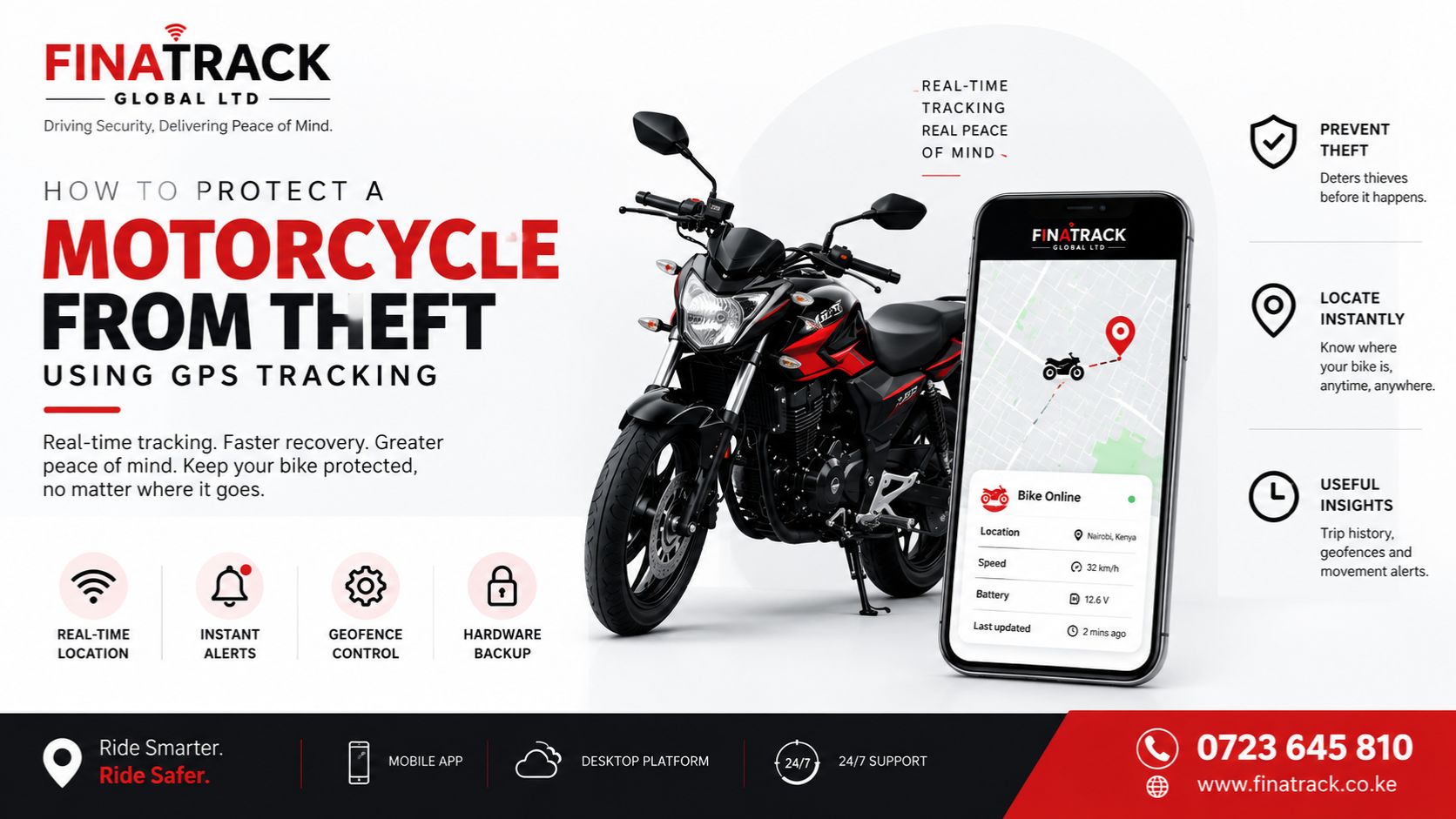
Motorcycles have become an essential part of transport and business across Kenya, serving private riders, delivery operators, boda boda riders and companies that depend on two-wheel mobility. Their convenience, however, also makes them vulnerable to theft because motorcycles are easier to move, hide and dismantle than larger vehicles. For owners, this means security should go beyond a conventional steering lock or chain.
GPS tracking can add an important layer of protection by giving the owner visibility over the motorcycle’s location and movement. A professionally installed tracker allows an authorised user to monitor the bike through a smartphone or computer, helping them establish where it is, where it has travelled and whether it has moved unexpectedly.
The biggest advantage of GPS tracking is that it continues to provide information after the motorcycle has left the place where it was parked. A physical lock may delay a thief, but once the motorcycle is moved, the owner may have little information about where it has gone. GPS tracking changes that by creating a digital connection between the motorcycle and the person responsible for it.
For private riders, this can provide reassurance when the bike is parked outside an office, apartment, shopping centre or entertainment venue. For businesses, the same technology can help monitor delivery motorcycles, field staff and company riders operating in different areas during the day.
A good motorcycle GPS tracking system should provide more than a location pin on a map. Depending on the device installed, useful features can include real-time tracking, trip history, movement alerts, ignition notifications and geofencing. These features help the owner understand not only where the motorcycle is, but also when it begins moving and how it is being used.
Movement alerts are particularly useful for theft prevention. If a motorcycle is parked and the tracking system detects unexpected movement, the owner may receive an alert through the monitoring platform. This gives them an opportunity to respond before the theft goes unnoticed for several hours.
Ignition alerts can provide another early warning. If the motorcycle ignition is switched on at a time when the owner knows it should remain parked, the alert can prompt an immediate check of the bike’s location. Early detection can make a significant difference because the longer a stolen motorcycle remains unreported, the more difficult recovery can become.
Geofencing provides a further layer of control. The owner can create a virtual boundary around a home, office, yard or operating area and receive an alert when the motorcycle leaves that area. For businesses managing several motorcycles, this can also help identify unauthorised trips or movement outside approved operating zones.
Trip history can become valuable after an incident. If the motorcycle moved before the owner noticed, historical tracking information may show the route it followed and the locations where it stopped. This information can support police and authorised recovery efforts when a theft is reported.
Motorcycle owners should, however, avoid treating live GPS information as an invitation to confront suspected thieves personally. Seeing the motorcycle’s location on a phone can create a strong temptation to pursue it directly, but that can be dangerous. The safer approach is to report the theft to the police, contact the tracking provider and share relevant location information with authorised recovery personnel.
The effectiveness of the system depends heavily on installation quality. Motorcycles have less internal space than cars, which means a poorly positioned tracking device can be easier to discover. A professional installer should choose a location that provides reliable power and communication while keeping the tracker as discreet as reasonably possible.
Weather protection also matters. Motorcycles are routinely exposed to rain, dust, vibration and heat, so the device and installation method should be suitable for the environment in which the bike operates. Loose wiring or poorly protected connections can reduce reliability over time.
A wired motorcycle tracker is generally connected to the bike’s electrical system and can provide continuous monitoring as long as power remains available. Some devices may also include internal backup power, allowing the tracker to continue operating temporarily if the main supply is interrupted.
Wireless tracking can provide an additional backup layer. A separate battery-powered device can be positioned independently from the primary tracker and may continue transmitting even if the main device is discovered or disconnected. For higher-risk motorcycles, combining primary and backup tracking can make the security system more resilient.
GPS tracking should also be combined with physical security. A tracker helps locate a motorcycle, but it does not physically stop someone from attempting to move it. Steering locks, quality chains, disc locks and secure parking can increase the effort required to steal the bike and may discourage opportunistic thieves.
Parking strategy remains one of the simplest forms of theft prevention. Whenever possible, motorcycles should be left in well-lit, controlled or monitored areas rather than isolated locations. Parking near security personnel or CCTV coverage can provide additional deterrence and useful evidence if an incident occurs.
Owners should also avoid leaving motorcycle keys in predictable or easily accessible places. Many thefts do not involve sophisticated technology; they begin with simple access to the key or an opportunity created by poor security habits. GPS tracking works best when basic security practices are already in place.
For boda boda riders and delivery operators, GPS tracking can support both theft prevention and business management. A rider may spend most of the day away from a fixed office, which makes vehicle visibility especially useful. Operators managing several motorcycles can monitor location, route history and movement from one platform rather than depending entirely on phone calls.
This can help businesses understand how motorcycles are being used and investigate unusual movements. It can also support accountability where different riders operate company-owned bikes on different shifts.
Motorcycle finance creates another reason to consider tracking. Where a bike has been financed through a lender, SACCO or microfinance institution, the motorcycle may serve as security for the loan. Tracking can therefore protect both the borrower and the institution by improving visibility over the financed asset.
The borrower benefits because the motorcycle may be a source of income. If a financed bike is stolen, the owner may lose both the asset and the ability to generate the money needed to continue making repayments. GPS tracking therefore protects more than the motorcycle itself; it can also protect the rider’s livelihood.
Account security should not be overlooked. A tracker may be professionally hidden, but weak login credentials can expose sensitive location information. Motorcycle owners should use strong passwords and avoid sharing tracking accounts with people who do not need access.
Businesses should go further by defining who is authorised to view fleet information. Not every employee needs access to every motorcycle. Clear user controls reduce the risk of misuse and make the system easier to manage.
Owners should also periodically confirm that the tracker is still communicating correctly. A security system should not be installed and forgotten. Checking the device, platform and alerts from time to time helps identify technical problems before an emergency occurs.
If the tracker suddenly goes offline, the cause should be investigated. The problem may be related to mobile network coverage, power supply, wiring or deliberate interference. A professional tracking provider should be able to help determine why communication has stopped.
No GPS tracker can guarantee that a motorcycle will never be stolen. Criminals may attempt to remove devices, disconnect batteries or move bikes into locations with limited network coverage. The objective of tracking is therefore to improve detection, visibility and recovery options rather than create a false promise of complete protection.
The strongest security strategy combines several independent layers. Physical locks make the motorcycle harder to move, a hidden GPS tracker provides location visibility, movement alerts warn the owner about suspicious activity and backup tracking can preserve another source of information if the primary device is compromised.
For commercial motorcycles, telematics can add even more value. Businesses may use tracking information to monitor route efficiency, identify unauthorised use and improve accountability across their operations. The same technology installed primarily for theft protection can therefore become a useful management tool.
Finatrack Global Ltd provides GPS tracking and vehicle security solutions for motorcycles, private vehicles and commercial fleets in Kenya. Motorcycle owners can use tracking technology to improve security, monitor movement and gain greater visibility over an asset that may be both valuable and essential to daily income.
Protecting a motorcycle should not begin after it disappears.
It should begin while it is still parked where you left it.
For professional motorcycle GPS tracking solutions in Kenya, contact Finatrack Global Ltd on 0723 645 810 or visit www.finatrack.co.ke.