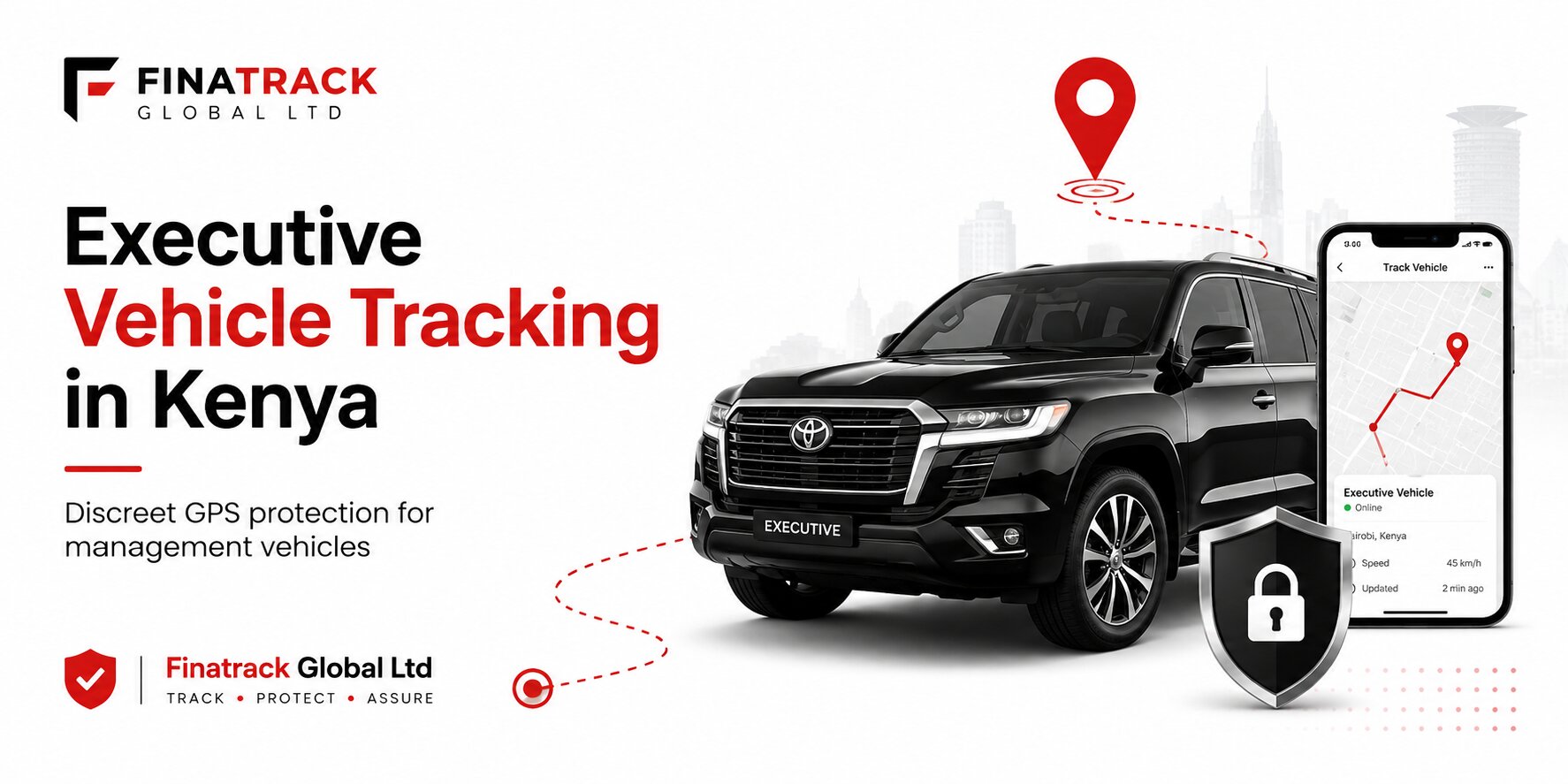
Executive and management vehicles are often among the most valuable cars in a company fleet. They may be assigned to directors, senior managers, business owners or visiting executives and can spend considerable time moving between offices, meetings, airports, hotels and client locations. Despite their value, these vehicles are sometimes managed less systematically than delivery vans and commercial trucks because management assumes that executive cars do not require the same level of fleet oversight.
That assumption can create unnecessary security and operational risk. A high value SUV or executive saloon remains a company asset regardless of who is driving it, and the financial consequences of theft, unauthorised use or a serious accident can be significant. GPS tracking gives businesses a practical way to protect these vehicles without turning executive transport into a complicated fleet management exercise.
The first benefit is straightforward vehicle visibility. An authorised user can check the current or most recently reported location of a management vehicle through a tracking platform rather than depending entirely on calls to the driver. This can be particularly useful when vehicles are assigned to chauffeurs, drivers or employees who spend much of the working day away from the office.
The purpose should not be to monitor executives unnecessarily. The tracking system should be positioned primarily around vehicle security, asset protection, operational support and maintenance rather than personal surveillance. Clear access rules can ensure that location information is available only to people with a legitimate reason to view it.
For many businesses, vehicle security is the strongest justification for installing GPS tracking on executive cars. Management vehicles are often newer, better equipped and more valuable than ordinary company cars, which can make them attractive theft targets. They may also be parked at hotels, restaurants, airports and unfamiliar meeting locations where the company’s normal physical security controls do not exist.
If an executive vehicle moves unexpectedly, GPS tracking can provide current or recent location information depending on the condition of the device and available network connectivity. This information can support security and law enforcement procedures when theft is suspected. The owner or company should avoid personally pursuing a suspected stolen vehicle simply because its position appears on a map.
Executive cars can also benefit from layered vehicle security. A professionally installed wired GPS tracker can provide primary location and trip information, while a separate wireless tracker or tracking tag can provide an additional recovery layer. Vehicle alarms, immobilisation and hidden cut off systems may provide further protection depending on the vehicle and security requirements.
The advantage of layered security is that the business does not depend entirely on one device. If the primary tracker is discovered or its power is interfered with, another independent security layer may remain available. This can be particularly important for high value SUVs and executive vehicles where the potential financial loss justifies stronger protection.
Discreet installation is especially important in executive cars. The vehicle interior should remain clean and professional, with no unnecessary visible wiring or equipment affecting the appearance of the cabin. A professionally installed tracker should operate in the background without interfering with normal vehicle use.
Modern executive vehicles also contain increasingly sophisticated electrical systems. Professional installation therefore matters because improper wiring can create unnecessary electrical problems or interfere with sensitive vehicle systems. The tracking provider should understand that protecting the integrity of the vehicle is as important as getting a location icon to appear on a phone.
Where a vehicle is still under manufacturer or dealer warranty, the owner should also understand the applicable warranty conditions before significant aftermarket electrical modifications are made. A basic professionally installed GPS system and a more complicated installation involving immobilisation can involve different levels of electrical interaction. The installation method should therefore match both the vehicle and the security requirement.
Power disconnection alerts can provide another useful security signal where supported by the tracking system. If the vehicle battery or the tracker’s external power supply is unexpectedly interrupted, authorised users may receive an alert depending on the device and configuration. This can provide early awareness that something unusual has happened.
A power alert does not automatically mean somebody is attempting to steal the vehicle. Battery replacement, workshop repairs and electrical maintenance can produce exactly the same event. The useful approach is to check the location, ignition status, time of the alert and whether anyone is legitimately working on the car.
Ignition monitoring can provide additional context. An executive vehicle expected to remain parked overnight should not normally show unexpected ignition activity unless somebody has permission to use it. When ignition information appears together with unexpected movement, the business has a clearer reason to verify what is happening.
This can be particularly useful for vehicles assigned to chauffeurs. A driver may keep the vehicle overnight or take it home because the executive needs an early morning pickup, making direct physical supervision difficult. GPS tracking can provide asset visibility without requiring managers to repeatedly call the driver simply to confirm where the vehicle is.
Clear vehicle use policies remain important. The business should define whether a driver can use the vehicle for personal journeys, where it should be parked and who can authorise movement outside normal operating hours. Tracking supports those policies by providing independent vehicle information when unusual activity needs clarification.
Trip history can also be useful even when the company has no interest in closely monitoring day to day executive movement. A historical journey record can help investigate vehicle security incidents, mileage differences or disputes about where the car was at a particular time. The system provides an operational record rather than forcing the business to depend entirely on memory.
Privacy should nevertheless be handled carefully. Executive travel can involve sensitive business meetings, confidential client locations and private movements, so detailed tracking information should not be widely available throughout the organisation. Access should be limited to authorised personnel such as the vehicle owner, fleet manager or designated security staff.
The same principle applies to alerts. A large group of employees should not receive notifications every time an executive vehicle moves. The company should decide which events genuinely matter, such as unexpected after hours activity, geofence movement or tracker power loss, and who is responsible for responding.
GPS tracking can also simplify maintenance planning. Executive cars sometimes accumulate substantial mileage because they are used for meetings, airport transfers and regional travel, yet their usage may not be reviewed as closely as commercial fleet vehicles. Mileage information helps management understand when the car is approaching servicing requirements.
This is particularly important when several management vehicles are assigned to different executives. One vehicle may travel mostly within Nairobi while another regularly travels between counties. Even if both cars were purchased at the same time, they may require servicing at very different intervals.
Using actual mileage provides a more reliable basis for maintenance planning. A heavily used management SUV should not wait for the same calendar date as another vehicle that spends most of the week parked. Better maintenance planning reduces the risk of avoidable breakdowns affecting important business travel.
Breakdowns can be especially disruptive for executive transport because they often occur when the vehicle is travelling to an important meeting, airport transfer or client engagement. GPS location can help management coordinate assistance more accurately if the vehicle stops unexpectedly. A mechanic or recovery provider can be directed using the current or last reported location rather than depending solely on verbal directions.
For organisations operating several vehicles, management may also identify another company vehicle nearby that can assist. This can reduce disruption and help ensure that the executive continues to the destination while the affected vehicle is being recovered. The same fleet visibility used for commercial operations can therefore support executive transport without requiring a complicated system.
Driver behaviour is another consideration, particularly where executive vehicles are driven by employed chauffeurs. Senior managers may spend considerable time as passengers and naturally expect a high standard of road safety. GPS telematics can provide information about repeated speeding or other selected driving events depending on the solution installed.
One isolated event should not automatically be treated as poor driving because Kenyan roads can present unpredictable conditions. Repeated patterns across many journeys are generally more useful when assessing whether driver coaching may be required. The objective should be protecting passengers, drivers and company assets rather than creating unnecessary conflict.
AI dashcams can provide additional protection where the company requires more advanced monitoring. GPS information can show where a vehicle was and how it was moving, while video can provide context during an accident or disputed road event. This can be particularly useful for high value executive vehicles where an accident may have substantial financial consequences.
Video systems should also be deployed with appropriate privacy controls. Executive conversations and movements can be commercially sensitive, so organisations should carefully determine what cameras record, who can access footage and under what circumstances it can be reviewed. Security technology should improve risk management without creating unnecessary exposure of confidential activity.
Vehicle mileage can also reveal whether a management car is being used more extensively than expected. An executive vehicle may be assigned primarily for official duties but gradually accumulate substantial additional mileage outside normal business activity. Trip records can help management understand where operating costs are coming from.
The goal should not be to question every kilometre. Executives may travel outside ordinary working hours because business activity itself does not always fit a fixed schedule. The useful question is whether the vehicle’s usage remains consistent with the company’s policy and asset management expectations.
Fuel costs can also be reviewed more intelligently when mileage is available. A sudden rise in fuel expenditure may simply reflect additional travel, but it could also indicate mechanical problems, inefficient driving or extended idling. GPS information provides context before management reaches conclusions.
For most executive vehicles, the first priority is likely to remain security rather than advanced fuel analysis. A business does not necessarily need to turn every management car into a complex telematics project. Real time location, trip history, ignition information and carefully selected security alerts may already provide most of the value required.
Geofencing can also be used selectively. A business may create a virtual boundary around the head office, secure parking area or another important location. Depending on the system configuration, authorised users can identify when the vehicle enters or leaves that area.
This can be useful for executive cars kept at company premises overnight. If a vehicle unexpectedly leaves the parking area long after working hours, the business gains early visibility of the movement. The event can then be verified before management decides whether there is a security concern.
Airport parking presents another practical use case. An executive may leave a vehicle at an airport or hotel parking facility for an extended period while travelling. Having remote visibility over the car provides an additional layer of reassurance when the owner is physically far away.
A tracker should still not replace proper parking security. The vehicle should be locked, parked appropriately and protected using other available security measures. GPS tracking provides visibility if something goes wrong rather than guaranteeing that theft cannot occur.
Valet parking and workshop visits also create situations where the vehicle temporarily leaves the direct control of the executive or business owner. GPS tracking can show when the car is moved and where it travels. This information can be valuable where the owner wants confidence that the vehicle has remained within the expected area.
Normal operational context should still be considered. A workshop may legitimately conduct a road test, and valet staff may need to move the vehicle to another parking area. Tracking makes those movements visible but does not automatically make them suspicious.
The last update time is particularly important when checking executive vehicle location. Seeing the car icon at an office or residence is only useful if the owner understands how recently that position was reported. A location transmitted yesterday should not be treated as proof that the car is still there today.
Users should therefore develop the habit of checking both location and timestamp. If the tracker normally communicates frequently but suddenly stops updating, the owner can determine whether the vehicle is in an area with poor mobile coverage or whether technical attention may be required. This prevents an inactive tracker from providing false confidence.
Network connectivity should also be understood realistically. GPS satellites help determine position, while many vehicle trackers use mobile networks to send that information to a server. A tracker operating in an underground basement or remote area may therefore temporarily stop providing live updates even though the device itself has not necessarily failed.
Depending on the tracker and configuration, historical information may appear after the device reconnects. The user should understand the normal behaviour of the installed system before treating every temporary offline status as an emergency. A device that remains offline after returning to a normally well covered area should be investigated.
Regular tracker health checks remain important, even for vehicles that are rarely driven. An executive car can sit securely in a garage for weeks while nobody notices that its tracker has stopped communicating. Discovering this during an actual theft would defeat much of the reason the device was installed.
A simple periodic check can prevent this. Open the application, confirm that the last update is recent and review whether recent journeys appear normally. Where the vehicle has been parked, start it and verify that the tracker responds as expected.
Tracker operation should also be confirmed after battery replacement or significant electrical repairs. A mechanic may accidentally disturb hidden tracker wiring while working on an unrelated part of the vehicle. The car can leave the workshop functioning normally while the tracking device remains offline.
Professional technical support therefore matters. When an executive car suddenly stops reporting, the provider should be able to help determine whether the issue involves power, connectivity, the SIM service or the tracker itself. This reduces unnecessary dashboard dismantling and helps restore security more quickly.
Companies managing several executive cars should also think about user access. The CEO may want access to their own vehicle, while the fleet manager may require visibility over all management cars. A security officer may only need access during specific incidents.
The system should therefore be organised around actual responsibility. Vehicle location is sensitive information, particularly for senior executives, and access should not be shared more widely than necessary. Strong fleet management includes controlling who can see the fleet as well as controlling the vehicles themselves.
Executive tracking can also support businesses when vehicles are transferred between managers. A company may reassign a car from one employee to another as roles change, and the tracking account should be updated accordingly. Clear records help avoid confusion over who is responsible for the asset.
The same applies when a vehicle is sold. The company should decide whether the tracker will be removed, transferred to another car or included as part of the sale. The previous owner should not continue monitoring a vehicle after legitimate ownership has transferred without an appropriate basis.
For business owners, GPS tracking can also separate the personal convenience of an executive car from its financial reality as a business asset. Insurance, servicing, tyres, depreciation and security costs continue regardless of whether the vehicle is used for commercial deliveries or management transport. Protecting the asset therefore remains part of responsible business management.
The system does not need to overwhelm executives with constant fleet information. A properly configured solution can operate quietly in the background, providing location and security information when required while allowing the vehicle to be used normally. This is what makes GPS tracking particularly suitable for management vehicles.
For privately owned executive cars, the benefits are similar. The owner may be primarily interested in theft recovery, backup security and knowing where the vehicle is when another family member or driver is using it. The tracking solution can therefore be configured around security without introducing unnecessary commercial fleet features.
Businesses with more advanced requirements can add additional layers later. AI dashcams, driver behaviour information, backup wireless trackers and other security technologies can be introduced according to the risk profile of the vehicle. The correct solution should reflect the value of the asset and how it is used.
What matters most is avoiding the assumption that an executive car is safe simply because it is driven by senior management. Valuable vehicles still travel through public roads, unfamiliar parking areas and environments outside the company’s physical control. Their value can actually make them more important to protect.
Finatrack Global Ltd provides professionally installed GPS tracking and vehicle security solutions for executive vehicles, private motorists and corporate fleets in Kenya. Depending on the security requirements, solutions can include wired GPS tracking, wireless backup tracking, tracking tags, AI dashcams, alarms and other vehicle security technologies.
Professional installation can be arranged at the customer’s convenient location or at Vision Plaza, 1st Floor, Office 2, Mombasa Road, Nairobi. Businesses and vehicle owners seeking discreet GPS tracking for executive and management vehicles can contact Finatrack Global Ltd on 0723 645 810 or visit www.finatrack.co.ke.
An executive vehicle does not need complicated fleet management to benefit from GPS tracking. It needs reliable visibility, professional installation, controlled access and a security strategy appropriate to the value of the asset. When those elements are in place, the technology can quietly protect the vehicle without interfering with the people who use it.