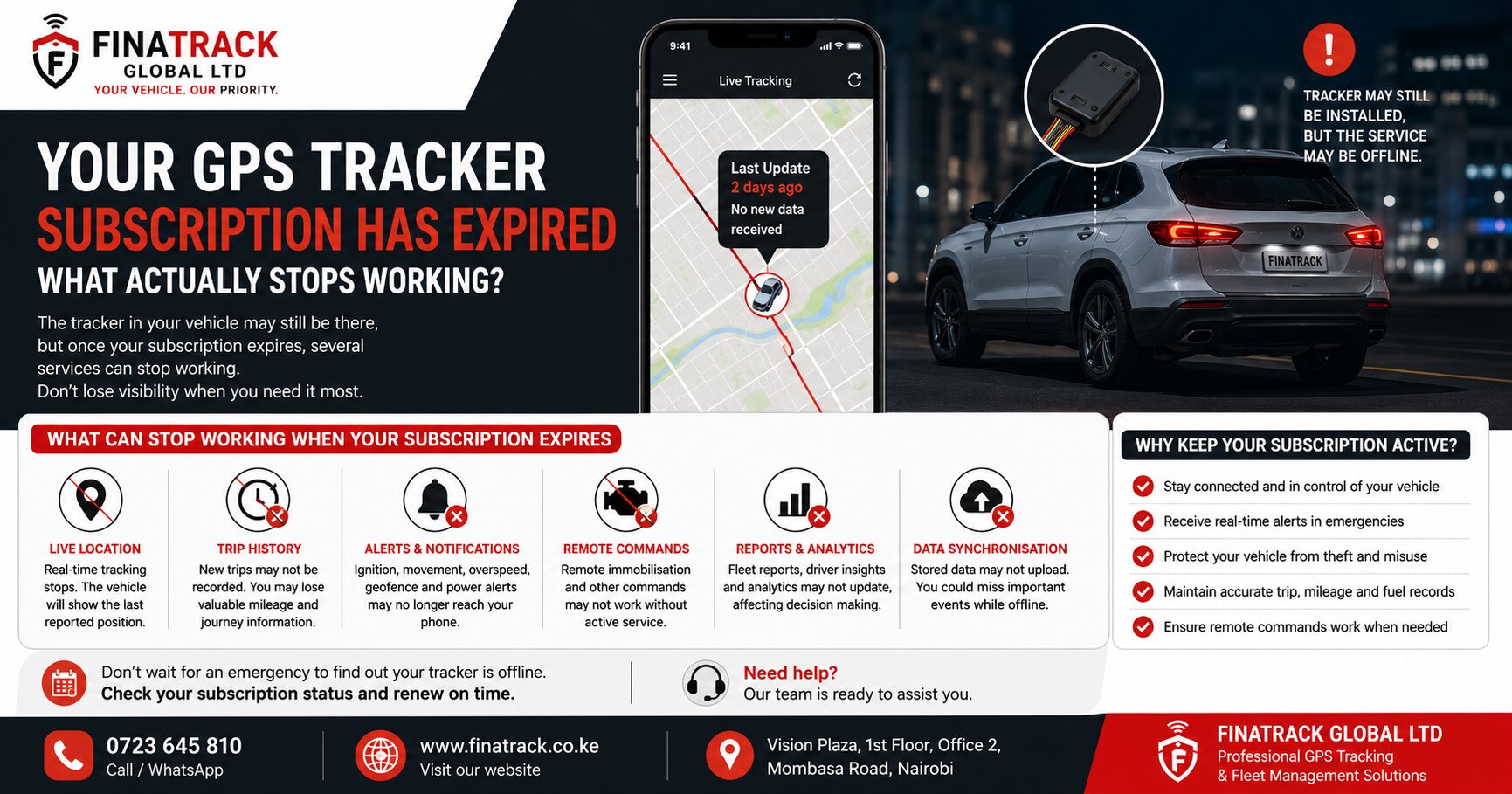
A GPS tracker can remain physically installed in your vehicle for years, but the device itself is only one part of a working tracking system. Most vehicle tracking solutions also depend on mobile network connectivity, a tracking server, an application or web platform and ongoing technical support. When a tracking subscription expires, the tracker may still be inside the vehicle, but some or all of the services that make the device useful can stop working depending on how the tracking provider has configured the system.
This can confuse vehicle owners because nothing visibly changes inside the car. The engine still starts, the tracker remains hidden in its installation position and there may be no dashboard warning telling you that the tracking service is no longer active. The problem may only become obvious when you open the tracking application and discover that the vehicle has stopped updating.
Understanding what happens when a GPS tracker subscription expires is therefore important for both private motorists and businesses operating fleets. Tracking is most valuable when it is available during an unexpected security or operational incident, and discovering that the service expired several months earlier during a theft can leave the owner with a serious problem.
The first thing to understand is that the GPS tracker and the tracking service are not necessarily the same thing. The physical device installed in the vehicle normally determines location using satellite signals, while many tracking systems use a mobile network connection to send that information to a remote server. The application on your phone or computer then displays the information received by that server.
An active tracking service therefore requires several parts of the system to continue working together. The hardware must have power, the communication service must remain active, the platform must continue accepting data and the customer’s account must still have access to the information. If any one of these components is suspended, the user may lose normal visibility even though the tracker itself has not been physically removed.
One of the first things that may stop working after subscription expiry is live vehicle location. If the provider suspends the SIM or data service associated with the tracker, the device may no longer be able to transmit fresh location information to the tracking platform. The car can continue moving normally while the location displayed on the application remains stuck at the last successfully reported position.
This is why the last update time becomes extremely important. A vehicle icon appearing on the map can create the impression that tracking is still active, yet the timestamp may show that the position was received several days or weeks earlier. Vehicle owners should always check both the map location and the time of the most recent update before assuming that a tracker is operating normally.
A tracker that last reported yesterday should not be treated as live simply because the vehicle marker still appears on the screen. The platform may continue displaying the last known position even when no new information is arriving. During a theft or security incident, confusing an old location with a current position could waste valuable time.
Trip history may also stop updating when the tracking service becomes inactive. While previous journeys already stored on the platform may remain visible for some period depending on the provider, new trips may no longer appear if the tracker is not transmitting data. The vehicle can continue accumulating kilometres while the owner’s online records remain unchanged.
This can create problems for businesses using trip history for mileage verification, route management or employee vehicle accountability. A company may assume that a particular vehicle has remained inactive because no journeys appear on the platform, while the vehicle has actually been working normally. The missing information may simply reflect an inactive tracking service.
Historical information that was already stored before the subscription expired may also be affected by the provider’s retention policy. Some platforms may continue allowing access to previous records, while others may restrict account access completely once the service is suspended. Vehicle owners should therefore understand how long historical information remains available under their particular tracking arrangement.
Vehicle alerts can also be affected. Ignition notifications, geofence alerts, overspeed notifications, power disconnection alerts and movement alerts normally depend on information reaching the tracking platform and being processed according to the customer’s settings. If the tracker can no longer communicate with the server, those alerts may not reach the user’s phone.
This is particularly important because many motorists think of GPS tracking primarily as an anti theft system. The owner may expect to receive an alert if the car starts unexpectedly at night, but an expired service can prevent that notification from arriving. The physical tracker may still be present while one of its most valuable security functions has effectively disappeared.
Geofence monitoring presents the same risk. A vehicle may leave an approved area without management receiving the expected notification if the tracking service is inactive. For businesses using geofences around warehouses, construction sites or parking yards, expired tracking subscriptions can therefore create operational blind spots as well as security concerns.
Overspeed monitoring can also become unavailable when new driving data is no longer reaching the server. A fleet manager may believe that drivers have stopped generating speed alerts when the real problem is that the tracker has stopped communicating. This is why fleet supervisors should periodically confirm tracker health rather than judging system performance only by the number of notifications received.
Remote immobilisation may also be affected, depending on the system installed and how the provider manages connectivity. A wired tracker with an immobilisation relay may still be physically connected to the vehicle, but a command sent from the application normally needs a communication path to reach the device. If the tracker is no longer connected to the mobile network or the account has been suspended, the remote command may not reach the vehicle.
Vehicle owners should never assume that remote engine control remains available after a tracking subscription expires. The functionality should be tested and confirmed with the tracking provider before it is relied upon for security. Even with an active subscription, immobilisation should always be used according to appropriate safety procedures and should not be activated in circumstances where stopping the vehicle could create danger.
The same principle applies to remote commands in general. Functions such as requesting a fresh location, changing selected tracker settings or controlling certain connected outputs may depend on an active communication service. An expired subscription can therefore turn a sophisticated tracking installation into hardware that is physically present but no longer remotely manageable.
Businesses using multiple vehicles can experience an even bigger problem because one expired unit may be difficult to notice inside a large fleet. A manager may see twenty vehicles reporting normally and fail to realise that one tracker has not updated for several weeks. That particular vehicle then continues operating without the level of monitoring management believes is in place.
This is why companies should review tracker status regularly. A simple check of last update times across the fleet can reveal vehicles that have stopped communicating. Devices with unusually old timestamps should be investigated before the business assumes that the vehicle is still protected.
Subscription expiry is not the only reason a tracker can appear offline, so management should avoid reaching conclusions too quickly. Weak mobile network coverage, battery problems, poor wiring, a damaged device or vehicle repairs can create similar symptoms. The difference is that an expired service usually affects connectivity or platform access according to the provider’s account status rather than a mechanical problem inside the tracker.
Contacting the tracking provider is therefore one of the fastest ways to determine whether a subscription issue is responsible. The provider should be able to confirm whether the service is active, whether the SIM or communication account remains operational and whether the device has attempted to connect recently. This can prevent unnecessary dismantling of the vehicle while searching for a hardware fault that does not exist.
A vehicle owner should also understand the difference between a tracking subscription and the physical SIM card. Some tracking providers manage both together, while others may structure service differently. What matters to the customer is whether the tracker can still communicate with the monitoring platform and whether the account remains authorised to receive that information.
Even if a SIM card physically remains inside the device, network service can be suspended remotely. The tracker may continue powering on and attempting to communicate without successfully sending new location information. From the vehicle owner’s perspective, the result is effectively the same: the car is no longer visible in real time.
The GPS receiver itself may still function during this period. The device may continue calculating coordinates internally if it has power and adequate satellite visibility, but that information is of limited value if it cannot reach the person monitoring the vehicle. GPS positioning and remote tracking are therefore related but not identical functions.
Some tracking devices may also store data temporarily when communication is unavailable. Depending on the hardware and configuration, stored records can sometimes be transmitted after connectivity is restored. This means that after a subscription is renewed, some historical information from the offline period may reappear.
Vehicle owners should not assume that this will always happen. Storage capacity, device configuration and the length of the interruption can affect whether records are retained. If trip history is important for business, the correct approach is to keep the service active rather than depending on the possibility that missing records will later upload.
Subscription expiry can also affect tracking account access itself. Some providers may allow the user to log in but show the device as inactive, while others may restrict access to the account until renewal is completed. The exact behaviour depends on the tracking platform and the provider’s service terms.
This can be particularly frustrating during an emergency. A vehicle owner may remember their username and password but discover that the account cannot provide fresh information because the service expired. Keeping renewal dates under control is therefore part of maintaining vehicle security.
Businesses should treat tracking renewals similarly to insurance, vehicle licensing and scheduled maintenance. The system may not demand attention every day, but allowing the service to lapse can remove protection at exactly the wrong moment. Fleet managers should maintain a record of subscription dates rather than waiting for individual drivers to notice a problem.
A central renewal schedule can be especially useful for larger fleets. Instead of handling trackers separately as each one expires, the business can group renewal dates or maintain a simple tracking register showing vehicle registration, tracker details and service expiry date. This reduces the likelihood that one vehicle quietly falls out of the monitoring system.
Renewal reminders should also be directed to the correct person. If the tracking account was originally registered using the phone number or email address of an employee who later left the company, important reminders may never reach management. Businesses should ensure that account contact details remain current.
The same issue can affect private vehicle owners. A person may change phone numbers or email addresses and forget to update the tracking provider. Months later, the subscription expires without the owner ever seeing the renewal notice.
Checking account details periodically can prevent this problem. The phone number, email address and authorised users associated with the tracking account should be reviewed whenever ownership, staff responsibilities or contact information changes. Security systems work best when administrative information is maintained as carefully as the hardware.
A tracker that has been inactive for a long time may require more than simply making a payment. The provider may need to confirm that the SIM can still be reactivated, that the device is still communicating and that the vehicle installation remains functional. In some cases, a technical inspection may be sensible after a prolonged period of inactivity.
This is especially important if the vehicle has undergone electrical repairs during the expired period. The tracker wiring could have been disturbed while nobody was monitoring the system. Renewing the service without confirming that the hardware still works could create a false sense of security.
After renewal, the owner should check for a fresh location update. Starting the vehicle and taking a short test journey can help confirm that the tracking platform is receiving current information again. The last update time should change, and the new trip should appear according to the normal behaviour of the system.
Ignition status should also be checked where the tracker supports it. If the vehicle starts but the application continues showing ignition off, the installation may require technical inspection. Renewal restores the service relationship, but it does not automatically repair wiring or hardware faults.
Configured alerts should also be tested or reviewed. The owner should confirm that relevant ignition, geofence, speeding or power related notifications remain enabled according to their requirements. Settings can sometimes change over time or be forgotten after a long period without using the system.
For businesses, reopening an inactive tracking account should include confirming user access permissions. Former employees should not remain authorised to view vehicle locations simply because their accounts existed before the subscription expired. Renewal is a good opportunity to review who can access fleet information.
This becomes particularly important where company vehicles move between branches or departments. The people responsible for the fleet may have changed since the tracker was first installed. Access should follow current operational responsibility rather than historical convenience.
Vehicle owners should also avoid assuming that subscription expiry means the tracker itself must be replaced. In many cases, the installed hardware may still be perfectly usable once the service is renewed. Whether replacement is necessary depends on the device’s age, technology, condition and compatibility with the provider’s current platform.
Older tracking hardware may eventually become less suitable even if it still powers on. Mobile network technology, device firmware and platform requirements can change over time. A provider may recommend upgrading equipment when older devices can no longer provide the expected reliability or functionality.
This should be evaluated separately from the subscription itself. Paying for a new service period does not automatically modernise old hardware, while replacing a tracker does not eliminate the need for continued connectivity and platform support. Vehicle owners should understand both costs when comparing tracking solutions.
This is one reason extremely cheap tracking offers should be evaluated carefully. The initial installation price may appear attractive, but the customer also needs to understand what ongoing service is required, what renewal costs cover and what happens when that service stops. A tracker is a long term security tool rather than a one day installation purchase.
The renewal fee may support several elements beyond mobile data. Depending on the provider, ongoing tracking services can include server access, application use, SIM connectivity, technical support, data storage and management of the tracking infrastructure. Customers should ask what their specific subscription covers rather than assuming every provider uses the same model.
Motorists should also distinguish between annual service charges and device warranties. A warranty normally relates to defects or specified hardware issues, while the tracking subscription maintains access to the monitoring service. An expired subscription does not necessarily mean the tracker warranty has expired, and the reverse can also be true.
The terms of each should therefore be understood separately. A tracker may still be under hardware warranty while its service subscription needs renewal. Alternatively, the device may be outside warranty but continue functioning perfectly with an active tracking service.
Tracking subscriptions become even more important when the vehicle is financed. Banks, SACCOs, microfinance institutions or other lenders may require tracking as part of their risk management arrangements. Allowing the tracking service to expire could potentially undermine the purpose for which the system was installed.
Vehicle owners with financed cars should therefore understand any tracking obligations connected to their financing agreements. Renewal should not be treated as optional merely because the car still operates normally. The relevant lender or tracking provider can clarify any requirements applying to a particular vehicle.
Businesses using trackers for internal control face similar concerns. A company may depend on GPS information for delivery accountability, fuel analysis, mileage management or route monitoring. When a subscription expires, the loss is not limited to theft protection because management also loses an important source of operational data.
A delivery van can continue serving customers while invisible to the fleet manager. A sales car can continue accumulating mileage without trip records, and a project vehicle can leave a site without generating a geofence alert. The business therefore loses part of the management system it may already depend on.
This is why expired subscriptions should be treated as a fleet exception requiring action. A company should not allow vehicles to operate indefinitely while trackers remain inactive. Either the service should be restored or management should formally decide that the tracking device is no longer required.
Leaving a non functioning tracker installed without resolving the issue creates confusion. Employees may assume the vehicle is monitored while managers may assume alerts are active. Clear records should show which vehicles are actively tracked and which are not.
Owners should also be cautious about relying on old application screenshots or cached maps. A tracking application may still open and display historical information even when the vehicle has not communicated recently. The timestamp remains the most important confirmation that new data is actually being received.
The same applies to notification history. Seeing older ignition or geofence alerts in the application does not mean new alerts are still being generated. Owners should confirm recent activity rather than assuming the system is active because previous records remain visible.
For private motorists, a quick monthly check can prevent many problems. Open the application, confirm the vehicle shows a recent location and review whether a recent trip appears normally. This takes very little time but can reveal expired service, communication problems or tracker faults before an emergency occurs.
Businesses can build the same practice into fleet management routines. A weekly or monthly device health review can identify trackers with old last update times, approaching subscription expiry or unusual communication patterns. This is particularly important where dozens of vehicles are being monitored.
The best time to discover an expired tracking subscription is while the car is safely parked outside your home or office. The worst time is after the vehicle has disappeared and you open the application expecting live location information that is no longer available. Regular checks turn this from an emergency surprise into a routine administrative task.
Finatrack Global Ltd provides professionally installed GPS tracking and fleet telematics solutions for private motorists and businesses in Kenya. Vehicle owners can use tracking systems for real time vehicle visibility, trip history, selected alerts, geofencing and other security or fleet management functions depending on the installed solution and active service.
Customers who are unsure whether their tracking service is still active can contact Finatrack Global Ltd on 0723 645 810 or visit www.finatrack.co.ke. Professional support and installation are also available through Vision Plaza, 1st Floor, Office 2, Mombasa Road, Nairobi, and customers should confirm service status whenever a tracker has remained offline unexpectedly.
A GPS tracker does not become useful simply because a small device is hidden somewhere inside the vehicle. Reliable tracking depends on the hardware, connectivity, monitoring platform and active service working together. Keeping the subscription active and occasionally checking that fresh information is reaching the platform helps ensure that when you genuinely need to know where your vehicle is, the tracking system is ready to answer.