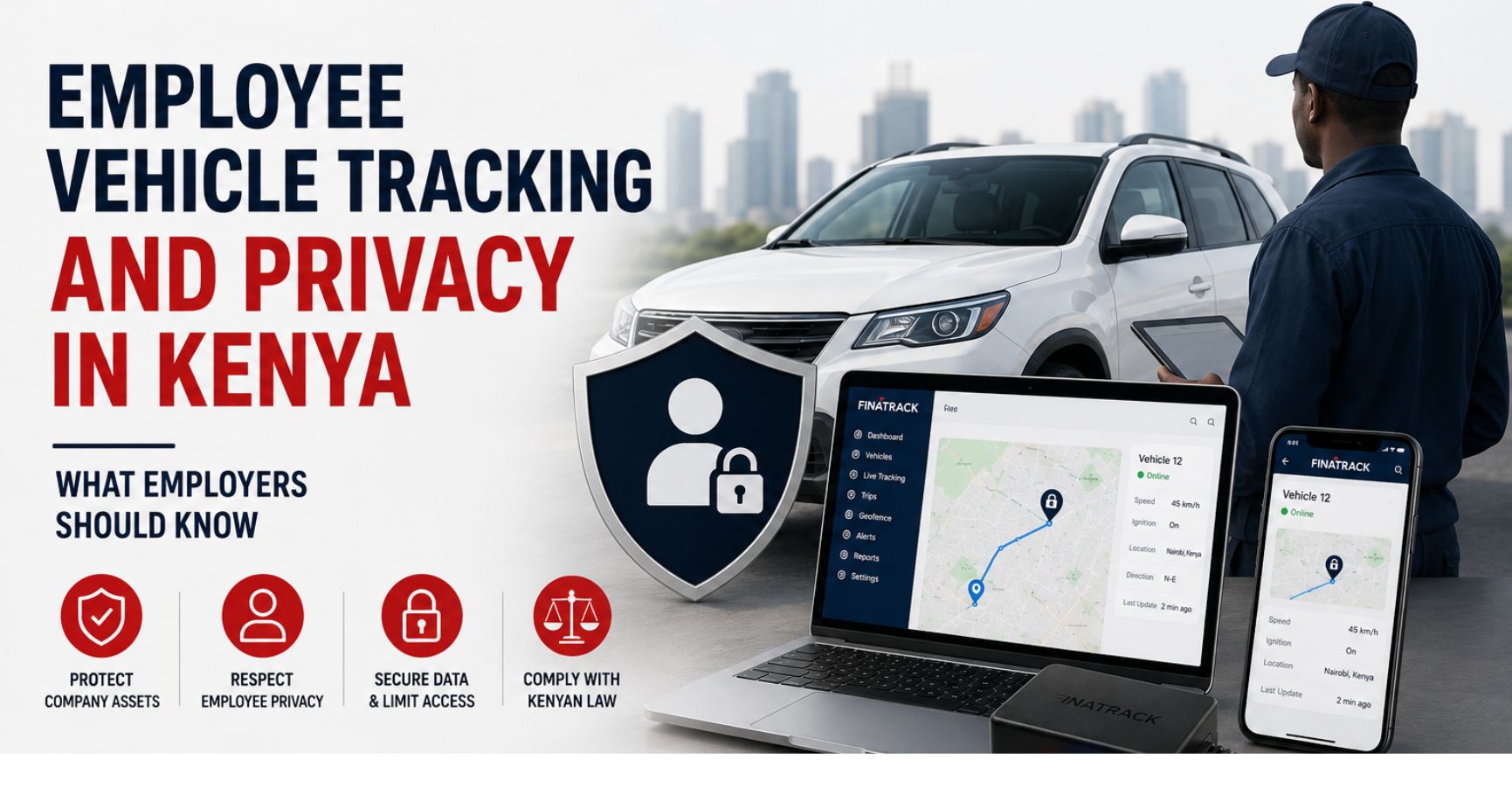
For years, the traditional dashcam had one straightforward job: record what happened in front of a vehicle and store the footage on a memory card. If an accident occurred, the driver could remove the card, review the recording and use the footage to establish what happened. The technology was useful, but largely passive. Unless someone physically accessed the camera or its storage, the information remained inside the vehicle.
The arrival of 4G dashcams has significantly changed that model. Instead of functioning only as an onboard video recorder, a 4G dashcam can use a mobile data connection to communicate with an online platform while the vehicle is on the road. Depending on the system installed, authorised users may be able to remotely access vehicle information, receive alerts, view location data and retrieve video without waiting for the vehicle to return to the office.
The simplest way to understand a 4G dashcam is to think of it as a conventional dashboard camera combined with mobile connectivity. The camera records video just like an ordinary dashcam, while an installed SIM card or integrated cellular module allows compatible information to be transmitted through a 4G mobile network. This connection can turn the camera from a device that simply stores evidence into part of a wider connected vehicle monitoring system.
This difference becomes particularly important when a vehicle is far away from the person responsible for managing it. A fleet manager sitting in Nairobi, for example, may have vehicles operating hundreds of kilometres away. With a traditional dashcam, the manager may only see recorded footage after the vehicle returns or after somebody retrieves the memory card. A properly configured connected dashcam can make selected information available remotely through a web or mobile platform.
Not every 4G dashcam offers exactly the same capabilities. The available features depend on the hardware, software platform, camera configuration and service package. Some systems concentrate mainly on video and location monitoring, while more advanced solutions may combine video with GPS tracking, driver behaviour monitoring, event alerts and other telematics functions.
This is one of the reasons businesses should look beyond the word “4G” when comparing dashcams. Cellular connectivity tells you how the device communicates, but it does not tell you everything the system can do. Buyers should establish what video can be accessed remotely, how recordings are stored, how long information is retained, whether GPS tracking is included and what happens when the vehicle temporarily loses mobile network coverage.
A typical connected dashcam may continue recording locally even when the 4G network is unavailable. Once connectivity returns, certain information may be synchronised depending on how the system has been designed. This ability is important because Kenyan vehicles frequently operate in areas where mobile network quality can vary.
GPS integration is another major feature found in many connected dashcam systems. Video alone can show what happened, but GPS information can help establish where the vehicle was when the incident occurred. Combining time, location and video can provide much stronger context when investigating an accident, unauthorised vehicle movement or another significant event.
For businesses, this combination can transform the dashcam from an accident recording device into a fleet management tool. A logistics company can potentially review events involving vehicles travelling between cities. A distribution company can investigate incidents affecting delivery vehicles. A company managing field employees can gain greater visibility when a vehicle is involved in an accident or unusual event.
Video can also provide context that conventional GPS tracking cannot. A GPS tracker may show that a vehicle stopped unexpectedly on a particular road. A connected camera may help management understand why it stopped. The driver may have encountered traffic, an accident, a road obstruction or another legitimate situation that cannot be understood from location data alone.
The same principle applies to harsh driving events. Telematics information may identify sudden braking or rapid acceleration, but video can sometimes provide important context. A driver may have braked suddenly because a pedestrian crossed the road or because another motorist entered the lane unexpectedly. Modern video analytics research increasingly explores the use of dashcam footage to identify driving hazards and driver distraction in near real time, demonstrating how vehicle cameras are becoming part of broader road safety technology rather than simply evidence recorders.
Some advanced dashcam systems use two cameras rather than one. One camera faces the road while another faces the vehicle cabin. This configuration can be particularly useful for commercial fleets where businesses want greater insight into both road conditions and driver behaviour.
Driver facing cameras can support monitoring for risks such as distraction or fatigue where the chosen system provides those capabilities. Road facing cameras, meanwhile, provide visual information about what is happening around the vehicle. Together, the two perspectives can create a more complete record of an incident.
This technology can be particularly relevant for trucks, buses, taxis, delivery vehicles, company fleets and other vehicles that spend significant amounts of time on the road. For businesses managing many drivers, road safety incidents can create costs extending far beyond vehicle repairs. Accidents may lead to downtime, insurance claims, delayed deliveries, injuries, disputes and reputational damage.
A connected dashcam can help fleet managers move from investigating incidents only after they occur towards identifying patterns that may require attention. If a system repeatedly identifies particular driving events involving the same vehicle or driver, management may have an opportunity to provide additional training before a more serious accident occurs.
However, a 4G dashcam should not be viewed as a substitute for responsible fleet management. Technology can provide information, but businesses still need proper driver policies, training, maintenance programmes and procedures for responding to alerts. Installing cameras without establishing how the information will be reviewed can simply generate large amounts of data without improving safety.
Storage is another important consideration. Traditional dashcams normally record footage onto a memory card and overwrite older recordings when the storage becomes full. Connected systems may combine local storage with cloud based storage or event based uploads depending on the provider.
This does not necessarily mean every second of every journey is continuously uploaded to the internet. Video consumes substantial amounts of mobile data, so systems may be configured to transmit selected clips, event footage or live video when requested. Buyers should therefore understand exactly how their chosen system handles video before installation.
The use of mobile data also means that a 4G dashcam may involve ongoing connectivity costs. A SIM card needs access to a mobile network, and the platform supporting the device may have subscription or service charges. The total cost of ownership should therefore be considered alongside the initial purchase and installation price.
Businesses should ask what happens after the first year. They should establish whether there are data charges, platform fees, cloud storage charges or annual maintenance costs. A low initial price can become misleading if the operating costs have not been clearly explained.
Data protection is another increasingly important consideration, particularly when cameras are installed in company vehicles. A connected dashcam may collect video, location information and information relating to employees or other identifiable people. Employers should therefore have a clear reason for collecting this information and should understand how it is stored, accessed and protected.
The issue becomes particularly sensitive when cameras face the driver or vehicle cabin. Employees should understand that video monitoring is taking place and why the technology has been installed. Businesses should also control who can access recordings rather than giving unnecessary access to everyone who has fleet management responsibilities.
Vehicle owners should apply similar caution to account security. A system that provides remote access to vehicle location or video should use properly protected login credentials. Passwords should not be casually shared, and access should be removed when employees or administrators no longer require it.
Another advantage of connected dashcams is the potential speed of access during an incident. With a conventional camera, crucial footage may remain inside a damaged, stolen or inaccessible vehicle. Where the system supports remote uploads, important footage may already have been transmitted to a server or may be available through the monitoring platform.
This can be particularly valuable where a vehicle is stolen together with the dashcam. A memory card inside the stolen vehicle may provide little immediate help to the owner. A connected system that combines GPS tracking and remote communication can offer considerably greater visibility, although no tracking or camera system can guarantee recovery in every situation.
For private motorists, the decision between a standard dashcam and a 4G dashcam largely depends on what they want from the technology. Someone who mainly wants video evidence after an accident may find a conventional high quality dashcam sufficient. A vehicle owner who wants remote connectivity, location visibility and additional security features may find a 4G system more useful.
The commercial case can be stronger for businesses. A company responsible for ten, fifty or several hundred vehicles cannot reasonably collect memory cards from every vehicle whenever management needs information. Remote access creates an operational advantage because selected information can be reviewed without physically accessing every camera.
This is also where 4G dashcams increasingly overlap with telematics. The modern fleet manager may no longer use completely separate systems for video, GPS location, driver behaviour and security. Connected vehicle technologies are increasingly bringing these sources of information together to give businesses a more complete view of what is happening on the road.
Finatrack Global Ltd provides GPS tracking, telematics and vehicle security solutions for individuals, SMEs and corporate fleets in Kenya. The company’s vehicle security offering includes dashcams alongside GPS tracking and other security technologies, while its fleet solutions focus on driver behaviour, vehicle utilisation and operational visibility.
For businesses considering a 4G dashcam, the most important question should therefore not simply be whether the camera records in high definition. Buyers should ask whether the system provides the connectivity, video access, GPS information, storage, reporting and support required for their particular operation.
They should also consider installation quality. A professionally installed commercial dashcam should be positioned to provide a useful field of view without unnecessarily obstructing the driver’s visibility. Power connections, camera placement and any additional sensors should be installed reliably so that the system continues operating under normal vehicle conditions.
The provider behind the technology matters as well. A connected dashcam depends on more than the physical camera. It may rely on a mobile network, software platform, server infrastructure and technical support. Customers should therefore consider whether the company providing the solution can support the system after installation.
That is ultimately what makes a 4G dashcam different from the traditional camera attached to a windscreen.
A conventional dashcam records what happened.
A connected 4G dashcam can potentially help authorised users see, locate and respond to what is happening much sooner.
For Kenyan motorists, that can provide additional security and evidence.
For fleet operators, it can provide something even more valuable: greater visibility over vehicles and drivers while they are still on the road.
For professional dashcam, GPS tracking and fleet telematics solutions, Finatrack Global Ltd can be contacted on 0723 645 810 or through www.finatrack.co.ke. Installations are available through its Vision Plaza office along Mombasa Road in Nairobi and can also be arranged at customer locations.