For thousands of Kenyans, a motorcycle is more than a means of transport. It is a source of employment, a business investment and, in many households, an important contributor to daily income. From boda boda operators transporting passengers to delivery riders distributing goods across towns and cities, motorcycles play an essential role in Kenya’s transport economy. However, owning a motorcycle also comes with significant risks, particularly when it is operated by another person, parked in unfamiliar locations or used for commercial activities throughout the day.
Motorcycle theft, unauthorised usage and poor accountability can expose owners to substantial financial losses. A motorcycle purchased for business may disappear while being operated by a rider, or the owner may struggle to establish where it has travelled during working hours. These challenges have encouraged more motorcycle owners to consider GPS tracking as an additional security and management tool. By providing access to location information, movement history and selected security alerts, a motorcycle GPS tracker can help owners monitor their investments and respond more effectively when unusual activities occur.
Why Motorcycle Security Is Important in Kenya
Motorcycles are widely used across Kenya because they offer convenient transport, relatively low operating costs and the ability to navigate areas that may be difficult for larger vehicles to access. In urban areas such as Nairobi, Mombasa, Kisumu and Nakuru, motorcycles support passenger transport, food delivery, courier services and other commercial operations. In rural communities, they also provide important connections between markets, residential areas and trading centres.
Despite these advantages, motorcycles present particular security challenges. Their relatively small size makes them easier to move or transport compared with larger vehicles, while commercial motorcycles frequently operate across different locations with limited direct supervision. For owners who lease motorcycles to riders or employ operators, maintaining visibility over daily movements can be difficult.
A stolen motorcycle can interrupt business operations and eliminate an important source of income. Even when theft does not occur, unauthorised trips, disagreements over vehicle usage and difficulties locating a motorcycle can create unnecessary expenses. Investing in suitable security measures can help reduce these risks and provide owners with better information about their motorcycles.
How Does a Motorcycle GPS Tracker Work?
A motorcycle GPS tracker is a compact electronic device designed to determine and report the location of a motorcycle. Most commonly used tracking systems obtain positioning information from navigation satellites and transmit the information through mobile communication networks to a monitoring platform. The motorcycle owner can then access available location records using a smartphone application or compatible web-based system.
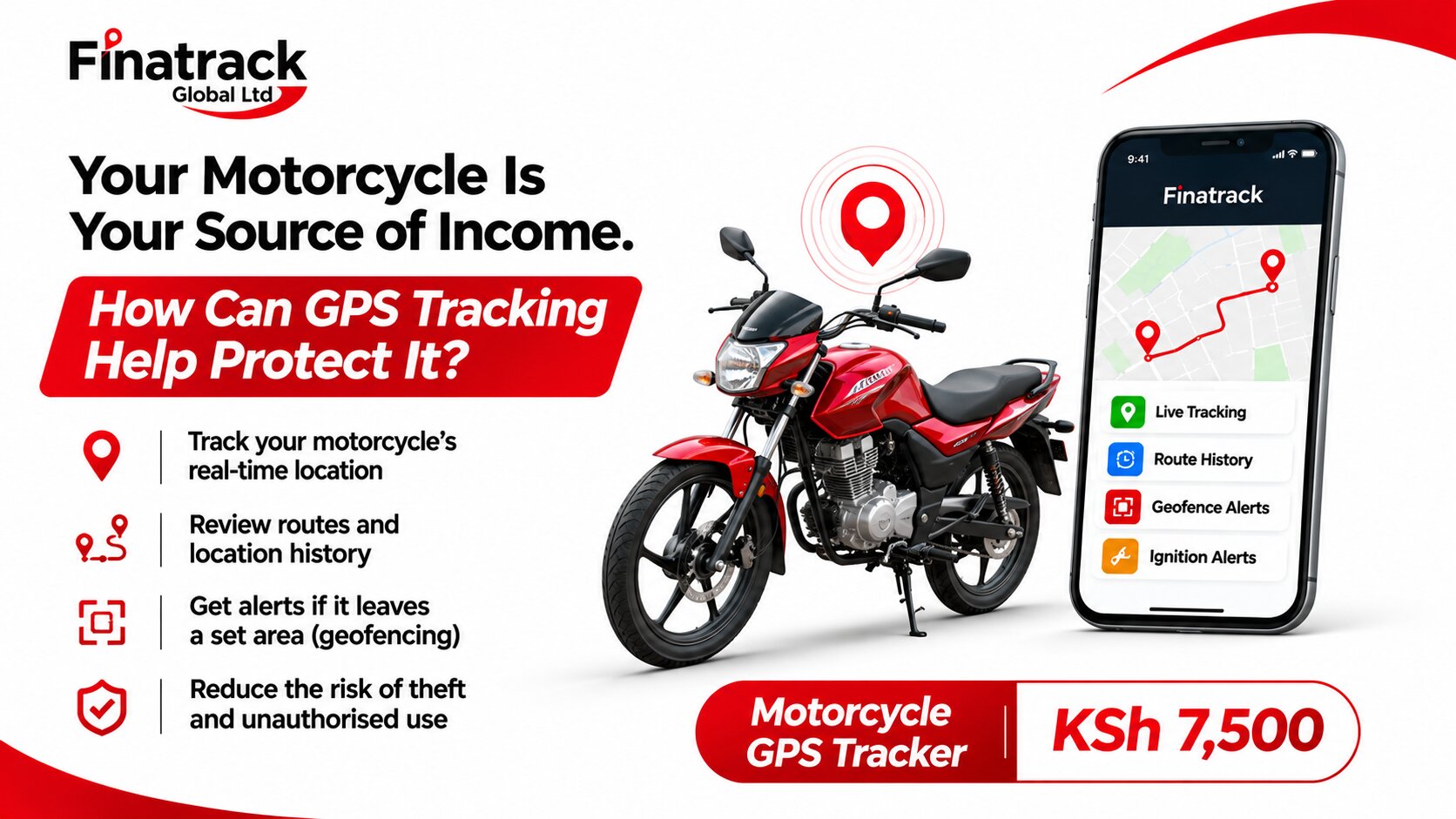
Depending on the equipment and configuration, a motorcycle tracker may provide live location information, historical route playback, geofencing and movement notifications. Some systems also support ignition monitoring and other security functions when installed with the necessary connections.
For example, a motorcycle owner in Nairobi may provide a bike to an authorised rider for daily commercial operations. Through the tracking application, the owner can review its reported location and check whether it has travelled within the expected working area. This reduces the need to rely entirely on telephone calls when confirming the motorcycle’s whereabouts.
However, GPS tracking requires suitable device power, satellite positioning and communication connectivity. When these conditions are unavailable, location updates may be delayed or temporarily interrupted.
Can GPS Tracking Help When a Motorcycle Is Stolen?
One of the main reasons motorcycle owners invest in GPS tracking is to improve their ability to establish the location of a missing motorcycle. Without a tracking device, owners may depend on witness accounts, the rider’s explanation or information from people who last saw the motorcycle. These methods may provide useful leads but can make it difficult to determine where the bike has been taken.
A functioning GPS tracker can provide location information that may assist during a theft investigation. If the motorcycle moves unexpectedly, the owner may be able to review its latest reported position and relevant movement history. Where the system supports configured security alerts, suspicious activity may also generate a notification.
Consider a motorcycle parked outside a residential building in Kiambu overnight. If it is moved without the owner’s knowledge, a compatible tracker may identify the movement or trigger a geofence notification. This could allow the owner to investigate sooner and share relevant location information with the police or an authorised recovery team.
Although GPS tracking may assist recovery efforts, it cannot guarantee that a stolen motorcycle will be recovered. The tracker must remain functional, adequately powered and capable of communicating with the monitoring platform. Motorcycle owners should also avoid attempting dangerous confrontations based solely on location information.
How GPS Tracking Helps Boda Boda Owners Monitor Their Riders
Many motorcycle owners in Kenya operate businesses where another person uses the motorcycle to generate income. Under such arrangements, the rider may be expected to work within a particular area, operate during agreed hours and make regular payments to the owner.
Managing these arrangements can be challenging when the owner has no independent information about the motorcycle’s movements. A rider may report that the motorcycle remained within an assigned area, while the owner has limited ability to verify its journeys.
A motorcycle GPS tracker can provide additional visibility through location monitoring and historical route information. For example, an owner operating several boda bodas around Nairobi may review the recorded movements of each bike and identify trips outside agreed operating zones. This information can support conversations about vehicle usage and help establish clearer expectations between owners and riders.
However, location monitoring should be implemented transparently. Riders should understand that the motorcycle is equipped with a tracking device, the purpose of monitoring and how relevant information may be used. GPS records should support fair business management rather than become a substitute for communication and reasonable working arrangements.
Can You Track a Motorcycle Without Calling the Rider?
For owners who manage motorcycles remotely, one of the practical benefits of GPS tracking is the ability to access location information without repeatedly calling the rider.
Imagine owning three motorcycles operating in different parts of Nairobi. One rider works around Embakasi, another operates in Kasarani, while the third provides delivery services within the central business district. Without a tracking system, establishing their locations may require several telephone calls, particularly when business activities are busy.
A GPS tracking application can display the available locations of authorised motorcycles, allowing the owner to review movements more conveniently. Where route history is supported, the owner may also examine previously recorded journeys rather than relying entirely on verbal explanations.
This can improve coordination, especially when a motorcycle is required for a particular assignment or when the owner needs to investigate an unexpected delay. Nevertheless, tracking information indicates the location of the motorcycle and does not independently establish the identity or activities of the person operating it.
How Geofencing Can Improve Motorcycle Security
Geofencing is a feature that allows a motorcycle owner to establish a virtual boundary around a geographical area. When a compatible GPS tracker detects that the motorcycle has entered or exited the designated zone, the monitoring platform may generate an alert.
For example, a boda boda owner operating in Thika may establish a geofence around the agreed working area. If the motorcycle moves beyond that boundary, the tracking application may send a notification, depending on the device’s settings and connectivity.
Geofencing can also be useful when a motorcycle is parked at home overnight. An owner may configure a smaller boundary around the parking location and receive an alert if the motorcycle moves outside it.
However, geofencing should not be treated as a foolproof security mechanism. GPS positioning errors, communication delays and device settings can affect when notifications are generated. Owners should confirm that geofence alerts are functioning correctly and understand that some legitimate movements may also trigger warnings.
Why Route History Matters for Motorcycle Businesses
Historical route playback allows motorcycle owners to review available records of where a bike has travelled during a selected period. This can be particularly useful for businesses managing delivery motorcycles, courier services and boda boda operations.
A delivery company operating motorcycles across Nairobi may need to understand which routes were taken during working hours. By comparing recorded routes with planned assignments, managers can identify unnecessary detours, investigate unusual travel patterns and improve future scheduling.
Route history can also support maintenance planning. Motorcycles used commercially may cover considerable distances every week, making regular servicing important. Where reliable mileage records are available, businesses can use the information alongside service records to help schedule inspections and maintenance.
However, location history does not automatically reveal the purpose of each trip. An unexpected route may result from road closures, traffic congestion, customer requests or other legitimate circumstances. Owners should therefore review available information carefully before drawing conclusions about rider conduct.
Can a Motorcycle GPS Tracker Help Reduce Operating Expenses?
Running a commercial motorcycle involves several expenses, including fuel, maintenance, insurance, repairs and rider-related costs. While GPS tracking cannot eliminate these expenses, it can provide information that helps owners manage certain aspects of their operations.
For example, reviewing historical journeys may reveal repeated unnecessary trips or inefficient routes. A delivery business may use this information to organise assignments more effectively and reduce avoidable travel.
Tracking can also support better accountability where motorcycles are expected to remain within specified working areas or follow agreed schedules. Over time, clearer visibility over movements may help owners identify operational problems before they become more expensive.
However, GPS tracking does not independently measure fuel consumption or guarantee lower maintenance costs. The financial benefits depend on how the information is used, the business’s operating practices and the decisions made by management.
What Happens When a Motorcycle GPS Tracker Is Disconnected?
Most wired motorcycle GPS trackers depend on the motorcycle’s electrical system for their primary power supply. If that connection is interrupted, the tracking device may stop sending location updates unless it has an internal backup battery or another independent power source.
Some tracking devices support external power-disconnection alerts, which may notify the owner when the primary power supply is interrupted. However, this feature must be supported and correctly configured, and the device must still be capable of transmitting the notification.
A tracking interruption does not necessarily mean that someone has attempted to steal the motorcycle. Loose connections, electrical repairs, battery problems and poor network coverage may produce similar symptoms.
Motorcycle owners should therefore check the tracking application’s last update time and contact their installation provider when unexplained interruptions occur. Regular testing and professional maintenance can help identify issues that might otherwise compromise the reliability of the system.
Why Professional Motorcycle Tracker Installation Is Important
Motorcycles have limited installation space, exposed operating environments and electrical systems that may differ considerably between models. Installing a GPS tracker therefore requires appropriate equipment, secure mounting and suitable electrical connections.
A poorly installed tracker may experience water exposure, vibration-related damage or interruptions in its power supply. Incorrect wiring can also create problems for the motorcycle’s electrical components.
Professional installation helps ensure that the device is mounted securely and configured correctly. After installation, the owner should test available location information, route history and security notifications to confirm that the system is operating as expected.
For commercial motorcycle owners, periodic inspections are particularly important because the vehicles often operate in demanding conditions. Regular checks can help maintain the tracking device’s functionality and reduce unexpected interruptions.
How Much Does a Motorcycle GPS Tracker Cost in Kenya?
The cost of motorcycle GPS tracking in Kenya depends on the device, installation requirements, features and service arrangements. Some tracking systems offer basic location reporting, while others include additional functions such as geofencing, ignition monitoring and historical playback.
At Finatrack Global Ltd, our Motorcycle GPS Tracker is available at KSh 7,500. The solution is designed for motorcycle owners seeking greater visibility over their bikes’ locations and movements.
Customers can consult our team to understand the tracking features supported by the selected equipment, installation arrangements and any applicable service terms.
For individuals operating one motorcycle, a tracking device can provide additional visibility over an important investment. For businesses managing several motorcycles, adopting a consistent tracking arrangement may also simplify monitoring and coordination.
Is Motorcycle GPS Tracking Worth the Investment?
For a motorcycle owner whose bike generates income every day, protecting the investment is an important business consideration. Theft, prolonged loss of access or unauthorised usage can disrupt operations and place financial pressure on the owner.
A GPS tracker can provide useful location information, help owners review movements and support investigations when a motorcycle goes missing. For commercial operators, it can also improve visibility over vehicles used by authorised riders.
Nevertheless, motorcycle tracking should not replace other security precautions. Owners should continue using suitable locks, secure parking arrangements, responsible key management and appropriate insurance protection.
The greatest value comes from combining tracking technology with sensible security practices and clear operating procedures. Rather than relying entirely on one device, motorcycle owners should adopt an approach that addresses both theft prevention and effective vehicle management.
Protect Your Motorcycle With Finatrack Global Ltd
Whether you own a personal motorcycle, operate a boda boda business or manage a fleet of delivery bikes, knowing where your motorcycle is located can provide greater control over your investment.
Finatrack Global Ltd offers motorcycle GPS tracking solutions designed to help owners monitor movements, access available location history and use supported security notifications. Our solutions are suitable for individuals and businesses seeking additional visibility over motorcycles operated across Kenya.
Our Motorcycle GPS Tracker costs KSh 7,500. Customers can contact our team for information about available features, professional installation and device compatibility.
For enquiries and installation, call 0723 645 810, visit Vision Plaza, 1st Floor, Office 2, Mombasa Road, Nairobi, or explore our tracking solutions at www.finatrack.co.ke.
Your motorcycle works hard to generate income. Make sure you have a reliable way to monitor its movements and protect your investment.