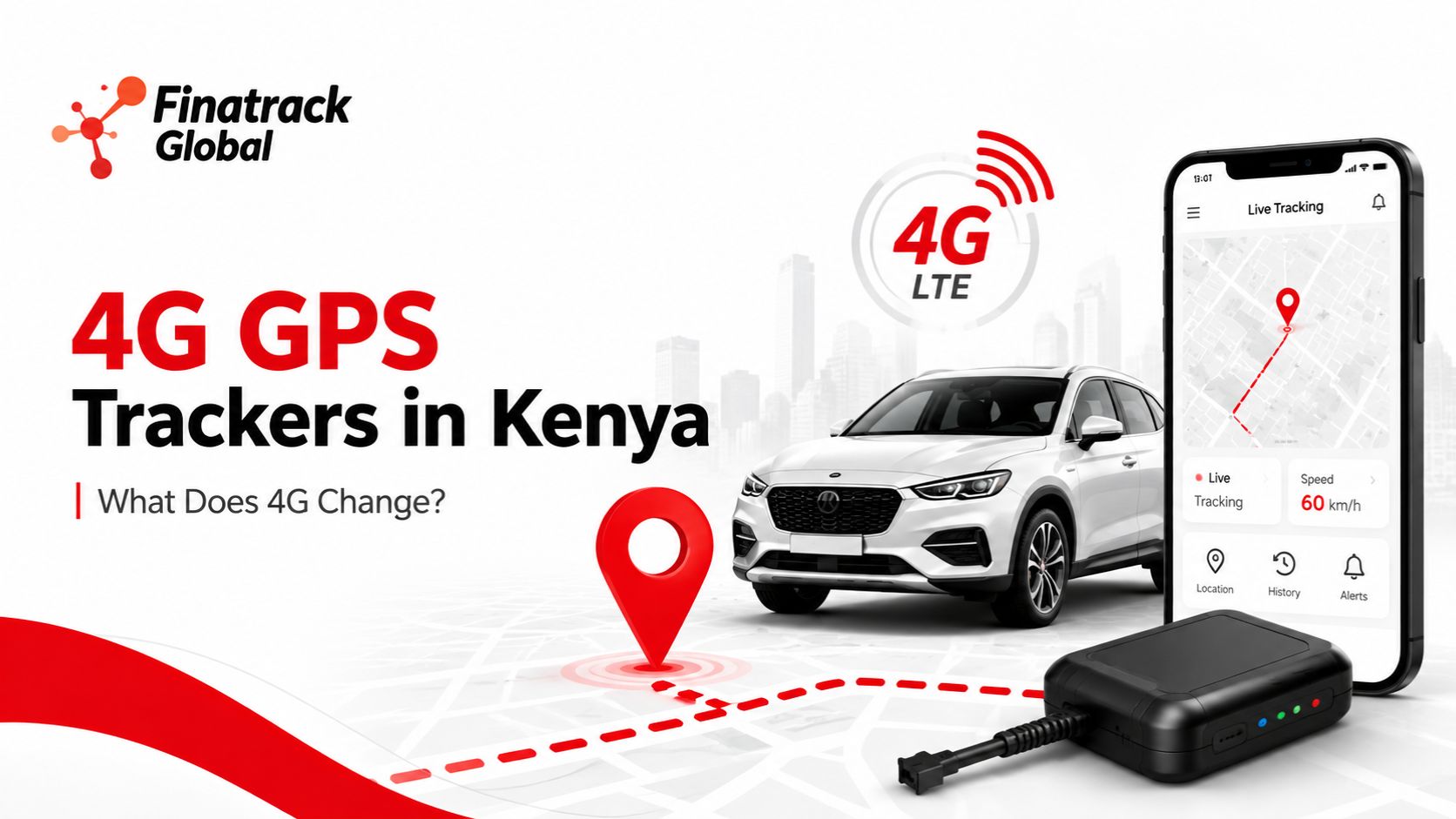
When vehicle owners hear the term “4G GPS tracker,” it is easy to assume that 4G somehow makes the satellite location more accurate. The technology is often marketed as faster, newer and more advanced, which can make the distinction confusing. In reality, GPS and 4G perform two different jobs inside a modern vehicle tracking system.
GPS, or more broadly GNSS satellite positioning, helps the tracking device determine where the vehicle is. The 4G mobile network is then used to transmit that location and other vehicle information from the tracker to the tracking platform. In simple terms, GPS finds the vehicle while 4G helps the tracker communicate what it has found.
This distinction matters when comparing different tracking devices. A tracker does not become more geographically accurate simply because it uses a 4G SIM or modem. Positioning accuracy depends on factors such as the GNSS hardware, satellite visibility, antenna quality, installation position and surrounding environment, while 4G mainly affects how information travels between the vehicle and the server.
For motorists and businesses in Kenya, however, that communication layer is increasingly important. Vehicle trackers are rarely installed for a few months and removed; many remain in cars, trucks and motorcycles for years. Choosing equipment that communicates through modern mobile networks can therefore improve the long-term usefulness of the tracking system as network technologies continue evolving.
A typical vehicle tracker collects relatively small pieces of information. These may include location, speed, ignition status, movement, battery voltage and other configured vehicle data. The tracker then sends those records through the mobile network to a secure server, where the owner or fleet manager can view the information through a phone application or web platform.
This explains why a tracking application can show a moving vehicle on a map even when the customer is kilometres away. The map itself is not inside the GPS tracker. The device is sending location records to the tracking server, while the application converts those records into the visual information the customer sees.
For private motorists, the most noticeable benefit of a modern 4G tracker may simply be reliable communication with the tracking platform. The vehicle owner can check current location, review previous trips, receive ignition alerts and monitor selected security events depending on the system installed. The important advantage is not that 4G changes where the vehicle is, but that it provides a modern network through which that information can be communicated.
For businesses managing commercial fleets, the benefits can go much further. A company may need location information from dozens of vehicles while also monitoring driver behaviour, ignition activity, geofences, vehicle voltage or other fleet parameters. More advanced telematics installations may integrate fuel monitoring, sensors or other operational information, making reliable mobile communication an important part of the entire system.
This is why two 4G trackers can still provide very different levels of service. One may offer only basic vehicle location while another supports additional inputs, sensors, driver monitoring or fleet integrations. Customers should therefore avoid choosing a tracker simply because the packaging says “4G” and instead ask what the complete tracking solution can actually do.
A private car owner may only require real-time location, trip history, ignition alerts and remote immobilisation. A logistics company operating trucks may need additional reporting, geofences, fuel information and more detailed fleet-management tools. Both customers may use 4G devices, but their tracking requirements are completely different.
Network coverage also remains important. A 4G tracker can only send information in real time when it has access to a compatible mobile network and the SIM is correctly configured. If the vehicle enters an area with weak mobile coverage, the tracker may still determine its position but temporarily be unable to send the information to the server.
That situation can make the tracking platform appear as though the vehicle has stopped updating. The map may continue showing the last successfully transmitted location until the device regains network communication. Depending on the tracking device and configuration, journey records may be stored temporarily and transmitted later when connectivity returns.
This is particularly important for vehicles travelling through rural areas or long-distance routes. A temporary gap in live reporting does not automatically mean the GPS tracker has failed or been removed. Fleet managers should look at the last update time, network conditions and whether normal reporting resumes once the vehicle reaches stronger coverage.
Cross-border vehicle tracking introduces the same principle. A truck travelling from Kenya into Uganda or Tanzania may still receive satellite positioning outside the country, but the tracker also needs an appropriate roaming arrangement to communicate through foreign mobile networks. A 4G tracker without the correct roaming setup may know where the vehicle is while temporarily being unable to send that location back to the monitoring platform.
The SIM card and tracking service are therefore just as important as the hardware. Installing an expensive 4G device does not guarantee reliable vehicle visibility if the communication service has not been configured properly. A professional tracking solution needs the device, SIM, mobile network, tracking server and customer platform to work together.
Battery consumption is another concern among motorists considering newer tracking technology. A professionally designed wired tracker normally draws a relatively small amount of electricity from the vehicle and can use power-saving modes when the car is parked. The precise behaviour depends on the specific hardware and configuration, which is why installation quality remains important regardless of whether the tracker is 2G, 4G or another technology.
Some trackers also contain internal backup batteries. These can allow the device to continue operating temporarily if the main vehicle power supply is interrupted, depending on the equipment installed. For security-conscious customers, this can provide another layer of protection if someone disconnects the vehicle battery or interferes with the tracker’s external power source.
The move to 4G should therefore not be viewed only as a question of internet speed. Vehicle tracking sends relatively small amounts of information compared with activities such as video streaming. The more important consideration is compatibility with modern mobile networks and the ability of the tracker to communicate reliably over the years it remains installed in the vehicle.
This becomes particularly important for businesses buying trackers for an entire fleet. Installing dozens of devices represents a longer-term investment in telematics infrastructure. Fleet managers should consider whether the hardware will continue meeting operational needs as the company grows and as the communication environment changes.
At the same time, businesses should not assume that an existing tracker needs to be replaced immediately simply because a newer 4G model is available. If the current device remains reliable, the supporting mobile network is available and the platform continues meeting the company’s requirements, there may be no urgent reason to change it. The decision should be based on operational need rather than technology labels alone.
Installation remains one of the most important factors regardless of the communication technology being used. A 4G tracker installed with poor wiring, an unstable power connection or unsuitable placement can still perform badly. Professional installation should ensure the device is discreet, properly powered, securely connected and fully tested before the vehicle returns to normal use.
The customer should also receive proper training after installation. They should know how to locate the vehicle, review previous journeys, understand the tracker status and recognise important alerts. The newest tracking hardware provides little value if the owner does not know how to use the system.
For businesses, platform organisation matters just as much. Vehicles should be clearly identified by registration number, department or other useful fleet information so that managers can quickly understand what they are seeing. A modern 4G tracker should therefore form part of a properly managed fleet system rather than simply being another electronic device hidden inside the dashboard.
The best way to evaluate a 4G GPS tracker is to ask practical questions. Does it provide the location information you need? Does it work with the required mobile networks? Can it store data temporarily when coverage disappears? Does it support the alerts and fleet features required by the vehicle owner or business?
Customers should also ask what happens when the vehicle crosses the border, whether backup power is available and what technical support is provided if the device goes offline. These questions reveal far more about the quality of a tracking solution than the word “4G” printed on the product specification.
For private motorists, the main objective remains security and visibility. For businesses, the same technology can support dispatch, driver management, vehicle utilisation and operational decision-making. In both cases, the communication technology should support the customer’s real requirement rather than becoming the entire selling point.
The simplest way to understand the difference is this: GPS determines where the vehicle is, while 4G helps transmit that information to the person monitoring it. A strong vehicle tracking system needs both reliable positioning and reliable communication.
Finatrack Global Ltd provides professionally installed GPS tracking and fleet telematics solutions for private cars, motorcycles and commercial fleets in Kenya. Tracking solutions can be configured according to the customer’s vehicle security, monitoring and fleet-management requirements.
Professional installation can be arranged at the customer’s convenient location or at Vision Plaza, 1st Floor, Office 2, Mombasa Road, Nairobi. For GPS tracking and vehicle security solutions, contact Finatrack Global Ltd on 0723 645 810 or visit www.finatrack.co.ke.
4G does not change where the satellites are or where your vehicle is.
It improves the communication that helps that vehicle tell you where it is.