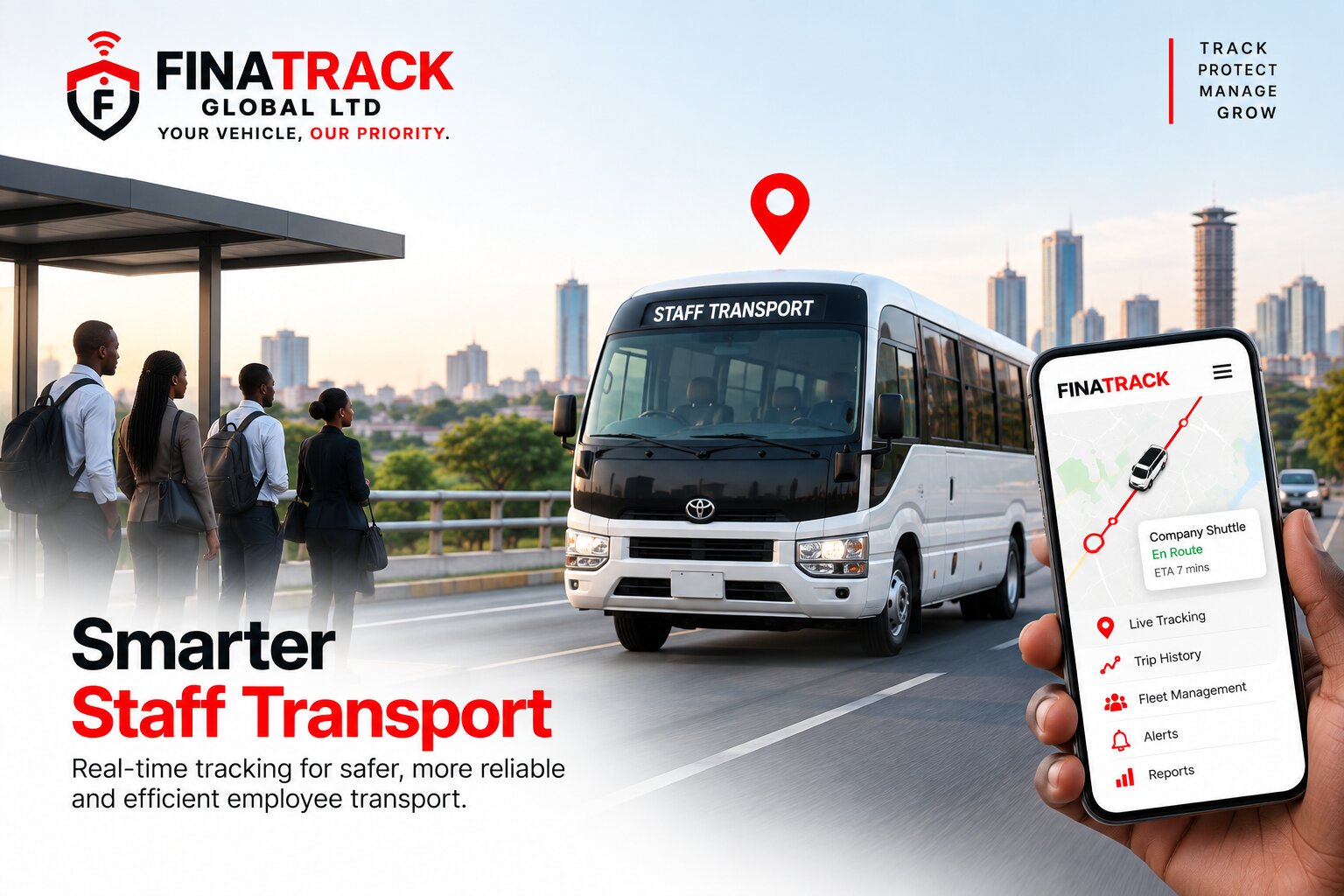
A company bus may leave the depot every morning at exactly the right time, yet employees can still spend twenty or thirty minutes standing at pickup points wondering when it will arrive. Traffic changes, drivers take different routes, vehicles break down and managers may have no reliable way of knowing where the shuttle actually is. For Kenyan businesses transporting employees between homes, offices, factories, warehouses and project sites, poor vehicle visibility can quickly become a productivity problem rather than simply a transport inconvenience.
Corporate staff transport is often treated as a support function, but it can influence whether employees arrive at work on time, how safely they travel and how much the organisation spends operating buses, vans and company shuttles. A business may operate several vehicles every day while depending mainly on driver phone calls and handwritten schedules to understand what is happening on the road. GPS tracking can provide a clearer picture by allowing authorised managers to monitor vehicle location, routes, trip history, mileage and selected driving information from one platform.
The value begins with a simple question that employees ask every day: Where is the bus? Without GPS tracking, the answer may require calling the driver, who could already be navigating heavy traffic. With a tracking platform, the transport coordinator can check the latest vehicle location before responding.
This becomes particularly useful during morning and evening peak periods in Nairobi. A shuttle travelling along Mombasa Road, Thika Road, Ngong Road or Waiyaki Way can experience very different travel times depending on traffic conditions. A timetable may say the bus should arrive at 7:20 a.m., but actual road conditions determine whether that schedule remains realistic.
GPS visibility allows the company to understand what is happening instead of relying entirely on planned arrival times. If the vehicle is still several kilometres away, employees can receive more accurate information rather than repeatedly being told that the shuttle is “almost there.” Better information reduces frustration even when traffic itself cannot be eliminated.
The same visibility can help transport managers identify persistent delays. One late journey may simply reflect an accident, road works or unusual congestion. If the same route arrives late almost every day, however, the schedule may need to be redesigned.
Historical trip information can show how long the shuttle normally takes between important points. Management can compare different days and determine whether the scheduled departure time is realistic. A route that consistently requires ninety minutes should not be planned as though it can reliably be completed in sixty.
This is where GPS tracking becomes more than a map. The organisation begins using actual movement data to improve transport planning. Timetables can be adjusted according to what vehicles are really experiencing on the road rather than what managers assume from the office.
Pickup points can also be reviewed. A staff shuttle may make many stops that were added gradually as employees joined the company or changed residence. Over time, the route can become inefficient because nobody has reviewed whether the pickup sequence still makes geographical sense.
GPS trip history can make unnecessary backtracking easier to identify. A bus may travel through one neighbourhood, leave the area and then return nearby to collect another employee. Reorganising the pickup order can reduce both kilometres and journey time.
The objective should not be to remove convenient pickup points simply to shorten a route. Staff transport exists partly to support employees, and accessibility remains important. The goal is to arrange those stops as efficiently as possible while maintaining reasonable service.
For businesses operating several staff buses, route allocation becomes even more important. One vehicle may be overloaded with stops while another operates a shorter route with significantly fewer passengers. GPS data can show the movement of each vehicle, while passenger records provide information about how many employees are actually using the service.
When both are reviewed together, management can decide whether routes should be redesigned. One bus may be able to absorb an additional pickup point while another route is shortened. The fleet becomes easier to manage without necessarily adding another vehicle.
This can save substantial money because purchasing another staff bus is expensive. Beyond the purchase price, the company assumes insurance, fuel, maintenance, tyres, tracking, licensing and driver costs. Before increasing fleet size, management should understand whether the existing vehicles are already being used efficiently.
GPS tracking provides useful evidence for that decision. If every suitable vehicle is operating intensively and employee demand continues growing, expansion may be justified. If one vehicle spends much of the day parked while another route is overloaded, better allocation may solve part of the problem first.
Mileage is another important part of staff transport management. Employee shuttle vehicles can accumulate kilometres quickly because they repeat routes every working day. Even a small unnecessary detour becomes significant when it is repeated hundreds of times during the year.
A route that adds only ten avoidable kilometres every day can create thousands of additional kilometres over time. Those kilometres consume fuel and bring the vehicle closer to its next service, tyre replacement and eventual depreciation. Route efficiency therefore has a direct financial effect.
GPS trip reports allow management to compare planned routes with actual movement. If a shuttle repeatedly deviates without explanation, the transport manager can investigate whether traffic conditions, road closures or driver decisions are responsible. The information supports a conversation rather than creating an automatic accusation.
Route deviations are sometimes completely justified. Nairobi traffic can change quickly, and an alternative road may save considerable time. The value of GPS tracking is not forcing drivers to follow one road regardless of conditions but helping management understand whether repeated alternative routes improve or worsen the service.
Driver speeding deserves particular attention in staff transport because the vehicle is carrying employees rather than only goods. A company has a strong interest in ensuring that employees are transported safely and that drivers are not placed under pressure to compensate for poor schedules by travelling too fast.
GPS telematics can provide speed information and overspeed alerts depending on the system installed and configured. Management can identify repeated patterns and discuss them with drivers before unsafe behaviour becomes normal. One isolated speed event should still be interpreted within context, while repeated overspeeding deserves closer attention.
Poor scheduling can contribute to unsafe driving. A driver who is expected to complete an unrealistic route may feel pressured to recover lost time after traffic delays. Transport managers should therefore investigate whether repeated speeding reflects individual behaviour or a timetable that encourages rushing.
This distinction matters because driver coaching alone will not solve a structural problem. If the schedule requires impossible arrival times, the organisation needs to redesign the route as well. GPS data can help reveal both the behaviour and the operating conditions surrounding it.
Harsh braking and acceleration can provide additional safety information where the telematics system supports those events. Heavy traffic, motorcycles, pedestrians and sudden road hazards can produce legitimate harsh events, so individual notifications should not be treated as proof of reckless driving. Patterns across many trips provide much stronger information.
For staff buses, frequent harsh braking can also affect passenger comfort. Employees standing or moving inside a shuttle can be injured even where no collision occurs. A smoother driving style therefore contributes to both safety and the overall quality of the transport service.
Businesses with stronger safety requirements may consider AI dashcams alongside GPS tracking. Driver monitoring and road facing video can provide additional context around fatigue, distraction, harsh driving or accidents depending on the selected system. GPS shows where an event occurred, while video may help explain what happened around it.
This can be particularly useful for companies operating long staff routes or night shifts. A driver transporting employees after a late shift may be exposed to fatigue in a way that a short daytime route does not create. Driver safety technology should therefore reflect the actual operating environment.
GPS tracking can also improve incident response. If a staff shuttle is involved in an accident or develops a mechanical problem, management can identify its latest reported location instead of relying entirely on verbal directions from the driver. This can help coordinate a replacement vehicle, mechanic or recovery service faster.
Knowing where the stranded bus is can also help the company communicate with employees who are waiting farther along the route. Management can decide whether another vehicle should collect them instead of allowing them to remain at pickup points without information. Vehicle visibility becomes part of business continuity.
Mechanical breakdowns are especially disruptive because one unavailable shuttle can affect many employees at once. A company vehicle carrying twenty people creates a much larger productivity problem when it fails than a sales car carrying one employee. Preventive maintenance should therefore be closely connected to staff transport operations.
GPS mileage records can help management understand how quickly each shuttle is accumulating distance. Two buses purchased at the same time may reach service intervals at very different rates because their routes are not equal. Maintenance should therefore reflect actual use rather than assuming identical calendar schedules.
The manufacturer’s maintenance recommendations and professional mechanical inspection should still determine the work required. GPS tracking does not diagnose worn brakes, tyres or suspension by itself. What it provides is operational information that helps management know which vehicles are working hardest.
Idling is another potential cost. A driver may arrive early at a pickup point and leave the engine running for twenty minutes while waiting for staff. The same vehicle may later idle outside the office before the evening journey begins.
Some idling may be necessary, particularly where operational or passenger considerations justify it. Repeated unnecessary idling, however, can increase fuel expenditure without moving employees any closer to their destination. GPS and ignition information can help management identify where these periods occur.
Patterns matter more than isolated events. If several shuttles spend long periods running while parked at the same company gate, the problem may involve dispatch procedures rather than individual drivers. Management may need to change departure processes rather than simply tell drivers to switch off engines.
Fuel management becomes more important as the staff transport fleet grows. A company operating five buses may purchase substantial amounts of fuel every month, yet management may have limited visibility into how consumption relates to actual routes and mileage. Comparing fuel expenditure with GPS movement provides a stronger basis for review.
A shuttle travelling significantly farther than another would naturally be expected to use more fuel. A similar vehicle covering comparable routes but consuming much more deserves investigation. Traffic, idling, mechanical condition, load and driver behaviour can all influence consumption.
The objective should not be to treat every fuel difference as theft. GPS information helps establish the operating context first. Management can then decide whether further mechanical or operational investigation is necessary.
Larger commercial fleets may also benefit from dedicated fuel monitoring where the vehicle configuration makes it appropriate. Fuel level information can be examined alongside trip activity to identify refilling patterns and unusual changes. This can provide deeper control where fuel represents a significant portion of transport expenditure.
Another major benefit of GPS tracking is after hours vehicle accountability. Staff buses may complete their final drop off in the evening and be expected to return to the company yard or another approved parking location. If the vehicle continues travelling later at night, management may want to understand why.
The movement may be authorised. A driver may be returning from the final employee drop off or the bus may have been reassigned to another shift. GPS history simply allows management to distinguish legitimate operations from unexplained use.
Clear company policy is essential. Drivers should understand where vehicles are expected to remain after working hours, whether they may take them home and what journeys require authorisation. Tracking works best when it supports rules that were already communicated.
Unauthorised personal use can increase operating costs considerably. Extra kilometres add fuel, servicing, tyre wear and accident exposure while providing no direct value to the employer. The cost becomes particularly significant when large buses or vans are involved.
Geofencing can support this control. A virtual boundary can be created around the company yard, depot, staff housing or another approved location depending on the tracking platform. Management can identify when the shuttle enters or leaves those locations without continuously watching the map.
The same technology can be used around important route locations. A transport coordinator may want to know when a bus leaves the depot or reaches a major pickup zone. These events can provide useful operational visibility while keeping manual monitoring manageable.
Geofencing should not be overused. Creating too many zones can produce excessive alerts that managers eventually ignore. The system should focus on locations where an entry or exit genuinely matters.
Vehicle utilisation is another important area. Some companies operate several staff buses because routes developed independently over time. One vehicle may complete two full journeys every day while another carries very few employees.
GPS information can reveal how active each vehicle is, but passenger numbers still need to be considered. A bus travelling every day is not necessarily being used efficiently if it consistently carries only a handful of employees. Combining vehicle movement with passenger information provides a better picture.
This can influence whether the business should use a large bus, smaller van or different route arrangement. Matching vehicle capacity to actual transport demand can reduce fuel and operating costs. A forty seat bus may be unnecessary for a route consistently serving ten employees.
Demand can also change over time. Hybrid working, staff turnover, new branches and relocation can all alter where employees need transport. Routes designed several years earlier may no longer reflect the workforce.
A periodic route review helps keep the service relevant. GPS trip history provides evidence showing how long current routes take and which areas generate the most travel. Employee transport surveys can then provide the human side of the decision.
This combination is more effective than redesigning transport entirely from GPS data. The map shows where the bus travels, while employees explain where they actually need to be collected. Technology should support staff transport planning rather than replace employee consultation.
For companies with shift workers, reliable transport visibility becomes particularly important. Manufacturing plants, warehouses, hospitals, security operations and other businesses may have employees reporting very early in the morning or leaving late at night. Public transport options may be limited during those hours.
A late company shuttle can therefore create both productivity and employee welfare concerns. If workers cannot reach the workplace on time because the company vehicle was delayed, production may be affected before the shift even begins. Better route management can help reduce these disruptions.
Night transport also increases the importance of vehicle security. The shuttle may travel through quieter areas and park at locations outside normal business hours. GPS tracking provides another layer of visibility over an asset carrying both employees and company responsibility.
Higher risk staff transport operations may justify layered vehicle security. A wired GPS tracker can provide normal everyday tracking, while an independent wireless tracker or tracking tag can provide backup visibility. Alarm and immobilisation systems can strengthen vehicle security when the shuttle is parked.
The appropriate configuration should depend on the value of the vehicle, routes and operating environment. Not every staff van requires the same security level as a high value executive shuttle or vehicle operating overnight. Security investment should remain proportionate to risk.
Employee communication can also improve through GPS information. A company may use internal messaging, a transport desk or other communication channels to inform staff about delays. Tracking gives the person sending those updates better information.
Instead of saying, “The bus is delayed,” the coordinator can confirm that it has left the previous pickup point or is approaching a particular part of the route. The goal is not necessarily to provide employees direct access to the full tracking platform but to improve the accuracy of operational communication.
Some organisations may choose to provide limited vehicle visibility to employees depending on their systems and policies. This can reduce repeated calls asking where the shuttle is. Access should still be designed carefully because the tracking platform can contain sensitive information beyond one staff route.
Fleet administrator accounts should therefore remain restricted. Employees do not necessarily need access to every company vehicle simply because they use one shuttle. Role based access, where available, can provide better control.
Tracking credentials should not be shared casually through large staff groups. A company vehicle’s historical routes, parking locations and operating patterns can be sensitive information. Access should be provided only where it supports a legitimate transport requirement.
Privacy also matters because staff transport data indirectly reveals employee movement. A bus arriving at particular residential pickup points can indicate where employees live or regularly travel. Businesses should therefore use location data responsibly and restrict unnecessary access.
The purpose of tracking should be clear. Vehicle security, route planning, maintenance, staff transport coordination and driver safety are legitimate operational reasons. The system should not become a tool for unrelated monitoring of employees.
Transparency helps create trust. Drivers and relevant employees should understand that the company shuttle is GPS tracked and why the information is collected. Clear communication prevents the technology from being perceived as secret surveillance.
GPS information should also not be treated as proof that an employee was present simply because the bus reached their pickup location. The tracker monitors the vehicle, not each passenger. Attendance and workforce management still require appropriate internal systems.
The same limitation applies to driver performance. GPS can show movement, speed and selected vehicle events, but it does not explain every situation on the road. Management should combine telematics information with driver reports and operational context.
A traffic diversion may explain a route change, while an emergency may justify an unusual stop. Good fleet management asks why something happened before deciding whether it represents a problem. Data should improve fairness rather than eliminate judgement.
For outsourced staff transport, GPS visibility can support service provider accountability as well. A company may contract buses from another transport operator instead of owning the vehicles directly. Where the commercial arrangement allows appropriate tracking access, movement data can help verify whether agreed routes and schedules are being followed.
The contract should define expectations clearly. The organisation should know which routes, reporting standards and vehicle safety requirements apply. GPS information then supports the service agreement rather than creating new expectations after problems occur.
Repeated late departures can be identified more objectively. Management can determine whether the vehicle left the depot late or whether delays occurred after departure. This helps separate transport provider performance from external traffic conditions.
For companies paying according to kilometres or trips, tracking records can provide useful supporting information. GPS data should still be compared with invoices and contractual records rather than treated as the sole financial document. The technology strengthens verification without replacing normal controls.
GPS tracking can also help when a shuttle is temporarily replaced. The company should ensure that substitute vehicles receive appropriate tracking visibility if they are going to operate for a significant period. Otherwise, management can lose oversight exactly when the normal fleet is already disrupted.
Businesses should maintain an accurate record of which tracker belongs to which vehicle. Registration numbers and vehicle descriptions on the platform should match the actual fleet. A GPS account showing the wrong vehicle identity can create serious confusion during an accident or security incident.
Tracker health should be reviewed regularly. A shuttle can continue completing its route every day even after its GPS device has stopped communicating. If nobody checks the last update time, the company may only discover the problem when an urgent incident occurs.
Transport coordinators can perform a simple weekly review. Confirm that every active shuttle has recent tracking data and that recent journeys appear normally. Units showing unusually old timestamps can then receive technical attention.
Trackers should also be checked after battery replacement and major electrical work. Mechanics may accidentally disturb aftermarket wiring while servicing the vehicle. A quick tracking test before the bus returns to staff duty can prevent long periods of missing data.
The same applies after tracker or alarm upgrades. All relevant functions should be tested together rather than assuming one new installation did not affect another security system. Professional vehicle security is strongest when different components are coordinated.
A good staff transport tracking system should eventually answer several practical questions without management having to call every driver. Where are the vehicles, are routes being followed reasonably, which shuttle is delayed, how much mileage is each vehicle accumulating and are drivers showing recurring risky behaviour? When those answers become available consistently, transport management becomes much more proactive.
Finatrack Global Ltd provides professionally installed GPS tracking and fleet telematics solutions suitable for corporate staff transport vehicles in Kenya. Depending on the selected solution, businesses can access vehicle location, trip history, mileage, geofencing, ignition information and selected driver behaviour alerts through a central tracking platform.
The wired GPS tracker is available at KES 15,000, providing a permanent tracking solution for company buses, vans and other corporate vehicles. Businesses requiring stronger fleet security or more advanced visibility can also discuss wireless backup tracking, tracking tags, AI dashcams and other suitable telematics solutions according to their operating requirements.
Professional installation can be arranged at the customer’s convenient location or through Finatrack Global Ltd at Vision Plaza, 1st Floor, Office 2, Mombasa Road, Nairobi. Companies looking to improve staff transport visibility can contact 0723 645 810 or visit www.finatrack.co.ke.
Corporate staff transport should not become a daily cycle of employees asking where the bus is while managers repeatedly call drivers for answers. When GPS tracking is combined with sensible route planning, driver safety policies and reliable vehicle maintenance, organisations gain better visibility over the entire transport operation. The result is not simply knowing where the shuttle is, but creating a staff transport system that is safer, more predictable and easier to manage.
:::